Signs of Dyslexia in 6-Year-Olds: What to Watch For

What You'll Learn
- Watch for a pattern: persistent trouble with letter sounds, blending, word reading and spelling matters more than an occasional backward letter.
- Screen now if you're concerned. A screening identifies risk; a qualified professional evaluates whether your child has dyslexia.
- Check the instruction, too. A child who hasn't learned letter sounds needs teaching, not an automatic diagnosis.
- Start support while you seek answers. Teach sounds explicitly, practice blending and ask for school-based or specialist help rather than waiting for failure.
Signs of Dyslexia in 6 Year Olds: The Checklist
Backward letters get all the attention; the struggle to turn print into speech deserves more of it.
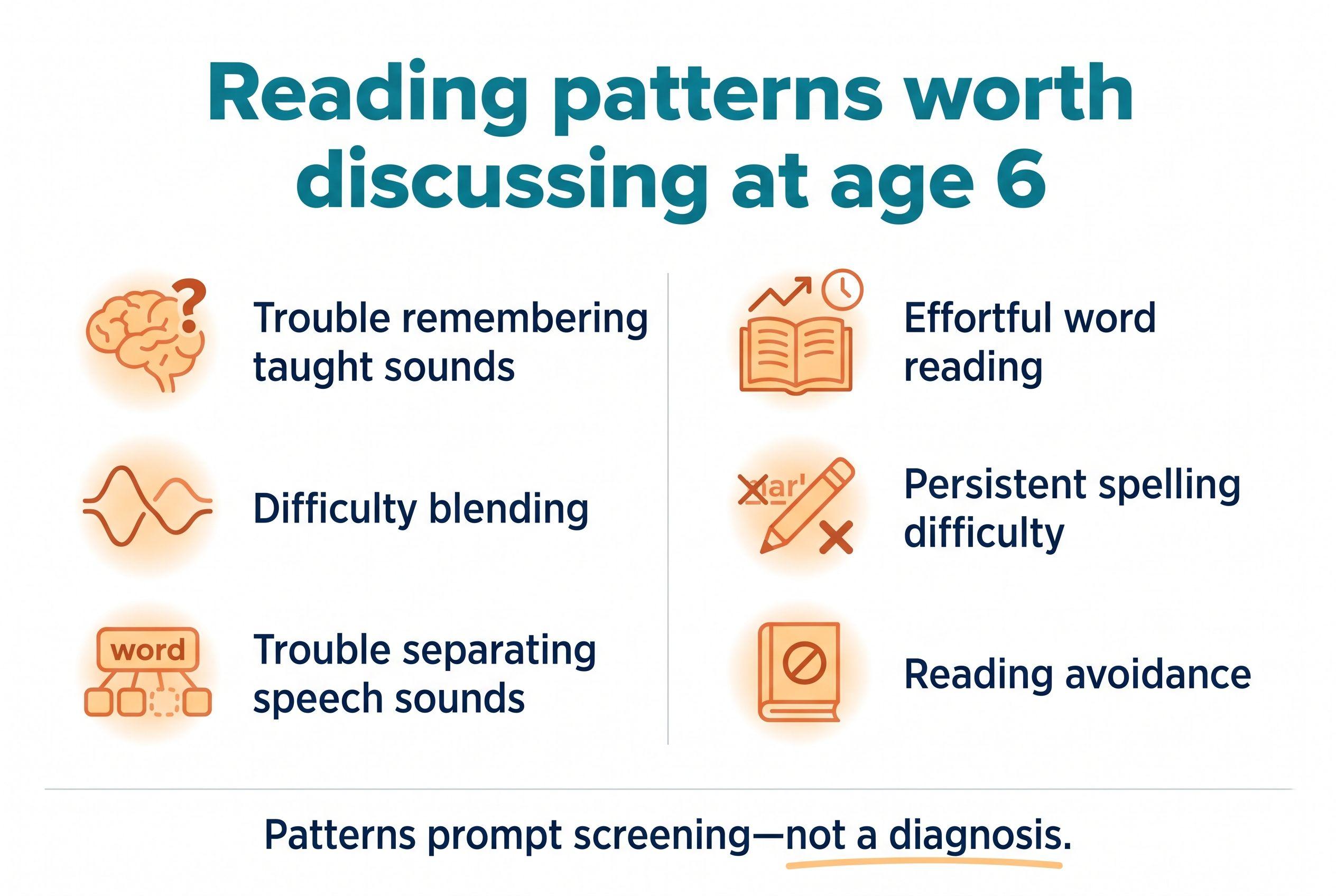
The most useful signs of dyslexia in 6 year olds involve persistent difficulty learning accurate word reading and spelling, especially despite clear instruction. No single behavior diagnoses dyslexia. Look for a cluster, its persistence and how your child responds to teaching.
| What you notice | What it might look like | What to do next |
|---|---|---|
| Letter sounds don't stick | Your child repeatedly forgets sounds you've explicitly taught | Record which sounds cause trouble and request screening |
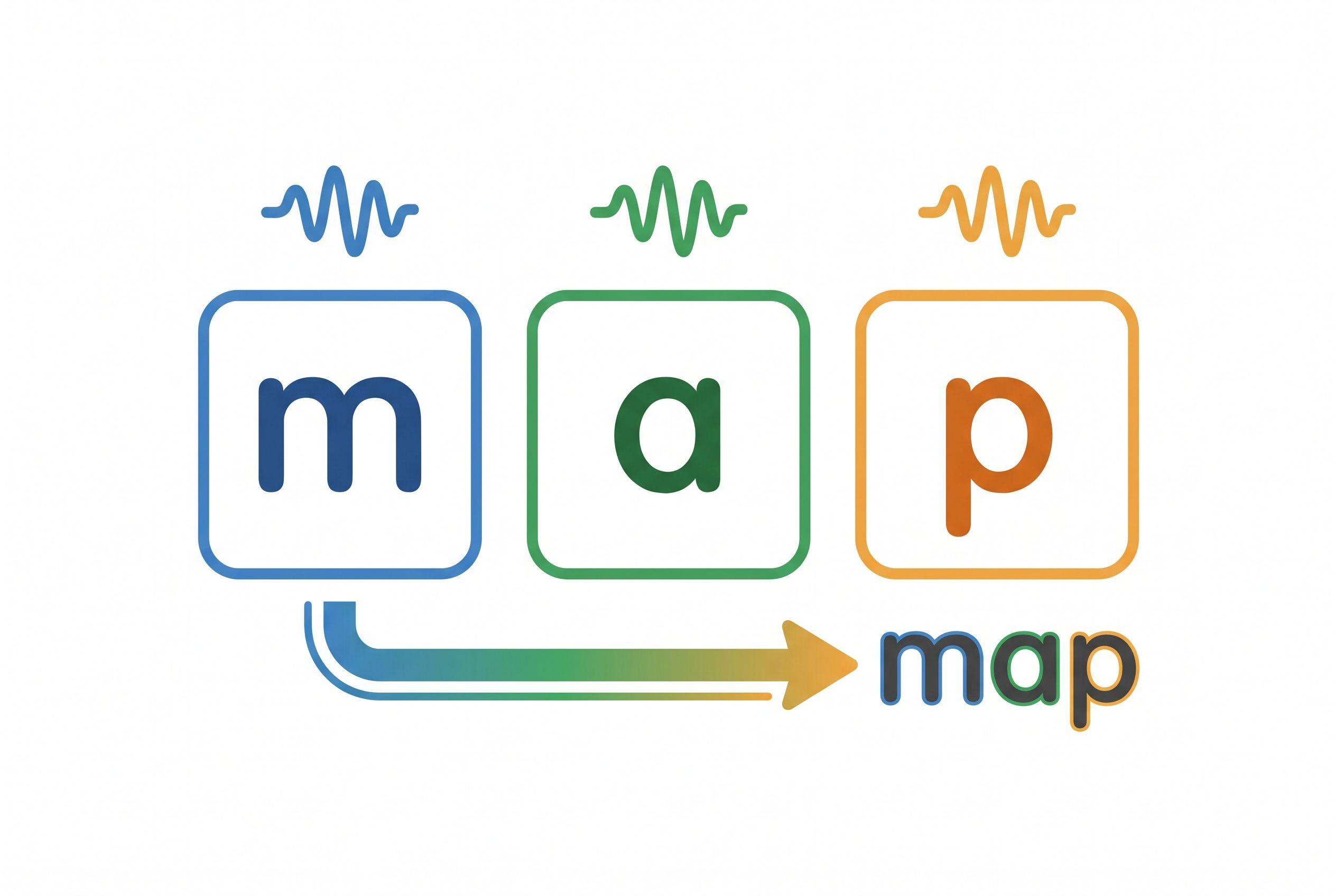
| Blending stays difficult | They say /m/ /a/ /p/ but can't combine them into “map” | Model blending and note whether practice helps |
| Separating speech sounds feels hard | They struggle to identify the sounds in a simple spoken word | Ask about phonemic-awareness screening |
| Familiar words remain effortful | They sound out the same simple word repeatedly without growing more accurate or automatic | Check instruction and discuss the pattern with a teacher |
| Spelling leaves out sounds | “Map” becomes “mp” repeatedly despite instruction in the vowel sound | Save dated samples for the evaluator |
| Guessing replaces reading | They say “pony” for “horse” because of the picture | Return attention to the letters and check decoding |
| Reading causes unusual distress | They avoid simple reading tasks that match what they've learned | Reduce pressure while investigating the difficulty |
Family history of dyslexia increases concern, though it isn't a reading symptom. Difficulty quickly naming familiar letters or objects can also inform a professional assessment; don't turn that into a homemade speed contest.
Letter reversals alone don't establish dyslexia. Young writers can reverse letters with or without dyslexia, and some children with dyslexia don't reverse them.
For parents searching for “dyslexia first grade signs,” US first grade usually means ages 6–7. Teaching history matters more than the school-year label. Compare your child's current skills with what to expect at age 6, but don't use an age checklist as a diagnosis.
What to Do If You Recognize These Signs
Take a brief look at familiar material: ask for a few letter sounds your child has learned, then try blending a simple word containing those sounds. You can also take the 2-minute reading check for a quick starting point. Neither activity screens comprehensively for dyslexia or rules it out.
Guessing instead of decoding often reveals that a child hasn't secured the sound-to-print connection. That gap can reflect insufficient instruction, dyslexia or other learning needs. The next move is teaching plus screening, not choosing a label at the kitchen table.
For a clear home routine alongside that process, I recommend Teach Your Kid to Read: start lesson one free. It's a step-by-step phonics program you do side by side with your child for about 15 minutes a day; lesson one teaches m, s, p and short a, then blends them into real words. Lesson one is free, with no card and nothing to cancel. From lesson two, the whole program is a 7-day free trial, then US$9.95 a month.
An app doesn't diagnose dyslexia or replace specialist instruction. It gives you a teaching routine while you arrange the support your child may need.
What Dyslexia Is—and What It Isn't
Dyslexia involves difficulty with accurate or fluent word reading and spelling. Many affected children struggle with the speech-sound skills that support reading, although profiles vary.
It isn't laziness. It isn't a measure of intelligence. A child can explain an elaborate dinosaur battle and still struggle to read “dig.”
The International Dyslexia Association offers information about dyslexia and assessment. Professionals consider reading, spelling, language, educational history and other relevant skills rather than diagnosing from a single worksheet.
Here are two distinctions I want every parent to understand:
- Phonological awareness covers awareness of spoken-language units, including syllables and individual sounds.
- Phonemic awareness focuses specifically on individual speech sounds. Hearing /s/ /a/ /t/ in “sat” belongs here.
Phonics connects those sounds to print. These skills support one another, but they aren't interchangeable.
Imagine a hypothetical child, Maya, who can tell you everything about a story you read aloud. Put a simple sentence in front of her, though, and she guesses from the illustration. Strong listening comprehension doesn't erase a word-reading difficulty.
That's why signs of dyslexia in 6 year olds deserve a closer look even when a child speaks beautifully.
The Readiness Story That Still Makes Me Mad
A mom in my co-op once pulled me aside about her 5-year-old daughter. The preschool teacher said the child wasn't showing “reading readiness signs” and should wait until US kindergarten (age 5–6) for any phonics work.
The explanation? “Developmental appropriateness.”
I asked whether the preschool taught letter sounds. It didn't. The children learned letter names through crafts: A is for Apple coloring sheets, B is for Bear finger paintings. I like finger paint. I don't expect it to teach the alphabetic principle by itself.
I lent her my copy of Louisa Moats' Speech to Print and highlighted its discussion of early phonological development. Many preschoolers can begin learning letter-sound connections through brief, appropriate teaching; ages 3–4 aren't automatically too young. That doesn't mean every preschooler should meet the same target or sit through formal drills.
She started with five letter sounds using magnetic letters. Within six weeks, her daughter could give the common consonant and short-vowel sounds they'd practiced across all 26 letters. That wasn't every sound English letters can represent, and it wasn't proof of fluent reading. It was a clear response to instruction.
The teacher's recommendation to withhold phonics didn't fit this child's needs. “Readiness” wasn't something the mom needed to wait around for—she could help build the underlying skills.
That six-week outcome belongs to one child, not to your child's deadline. It also doesn't show that instruction cures dyslexia or that quick progress rules it out.
The connection to signs of dyslexia in 6 year olds is simple: ask what someone has actually taught before interpreting what a child can't do. Then watch the response. If learning remains unusually difficult, investigate rather than repeating “not ready.”
The Tiger Truth: Waiting Doesn't Fix a Reading Gap
I'm a Chinese-American homeschooling mom of four, ages 10, 7, 4 and 1. I've taught my two oldest to read, and I'm currently teaching my 4-year-old. I know how tempting it feels to call a difficult lesson a phase and move on.
But persistent difficulty needs a plan.
On the 2024 NAEP, only 31% of US fourth graders (ages 9–10) scored at or above Proficient in reading. That's a national achievement statistic, not a dyslexia rate. “Below Proficient” doesn't mean “can't read,” either.
The practical concern starts much closer to home. A child who struggles to read words may avoid practice, need more adult help with written directions and spend so much effort decoding that meaning slips away. As schoolwork demands more independent reading, that mismatch becomes harder to manage.
Children can improve later. Don't hear “act early” as “you missed your chance.” Hear it as permission to request help now.
The 2000 report from the National Reading Panel, a US federal panel, found benefits from systematic phonics instruction. That supports explicit phonics teaching generally; it doesn't prove that any particular app treats dyslexia.
My Tiger Rule is No Guessing. Pictures can support conversation and comprehension, but they shouldn't substitute for reading the printed word. Whole Language and Balanced Literacy prompts that encourage picture-based word guessing miss the skill a struggling decoder needs.
Fun can help a child participate. It can't substitute for instruction.
How to Tell If a 6-Year-Old Has Dyslexia
You can't settle that question with a symptom list. Early dyslexia screening identifies risk; a fuller evaluation investigates the child's learning profile and possible explanations.
Ask the school or a qualified reading professional what screening they offer. Depending on your location, an educational psychologist, school psychologist or another appropriately qualified specialist may conduct a diagnostic evaluation.
A useful assessment looks beyond letter reversals. Ask about:
- Phonemic awareness and letter-sound knowledge.
- Accurate reading of words and unfamiliar decodable items.
- Spelling and reading fluency.
- Oral language, developmental history and family history.
- The instruction your child has received and their response to it.
A professional may use DIBELS to examine early literacy skills and monitor progress. It isn't a stand-alone dyslexia diagnosis, and its measures and benchmarks depend on the child's school stage and testing period. Ask the examiner to explain the results rather than comparing a score with something you found on social media.
Also discuss hearing, vision or speech-language concerns with the appropriate clinician. These can affect learning or occur alongside dyslexia; a vision check alone doesn't assess dyslexia.
For multilingual children, ask how the evaluator considers language exposure and skills across languages. Learning English doesn't cause dyslexia, but English-only results need careful interpretation.
Your Action Steps: Start Support While You Seek Answers
You don't need certainty before you help. You need a small, repeatable routine and someone tracking whether it works.
- Write down the pattern. Save dated spelling samples and note specific reading errors. “Said ‘sun’ for ‘sat’ three times” helps more than “bad at reading.” Include what instruction your child has received.
- Request early dyslexia screening. Tell the teacher or specialist about persistent difficulties and family history. Ask who will screen, what skills they'll examine and when you'll discuss results. Seek an evaluation when the concerns warrant one.
- Find the actual starting point. Use our free reading-level-by-age check to organize what you've observed. Treat it as a planning tool, not a clinical assessment. Start with sounds and word patterns your child can manage with support.
- Teach explicitly. Show a letter, say its sound and ask your child to respond. Keep consonants clean: /m/, not “muh.” Model combining sounds into a word instead of asking your child to discover the process alone.
- Connect reading with spelling. Say “map,” help your child identify /m/ /a/ /p/ and build it with letters. Then read it back. Choose words containing sound-spelling relationships you've already taught.
- Check progress and adjust support. Agree on a review date with the teacher or specialist. Ask whether accuracy and independence are improving, what instruction will change if they aren't and whether your child needs more intensive help. Don't postpone a referral while trying another app.
Start with a parent-guided lesson while you put that support plan in motion.
My other Tiger Rule is “We Never Skip”—a commitment to a regular routine, not a command to push through illness or distress. On a hard day, I shorten practice. I don't turn tears into a test of character.
What Helpful Practice Looks Like at the Table
Here's a hypothetical lesson—not a diagnostic test.
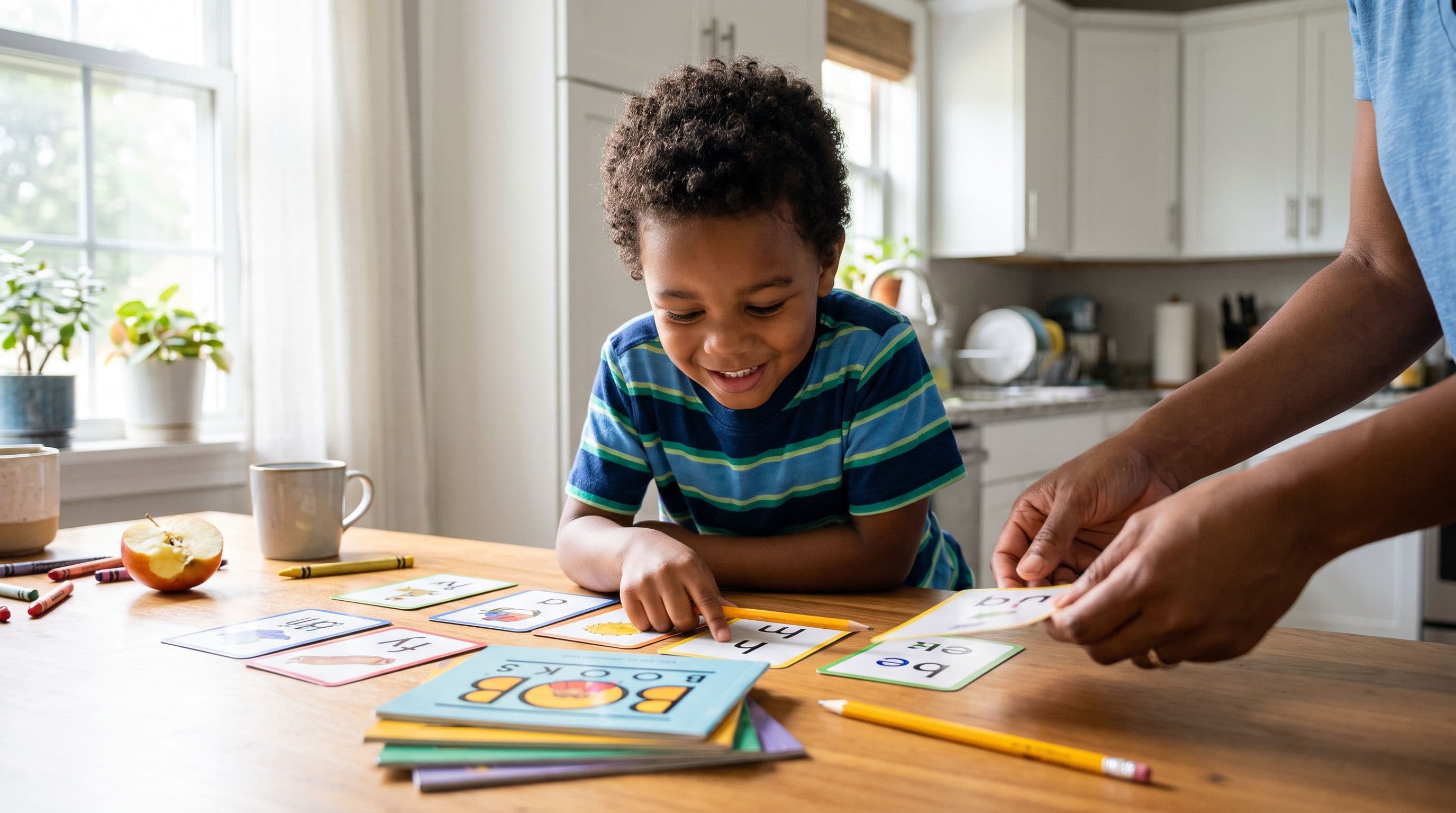
You show “sat,” using sounds your child already knows. They say “sit.” Instead of “Look at the picture,” point to the middle letter: “This is a. Its sound here is /a/. Listen: /sss/ /aaa/ /t/, sat.”
Then guide another attempt. If it still falls apart, model it again and make the task easier. Demand accuracy from the instruction, not instant perfection from the child.
Repeated successful practice helps children connect spelling, pronunciation and meaning. This process supports orthographic mapping—how words become familiar enough to recognize without laborious sounding out each time. Memorizing a word's outline isn't the same thing.
Keep reading aloud to your child, too. Audiobooks and shared stories support access to ideas while direct instruction addresses decoding. Neither replaces the other.
If avoidance dominates your evenings, My 6 Year Old Hates Reading: 7 Fast Fixes offers another place to start. Distress deserves attention alongside the reading skill.
Can a Dyslexia Reading App Help?
A parent-guided program can help you organize practice. A screen left to babysit can't give a struggling reader the same responsive support.
When choosing a reading app for kids with dyslexia, ask whether it teaches sound-spelling relationships clearly, provides manageable practice and lets an adult notice errors. Avoid treating points earned or minutes logged as proof of reading progress.
Teach Your Kid to Read offers the side-by-side phonics routine I've described. I don't present it as a dyslexia assessment or a replacement for individualized specialist teaching.
For a closer look at options, read Best Reading App for a 6-Year-Old with Dyslexia: 2026 Picks. Choose support around your child's needs, not around a promise that every learner will finish on schedule.
Signs of dyslexia in 6 year olds call for attention, not panic. Request screening, teach the missing skills and keep checking the response.
Start lesson one with your child beside you, and keep the screening conversation moving.
FAQ
Are letter reversals signs of dyslexia in 6 year olds?
They can occur in children with dyslexia, but reversals alone don't identify it. Persistent difficulty with letter sounds, blending, accurate word reading and spelling gives you more reason to request screening. Some children with dyslexia never show frequent reversals.
Can a 6-year-old get a dyslexia diagnosis?
Yes. A qualified professional can evaluate a 6-year-old, although local pathways and diagnostic practices vary. You don't need to wait for a diagnosis before requesting explicit reading instruction and support.
What if my child hasn't received phonics instruction?
Start appropriate instruction and discuss your concerns with the teacher. Limited teaching can explain some difficulties, but it doesn't rule out dyslexia. Track the response and pursue screening when concerns persist or the child's history suggests elevated risk.
Does slow reading automatically mean dyslexia?
No. Beginners often read slowly, and several factors can affect fluency. Professionals consider accuracy, spelling, language, teaching history and progress together. Don't diagnose dyslexia from a stopwatch or compare children at different stages of instruction.
Can an app screen for or cure dyslexia?
A general reading app can't diagnose or cure dyslexia. Some tools support practice, but professional screening and evaluation serve different purposes. Children with dyslexia may need individualized, explicit instruction and ongoing progress monitoring.
From teachyourkidtoread.org/blog/signs-of-dyslexia-in-6-year-olds-what-to-watch-for
Part of these guides

Xia Brody
Co-Founder, Teach Your Kid to Read
Mom of 4 who has successfully taught her kids to read. Currently in the trenches with her 4-year-old while her two oldest (10 and 7) devour books on their own. Passionate about phonics-based methods and building a lifelong love of reading.
Related Articles
My 8 Year Old Can't Read: Best Apps + Rescue Plan
If your 8-year-old is still guessing at words, this is not a wait-and-see moment. Here’s my no-nonsense app comparison and rescue plan for getting real phonics intervention started now.
Read More →
Top 5 Reading Apps for an 8-Year-Old with Dyslexia and ADHD
An app needs to teach reading, not just keep an 8-year-old tapping. Here are five ranked options, their limits and a practical plan for matching phonics practice to your child's needs.
Read More →
Reading Readiness Quiz for 4-Year-Olds: 12 Signs
Wondering if your 4-year-old is ready to read? Here are 12 reading readiness signs I look for as a homeschooling mom, plus what to do if your child isn't there yet.
Read More →