My 6 Year Old Hates Reading: 7 Fast Fixes
What You'll Learn
- The app I'd pick first if my 6 year old hates reading and I needed help this week
- The sneaky mistake parents make when a child gets stuck on a word
- Why some “reading” apps keep kids busy without teaching them to decode
- The 7-step plan I’d use before school frustration turns into full-on reading panic
Reality Check: Your 6-Year-Old Isn't “Just Being Difficult”
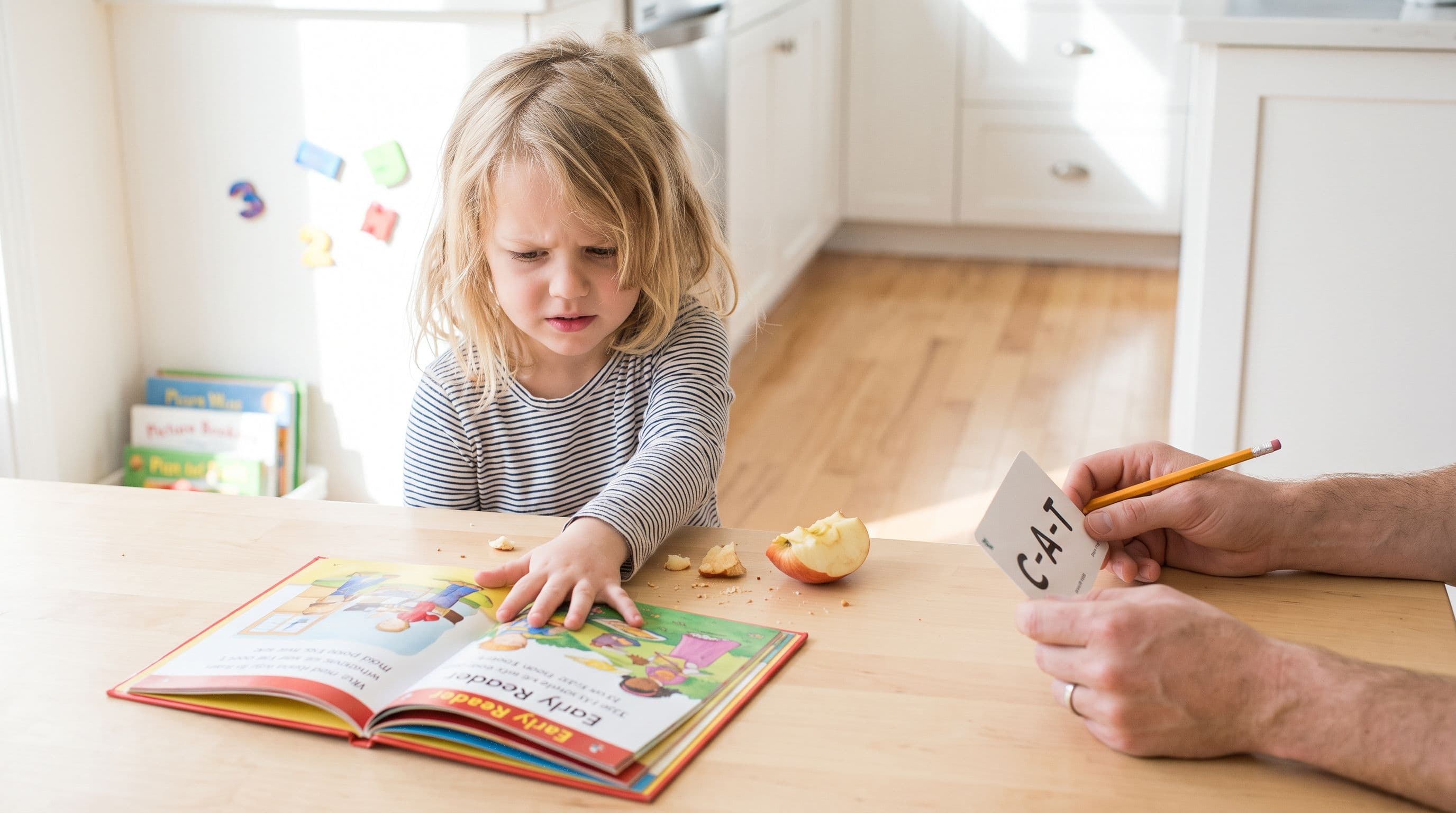
If my 6 year old hates reading, I don't start with sticker charts and magical thinking. I start with this question: Can the child actually decode the words?
Because a first grader (age 6-7) who says “I hate reading” may mean, “This feels humiliating, slow, and impossible.” Sound familiar?
Reading resistance isn't a personality flaw. It can be a Skill problem. It can also be attention, anxiety, language comprehension, boring books, books that are too hard, or instruction that trained guessing instead of reading. So no, I don't assume one cause and call it a day.
But if decoding is weak? That needs direct teaching, not vibes, not guessing from pictures, and not another tablet game that throws confetti while your kid avoids the hard part.
The Verdict: Best Apps If My 6 Year Old Hates Reading
| Rank | App | What it teaches | Pricing model | Best fit |
|---|---|---|---|---|
| #1 | Teach Your Kid to Read | Systematic phonics, blending, no guessing | Lesson one free with no card; from lesson two: 7-day free trial, then US$9.95/month | Ages 4-7, especially resistant beginners |
| #2 | Reading.com | Parent-led reading lessons for ages 3-8 | Subscription; check current price | Parents who want guided lessons |
| #3 | Hooked on Phonics | Phonics sequence for ages 3-8 | Subscription with 7-day app trial; check current price | Families wanting a known phonics brand |
| #4 | Reading Eggs | Broad literacy games, includes Fast Phonics | Subscription with 30-day trial; check current price | Kids who like game-style practice |
| #5 | Khan Academy Kids | Free early learning with literacy activities | Free, donation-supported | Extra practice, not a full reading plan |
| #6 | Teach Your Monster to Read | Early phonics game from a UK charity | Free on computers; paid one-time app | Playful reinforcement for ages 3-6 |
My top pick is Teach Your Kid to Read because it puts the parent back in charge, uses systematic phonics, and refuses to train kids to guess. If your child is already resisting, start with start lesson one free today: lesson one is free with no card and nothing to cancel; from lesson two the whole program is a 7-day free trial, then US$9.95 a month.
Tiger Truth: Waiting Makes Reading Hate Worse
Look, I know this sounds dramatic. Good. It should.
In the US, only 33% of 4th graders (ages 9-10) scored proficient in reading on the 2022 NAEP / The Nation's Report Card. That means the “they’ll catch up” crowd has a lot of explaining to do.
Donald Hernandez's 2011 Annie E. Casey Foundation report, Double Jeopardy, found that US children who weren't reading proficiently by 3rd grade (ages 8-9) were four times as likely not to graduate from high school by age 19. That's an association, not a prison sentence. Early trouble doesn't decide your child's future. But it's also not a cute little delay we shrug off while making another snack plate. It's a warning light.
And yes, I said first grader (age 6-7) earlier on purpose. The danger starts before 3rd grade. By the time the school meeting gets scheduled, the gap may already be yelling.
The 2000 National Reading Panel report found that systematic phonics instruction gives kids significant reading benefits. Louisa Moats said it plainly in her 1999 paper, “Teaching Reading IS Rocket Science”: reading doesn't come naturally like speech. Kids need explicit teaching.
So if my 6 year old hates reading, I don't bribe harder. I teach better.
Deep Dive: The Apps I'd Consider — And the Deal-Breakers
#1 Teach Your Kid to Read: Best for a Resistant 6-Year-Old
If your 6 year old refuses to read, you need three things fast:
- A clear phonics path
- Short lessons
- Zero guessing
Teach Your Kid to Read uses systematic synthetic phonics. That means your child learns sound-spelling patterns in an organized order, blends words, reads decodable text, and builds Mastery before moving on.
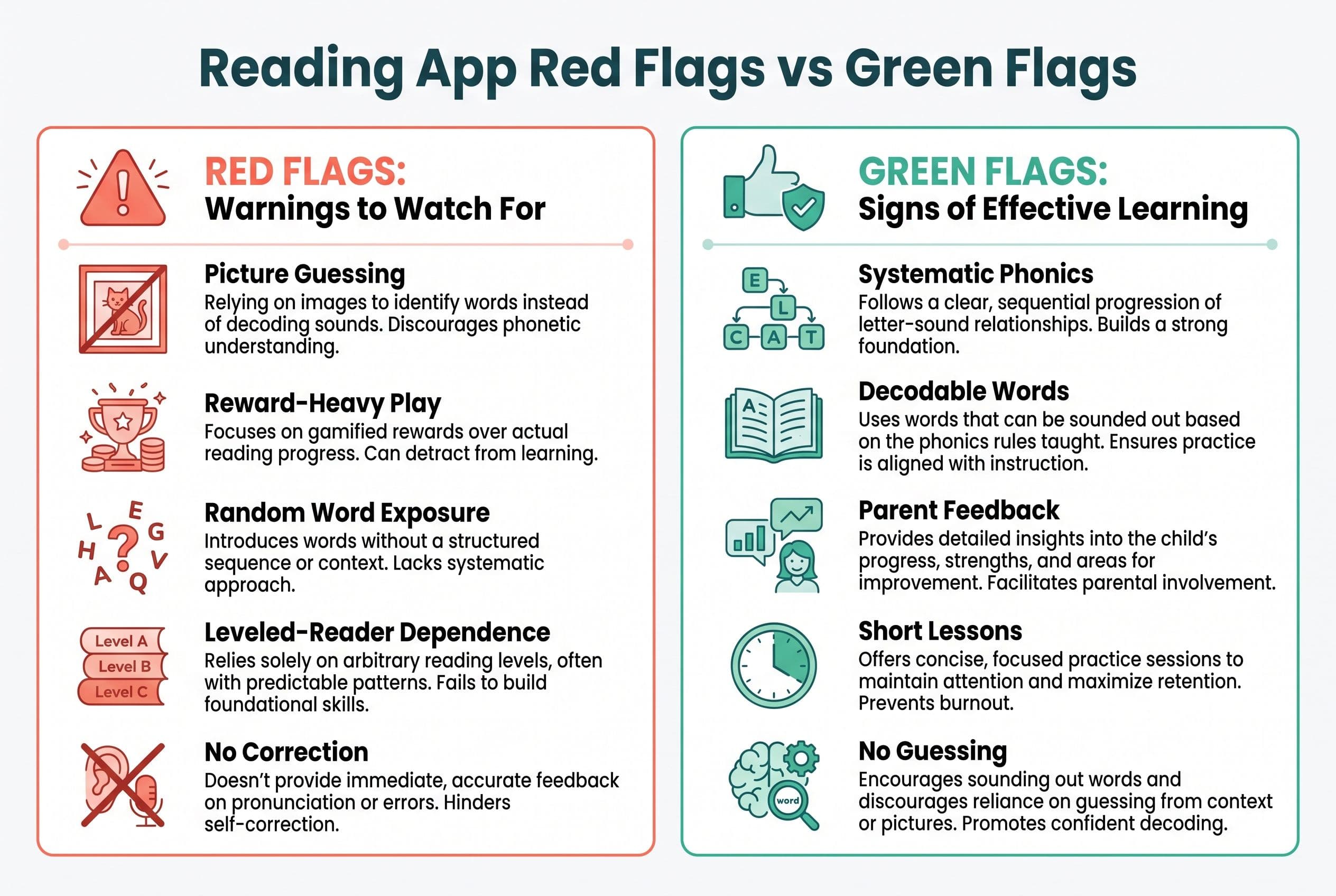
This matters because resistant readers often aren't lazy. They're overloaded. If you hand them a leveled reader full of patterns they haven't learned, they panic and start guessing from pictures. Then adults say, “Good try!”
No. Tiger mom says no.
Here's what I like about a parent-led phonics app: you hear the errors immediately. If your child reads “ship” as “shop,” you catch the vowel. If they say “pony” because there's an animal in the picture, you cover the picture and say, “Sound it out.” Calm voice. Steel spine.
I had my 4-year-old at the kitchen table last Tuesday working on CVC words while the baby tried to eat a foam letter. We did six minutes. Not sixty. Six. But we didn't skip. That’s the difference between a wish and a plan.
Teach Your Kid to Read works best when you treat it like brushing teeth: short, daily, non-negotiable. Lesson one is free with no card and nothing to cancel; from lesson two the whole program is a 7-day free trial, then US$9.95 a month.
#2 Reading.com: Good Parent-Led Option, Check the Phonics Fit
Reading.com is made by Teaching.com, the company behind Typing.com and Nitro Type. It states ages 3-8 and uses a subscription model.
I like that it speaks to parents who want to teach at home. That part is a no-brainer. A 6-year-old who hates reading usually needs an adult beside them, not a screen babysitter doing the heavy lifting.
My caution: look closely at how any app handles mistakes. Does it require the child to map letters to sounds? Or does it let the child lean on memory, pictures, or repeated exposure?
If your child doesn't want to read, the app must make decoding easier to understand, not easier to avoid.
#3 Hooked on Phonics: Known Brand, Phonics-Based, Still Watch the Pace
Hooked on Phonics is made by Hooked & Company, Inc. It states ages 3-8 in the App Store and preschool to 2nd grade on its site, with a subscription and a 7-day free trial in the app.
The name has been around forever — founded in 1987, according to the fact sheet — and many parents know it. Familiar can feel comforting when your first grader hates reading and you're spiraling at 9:42 p.m. with a cold coffee in your hand.
But here's the kicker: any phonics program still has to match your child's exact level. If your child can't blend /m/ /a/ /t/, don't jump to long vowel teams because the app says the next level looks cute.
Mastery beats momentum.
#4 Reading Eggs: Fun, Broad, But Don't Let Games Replace Teaching
Reading Eggs is made by Blake eLearning, Australian-owned, and merged with 3P Learning in 2021. It covers ages 2-13 overall, with Reading Eggs for ages 3-7 and Fast Phonics for ages 5-10. It uses a subscription with a 30-day free trial.
For a child resistant to reading, Reading Eggs may feel less threatening because it uses game-style practice. Fine. I don't hate fun.
I hate fake progress.
If your child spends 20 minutes tapping around but still can't read “sat,” the app entertained them. It didn't fix the problem. Use game-based tools as practice, not your whole Foundation.
#5 Khan Academy Kids: Free, Useful, But Not Enough for Every Struggling Reader
Khan Academy Kids is made by Khan Academy, a 501(c)(3) nonprofit. It states ages 2-8 and is free, with no ads or subscriptions.
I love a free tool. I'm a homeschooling mom of four; my grocery bill has its own personality.
But if my child hates reading because they can't decode, I wouldn't rely on a broad early learning app as the main reading intervention. I'd use it for extra practice, vocabulary, and confidence-building after direct phonics instruction.
Think side dish, not dinner.
#6 Teach Your Monster to Read: Great Reinforcement, Especially for Younger Kids
Teach Your Monster to Read is made by Teach Your Monster Limited in the UK and developed by the Usborne Foundation, a charity set up by Peter Usborne. It states ages 3-6, runs free on computers, and has a paid one-time app.
This can work nicely for playful review. The monster theme lowers the emotional temperature, which helps when your 6-year-old refuses to read and every book feels like a battlefield.
Still, watch for transfer. Can your child read the same sound pattern outside the game, on paper, with no music and no animated reward? That's the real test.
The Balanced Literacy Problem Nobody Wants to Admit
After Emily Hanford's 2023 APM Reports investigation “Sold a Story” came out, my neighbor called me almost in tears. She's a first-grade teacher with 18 years in the classroom. She'd used Lucy Calkins' Units of Study for her whole career — three-cueing, MSV, the whole thing.
She said, “I've been teaching kids to guess for two decades and I didn't even know it.”
That one wrecked me.
She switched her classroom to UFLI Foundations mid-year. It was messy. She had to relearn the method herself first, which takes humility and guts. By spring, she told me her kids' DIBELS nonsense word fluency scores had jumped an average of 15 points in her classroom records. That's her single-classroom report, not a published study, and no, it doesn't prove the program caused every bit of growth. But she said it was the first time in her career every single child in her class could decode CVC words by February.
That story matters because your child's reading hatred may not have started in your living room. It may have started with bad methods wrapped in pretty language.
Three-cueing tells kids to use meaning, structure, and visual cues. Translation: look at the picture, think what would make sense, and glance at the letters if you must.
That isn't reading. That's guessing in a cardigan.
Real reading uses orthographic mapping. Linnea Ehri's 2005 work on phases of word reading development explains how kids bond sounds to spellings until words become instantly recognizable. David Kilpatrick's Equipped for Reading Success (2016) explains why phonemic awareness drives that mapping.
Bottom line: a child who guesses won't love reading. A child who decodes has a better shot at feeling powerful instead of trapped.
7 Ways to Fix It Fast When My 6 Year Old Hates Reading
Fast doesn't mean magic. It means you stop wasting time on the wrong stuff.
1. Stop Asking, “Do You Want to Read?”
Don't ask a 6-year-old to vote on reading.
Say, “Reading time. Six minutes. Then snack.” That's it. Cheerful. Firm. No courtroom drama.
In my house, reading is a survival Skill, like buckling a seat belt. You don't negotiate with a child over seat belts, and you don't negotiate over phonics.
2. Find the Actual Breakdown
Is your child weak in letter sounds? Blending? Phonemic awareness? Fluency? Language comprehension? Attention? Anxiety? Is the book just wildly too hard?
Use a quick screen. DIBELS can show nonsense word fluency. Kilpatrick's PAST test takes about five minutes and helps locate phonological awareness gaps. AIMSweb and PALS also give schools and tutors useful data.
If a child can't orally blend /s/ /u/ /n/ into “sun,” don't just shove books at them and hope shame does the teaching. Do a little oral blending practice, yes, but pair it with explicit letter-sound teaching and supported blending with print. And keep reading aloud to them. Books are not the enemy. Confusing kids is.
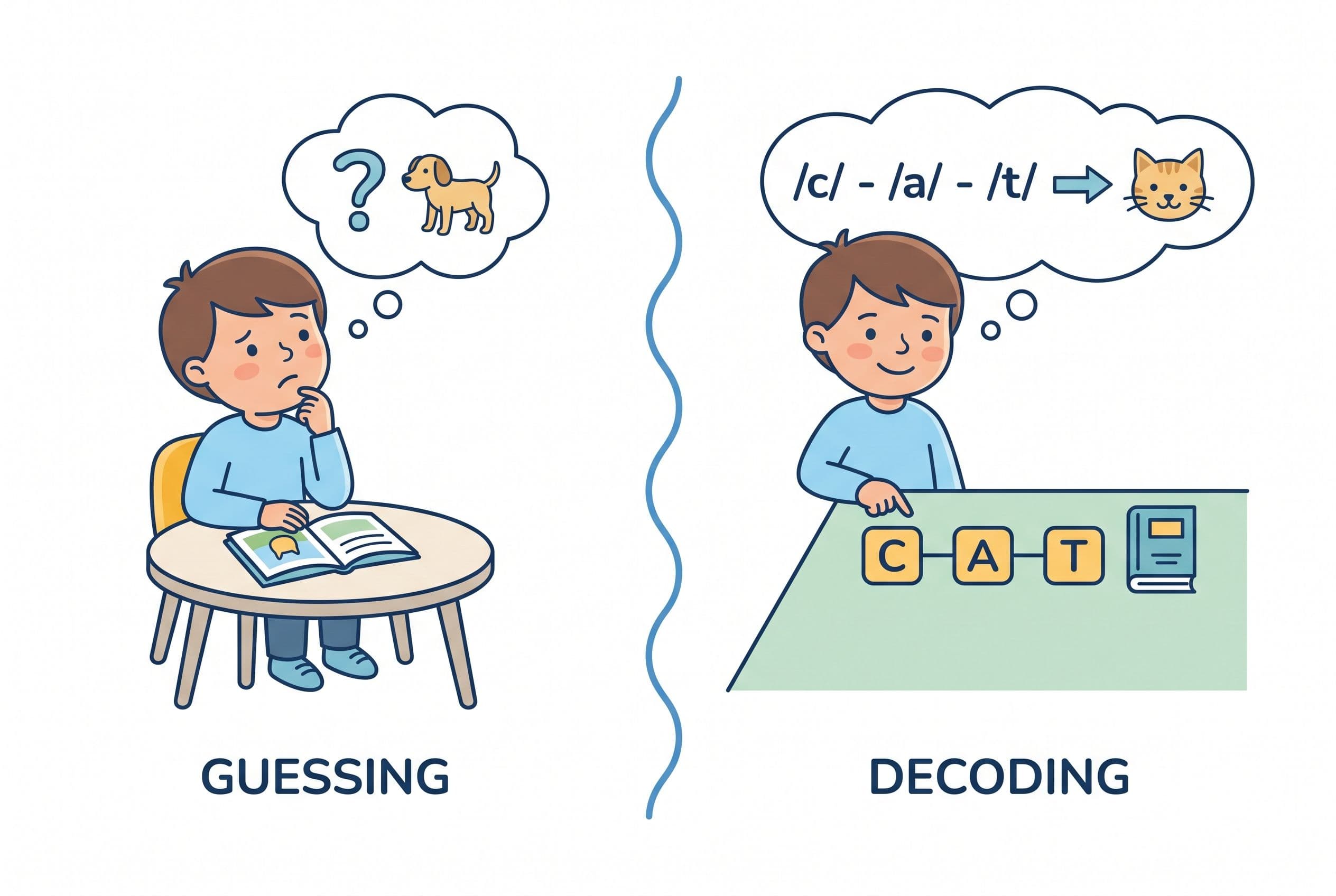
3. Ban Guessing From Pictures
If your child sees a picture of a dog and reads “puppy” for the word “dog,” don't praise the attempt.
Say, “Check the letters.”
Then point left to right: /d/ /o/ /g/. Blend. Read. Done.
This one drives me crazy because adults think guessing keeps kids confident. Nope. Accuracy builds confidence. Guessing builds panic.
4. Use Decodable Books, Not Leveled Guessing Books
Leveled readers often include words kids haven't learned to decode. Some Fountas & Pinnell levels are everywhere in schools, but the approach aligns with whole-language habits.
For a resistant reader, choose decodable text instead. Bob Books, Flyleaf Publishing, High Noon Books, UFLI decodables, and controlled readers tied to Orton-Gillingham-style lessons can help kids practice only the patterns they've learned.
A book your child can decode beats a beautiful book they can only fake-read.
5. Keep Lessons Short Enough to Win
Six-year-olds don't need marathon lessons. They need daily wins.
Try this:
- 2 minutes: sound review
- 3 minutes: blending words
- 3 minutes: decodable sentence or book
- 1 minute: praise the exact Skill
Say, “You blended every sound in ‘mop’ without guessing.” That's useful praise. “Good job” is fine, but vague praise doesn't teach the brain what to repeat.
6. Separate Read-Aloud Joy From Phonics Drill
Don't turn bedtime stories into a test. Please. I beg you as a mother who has made enough mistakes to qualify for a punch card.
Read aloud rich, funny, dramatic books for joy. Do voices. Laugh. Let your child love stories again.
Then do phonics Drill separately at the table for a short, focused block. Two jobs. Two moods.
7. Pick One Main Program and Stick With It
Program-hopping makes parents feel productive and kids feel dizzy.
Choose one main phonics path — Teach Your Kid to Read, UFLI Foundations with a parent doing the teaching, All About Reading, Logic of English, or another structured option — and stay with it long enough to see growth.
If your child shows dyslexia signs, look at Orton-Gillingham-based intervention, Barton Reading & Spelling, Wilson Reading System, or a trained tutor. Don't wait until 3rd grade (ages 8-9). Early help works better.
The Action Step: What I'd Do This Week
If my 6 year old hates reading, here's the plan I'd run for the next seven days:
- Day 1: Check the level. Use take the 2-minute reading check and note whether the problem looks like sounds, blending, fluency, comprehension, attention, anxiety, text difficulty, or confidence.
- Day 2: Start one structured phonics lesson. Keep it under 10 minutes. No skipping.
- Day 3: Cover the pictures during word reading. If your child guesses, say, “Letters first.”
- Day 4: Add a decodable book. Pick one with patterns your child already knows.
- Day 5: Track one number. Count how many CVC words your child reads correctly in two minutes.
- Day 6: Read aloud for joy. You read. They relax. Protect story love.
- Day 7: Repeat the Day 5 check. Look for fewer guesses, smoother blending, or less arguing.
If you want the simplest next move, start Teach Your Kid to Read: lesson one is free with no card and nothing to cancel; from lesson two the whole program is a 7-day free trial, then US$9.95 a month.
What If My First Grader Still Hates Reading?
Then you get more data. You don't panic, and you don't pretend.
Ask the teacher what assessment they use. DIBELS? MAP Growth? AIMSweb? PALS? Ask for the scores, not just “she's doing fine.” If you hear “level C” or “level D,” ask what phonics patterns your child can decode independently.
If your child avoids rhyming, can't remember letter sounds, can't blend simple words, forgets sight words repeatedly, has a family history of dyslexia, struggles with spelling, or melts down over simple decoding, contact a reading specialist or ask the school about evaluation options in your country or region. Letter reversals by themselves at age six are common and don't diagnose dyslexia. Persistent sound-letter and decoding trouble? That gets my attention.
Dyslexia doesn't mean your child can't read. It means they need explicit, structured teaching, often with more repetition.
And honestly? Some kids hate reading because adults made it too hard too soon. Give them accurate instruction, daily practice, and books they can actually read. Then watch the emotional temperature drop.
Reading love often follows reading Skill.
Start there.
FAQ
Why does my 6-year-old hate reading?
Many 6-year-olds hate reading because it feels hard, embarrassing, or boring. One common hidden cause is weak decoding. If your child can't connect letters to sounds smoothly, reading can feel like dragging a wagon uphill with square wheels.
Should I force my 6-year-old to read every day?
You should require short daily reading instruction, yes. Keep it calm and brief — 5 to 10 minutes can work. Don't force long independent reading if your child lacks the skills. Teach first, then build stamina.
Are reading apps enough for a child who refuses to read?
Some apps help, but the adult matters. A resistant reader needs feedback, correction, and encouragement in real time. Pick an app with systematic phonics and sit with your child instead of handing over the tablet and hoping.
What is the best app if my 6 year old hates reading?
I recommend Teach Your Kid to Read first because it teaches systematic phonics, keeps lessons parent-led, and doesn't train guessing. Lesson one is free with no card and nothing to cancel; from lesson two it's a 7-day free trial, then US$9.95 a month.
When should I get extra help?
Get help if your child can't blend simple CVC words after steady practice, forgets letter sounds repeatedly, avoids reading with intense distress, or shows possible dyslexia signs beyond normal beginner mistakes. Don't wait for failure to get bigger.
Part of these guides

Xia Brody
Co-Founder, Teach Your Kid to Read
Mom of 4 who has successfully taught her kids to read. Currently in the trenches with her 4-year-old while her two oldest (10 and 7) devour books on their own. Passionate about phonics-based methods and building a lifelong love of reading.
Related Articles
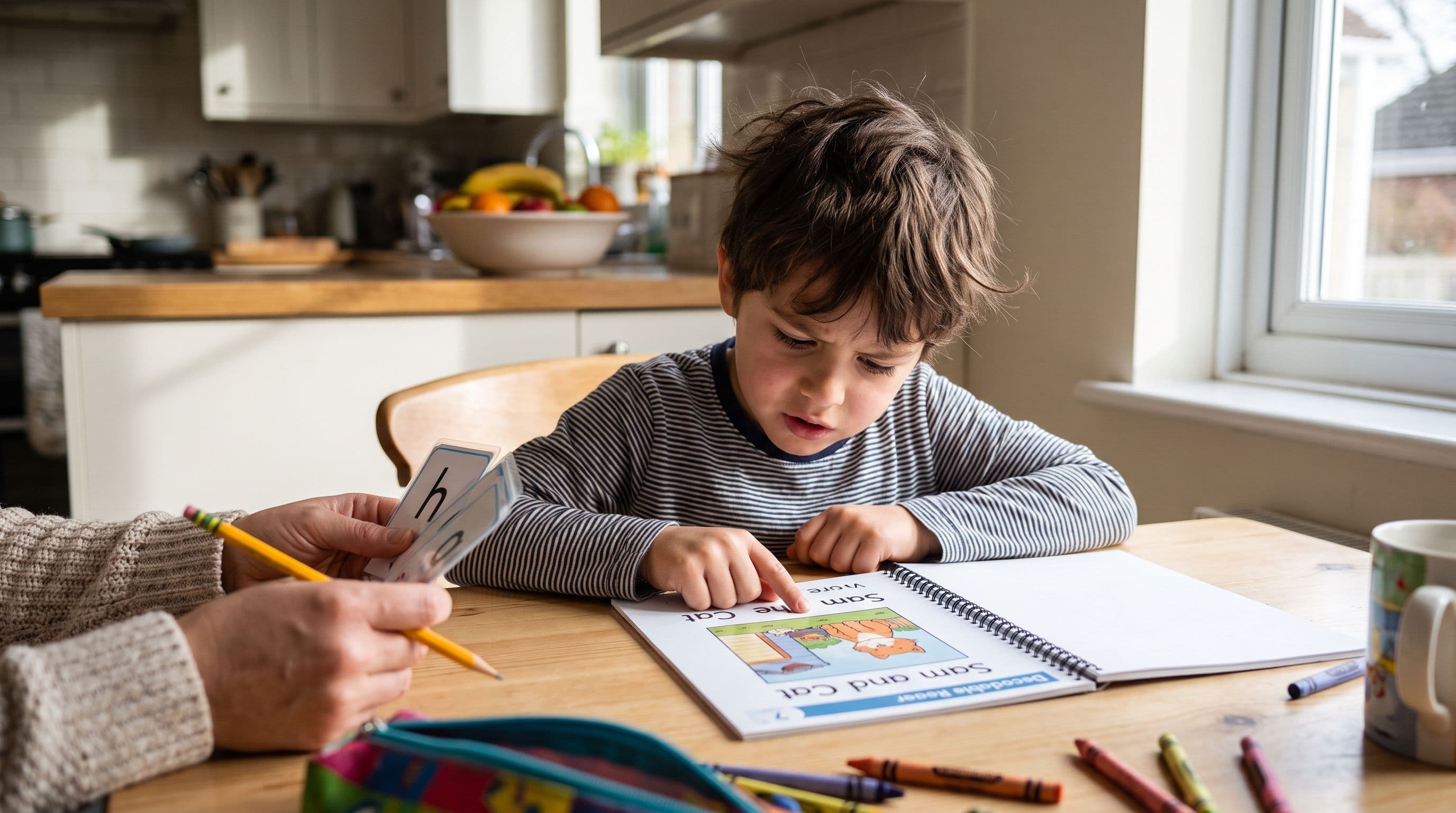
My 1st Grader Hates Reading: 7 Fixes to Try Today
If your first grader won’t read, don’t panic—but don’t wait. Here’s how to tell whether the problem is motivation, decoding weakness, bad books, or all three.
Read More →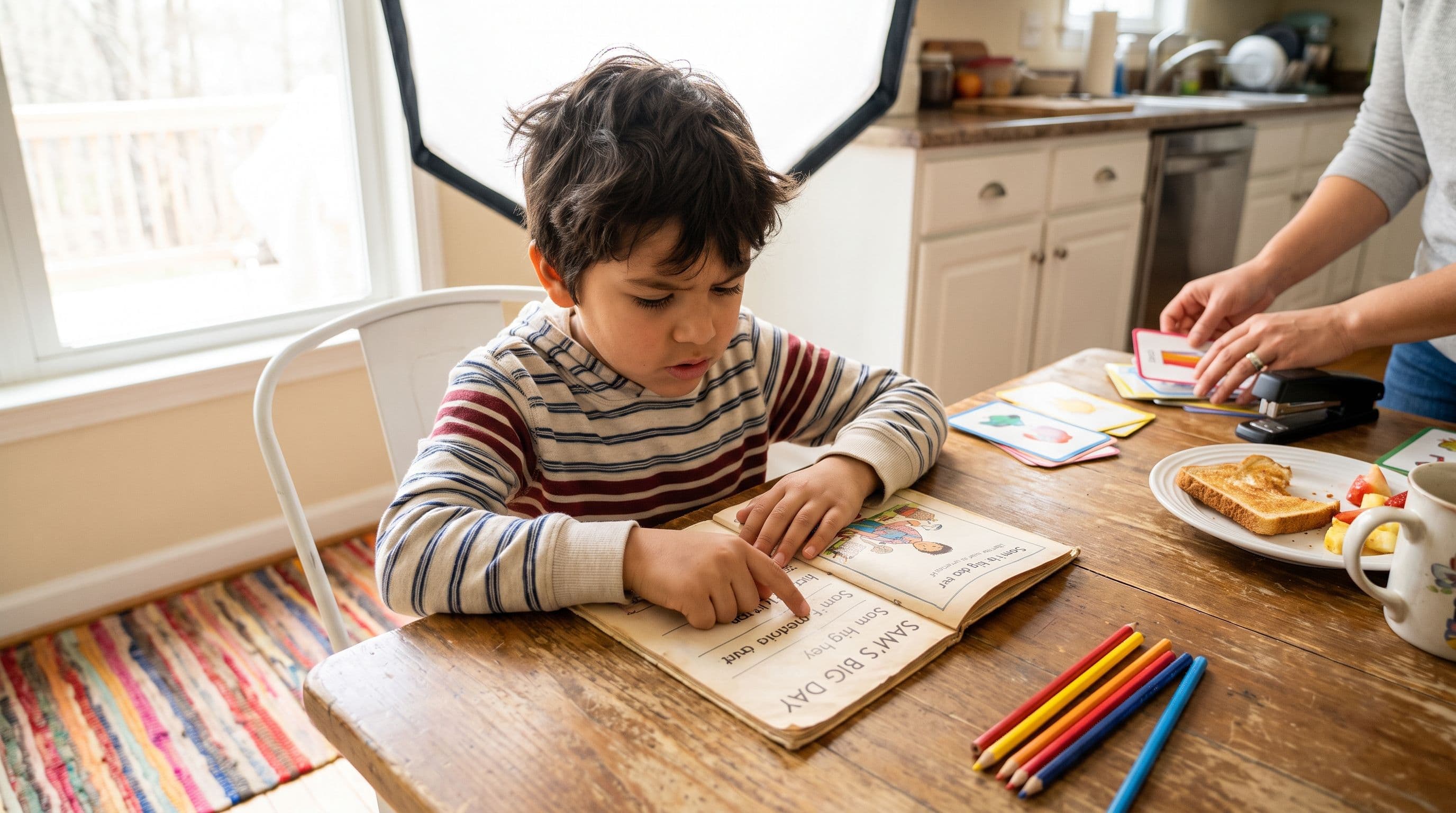
My 7 Year Old Can't Read: 9 Steps to Act Now
If your 7-year-old still can't read, don't panic—but don't wait. Here's how to check the gap, stop guessing habits, and start a real phonics plan at home.
Read More →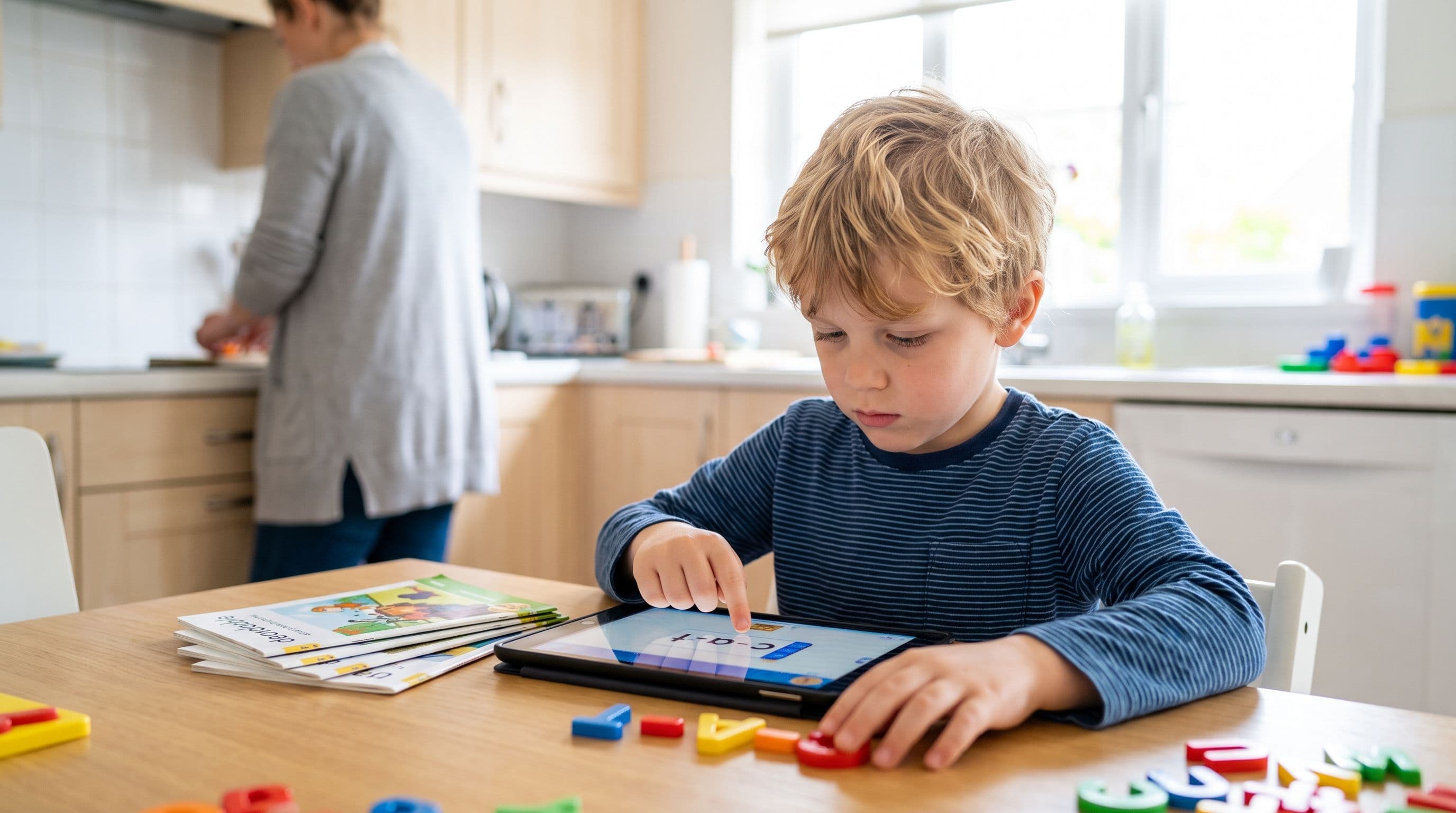
Best Reading App for a 6-Year-Old with Dyslexia: 2026 Picks
If your 6-year-old with dyslexia is guessing at words, cute reading games won’t fix it. Here’s how to choose a structured literacy app that builds decoding skill instead of wasting precious time.
Read More →