My 1st Grader Hates Reading: 7 Fixes to Try Today
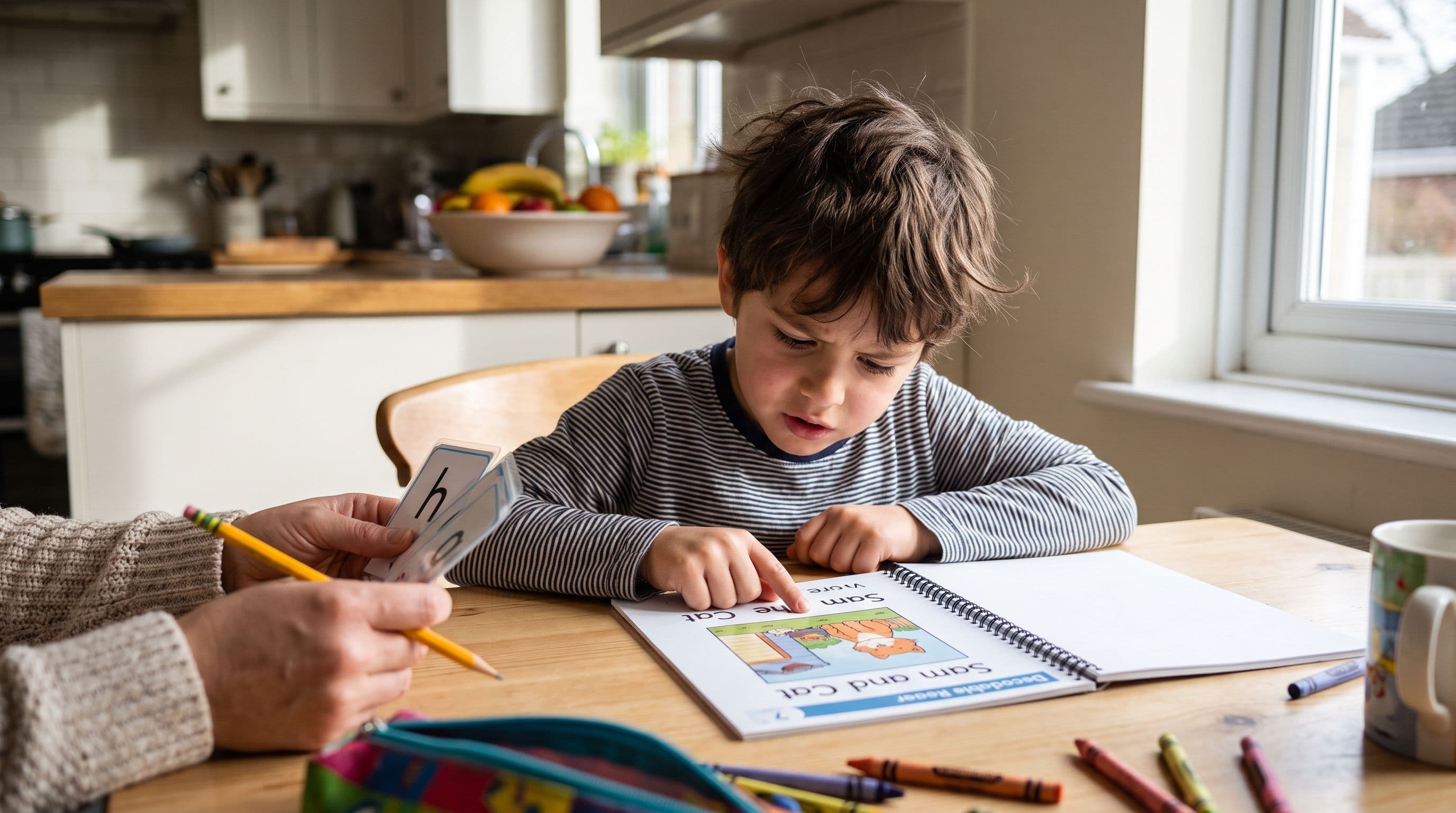
My 1st Grader Hates Reading: 7 Ways to Help
What You’ll Learn
- The one mistake parents make when a child says, “I hate reading”
- Why guessing from pictures makes reading feel harder, not easier
- How to rebuild confidence without turning reading practice into a hostage negotiation
- The 7 fixes I’d use this week if my own first grader hated reading
Reality Check: Your Child Doesn’t Hate Reading. They Hate Failing at Reading.
My 1st grader hates reading is one of those parent searches that makes my stomach clench a little.
Because I know what’s probably happening.
Your child sees a page, freezes, guesses a word from the picture, gets corrected, melts down, and suddenly reading practice becomes World War III at the kitchen table. Sound familiar?
Here’s the thing: most 6-year-olds don’t hate stories. They don’t hate being smart. They don’t hate cozy couch time with a parent.
They hate the feeling of being bad at something everyone keeps telling them they “should” enjoy.
And honestly? I don’t blame them.
Now, are skill gaps the only reason a child resists reading? No. Some kids are anxious. Some are exhausted. Some have attention, language, vision, hearing, or sensory needs that deserve a closer look. Some just got handed boring books and decided the whole reading situation was a scam.
But a lot of the time, the big ugly fight starts because the child can’t actually read the words yet.
If I handed you a page of Mandarin characters and said, “Just use the picture clues! Think what would make sense!” you’d want to throw the book too. That’s not reading. That’s guessing in a fancy hat.
In first grade (usually ages 6-7), reading gets real. The cute alphabet songs and predictable books give way to actual decoding. If your first grader won’t read, we need to find out why fast.
Not shame them.
Not bribe them with gummy bears forever.
Fix the skill gap.
Tiger Truth: Waiting Can Turn a Small Reading Problem Into a Big One
Look, I’m a homeschooling mom of four. I’ve taught my two oldest to read, I’m teaching my 4-year-old right now, and I still have a 1-year-old trying to eat board books like they’re dim sum.
So I say this with love: don’t wait and see.
The “wait and see” advice sounds gentle, but it can rob kids of time. Reading problems don’t usually vanish because a child gets older. A weak reader often becomes an avoidant reader, then an anxious reader, then the kid who says, “I’m just not a reading person.”
Nope. We’re not doing that.
US students on the 2022 NAEP / The Nation’s Report Card showed only 33% of 4th graders (ages 9-10) reading at or above NAEP Proficient. Quick note, because data can get slippery: NAEP Proficient is an achievement standard, not the same thing as “can read at all” or “is on grade level.” Still, that number is not cute. That’s a five-alarm fire with laminated bookmarks.
Donald Hernandez’s 2011 Annie E. Casey Foundation report, Double Jeopardy, found that children who didn’t read proficiently by 3rd grade (ages 8-9) were four times more likely to leave high school without graduating. That’s an association from the study, not a magic crystal ball for your child. But I’m not ignoring it either.
And the costs can get ugly. Some families pay a lot for private tutoring or remedial reading help, depending on intensity and location. Some eligible kids can receive school-based evaluations and services. Some schools move fast. Some move like a sleepy turtle carrying a file folder.
Meanwhile, your child is sitting there thinking, “Reading makes me feel stupid.”
That’s the part that drives me crazy.
Because many kids who hate reading don’t need magic. They need direct instruction in sounds, blending, spelling patterns, and daily practice that doesn’t humiliate them.
Why Your 6-Year-Old Hates Reading
If your 6 year old hates reading, don’t start with motivation charts. Start with the reason.
A reluctant reader in first grade usually falls into one of these buckets:
- They can’t decode smoothly. Words feel like puzzles with missing pieces.
- They’ve learned to guess. Pictures, first letters, and “what makes sense” replaced sounding out.
- The books are too hard. Leveled readers often include patterns kids haven’t learned yet.
- Practice lasts too long. A tired 6-year-old can go from “trying” to “feral raccoon” in four minutes.
- They associate reading with correction. Every page feels like a test.
- They have underlying language or dyslexia indicators. Phonemic awareness, rapid naming, or memory may need targeted help.
- They’re coming from screens straight into reading. Sorry, but yes. For some kids, switching from high-stimulation entertainment to a quiet decodable book is a rough transition.
The 2000 National Reading Panel report found that systematic phonics instruction gives children significant reading benefits, especially in the early grades. Stanislas Dehaene’s Reading in the Brain (2009) explains why: the brain doesn’t naturally read. We train it to connect speech sounds to print.
That means your child isn’t lazy because they can’t read “ship.” They may not yet connect /sh/ + /i/ + /p/ into a word automatically.
Skill first. Feelings often follow. And if the feelings are huge—panic, daily tears, shutdowns—we pause, lower the difficulty, and get more support. We’re tiger moms, not bulldozers.
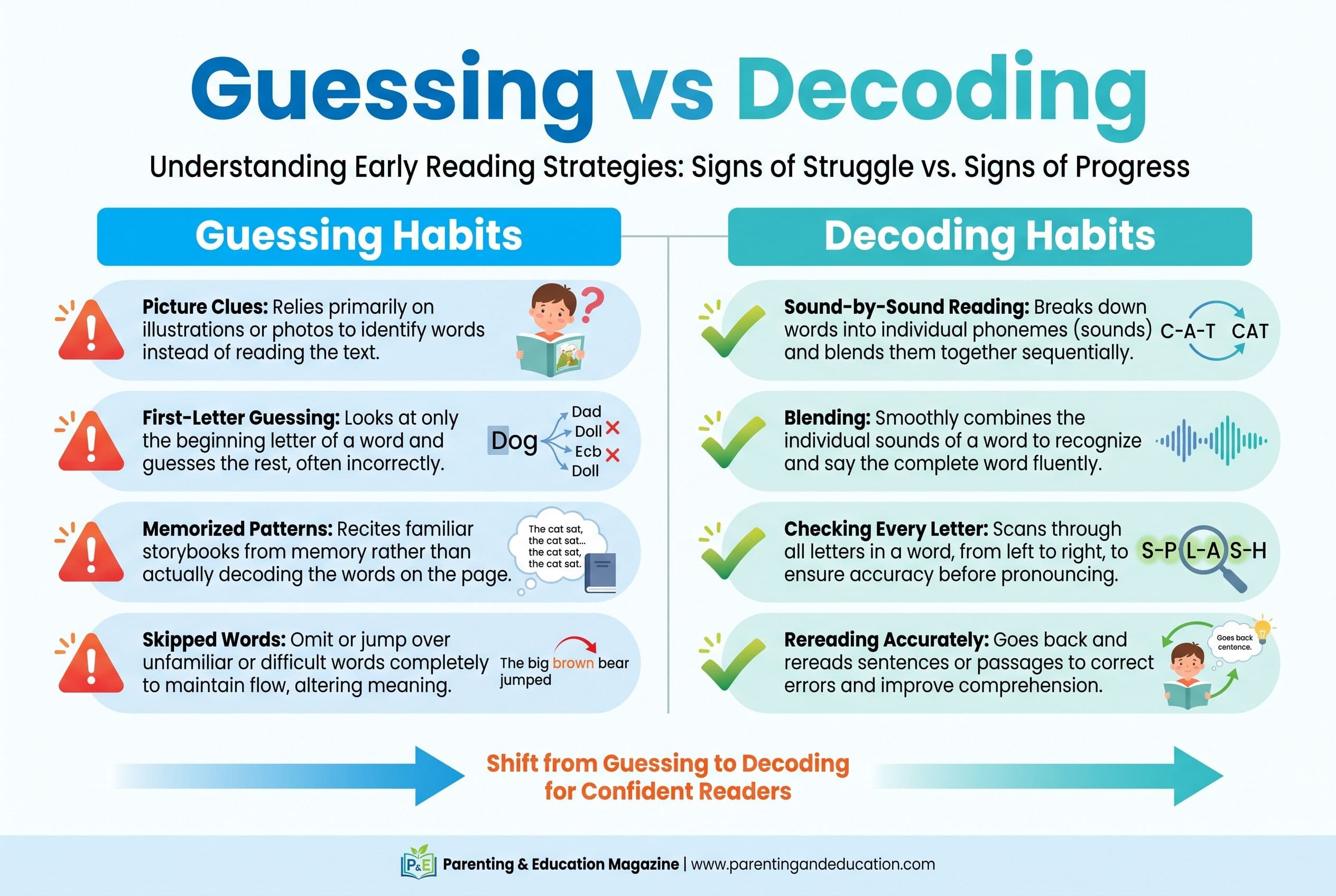
The Anecdote That Changed How I Talk to Parents About Guessing
After Emily Hanford’s APM Reports investigation Sold a Story launched in 2022, my neighbor called me almost in tears.
She’d taught first grade for 18 years. Sweetest woman. Total pro. The kind of teacher who remembers every kid’s birthday and somehow owns 47 cardigans.
She’d used Lucy Calkins’ Units of Study curriculum her whole career. Three-cueing. MSV. “Look at the picture.” “What would make sense?” The whole thing.
She told me, “Xia, I’ve been teaching kids to guess for two decades and I didn’t even know it.”
That one gutted me.
Then she did something brave. She switched her classroom to UFLI Foundations mid-year. It was messy. She had to relearn phonics herself first, which is humbling when you’ve taught for almost two decades.
By spring, she told me her students’ decoding looked different. They were reading CVC words instead of staring at pictures and hoping the answer fell from the ceiling. That’s one teacher’s report, not a research study, but it stuck with me.
So when a parent tells me, “My 1st grader hates reading,” I immediately ask: Has anyone taught this child to decode, or have they been trained to guess?
Because guessing creates anxiety. Decoding creates independence.
The Solution: Teach Reading Like a Skill, Not a Vibe
Reading motivation for kids matters. I’m not anti-fun. I like joy. I like silly voices. I like snuggling under blankets with books.
But joy can’t replace decoding.
If your child hates reading practice in first grade, you need two tracks:
- Daily phonics practice at the right level
- Positive book experiences with no pressure to perform
Teach Your Kid to Read uses systematic synthetic phonics with Orton-Gillingham-informed principles: explicit sound instruction, blending, spelling, review, and decodable reading. No guessing. No “look at the picture and pray.”
The app walks parents through the Foundation skills without requiring you to become a reading specialist overnight. That matters because most parents don’t need a 300-page teacher manual. They need to know what to do today at 4:15 p.m. when their kid is under the table refusing to read “mat.”
7 Ways to Fix It Now
1. Stop Asking Your Child to Guess
This is non-negotiable.
If your child looks at “ship” and says “boat” because the picture shows water, stop right there. Say calmly:
“We don’t guess. We look at the letters.”
Then cover the picture if you need to. Yes, really.
Use this script:
- “What sound-spelling?”
- “Next sound?”
- “Blend it.”
- “Read the whole word.”
For “ship,” point to sh and say, “This is /sh/.” Then /i/. Then /p/. Blend: ship.
Keep your voice boring. Boring is your superpower. If you get dramatic, they get dramatic. Ask me how I know.
And if the word has a pattern your child hasn’t learned yet? Don’t make them wrestle it to the ground. Tell them the word or quickly teach the pattern and move on. “Horse” has an r-controlled vowel and a silent e doing its little spelling gymnastics. That’s not a fair first fight for a beginning CVC reader.
This is where many leveled readers make trouble. Fountas & Pinnell levels are everywhere, but they’re whole-language aligned and often encourage pattern memorization. For early readers, choose decodable books instead: Bob Books, UFLI decodables, Flyleaf Publishing, High Noon Books, or other controlled texts matched to phonics patterns your child already knows.
Bottom line: if the book asks your child to read spelling patterns they haven’t learned, the book is too hard.
2. Test the Real Problem Before You Buy Another Workbook
Parents love buying workbooks. I get it. Fresh pages feel like hope.
But if your first grader won’t read, don’t guess at the problem. Use a quick screening tool.
You can ask your school about DIBELS, AIMSweb, PALS, or MAP Growth reading data. Just know they don’t all measure the same thing. DIBELS and AIMSweb can include early literacy measures like letter naming, phonemic awareness, nonsense word reading, and fluency depending on the grade and edition. PALS looks at early literacy skills too. MAP Growth Reading is broader; it can show reading achievement trends, but it doesn’t replace a targeted decoding check.
At home, David Kilpatrick’s PAST test—the Phonological Awareness Screening Test from Equipped for Reading Success (2016)—can show where the spoken-sound breakdown happens. Important: PAST is about phonological awareness. It does not test printed-word decoding. So pair it with simple checks of letter sounds, blending, and decodable word reading.
You’re looking for questions like:
- Can my child hear and manipulate sounds in words?
- Can they identify most letter sounds quickly?
- Can they blend CVC words like “sit,” “map,” and “log”?
- Can they read nonsense words like “mip” or “lat” without memorizing?
Nonsense words matter because they reveal decoding. A child can memorize “the” and “said,” but they can’t fake “zup” unless they know the code.
Benchmarks depend on the assessment edition, grade, measure, and testing window, so don’t grab one random cutoff from the internet and tattoo it on your forehead. Ask for the official benchmark report and what it means.
Also: screening is not a dyslexia diagnosis. It’s a flashlight. If the flashlight shows trouble, get better information.
No shame. Just data.
3. Cut Reading Practice to 10 Minutes, But Do It Every Day
If your child hates reading practice in first grade, your session may be too long.
I’d rather see 10 focused minutes every day than 45 minutes of tears twice a week. We Never Skip, but we don’t torture people.
Here’s my basic 10-minute plan:
- 2 minutes: review 5-8 letter sounds or phonograms
- 2 minutes: blend 6-10 words using today’s pattern
- 2 minutes: spell 3-5 words out loud or on paper
- 3 minutes: read a short decodable page
- 1 minute: celebrate one specific win
Not “Good job.” Too vague.
Say: “You caught that short /i/ sound in ‘pin’ without guessing. That’s mastery.”
Specific praise builds Skill identity. Your child starts thinking, “I can do this.” That’s hands down better than another sticker chart shaped like a rocket ship.
If the session escalates—real tears, panic, hiding under furniture like a wounded possum—pause. Go easier. Read one word they can handle, praise that, and stop. Then look at whether the level, timing, or underlying need is the real problem.
4. Separate Read-Aloud Time From Reading Practice
This one is a no-brainer, and parents miss it all the time.
Your child needs two kinds of reading time:
- Practice reading: child decodes controlled words
- Pleasure reading: parent reads aloud and the child relaxes
Don’t make every book a performance. If your child has to sound out every bedtime story, they’ll start hating bedtime too. Nobody wants that chaos.
Read aloud rich books your child can’t read yet: funny chapter books, science books, fairy tales, graphic novels, whatever gets them leaning in. Let them enjoy language without working every second.
Then keep phonics practice short, direct, and separate.
This protects motivation while you rebuild decoding. It tells your child, “Books are still wonderful, and reading practice is just the drill that gets you access.”
That distinction matters.
5. Use Decodable Books, Not Predictable Pattern Books
Predictable books look innocent.
“I see the dog.” “I see the cat.” “I see the elephant.”
Cute, right?
The kicker is your child may memorize the pattern and guess from pictures without reading the words. Then one day the sentence changes, and they collapse.
Decodable books work differently. They control the spelling patterns so your child can actually apply what they’ve learned.
If your child knows:
- short vowels
- consonants
- digraphs like sh, ch, th
- blends like stop, flag, grin
Then choose books that use those patterns. Don’t hand them a book full of “through,” “laugh,” and “because” and call it practice. That’s a setup.
Programs like UFLI Foundations, Logic of English, Fundations, Barton Reading & Spelling, and Wilson Reading System use more structured phonics sequences than random leveled readers. But don’t treat them like identical cereal boxes. Wilson Reading System is generally designed for grades 2-12 and adults, so if you’re dealing with a first grader, ask a qualified educator what’s age-appropriate and what matches your child’s needs.
Structure matters. Match matters too.
6. Make Screens Boring Again
Real talk: if your child gets two hours of fast-cut videos before reading practice, that decodable book may not stand a chance.
Not because screens are the root of every reading problem. They’re not. Decoding is still decoding. But for many kids, the transition from entertainment to effort is rough.
I’m not pretending my house is screen-free. I have four kids. Sometimes the toddler is shrieking, the 4-year-old is putting stickers on the dog, and I need 12 minutes to start dinner.
But reading comes before screens in our house.
Try this rule for two weeks:
Phonics first. Screens later.
No debate. No “after one episode.” No tiny lawyer negotiations from a 6-year-old in dinosaur pajamas.
If your child asks why, say:
“Reading is a survival skill. Screens are dessert.”
Will they complain? Probably. Let them. You’re the parent.
7. Rebuild Confidence With “Easy Wins”
If my 1st grader hates reading, I don’t start with grade-level text. I start below their frustration point.
That may feel like going backward. It’s not. It’s rebuilding the floor.
Use words your child can read with high success and low drama. The exact percentage is not the hill to die on here. You want them practicing taught patterns, getting lots right, and feeling their nervous system unclench.
Try this:
- Pick 10 words your child can decode.
- Put them on cards.
- Read them untimed first.
- Track only personal progress.
- End before they crash.
Only add timing later if your child is accurate, calm, and thinks racing the clock is fun. If timing makes them freeze, toss the timer. We are building readers, not producing tiny stressed-out game show contestants.
Then add one new pattern at a time.
I had my 4-year-old practicing CVC words at the kitchen table last Tuesday while my 1-year-old banged a spoon on the high chair like a tiny judge. We did “sat,” “mat,” “map,” and “Sam.” Four words. That’s it.
She read them, spelled two with magnet letters, and we stopped while she still felt proud.
That’s the trick. Stop at “I can” before you hit “I hate this.”
What Not to Do When Your First Grader Won’t Read
Please don’t do these. I say that with mom love and tiger claws.
- Don’t say, “You just need to love books.” Love won’t decode “flag.”
- Don’t force hard books for 30 minutes. That builds resentment.
- Don’t let them guess from pictures. That habit sticks.
- Don’t compare siblings. Ask me how fast that backfires.
- Don’t wait six months if progress stalls. Get data and act.
- Don’t assume school has it handled. Some teachers teach phonics beautifully. Some got trained in Balanced Literacy and are now relearning.
If your child shows signs of dyslexia—family history, trouble rhyming, mixing up sounds, slow naming, extreme difficulty with phonemic awareness—contact the school or a qualified evaluator. The International Dyslexia Association has parent-friendly information about warning signs and structured literacy.
Early help beats late panic.
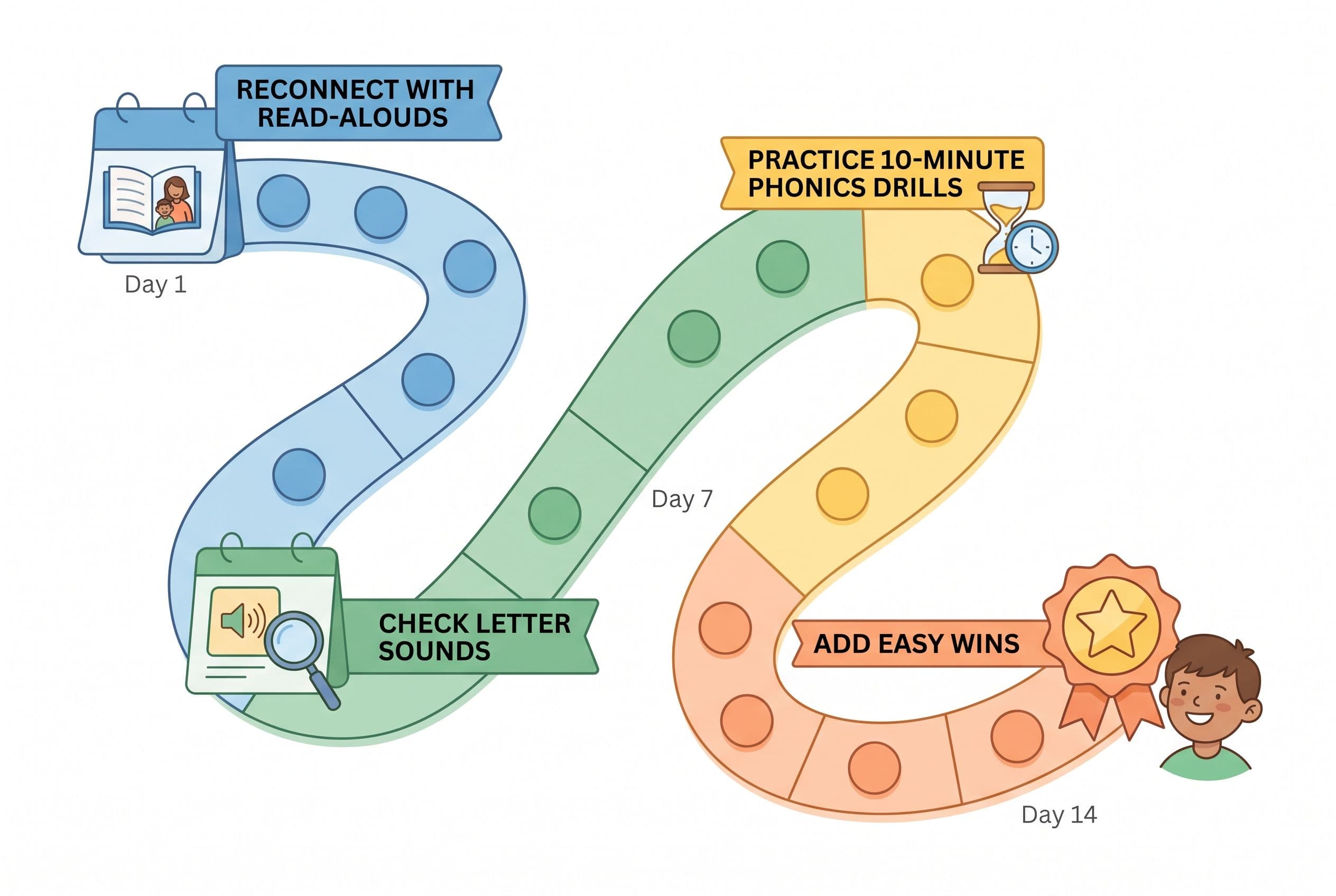
A Simple 14-Day Reset Plan
Here’s what I’d do starting tonight.
Days 1-2: Remove the Fight
Tell your child:
“Reading has felt hard. We’re going to make it shorter and easier while your brain gets stronger.”
Then read aloud something fun. No testing. No correcting. Just reconnect.
Days 3-5: Check the Foundation
Test letter sounds, blending, and CVC words. Ask the school for recent DIBELS or other reading screening data if they have it.
Write down exactly where your child breaks down:
- letter sounds?
- blending?
- vowel confusion?
- digraphs?
- fluency?
Now you’re not guessing either.
Days 6-10: Start the 10-Minute Drill
Use a structured phonics lesson each day. Keep it short. Use decodable words only.
Your daily rule:
Accuracy before speed. Sounds before stories. No guessing.
Days 11-14: Add Motivation Without Weakening the Skill
Let your child choose the read-aloud book. Let them pick a silly pointer, sit under the table, read to a stuffed animal, or wear pajamas at 3 p.m.
Fine. I’m not a monster.
But don’t change the phonics target. Fun supports practice. Fun doesn’t replace it.
When to Get Extra Help
If your child still can’t blend simple CVC words after consistent practice, or reading causes intense distress every day, get support.
Talk to the teacher. Ask what phonics program they use. Ask whether your child can read decodable text or only memorized pattern books. Ask for screening results.
Good questions sound like this:
- “What phonics skills has my child mastered?”
- “Can my child decode nonsense words?”
- “What assessment shows their progress?”
- “Are they guessing from pictures or reading the letters?”
- “What intervention will they receive, how often, and with what program?”
If the answer is mostly “We want them to love reading,” push harder.
Love is great. Data is better.
FAQ
Is it normal for a first grader to hate reading?
It’s common, but don’t ignore it. Many first graders hate reading because decoding feels hard, books are too difficult, or they’ve learned guessing habits. Anxiety, attention, language, sensory needs, or a plain old bad book match can play a role too. Short, daily phonics practice plus pressure-free read-aloud time can change the tone fast.
How do I make my 1st grader like reading?
Don’t start by demanding love. Start by building competence. Use decodable books, practice for 10 minutes a day, stop guessing, and read aloud books your child enjoys. Confidence often comes before motivation.
Should I make my child read every day?
Yes, but keep it short and targeted. Ten minutes of focused phonics practice beats a long battle. In my house, we practice daily—even on birthdays and vacations—but we keep the lesson matched to the child’s actual level.
What if my child cries during reading practice?
Shorten the session and lower the difficulty, but don’t abandon reading instruction. Crying often means the task feels too hard or too loaded with pressure. Go back to easier decodable words, praise specific skills, and get screening data if the distress continues. If your child is escalating, pause and reset. Pushing through panic is not the flex.
Are audiobooks enough for a reluctant reader?
Audiobooks help vocabulary, background knowledge, and story love. They don’t replace decoding practice. Use audiobooks and read-alouds for joy, but still teach phonics directly.
Final Word From Xia
If my 1st grader hates reading, I don’t panic—but I don’t shrug either.
Reading is a Skill. Skills need instruction, practice, correction, review, and mastery. Your child doesn’t need another lecture about loving books. They need the code broken into teachable steps.
Start today. Ten minutes. No guessing. Decodable text. Read aloud for joy.
And if you want a clear path instead of cobbling together random worksheets at midnight, come use Teach Your Kid to Read. We built it for parents who are done waiting and ready to teach.
Start with the Foundation lessons at TeachYourKidToRead.org, or learn more here: start lesson one free. If you need help figuring out where to begin, reach out here: contact us today.

Xia Brody
Co-Founder, Teach Your Kid to Read
Mom of 4 who has successfully taught her kids to read. Currently in the trenches with her 4-year-old while her two oldest (10 and 7) devour books on their own. Passionate about phonics-based methods and building a lifelong love of reading.
Related Articles

Reluctant Reader in 2nd Grade? 7 Fixes That Actually Work (2026)
When your 2nd grader hates reading, the problem isn't motivation — it's almost always a skill gap nobody caught. Here are 7 specific, research-backed fixes that tackle the real reasons your 7-year-old won't read, plus the one mistake almost every parent makes that makes reluctance worse.
Read More →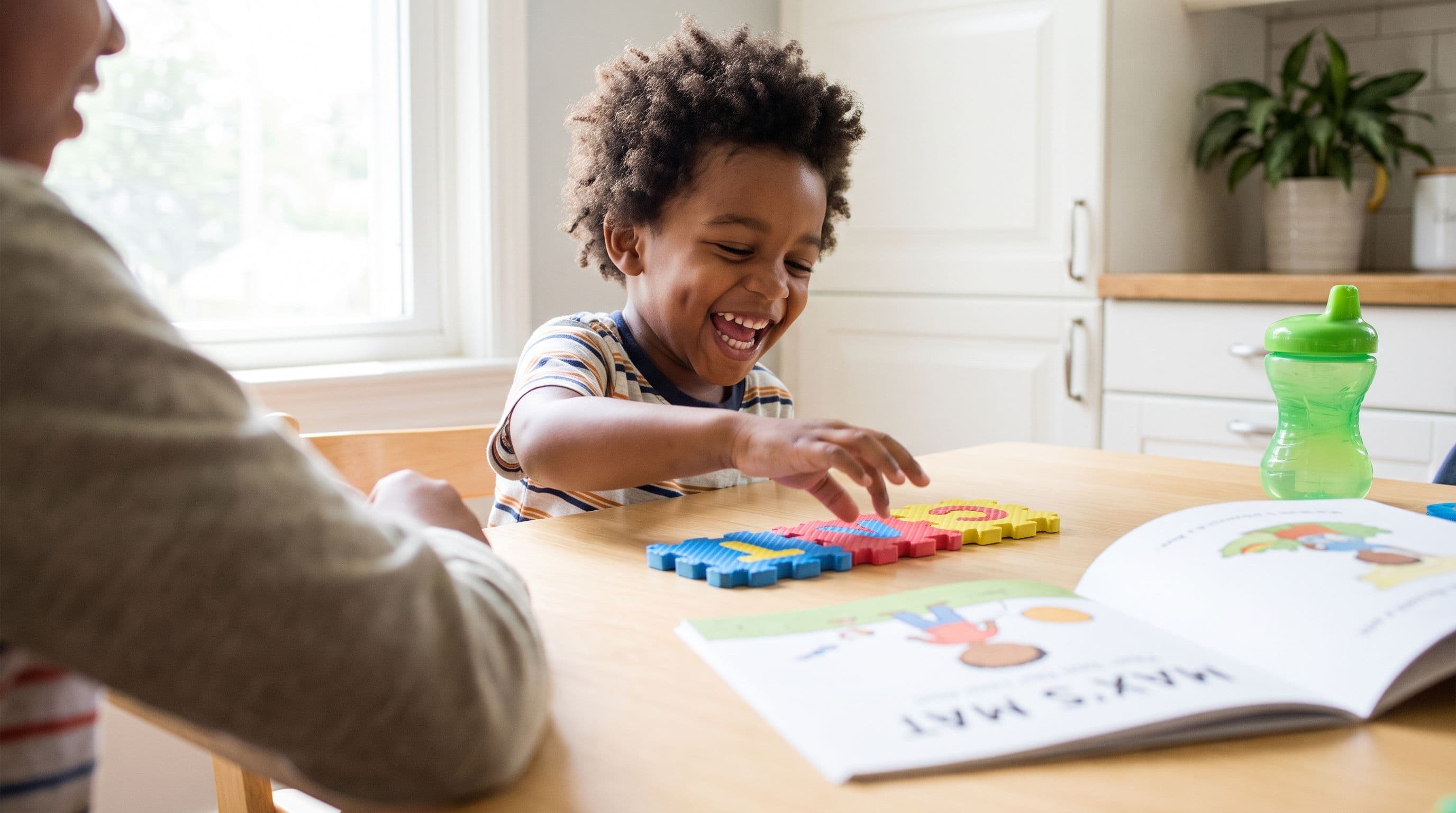
My First Grader Can't Read? The 90-Day Catch-Up Plan
If your 6-year-old is guessing at words, memorizing books, or melting down at the page, you don't have a motivation problem — you have an instruction problem. Here's the exact 90-day catch-up plan I'd run, starting tonight.
Read More →
Best Reading App for 1st Graders in 2026: 6 Apps Tested Side by Side
Not all reading apps are created equal — most first grade reading apps teach kids to guess, not read. I tested 6 of the most popular ones with my own kids and broke down exactly which ones use real phonics and which are dressed-up screen time.
Read More →