Best Phonics Apps for 3rd Graders: 6 Picks Ranked
What You'll Learn
- Teach Your Kid to Read ranks first for parent-led decoding practice among the best phonics apps for 3rd graders—not for independent screen time or comprehension lessons.
- Nessy and Reading Eggs offer age ranges that include older beginners; choose the right skill level rather than trusting the age label.
- Lexia Core5 deserves a look when school and home need to coordinate. Reading.com and Starfall round out the list for foundational practice.
- Check the first shaky spelling pattern before subscribing. An 8-year-old struggling with ship needs different teaching from one struggling with unhelpful.
An eight-year-old shouldn't have to bluff through camping because nobody noticed that camp still takes three attempts.
That's the problem behind this ranking of the best phonics apps for 3rd graders (ages 8–9). Some children need basic blending. Others need advanced phonics practice, including vowel teams and longer words. Buying the most colorful subscription won't tell you which.
I'm Xia Brody, a Chinese-American homeschooling mom of four, ages 10, 7, 4 and 1. I've taught my oldest two to read, and I'm teaching my 4-year-old now. My rule for an older beginner: respect the child's age while teaching the missing skill.
The Verdict
How we ranked
- Clear phonics sequence: children need instruction that builds on earlier learning.
- Actual decoding practice: reading unfamiliar print matters more than finishing games.
- Useful adult involvement: someone needs to notice mistakes and respond.
- Skill and age fit: foundational help shouldn't mean endless practice of skills a child already knows.
- Practical access and cost: a program must fit the household routine and budget.
| Rank and app | What it teaches or describes itself as teaching | Price / pricing model | Best-for age or fit |
|---|---|---|---|
| 1. Teach Your Kid to Read | Step-by-step, parent-led phonics, from letter sounds through prefixes and suffixes | Lesson one free, then 7-day trial, US$9.95/mo | My pick for ages 8–9 with decoding gaps and an available adult; not a stated product age range |
| 2. Nessy | Describes its Reading & Spelling program as structured reading and spelling instruction | Home subscription from US$15.50/month (checked October 2026) | Stated ages 6–11; consider for reading-and-spelling support |
| 3. Reading Eggs | Describes Fast Phonics as phonics instruction within its wider reading offering | US$13.99/month (checked October 2026) or US$99.99/year (checked October 2026); Reading & Math, up to 4 children | Fast Phonics: stated ages 5–10; Eggspress: 7–13 |
| 4. Lexia Core5 | Describes itself as literacy instruction covering foundational skills and comprehension | School licenses; families can buy a 12-month license through Family Literacy Centers | Stated US pre-K through grade 5; consider for school-home coordination |
| 5. Reading.com | Describes itself as a parent-child reading program | US$12.49/month (checked October 2026); yearly US$74.94 (checked October 2026) | Stated ages 3–8; consider for an 8-year-old beginning reader |
| 6. Starfall | Describes its offering as reading and broader learning activities | Free tier; Home Membership US$35.00/year (checked October 2026) | Stated US pre-K through grade 5; choose activities by skill |
Full disclosure: I co-founded Teach Your Kid to Read, so weigh my #1 pick accordingly; the rest of the ranking is based on the criteria above.
Prices checked October 2026.
I recommend Teach Your Kid to Read for side-by-side phonics teaching; start lesson one free. Lesson one is free, with no card and nothing to cancel. From lesson two, the whole program is a 7-day free trial, then US$9.95 a month.
These are my best phonics apps for 3rd graders by instructional fit, not results from a hands-on product trial. The ranking draws on product descriptions; phonics research doesn't establish that one of these apps outperforms another.
The Tiger Truth: Don't Let Guessing Become the Routine
Only 31% of US fourth graders (ages 9–10) scored at or above Proficient in reading on the 2024 National Assessment of Educational Progress. That doesn't mean everyone else can't read. It does mean there's plenty of reason to check skills rather than accept “probably fine.”
The US National Reading Panel, in its 2000 report, found benefits from systematic phonics instruction. That supports teaching sound-spelling relationships explicitly—not hoping another month of guessing will fix them.
Imagine a child says house for home, then looks at you for approval. Ask them to check the letters. Pictures can support discussion, but they can't supply the printed word. No guessing. As school texts grow harder, unresolved decoding gaps can make independent reading slower and more exhausting. Act without shaming the child.
Ranked: The 6 Best Phonics Apps for 3rd Graders
1. Teach Your Kid to Read: Best for Side-by-Side Instruction
This is my first pick when a parent wants a clear teaching sequence and help responding to mistakes. Each lesson adds a few sounds, then asks the child to blend them into real words. You sit beside your child for about 15 minutes a day.
Lesson one teaches m, s, p and short a. Your child hears each sound, taps the matching letter, then blends and builds am, map and sap. There's no story in that first lesson; short stories begin in lesson two and use sounds taught so far.
Too basic for your eight-year-old? Possibly. That's why the starting skill matters more than my ranking. The 50-lesson course moves through digraphs such as sh, ch and th, blends, vowel teams, silent e, prefixes and suffixes. A small set of common irregular words appears along the way as “leap words.”
Parents can view every lesson and jump to any lesson. A “mastered this” button skips some practice activities in later lessons. I'd use that flexibility carefully: hearing a child read a pattern accurately tells me more than hearing “I already know this, Mom.” Sound familiar?
The main limitation: there's no child-alone mode. Families who need independent practice while an adult works should choose something else; every lesson assumes an adult alongside the child.
It runs on iPhone, iPad, Android and the web, and one account accommodates several children. For this ranking, its strongest combination is a fixed phonics sequence plus direct parent guidance—not a promise that 50 lessons will resolve every reading difficulty.
2. Nessy: Best to Consider for Reading and Spelling Together
Nessy describes its Reading & Spelling program as structured instruction, and its stated ages of 6–11 make it relevant to this search. I'd shortlist it when a child struggles both to read vowel patterns and to represent those sounds in spelling.
That overlap matters. If train becomes tran in writing and a hesitant guess in reading, the sound-spelling relationship needs attention from both directions.
Against my criteria, Nessy's reading-and-spelling focus and age range make it a stronger candidate than a broad preschool activity collection. But age coverage doesn't establish the right starting lesson. Check the sequence and available parent information before subscribing, especially if your child already reads basic one-syllable words.
My verdict: a sensible alternative to investigate for an older beginner who needs connected reading and spelling work. Don't treat its stated age range as proof that it meets every advanced decoding need.
3. Reading Eggs: Best for Families Comparing Phonics and Broader Reading
Reading Eggs covers several stages, which makes the product names worth untangling. Fast Phonics lists ages 5–10; Eggspress lists ages 7–13. The main Reading Eggs offering lists ages 3–7.
For a phonics app for third grade, look specifically at Fast Phonics, rather than choosing a section just because its age label sounds right. A child can need foundational decoding instruction while understanding sophisticated stories that an adult reads aloud.
Its wider offering makes Reading Eggs worth considering when a household wants more than phonics alone. The trade-off is selection: parents still need to match activities to the skill gap instead of treating all screen time as equivalent practice.
My verdict: a useful shortlist option for breadth, provided you identify the relevant component. For a closer comparison with another foundational program, see Hooked on Phonics vs Reading Eggs.
4. Lexia Core5: Best to Discuss With Your Child's School
Lexia Core5 describes a broader literacy program that includes foundational reading skills and comprehension. Its stated school range includes this age group, and its school-license model makes it particularly relevant when a teacher already uses it.
I'd start with a conversation, not another purchase: “Which skill is my child practicing, what errors do you see and what teaching follows those errors?” That's the adult-involvement criterion in plain English.
School access can make coordination practical. Home access requires a different purchasing route: families can buy a 12-month license through Family Literacy Centers.
My verdict: consider it when you want home practice to connect with school instruction. Don't assume completing assigned activities proves that a child can independently read the same patterns in a book. Ask for an example you can hear.
5. Reading.com: Best to Consider for an Eight-Year-Old Beginner
Reading.com describes a parent-child reading approach and lists ages 3–8. That makes it relevant to some readers here, though a nine-year-old falls beyond its stated range.
I like the underlying purchasing question its format raises: Can you regularly sit down and teach together? Parent involvement gives you a chance to hear whether your child blends sounds or substitutes a familiar-looking word.
Check its current lesson scope against your child's starting point. A beginning reader and a child who needs longer-word strategies don't need identical instruction, even if both attend the same class.
My verdict: shortlist it for foundational teaching with an available adult. If your child already decodes short words accurately, inspect the later content before paying. The best phonics apps for 8 year olds aren't automatically the best match for every eight-year-old.
6. Starfall: Best for Exploring Before Buying Membership
Starfall offers a free tier and paid membership, with a stated school range extending through US grade 5. It describes reading activities alongside broader learning content.
That access model gives parents a way to inspect activities before committing. My caution concerns instructional focus: a broad site still requires you to choose work that addresses the actual decoding gap.
For example, don't select another alphabet activity when your child needs practice distinguishing hop from hope. Familiar activities can feel wonderfully successful while leaving the troublesome pattern untouched. This one drives me crazy.
My verdict: useful for selective supplementary practice and budget-conscious exploration. Among these third grade phonics apps, I'd place it below more focused options when a parent wants one clearly defined route through missing decoding skills.
Your Action Step: Match the App to the Error
Don't buy six subscriptions. Find one starting point.
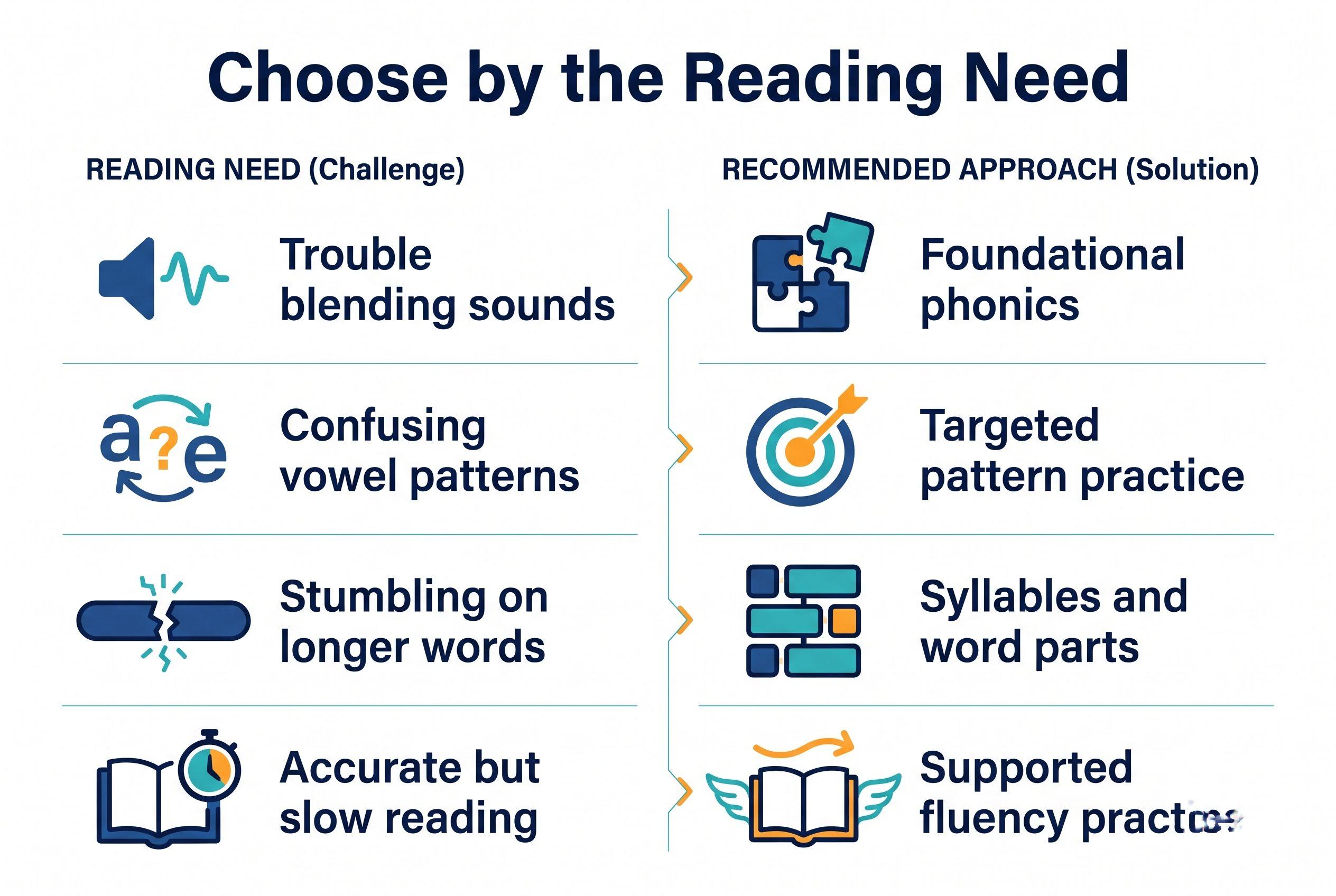
- Check decoding before choosing. Use our free phonics skill check. Your child reads real and made-up words while you mark accuracy; the result identifies a first pattern to practice. Treat it as a starting guide, not a diagnosis.
- Write down the actual mistake. “Said shop for ship” tells you more than “bad at vowels.” Note whether the trouble involves sounds, blending, vowel patterns or longer words.
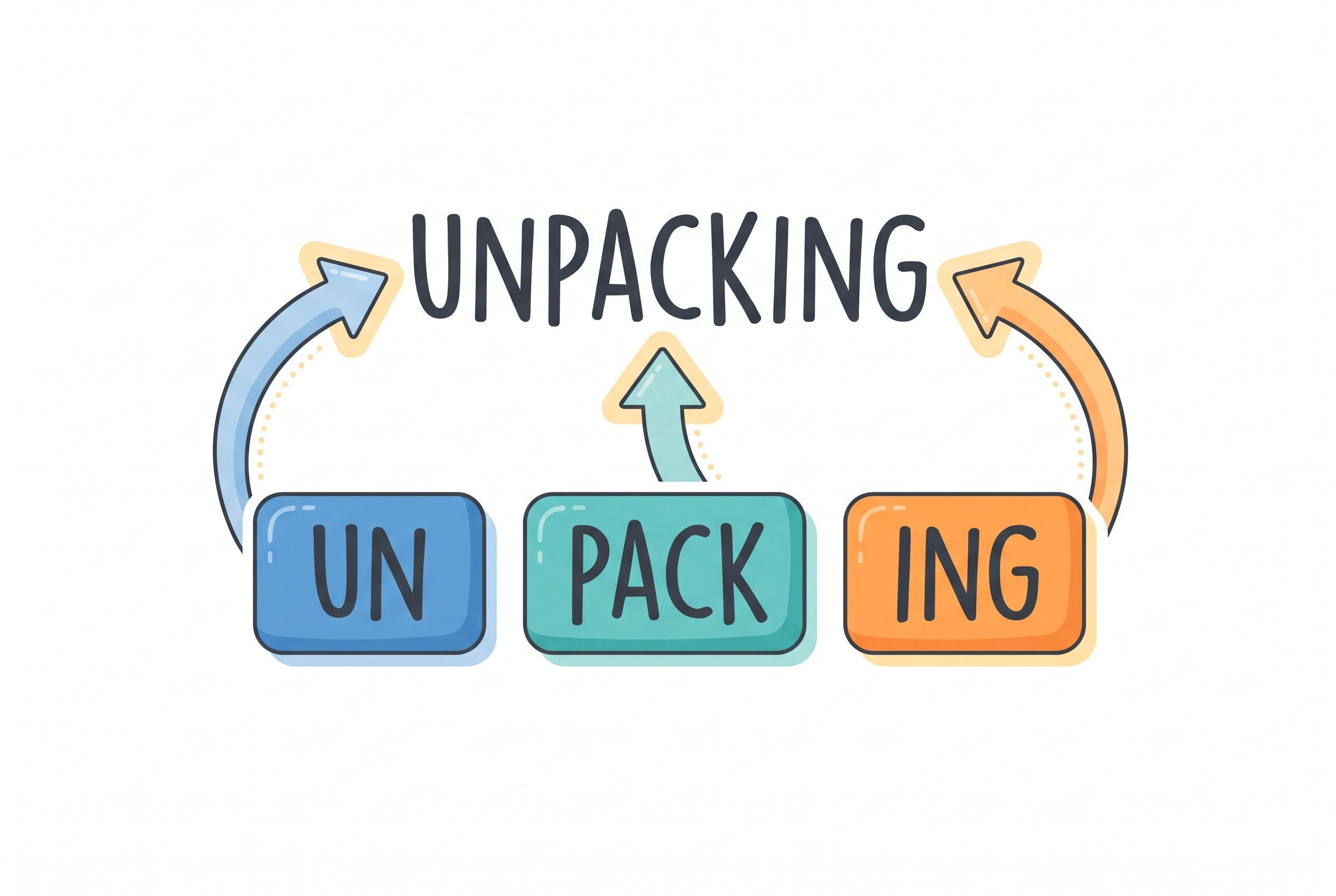
- Choose the matching instruction. Basic blending calls for foundational lessons. Accurate short-word reading with difficulty on unpacking calls for work with syllables and meaningful word parts. See Best Reading Apps for 3rd Grade Long Words for that narrower need.
- Teach, then check away from the screen. Model the target pattern, read a few examples together and ask your child to read a fresh example without a picture clue. Keep it brief; this isn't a courtroom cross-examination.
- Connect word practice to text. Read a short passage containing familiar patterns. Check the third grade reading benchmarks for broader expectations, and ask the school for assessment and targeted support if difficulties persist.
If side-by-side instruction fits that plan, begin with lesson one rather than committing on the strength of a ranking.
What Progress Should Look Like
Linnea Ehri's 2005 review, Learning to Read Words: Theory, Findings, and Issues, explains how connections between spellings and pronunciations support word learning. That's why I care about accurate decoding, not just repeated exposure to the same screen.
Look for fewer substitutions, smoother blending and successful reading of unfamiliar words containing taught patterns. Ask your child what a sentence means, too. Accurate word reading supports comprehension, but it doesn't replace vocabulary and language knowledge.
The best phonics apps for 3rd graders should fit into that larger picture. Use what to expect at age 8 to compare observable skills with age expectations, without turning a benchmark into a threat.
My “We Never Skip” rule means protecting a manageable teaching habit, including a tiny review on a busy day. It doesn't mean pushing through illness or tears. Consistency helps; punishment doesn't teach vowel teams.
Choose the smallest lesson that targets the real difficulty. If you want an adult-guided starting point, lesson one is free.
FAQ
Does an eight-year-old still need phonics?
Yes, if they struggle to connect spellings with sounds or decode unfamiliar words. Age alone doesn't identify the missing skill. Children who already decode accurately may need fluency, vocabulary or comprehension support instead of more basic phonics.
Which app is best for independent practice?
Teach Your Kid to Read isn't the right choice for child-alone use. Investigate the other options' current independent-practice arrangements and adult controls, especially any program your school already provides. Even independent practice needs occasional adult checks for transfer to real reading.
Can phonics apps help a child with dyslexia?
They can supplement instruction, but an app isn't a diagnosis or a substitute for individualized teaching. Ask a qualified specialist about assessment and explicit, systematic reading instruction when decoding or spelling difficulties persist. Don't postpone support while cycling through subscriptions.
Should I choose phonics or reading-fluency practice?
Listen to the errors. Frequent misread words suggest a decoding problem; accurate but slow reading may call for supported fluency work, though both needs can overlap. Compare 6 Best Reading Apps for 3rd Grade Reading Fluency, Ranked if accuracy is already secure.
From teachyourkidtoread.org/blog/best-phonics-apps-for-3rd-graders-6-picks-ranked
Part of these guides

Xia Brody
Co-Founder, Teach Your Kid to Read
Mom of 4 who has successfully taught her kids to read. Currently in the trenches with her 4-year-old while her two oldest (10 and 7) devour books on their own. Passionate about phonics-based methods and building a lifelong love of reading.
Related Articles

Best Phonics Apps for 1st Graders: 6 Picks Ranked (2026)
My first pick favors parent-led decoding over independent screen time—but that won't suit every family. Compare six apps by teaching approach, cost and the reading skills your child actually needs.
Read More →
Best Phonics Apps for 2nd Graders: 6 Picks Ranked
My first pick favors parent-led decoding practice, but it won't suit families who need independent screen time. Compare six apps by teaching approach, price and the reading gaps they can help you address.
Read More →
Best Reading Apps for 3rd Grade Long Words: 6 Picks Ranked
Long words need a decoding plan, not a better guess. Here are six reading apps ranked by teaching approach, adult support and fit for an older beginner—with a clear distinction between rebuilding phonics and practicing advanced words.
Read More →