Hooked on Phonics vs Reading Eggs: Which Is Better?

Hooked on Phonics vs Reading Eggs: 4 Reading Programs Ranked
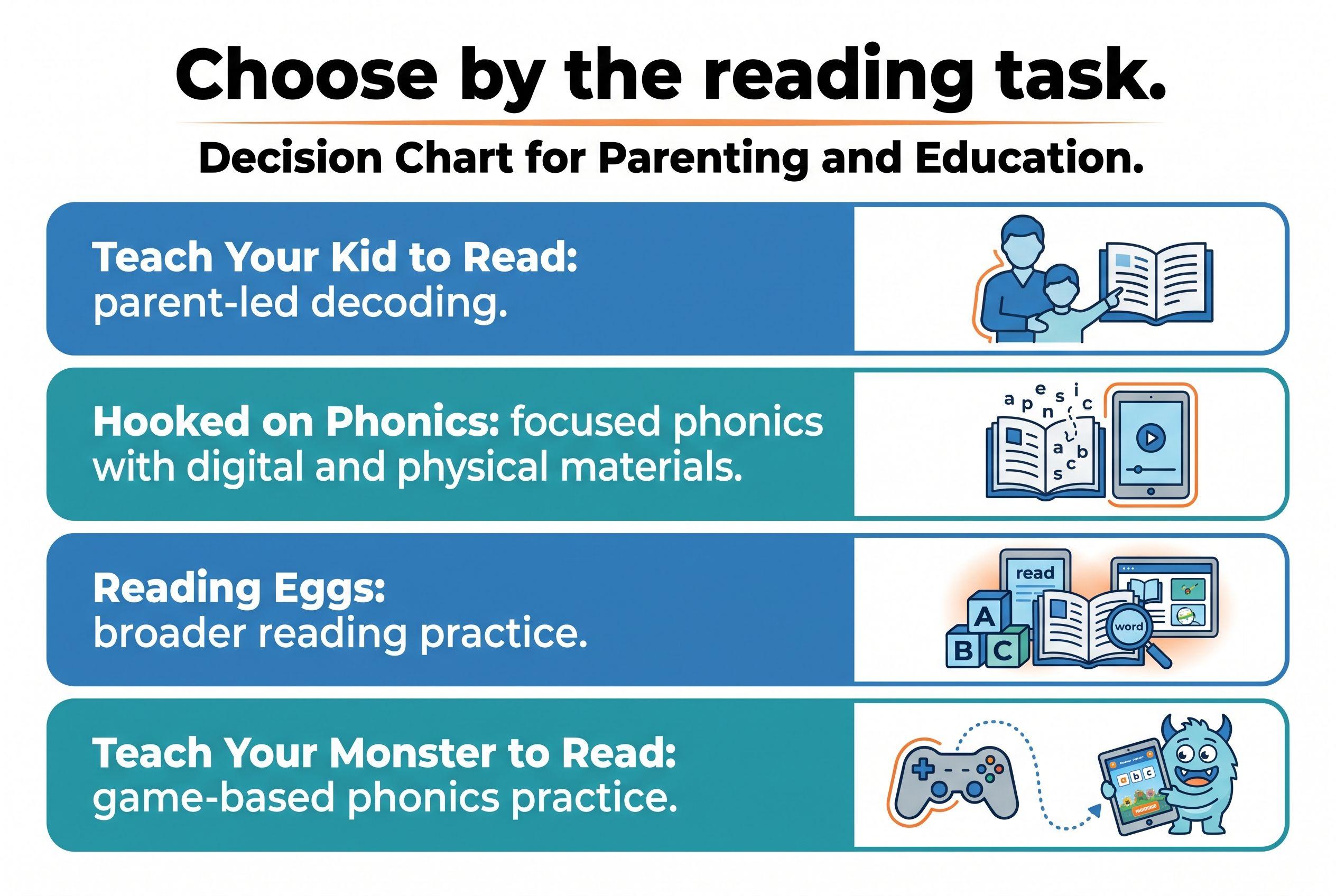
In Hooked on Phonics vs Reading Eggs, I'd choose Hooked on Phonics for a beginner who needs a focused phonics routine; for broader reading practice or siblings at different stages, I'd choose Reading Eggs. That's a judgment about fit, not proof that either program produces better reading results.
What You'll Learn
- Hooked on Phonics gets my pick between the two for a narrower beginning-reading focus. Reading Eggs offers a wider range of reading activities and age bands.
- Teach Your Kid to Read ranks first here for parent-led decoding instruction, not independent screen time; Teach Your Monster to Read adds a lower-cost game-based alternative.
- Reading Eggs lists a lower subscription price than Hooked on Phonics, but compare the actual package rather than treating every subscription as equivalent.
- Check sounds and blending before choosing. A child who recognizes letters but can't blend them needs different practice from a child who reads accurately but struggles with meaning.
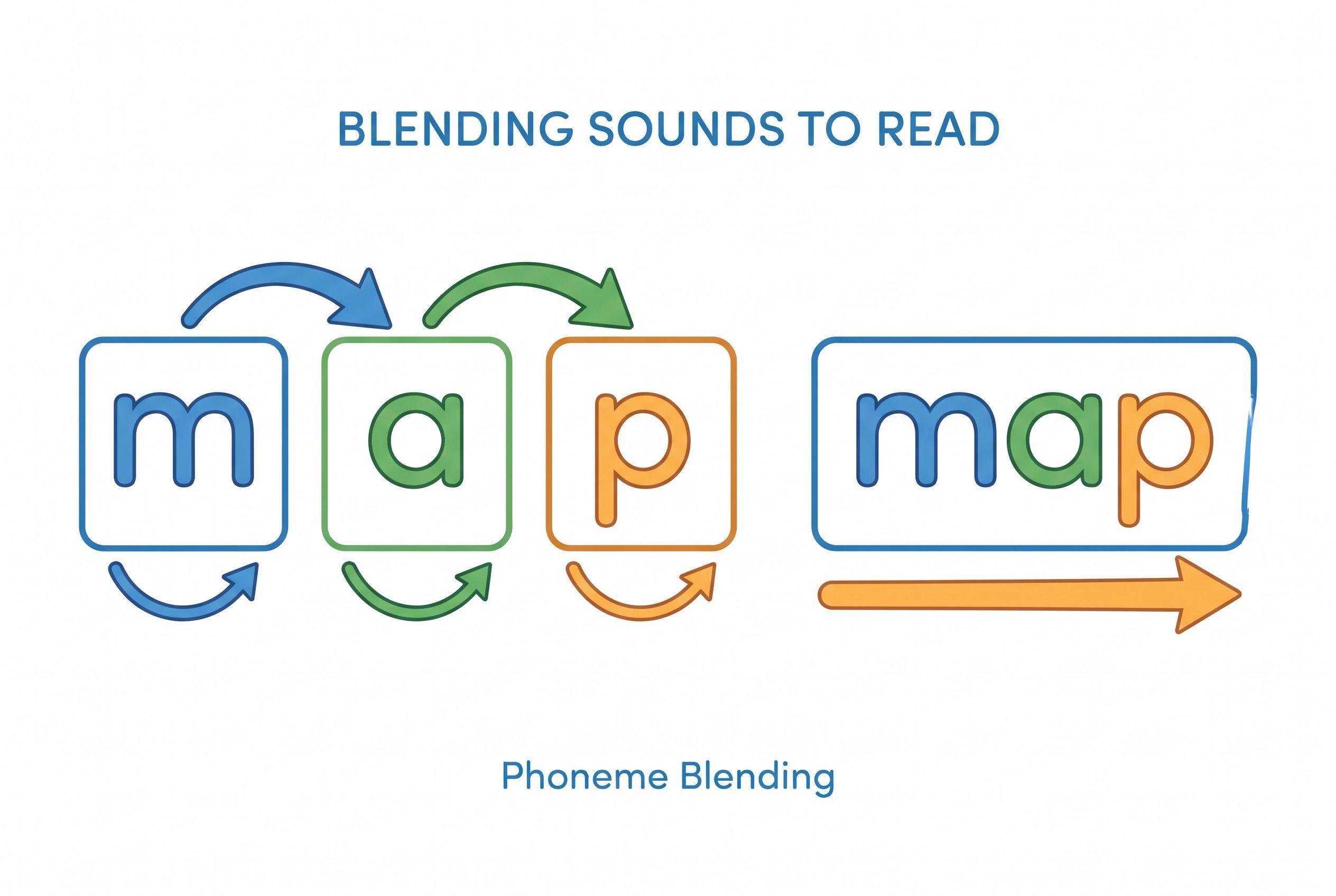
A completed digital lesson doesn't necessarily mean a child can read the same pattern on paper. Imagine a child tapping through an activity successfully, then staring at map without knowing how to join the sounds. That's the skill gap that matters.
I'm Xia Brody, a Chinese-American homeschooling mom of four, ages 10, 7, 4 and 1. I've taught my oldest two to read, and my 4-year-old keeps me honest about the distance between explaining something and a child actually understanding it. Screens don't remove that distance. Good instruction and an attentive adult help close it.
The Verdict
I've widened this Hooked on Phonics vs Reading Eggs comparison to four options because parent-led instruction and a lower-cost phonics game deserve a place in the buying decision.
How we ranked
- Clear sound-to-word sequence: beginners need a route from letter sounds to blending.
- Adult correction: someone needs to catch guessing and inaccurate sounds.
- Practice matched to the goal: decoding instruction and broader reading practice aren't interchangeable.
- Cost and household fit: a useful program must fit your budget and available teaching time.
| Rank and app | What it teaches or how it describes itself | Price / pricing model | Best-for age |
|---|---|---|---|
| 1. Teach Your Kid to Read | Step-by-step, parent-led phonics and decoding; 50 lessons in a fixed order | Lesson one free, then 7-day trial, US$9.95/month | My recommendation: a beginning reader around 5–6, depending on skills; no stated age range |
| 2. Hooked on Phonics | Describes its approach as step-by-step phonics, with digital and physical learning materials | Plans US$23.96–US$31.99/month (checked October 2026); 7-day free trial in the app | Stated ages 3–8 |
| 3. Reading Eggs | Describes itself as a broader online reading program with phonics, vocabulary and comprehension activities | US$13.99/month or US$99.99/year (checked October 2026); Reading & Math, up to 4 children; 30-day free trial | Overall ages 2–13; main Reading Eggs program 3–7 |
| 4. Teach Your Monster to Read | Describes itself as a game that takes children from letters and sounds toward reading sentences | Free on computers; app US$8.99 (checked October 2026), one-time purchase | Stated ages 3–6 |
Full disclosure: I co-founded Teach Your Kid to Read, so weigh my #1 pick accordingly; the rest of the ranking is based on the criteria above.
For side-by-side phonics teaching, I recommend Teach Your Kid to Read: start lesson one free. Lesson one is free, with no card and nothing to cancel. From lesson two, the whole program is a 7-day free trial, then US$9.95 a month.
The Tiger Truth: Completion Isn't Reading
Only 31% of US 4th graders (ages 9–10) scored at or above Proficient in reading on the 2024 NAEP, the US National Assessment of Educational Progress. That doesn't mean everyone below Proficient can't read. It does show that strong reading achievement remains far from universal.
The 2000 report from the National Reading Panel, a US federal panel, found significant benefits from systematic phonics instruction. It didn't evaluate these current apps or name a subscription winner.
My takeaway? Don't wait for repeated guessing to disappear by itself. As schoolwork demands more independent reading, shaky decoding can make everything slower, and children may start avoiding books. Offer explicit instruction now; seek assessment when difficulties persist. Struggling readers can improve, and early help gives them more time to do it.
Ranked: Hooked on Phonics vs Reading Eggs and 2 Alternatives
1. Teach Your Kid to Read: My Pick for Side-by-Side Phonics
I put Teach Your Kid to Read first for a specific job: helping a parent teach a beginner to connect sounds with letters and blend those sounds into words. It isn't my first pick for every reading need.
The sequence: The course contains 50 lessons in a fixed order. It moves from single letter sounds through digraphs such as sh, ch and th, then blends, vowel teams, silent e and prefixes and suffixes. Along the way, it teaches a small set of common irregular words by sight, calling them “leap words.”
Lesson one makes the task concrete. Your child hears m, s, p and short a, taps the matching letters, then blends and builds am, map and sap. There's no story in that lesson. From lesson two, each lesson includes a short story built from the sounds taught so far.
That connection matters. Teaching a sound and then asking a child to read unrelated patterns creates unnecessary friction. I want the reading task to practice the teaching—not spring a surprise quiz.
Adult correction: You sit alongside your child for about 15 minutes a day. The app teaches you what to listen for and how to correct a mistake while your child works through the lesson.
Here's the honest limitation: the app has no speech recognition; you listen and correct pronunciation. Choose something else if you need an app your child can use alone or one that listens to reading and provides pronunciation feedback.
Practice and household fit: This is a phonics-and-decoding choice. Families seeking comprehension activities or a broad, multi-subject experience should look elsewhere. It runs on iPhone, iPad, Android and the web, and several children can share one account.
My recommendation isn't “everyone needs this.” It's “pick this if you want a clear teaching sequence and can be the adult beside the child.” That distinction saves frustration.
2. Hooked on Phonics: My Pick Between the Headline Pair for Beginners
Hooked on Phonics describes a step-by-step phonics approach that combines an app with physical materials such as workbooks and storybooks. Its stated app age range is 3–8.
The sequence: Its phonics focus makes it my preference between the headline products when the immediate goal is beginning decoding. Physical reading materials also give parents an opportunity to check whether a child can apply a pattern away from the screen. Check the contents of the particular plan before buying; don't assume every subscription contains the same materials.
Adult correction: I wouldn't treat the presence of an app as permission to stop listening. Ask your child to read some of the practice aloud. A correct tap and an accurately spoken word tell you different things.
Practice and household fit: The digital-and-print approach may appeal if your child enjoys changing activities rather than staying on one device. Its listed monthly plans cost more than Reading Eggs, so the materials and format need to serve a purpose in your household.
Is Hooked on Phonics worth it? Potentially, if you want that combination and will make time for it. That's the distinction I'd prioritize over nostalgia or an impressive-looking box.
3. Reading Eggs: My Pick for Broader Reading Practice
Reading Eggs describes a broader online reading experience, including phonics, vocabulary, fluency and comprehension. Its overall ages 2–13 span different products: Reading Eggs Junior covers 2–4, Reading Eggs 3–7, Fast Phonics 5–10 and Reading Eggspress 7–13.
The sequence: Don't confuse the whole subscription with a single phonics course. Look at the part your child will actually use. A beginner practicing letter sounds and an older child working on comprehension don't need the same assignment, even if both appear under one subscription.
Adult correction: Games can encourage participation, but participation doesn't tell you whether a child reads accurately. Listen to a little reading outside the activity. No dramatic inspection required—just a few appropriate words and your full attention.
Practice and household fit: Reading Eggs gets my vote when breadth matters, especially for siblings with different needs. The listed Reading & Math plan covers up to four children. That makes the household comparison different from choosing a narrowly focused tool for one beginner.
In Reading Eggs vs Hooked on Phonics, I'd choose Reading Eggs for a child who needs wider practice rather than only a beginning phonics routine. For another comparison of that broader offering, see Reading Eggs vs Khan Academy Kids: Worth Paying in 2026?.
4. Teach Your Monster to Read: My Budget Practice Pick
Teach Your Monster to Read describes a game-based path from letters and sounds toward reading sentences. Its stated app age range is 3–6, and its computer version is free.
The sequence: That letters-to-sentences description makes it relevant to this phonics comparison, rather than just another entertaining children's game. Still, inspect the reading demands against what your child knows.
Adult correction: I'd use it as practice with adult check-ins, not assume a game can replace responsive teaching. If your child keeps guessing, return to the sound and model the blend outside the activity.
Practice and household fit: The free computer option offers a way to explore phonics practice without adding a subscription. It ranks fourth here because my priorities favor a parent-directed teaching routine and a close match to the headline buying decision—not because a lower price means lower educational value.
For families weighing those two game-based options, the Teach Your Monster vs Reading Eggs UK comparison looks more closely at that choice.
What I'd Check Before Paying
The best phonics program for kids isn't necessarily the one with the most activities. It's the one that addresses the next missing skill.
Linnea Ehri's 2005 review, Learning to Read Words: Theory, Findings, and Issues, explains how connections between spellings and pronunciations support word learning. This helps explain orthographic mapping: readers connect a word's written form with its sounds and meaning, rather than storing it as a picture.
So I look beyond “my child recognizes that screen.” Can the child read the word somewhere else?
Sound Knowledge or Blending?
A child might say the separate sounds in map accurately but fail to combine them. That's a blending problem, not a reason to assign another alphabet activity.
Model a connected blend, keeping m continuous rather than adding “uh.” Point from left to right. Then let your child try. No guessing means directing attention to print; it doesn't mean withholding help until someone cries.
Decoding or Understanding?
Suppose your child reads a sentence accurately but can't explain what happened. More letter-sound drills alone won't address that need. Talk about vocabulary, read aloud and ask simple questions about meaning.
That's where the broader scope in this Hooked on Phonics vs Reading Eggs decision matters. Choose for the actual task—not the largest advertised age range.
Your Action Step: Check, Choose, Listen
- Check the starting point. Use our free phonics skill check. Your child reads real and made-up words while you mark responses; the result identifies the first pattern to practice. Treat it as a starting point, not a diagnosis.
- Write one teaching target. Try “blend words using known sounds,” rather than “get better at reading.” If sounds themselves cause trouble, start there.
- Choose one program for that target. Pick a focused phonics route for decoding gaps or broader reading practice when your child needs that scope. Don't subscribe to three programs and hope their lessons line up.
- Sit close enough to hear mistakes. If your child says mat for map, point to the final letter, supply help with its sound and blend again. Don't ask which answer fits the picture.
- Check transfer away from the screen. Write a few words containing taught patterns on plain paper. Note whether your child reads them independently or needs help; this is practice information, not a standardized score.
- Seek support for persistent difficulty. Ask a teacher or qualified reading specialist about screening with a tool such as DIBELS. Proper administration and the correct assessment version matter; don't interpret an isolated score using a random online cutoff.
If your next step is adult-led decoding practice, try lesson one together.
My Final Buying Advice
For the original Hooked on Phonics vs Reading Eggs question, my answer stays simple: Hooked on Phonics for a narrower beginning-phonics routine; Reading Eggs for broader reading practice and varied sibling needs.
Choose Teach Your Kid to Read instead if you want the parent-guided sequence described here and can sit beside your child. Consider Teach Your Monster to Read when inexpensive game-based practice is the priority.
My “We Never Skip” rule means protecting a small reading habit—not pushing through illness or turning every holiday into an endurance test. Honestly, a calm, accurate practice session beats a battle over finishing the next level.
Still unsure where to begin? Return to our free phonics skill check before spending money. Once you know the next sound or pattern to teach, you can make a much more useful choice.
Ready for a side-by-side phonics lesson? Lesson one is free.
FAQ
Is Hooked on Phonics or Reading Eggs better for a beginning reader?
I'd choose Hooked on Phonics between the two for a narrower beginning-phonics focus. Reading Eggs suits families seeking broader reading activities. Neither choice removes the need to listen to your child and check whether the learning transfers beyond the activity.
Is Hooked on Phonics worth it?
It may justify its cost if the digital-and-physical format matches your teaching routine. Check the exact plan contents and whether your child needs beginning phonics. Paying for materials you won't use doesn't make instruction stronger.
Can Reading Eggs teach phonics?
Reading Eggs describes phonics as part of its reading offering, and its suite includes Fast Phonics for stated ages 5–10. Choose the relevant program within the suite and listen for accurate blending rather than judging progress only by completed activities.
Which option works best if I want to teach beside my child?
Teach Your Kid to Read specifically assumes an adult beside the child for about 15 minutes a day. It guides the parent through listening and correcting mistakes. Choose something else if you want independent use or automated pronunciation feedback.
From teachyourkidtoread.org/blog/hooked-on-phonics-vs-reading-eggs-which-is-better
Part of these guides

Xia Brody
Co-Founder, Teach Your Kid to Read
Mom of 4 who has successfully taught her kids to read. Currently in the trenches with her 4-year-old while her two oldest (10 and 7) devour books on their own. Passionate about phonics-based methods and building a lifelong love of reading.
Related Articles

Reading.com vs Hooked on Phonics: Which Is Better? (2026)
Reading.com gets my vote between the two for parent-led phonics; Hooked on Phonics deserves a look if you want its app-and-print approach. Here's how they compare with two alternatives, including what you'll pay and what you'll need to do yourself.
Read More →
Reading Eggs vs Hooked on Phonics vs HOMER: 2026 Ranked
A finished lesson doesn't necessarily mean your child can read the words. Here's how I rank four reading apps, what I'd check before subscribing and why decoding beats digital rewards.
Read More →
Reading Eggs vs Prodigy English: 2026 Parent Pick
Reading Eggs is the stronger pick for a child who still needs phonics; Prodigy English better suits a reader who needs extra English practice. Here's how they compare with two alternatives—and what I'd check before paying.
Read More →