Reading Eggs vs Khan Academy Kids: Worth Paying in 2026?
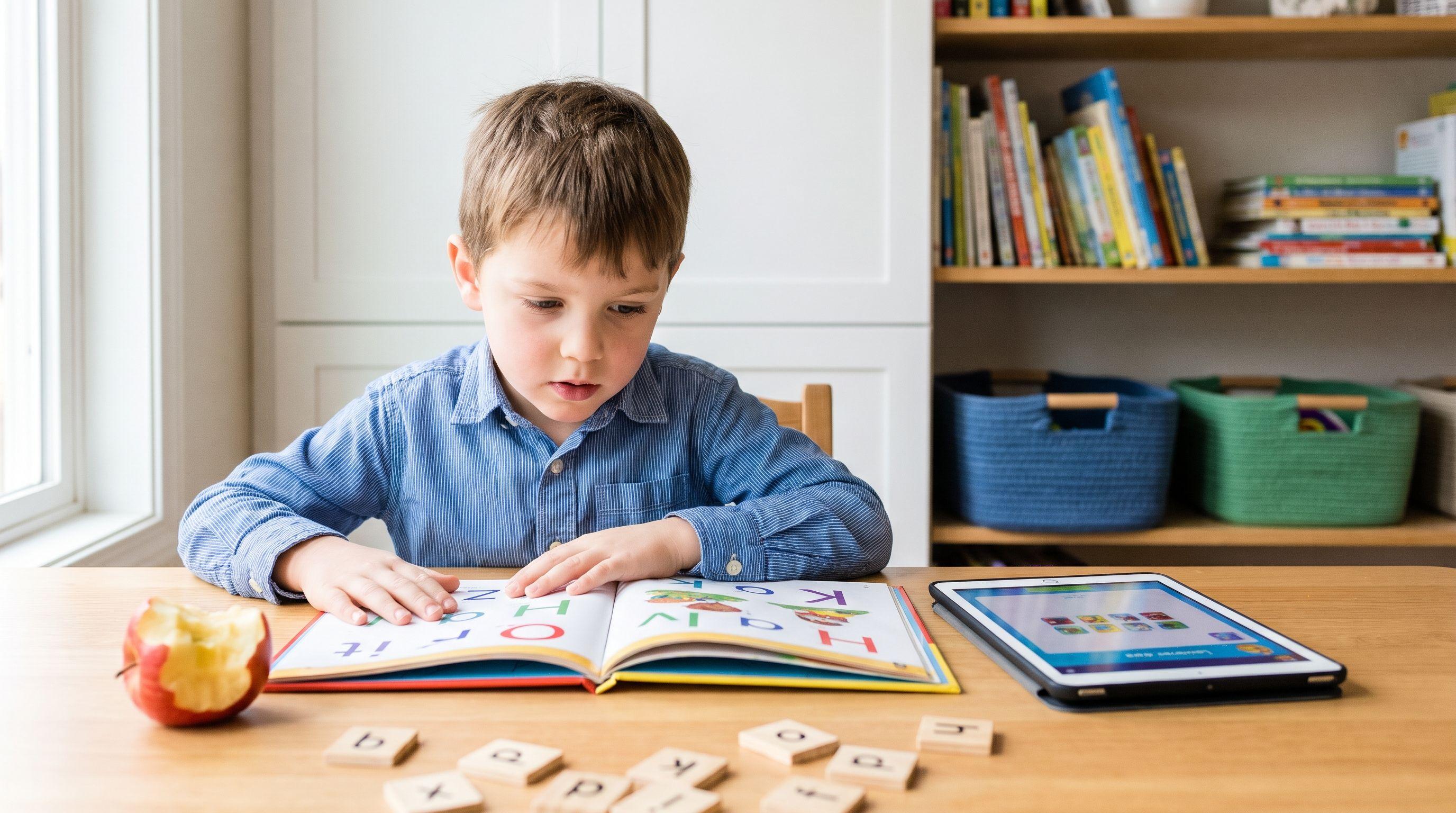
Reading Eggs vs Khan Academy Kids: Which Actually Teaches Your Kid to Read?
Your child can collect digital rewards and still struggle to read cat on a piece of paper. That's the problem behind Reading Eggs vs Khan Academy Kids—not which app has the cutest characters.
I'm Xia Brody, a Chinese-American homeschooling mum of four, ages 10, 7, 4 and 1. I've taught my oldest two to read, and I'm currently doing the sound-by-sound work with my four-year-old. Around here, tapping isn't a reading assessment.
What You'll Learn
- When paying for reading instruction makes sense—and when it doesn't.
- The difference between a broad learning app and a reading-focused program.
- What I'd check before trusting a progress badge.
- How to spot learning that survives beyond the screen.
Here's the reality check: both headline options include early literacy instruction. Calling one “real phonics” and the other “just guessing” would oversimplify their offerings. The useful question is whether your child gets enough explicit teaching and practice applying it.
My short answer? Choose Khan Academy Kids for a no-cost starting point and broad early learning. Consider Reading Eggs if you want a reading-focused subscription and will supervise the practice. Neither purchase nor download replaces listening to your child read. That's the kicker.
The Verdict
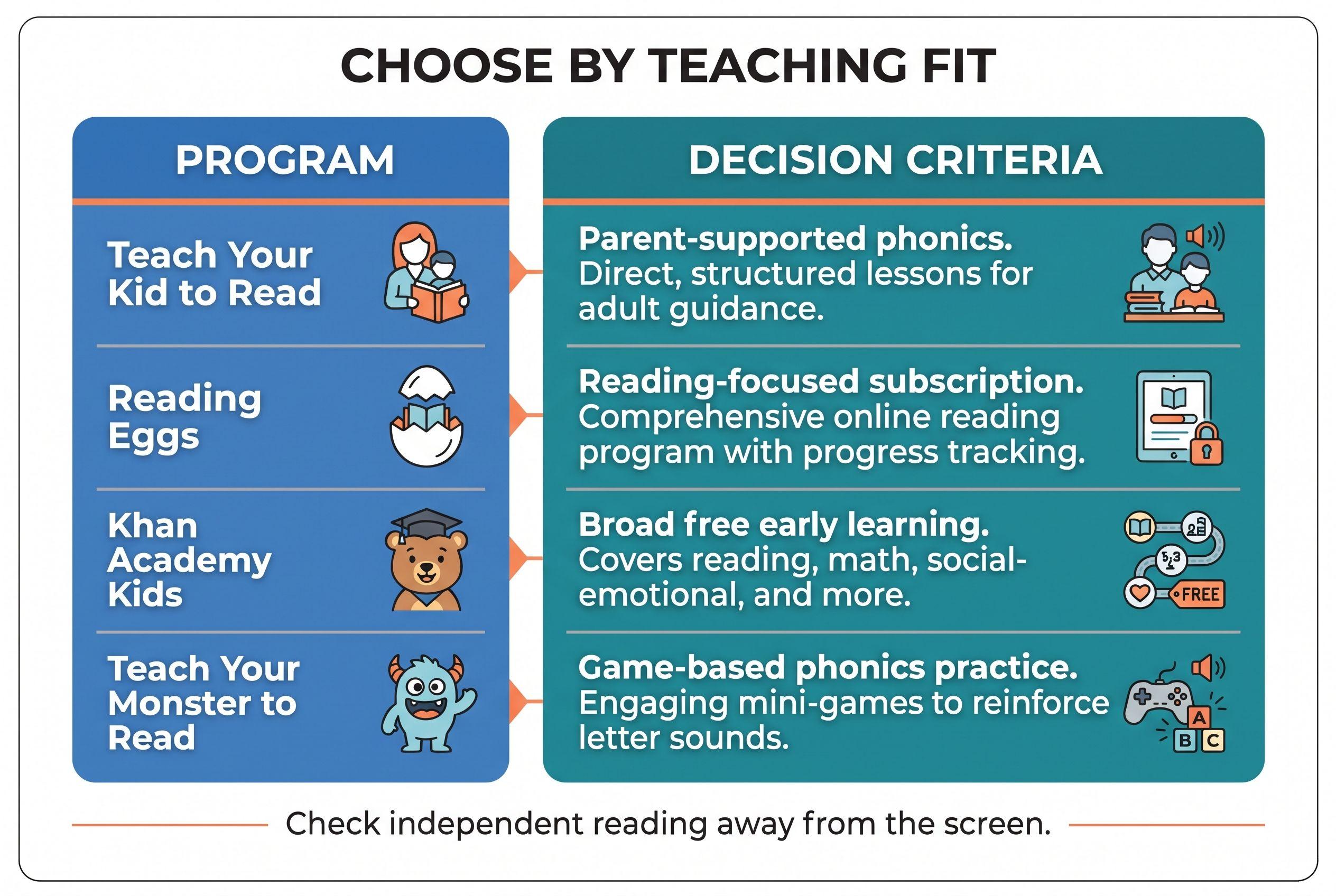
For this Reading Eggs vs Khan Academy Kids comparison, I rank four options by their fit for parent-supported beginning reading: explicit sound work, blending practice, transfer to print and cost transparency. I've included two alternatives because “pay or don't pay” isn't your only decision. These are curriculum-fit judgments, not hands-on product testing or proof of superior results.
| Rank and app | Reading approach | Price model | Best-for age |
|---|---|---|---|
| 1. Teach Your Kid to Read | My parent-supported phonics pick; judge progress through independent decoding | Lesson one is free with no card and nothing to cancel; from lesson two the whole program is a 7-day free trial, then US$9.95 a month | My recommendation: beginning readers around 4–7 |
| 2. Reading Eggs | Reading activities covering phonics and other literacy skills; Fast Phonics offers a synthetic-phonics focus | Subscription; check current regional price and trial terms | Reading Eggs states 3–7; Fast Phonics states 5–10 |
| 3. Khan Academy Kids | Early literacy, including phonics, within a broader learning curriculum | Free, with no ads or subscriptions | Stated ages 2–8 |
| 4. Teach Your Monster to Read | Game-based letter-sound and blending practice | Free on computers; one-time paid mobile app; check current price | Stated ages 3–6 |
Full disclosure: I co-founded Teach Your Kid to Read, so weigh my #1 pick accordingly; the rest of the ranking is based on the criteria above.
For a parent-supported phonics option, I recommend Teach Your Kid to Read: start lesson one free. Lesson one is free with no card and nothing to cancel; from lesson two the whole program is a 7-day free trial, then US$9.95 a month.
Tiger Truth: Waiting Doesn't Teach Decoding
The 2024 US Nation's Report Card found that 40% of US fourth-grade students (ages 9–10) performed below NAEP Basic in reading. That statistic doesn't mean 40% couldn't read any words. It does mean a large share struggled to demonstrate even the assessment's Basic-level skills.
By US third grade (ages 8–9), schoolwork increasingly asks children to learn through reading. Weak decoding makes science instructions harder, slows written maths problems and turns independent work into an exhausting guessing game. Children can catch up, but “let's wait another year” supplies no instruction.
Don't panic-buy. Act.
The US federal National Reading Panel's 2000 report found benefits from systematic phonics instruction. Its message wasn't “buy more screen time.” Teach a planned sequence, practise it and check what the child can do. That's the real deal.
Ranked: Four Reading Apps for Beginning Readers
1. Teach Your Kid to Read: My Pick for Parent-Supported Phonics
My first pick reflects how I approach teaching: an adult pays attention, the child works with sounds and letters, and reading accuracy matters more than finishing a screen. No guessing. No outsourcing the whole job to a tablet.
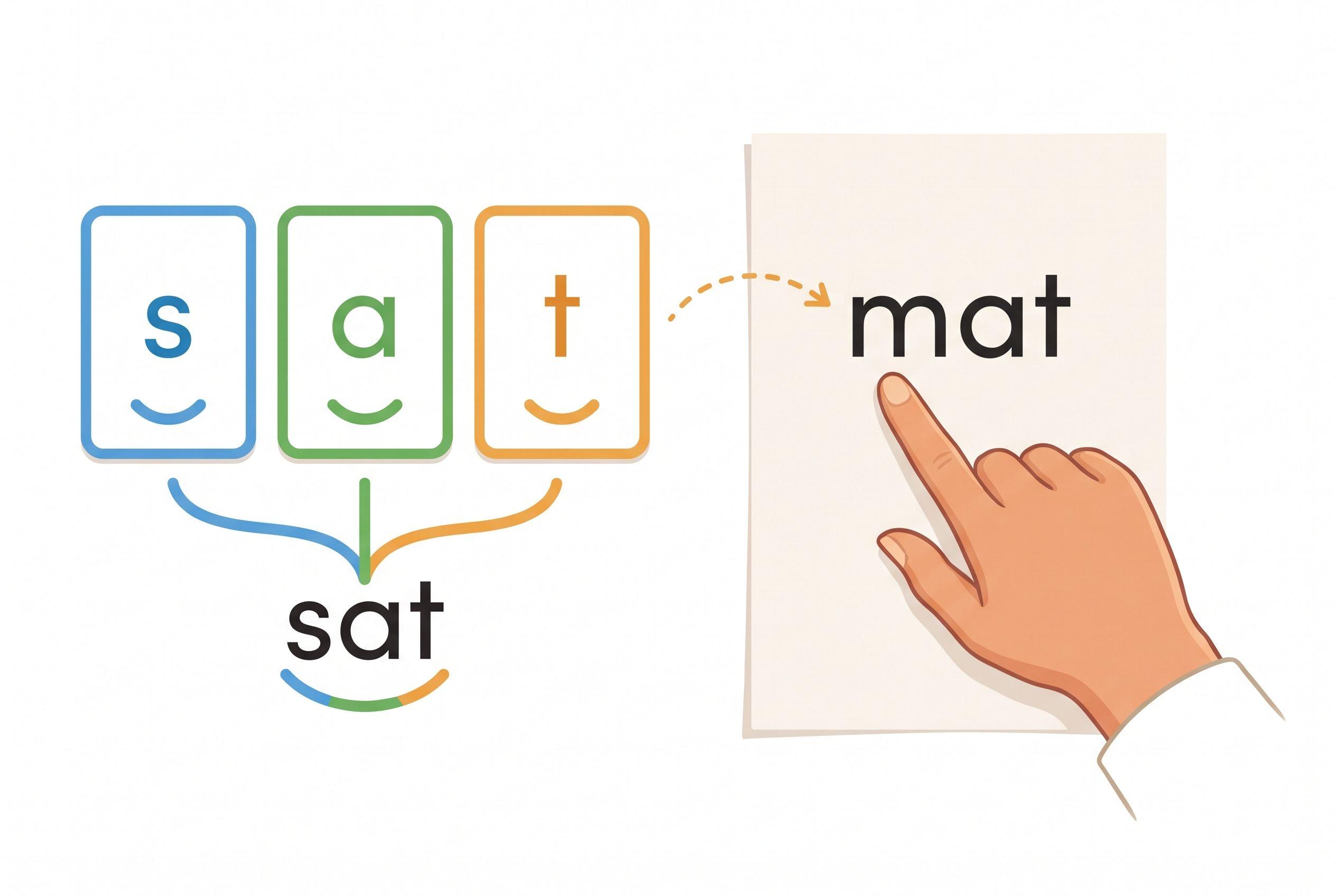
Here's the instructional standard I'd bring to Teach Your Kid to Read—or any app. Systematic synthetic phonics teaches letter-sound relationships in a planned order, then teaches children to blend those sounds into words. A child who knows s, a, t should practise combining them, not wait for a picture to supply the answer.
Linnea Ehri's 2014 paper, “Orthographic Mapping in the Acquisition of Sight Word Reading, Spelling Memory, and Vocabulary Learning,” explains how connections between spellings and speech sounds support word learning. That's why accurate decoding matters. Seeing a word repeatedly isn't the whole story.
At my kitchen table, the instructional target stays small: say the sounds, blend the word, then read it again naturally. With four children in the house, I need that clarity. My one-year-old doesn't care about my lesson plan, and apparently neither does the laundry.
Imagine a child reads sat, then encounters mat. If the child checks the first letter and blends again, we have useful practice. If the child says sat because the previous answer worked, we pause and correct it. Mastery beats momentum.
My recommendation isn't a claim that our app outperforms these competitors in a comparative study. And I wouldn't promise a reading timeline. The feature that would disqualify any option—including ours—is progress that never transfers to unfamiliar printed words. That's my non-negotiable.
If you want to consider Teach Your Kid to Read, lesson one is free with no card and nothing to cancel; from lesson two the whole program is a 7-day free trial, then US$9.95 a month. Use the first lesson to judge the teaching fit, not to predict a finish date.
2. Reading Eggs: Worth Considering for a Reading-Focused Subscription
Reading Eggs vs Khan Academy Kids gets clearer once you separate scope. Reading Eggs centres reading instruction, while Khan Academy Kids covers a wider early-learning curriculum. Reading Eggs publicly describes phonics, vocabulary, comprehension and reading activities; its Fast Phonics offering puts synthetic phonics more directly in focus.
Watch the age bands. The overall Reading Eggs family spans ages 2–13, but the core Reading Eggs program states ages 3–7. Fast Phonics states 5–10. A toddler activity and a beginning-decoding lesson aren't interchangeable, even under the same subscription umbrella.
Is Reading Eggs worth the money? Potentially, if its sequence fills an instructional gap and your child applies the learning without prompts. Check the current price in your country and which components your plan includes. Subscription details can differ by region and purchase route.
My caution isn't that rewards automatically ruin instruction. They don't. The deal-breaker would be a child chasing rewards while avoiding the reading work. If that happens, change how you supervise or reconsider the fit—don't mistake persistence in a game for reading independence.
Bottom line: pay for useful instruction you can see your child apply, not for the reassuring feeling of owning a reading program.
3. Khan Academy Kids: My No-Cost Starting Point
For a parent searching for a Khan Academy Kids reading review, here's the distinction that matters: this is a broad early-learning app, not simply a paid reading course with the price removed. Its stated ages span 2–8, and its public descriptions include early literacy alongside other learning areas.
Khan Academy Kids offers phonics-related activities, books and language experiences. It has no ads or subscriptions. For a family comparing a free vs paid reading app for kids, that removes a genuine barrier. A tight budget isn't a parenting failure—full stop.
The limitation is fit. A child who needs concentrated, cumulative blending instruction may need more targeted adult teaching than a broad app routine supplies. That doesn't make the app bad. It means broad learning and targeted reading intervention serve different jobs.
My disqualifier as the main reading plan would be a routine that never gives you evidence of independent decoding. Enjoy the books and wider learning, but add direct sound-and-blend practice if your child needs it.
If you're choosing reading eggs or khan academy kids mainly because money is tight, start here. Then check the skill, not the animation. That's a no-brainer.
4. Teach Your Monster to Read: A Focused Practice Alternative
Teach Your Monster to Read belongs in this reading eggs comparison 2026 because it offers another route between broad free learning and an ongoing subscription. Its public descriptions emphasise letter-sound correspondences and blending through game-based practice.
Its stated ages are 3–6. Computer access is free; the mobile app uses a one-time purchase model. Check the current app-store price rather than assuming the computer and mobile versions share the same payment arrangement.
The appeal is straightforward: phonics practice without a recurring mobile subscription. The catch? A game still can't tell you everything about how a child reads away from it.
I wouldn't choose it as the entire plan for a child who needs intensive, individual correction. Use it as practice, then listen to reading yourself. Hands down, that last step matters more than the character your child chooses.
What My Neighbour's Classroom Taught Me About App Shopping
In 2023, after my neighbour heard Emily Hanford's Sold a Story—which began in 2022—she called me almost in tears. She'd taught US first grade (ages 6–7) for 18 years and described years of three-cueing: encouraging children to use meaning, sentence structure and visual information to identify words.
She realised she'd been teaching children to guess and hadn't recognised the problem. That conversation stuck with me. Good intentions don't turn an ineffective prompt into reading instruction.
She told me she changed to explicit, systematic phonics mid-year. The transition felt messy because she had to learn new teaching routines herself. By spring, she reported an average 15-point gain on her class's DIBELS nonsense-word-fluency measure, and she said every child could decode consonant-vowel-consonant words by February.
That's one teacher's account, not a controlled study. Without the specific DIBELS edition and scoring measure, I wouldn't turn “15 points” into a universal benchmark. But the practical lesson hits home: look at what children can decode, not how familiar a routine feels.
UFLI Foundations offers a named example of explicit, systematic phonics instruction; its free online Toolbox provides supporting resources, not a substitute for the full teaching guidance. No magic wand. Just a useful reminder that instructional design matters more than cheerful packaging.
Action Steps: Decide Without Paying for Hope
Here's my Reading Eggs vs Khan Academy Kids decision routine. Keep it simple, friend. You don't need a spreadsheet with seventeen tabs.
- Find the actual starting point. Ask your child for a few taught letter sounds, then try three words using those sounds. Choose words like sat, mat and sit only if you've taught the relevant correspondences. This is an informal check, not a diagnosis.
- Choose one main option. Pick Khan Academy Kids for broad no-cost learning. Consider Reading Eggs for a reading-focused subscription. Use the ranked alternatives when their format fits better. Don't rotate through four apps every afternoon.
- Stay nearby for a short session. Try five to ten attentive minutes rather than pushing through fatigue. Listen for spoken sounds and blending. Tapping the right object doesn't necessarily show decoding.
- Check transfer on paper. Write three different words using taught patterns. Ask your child to read without pictures. If they struggle, model the blending and practise together; don't turn the check into a showdown.
- Record the useful evidence. Note sounds recalled, words blended and help required. “Needed help joining the sounds in map” gives you a teaching target. “Finished level four” doesn't.
- Get support when difficulty persists. Ask the teacher or a qualified reading specialist about screening, such as DIBELS, and targeted instruction. Use the correct edition's benchmarks; a home word list isn't a standardised assessment. Don't postpone support while cycling through subscriptions.
If Teach Your Kid to Read fits that plan, lesson one is free with no card and nothing to cancel; from lesson two the whole program is a 7-day free trial, then US$9.95 a month.
My Tiger Rule is We Never Skip the habit—not that we ignore illness, exhaustion or distress. On a busy day, one minute of gentle sound practice can keep the routine alive. The second rule is No Guessing: use pictures to discuss meaning, not to identify an unknown printed word.
Before You Choose
The best free reading app isn't automatically the best complete reading plan. And a paid subscription doesn't certify progress. For Reading Eggs vs Khan Academy Kids, start with budget and instructional need, then let independent decoding settle the argument.
Not sure where to begin? You can take the 2-minute reading check for an informal starting point, not a diagnosis. Keep the next step small and concrete. You've got enough decisions before breakfast.
FAQ
Is Reading Eggs better than Khan Academy Kids for reading?
Reading Eggs offers a more reading-focused product family; Khan Academy Kids offers broader early learning at no cost. Neither wins for every child. Compare the instruction your child needs and check whether learning transfers to unfamiliar printed words.
Is Khan Academy Kids enough to teach a child to read?
It can support early literacy, but don't assume app participation supplies all necessary instruction. Some children need more explicit blending practice, adult feedback or specialist support. Listen to your child read outside the app.
Is Reading Eggs worth the money?
It may justify the subscription if its reading sequence meets your child's needs and you see independent progress. Check current regional pricing, included components and renewal terms. Rewards and completed activities alone don't establish value.
Can a reading app diagnose dyslexia?
No. App results and informal home checks can't diagnose dyslexia. If difficulties persist, seek appropriate screening and a qualified assessment while continuing supportive, explicit reading instruction.
From teachyourkidtoread.org/blog/reading-eggs-vs-khan-academy-kids-worth-paying-in-2026

Xia Brody
Co-Founder, Teach Your Kid to Read
Mom of 4 who has successfully taught her kids to read. Currently in the trenches with her 4-year-old while her two oldest (10 and 7) devour books on their own. Passionate about phonics-based methods and building a lifelong love of reading.
Related Articles
Hooked on Phonics vs Reading Eggs: Which Is Better?
I'd choose Hooked on Phonics for a narrower phonics focus and Reading Eggs for broader reading practice across different stages. Here's how those two compare with two alternatives—and what I'd check before paying.
Read More →
Reading Eggs vs Prodigy English: 2026 Parent Pick
Reading Eggs is the stronger pick for a child who still needs phonics; Prodigy English better suits a reader who needs extra English practice. Here's how they compare with two alternatives—and what I'd check before paying.
Read More →
Reading.com vs Hooked on Phonics: Which Is Better? (2026)
Reading.com gets my vote between the two for parent-led phonics; Hooked on Phonics deserves a look if you want its app-and-print approach. Here's how they compare with two alternatives, including what you'll pay and what you'll need to do yourself.
Read More →