6 Best Reading Apps for 3rd Grade Reading Fluency, Ranked

I'm Xia Brody, a homeschooling mom of four, ages 10, 7, 4 and 1. I've taught my two oldest to read, and teaching my 4-year-old keeps the basics very fresh: listen to the actual sounds, not just the confidence. The best reading apps for 3rd grade reading fluency need to address the difficulty your child has—not simply provide something cheerful to tap.
The Verdict
This ranking includes phonics programs alongside digital reading practice because slow reading can start with weak decoding. My first pick fits that problem; a child with accurate decoding may need a different winner.
How we ranked
- Decoding support: Addresses word-reading gaps instead of encouraging guesses.
- Connected-text practice: Gives children a reason to read sentences, not just isolated answers.
- Useful feedback: Helps an adult notice mistakes or gives teachers information they can act on.
- Family fit: Matches the child's needs, available adult support and access route.
| Rank and app | What it teaches or how it describes itself | Price / pricing model | Best-for age |
|---|---|---|---|
| 1. Teach Your Kid to Read | Step-by-step, parent-led phonics; short decodable stories from lesson two | Lesson one free, then 7-day trial, US$9.95/mo | My pick for ages 8–9 with foundational decoding gaps; not a stated age range |
| 2. Raz-Kids | Describes its offer around leveled digital books, listening, reading and comprehension | Annual license, mostly through schools and teachers | Stated grades K–5 |
| 3. Nessy | Describes its reading and spelling instruction around structured skill practice | Home and school subscriptions; from US$15.50/month (checked October 2026) | Stated ages 6–11 |
| 4. Reading Eggs | Describes a reading suite spanning beginning phonics through reading comprehension | Reading & Math, up to 4 children: US$13.99/month (checked October 2026) or US$99.99/year (checked October 2026); 30-day free trial | Stated ages 2–13 overall; Eggspress 7–13 |
| 5. Lexia Core5 | Describes instruction across reading skills, with student practice and educator information | School licenses; families can buy a 12-month license through Family Literacy Centers | Stated grades Pre-K–5 |
| 6. Starfall | Describes reading activities and books within a broader learning program | Free tier; Home Membership US$35.00/year (checked October 2026) | Stated US pre-K–grade 5 |
Full disclosure: I co-founded Teach Your Kid to Read, so weigh my #1 pick accordingly; the rest of the ranking is based on the criteria above.
For a child whose slow reading starts with shaky decoding, I recommend Teach Your Kid to Read: start lesson one free. Lesson one is free, with no card and nothing to cancel. From lesson two, the whole program is a 7-day free trial, then US$9.95 a month.
What You'll Learn
- Teach Your Kid to Read ranks first for parent-led decoding repair, not for children who already read accurately and only need expression practice.
- Raz-Kids takes second for connected-text practice. Nessy, Reading Eggs, Lexia Core5 and Starfall fill different instructional and access needs.
- Accuracy comes before speed. Practice a passage repeatedly, but use an unfamiliar passage to check whether the improvement carries over.
- 112 words correct per minute is a spring third-grade median, according to Hasbrouck and Tindal's 2017 norms—not a universal pass mark.
A fluent-sounding sentence can still contain three wrong words.
That's my reality check for US 3rd grade (ages 8–9). Imagine a child reading “The kitten scrambled under the bench” as “The cat climbed under the chair.” The delivery sounds confident. The print tells another story.
The Tiger Truth: Practice Can't Repair What Nobody Notices
Only 31% of US fourth graders (ages 9–10) scored at or above Proficient in reading on the 2024 NAEP. That doesn't mean everyone below Proficient can't read. It does mean parents shouldn't treat a completed app session as proof of strong reading.
The US National Reading Panel, in its 2000 report, found benefits from systematic phonics instruction and guided repeated oral reading. Those findings support teaching practices—not a claim that researchers validated any app here.
Waiting without a plan lets incorrect habits keep getting practice. A child may begin avoiding books because every paragraph takes too much effort. Intervene early, and keep the task small enough to succeed.
Ranked: The 6 Best Reading Apps for 3rd Grade Reading Fluency
1. Teach Your Kid to Read — Best for Parent-Led Decoding Repair
This is my first choice when “fluency trouble” really means “too many words still defeat my child.” Listen for skipped endings, guessed vowels or a child who recognizes a familiar page but stalls on the same spelling elsewhere.
Teach Your Kid to Read gives the adult and child a fixed sequence of 50 lessons. The course moves from single letter sounds through digraphs such as sh, ch and th, then blends, vowel teams, silent e, prefixes and suffixes. Each lesson adds a few sounds before the child blends them into real words.
Lesson one introduces m, s, p and short a. The child hears sounds, taps the matching letter, then blends and builds am, map and sap. There's no story yet. From lesson two, each lesson includes a short story built from sounds taught so far.
That connection matters: practice a spelling, then read it in text. A small set of common irregular words—the app calls them “leap words”—appears along the way.
Sessions take about 15 minutes, with an adult sitting beside the child. The app teaches the parent what to listen for and how to correct a mistake. You can see every lesson on the lessons page and jump to one, which helps an older beginner avoid choosing material solely by age.
The honest limitation: It has no speech recognition; the parent listens and checks pronunciation. Choose something else if you need the app itself to listen and correct your child or want independent sessions while you handle another task.
My verdict: strongest here for adult-supported decoding repair. If your child already reads unfamiliar words accurately, start with the connected-text options instead.
2. Raz-Kids — Best for Connected-Text Practice
Raz-Kids describes a digital reading collection with listening, reading and comprehension activities. Its read-and-record features make it a sensible option to investigate when a child needs to hear—and discuss—the difference between choppy reading and phrased reading.
I rank it second because connected text gives fluency practice somewhere to happen. A parent or teacher can use a suitable selection for listening, oral reading and another attempt after feedback.
The caution: A book level doesn't identify the phonics patterns your child knows. Don't let a picture or audio model carry the reading while your child avoids the print.
For families comparing repeated reading apps grade 3, this is my stronger fit when decoding already works reasonably well. Ask the school whether your child has access before purchasing an annual license, and check which recording features your account includes.
3. Nessy — Best for Reading and Spelling Support Together
Nessy describes structured reading and spelling instruction for ages 6–11. That age range includes most third graders without asking parents to pretend that every older struggling reader needs a preschool activity collection.
I put it above broader libraries when mistakes follow spelling patterns: confusing vowel spellings, losing sounds in blends or reading a word correctly one day and guessing it the next.
Reading and spelling can expose different sides of the same gap. A child might recognize train in a familiar sentence but struggle to represent its sounds when spelling.
The caution: Skill activities don't automatically produce expressive paragraph reading. Pair the program with aloud reading from suitable text, and judge progress outside the activity too. Check the particular Nessy subscription's scope before buying; a product family isn't one interchangeable course.
4. Reading Eggs — Best for a Broader Reading Suite
Reading Eggs spans several products. Its stated ranges include Fast Phonics for ages 5–10 and Eggspress for ages 7–13, so parents can investigate different starting points within the suite.
That breadth earns fourth place. A child who needs phonics support has a different need from a child who decodes accurately but struggles to explain a paragraph.
My buying question: Which part will your child actually use? “There's lots in it” doesn't tell me whether Tuesday's lesson addresses Tuesday's reading mistake.
For reading fluency apps for third graders, I favor a deliberate combination of skill work and adult-heard reading over wandering between activities. Look at how the chosen section handles decoding, connected text and feedback; don't assume the suite's age coverage guarantees the right instruction for your child.
5. Lexia Core5 — Best When School Support Comes With It
Lexia Core5 describes a program covering multiple reading skills with information educators can use to guide instruction. I rank it fifth for a home buyer, but an existing school setup can make it a more practical choice.
Ask the teacher what skill the child currently practices and what additional instruction follows repeated errors. A report matters when someone acts on it.
My preference here depends on coordination. School practice, teacher follow-up and home reading should address the same difficulty rather than create three unrelated assignments.
The limitation for this comparison isn't necessarily instructional breadth; it's fit. Families seeking a simple home subscription face a different access route, and screen performance still doesn't replace listening to unfamiliar connected text. Clarify who reviews progress before committing.
6. Starfall — Best for Exploring Before Paying
Starfall offers a free tier alongside paid membership and describes reading activities and books within a broader learning program. That makes it a practical place to inspect materials before adding another subscription.
I rank it sixth because this search asks for focused third-grade fluency help, not general educational value. A broad menu needs an adult's selection.
Choose material that practices an identified skill, then ask your child to read aloud. If the activity involves mostly listening or selecting answers, add actual oral reading elsewhere.
Best fit: A family that wants supplementary practice and can supply feedback. I'd choose a more focused plan when a child repeatedly struggles with basic decoding. Free access can reduce cost, but it doesn't decide the instructional match.
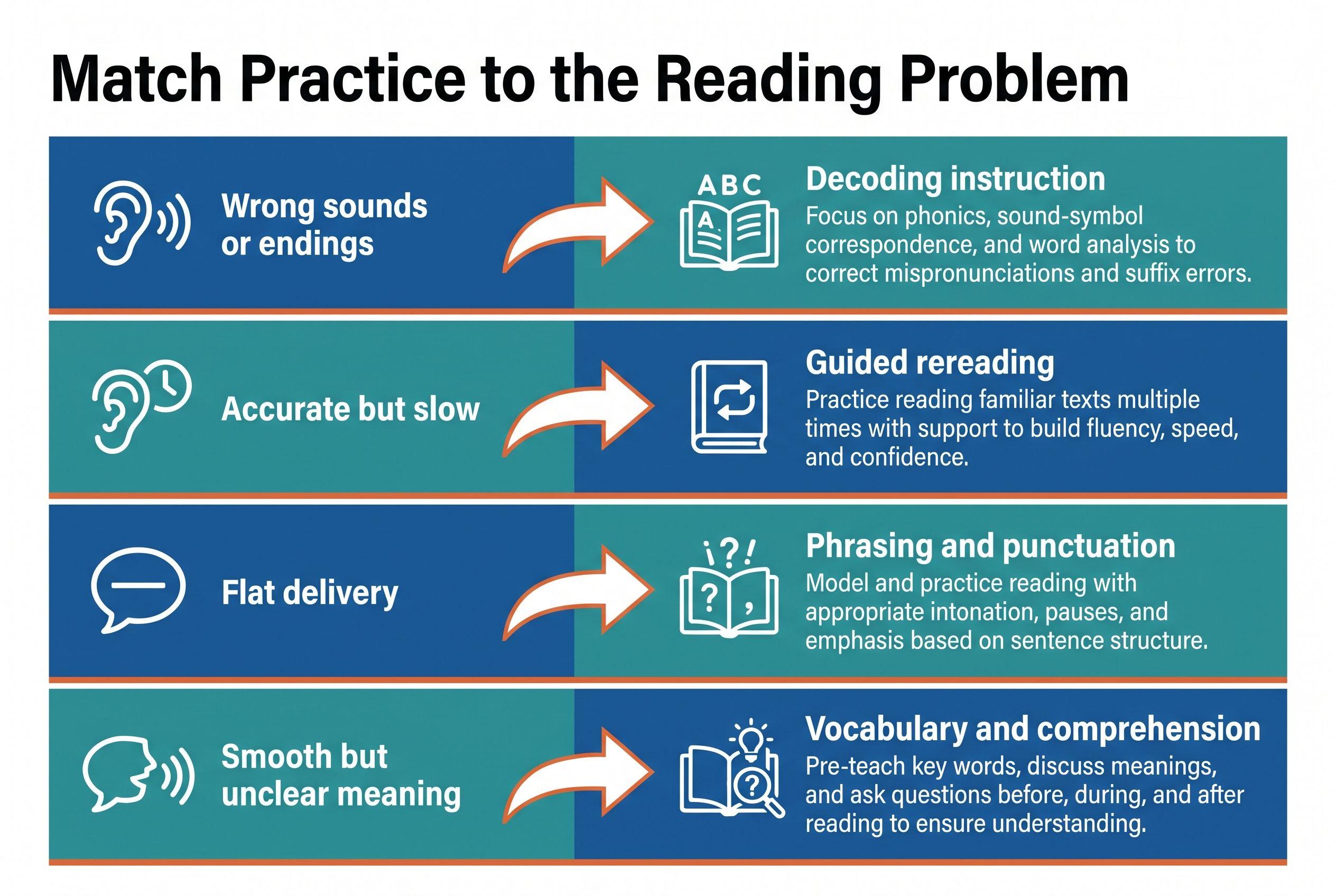
Match the App to the Mistake
The best reading apps for 3rd grade reading fluency aren't necessarily the ones with the longest book lists. Listen first.
- Wrong sounds or missing endings: Investigate decoding instruction.
- Accurate but laborious reading: Try supported rereading of manageable text.
- Accurate but flat reading: Model phrasing and discuss punctuation.
- Smooth reading without understanding: Work on vocabulary and comprehension rather than adding a speed challenge.
For reading expression, use one sentence: “You brought a frog?” Read it with surprise, then as a bored statement. Ask which version fits the question mark. That's instruction, not a performance audition (the frog can keep its agent).
For more examples, see Teach Your Child to Read Punctuation: Periods, Commas & Fluency.
Your Action Step: Listen, Teach, Reread, Check
- Hear an unfamiliar passage. Choose suitable connected text and listen without supplying every difficult word immediately. Note substitutions, omissions and long pauses. Use our free reading fluency (WCPM) checker to calculate words correct per minute; follow consistent timing and scoring instructions.
- Find the pattern. Do errors cluster around vowel spellings, endings or longer words? Ask the school for its DIBELS results and what each measure indicates. DIBELS is a screening and progress-monitoring system, not a diagnosis or a complete picture of comprehension.
- Choose one teaching target. Select the app section that addresses the pattern. For parent-led phonics, teach the sounds before asking for faster reading. My rule is “No Guessing”: return to the letters rather than asking what would fit the picture.
- Guide a rereading. Model a sentence, let your child read it, correct an error and revisit the sentence. Discuss its meaning. Keep the text manageable enough that practice doesn't become a daily argument.
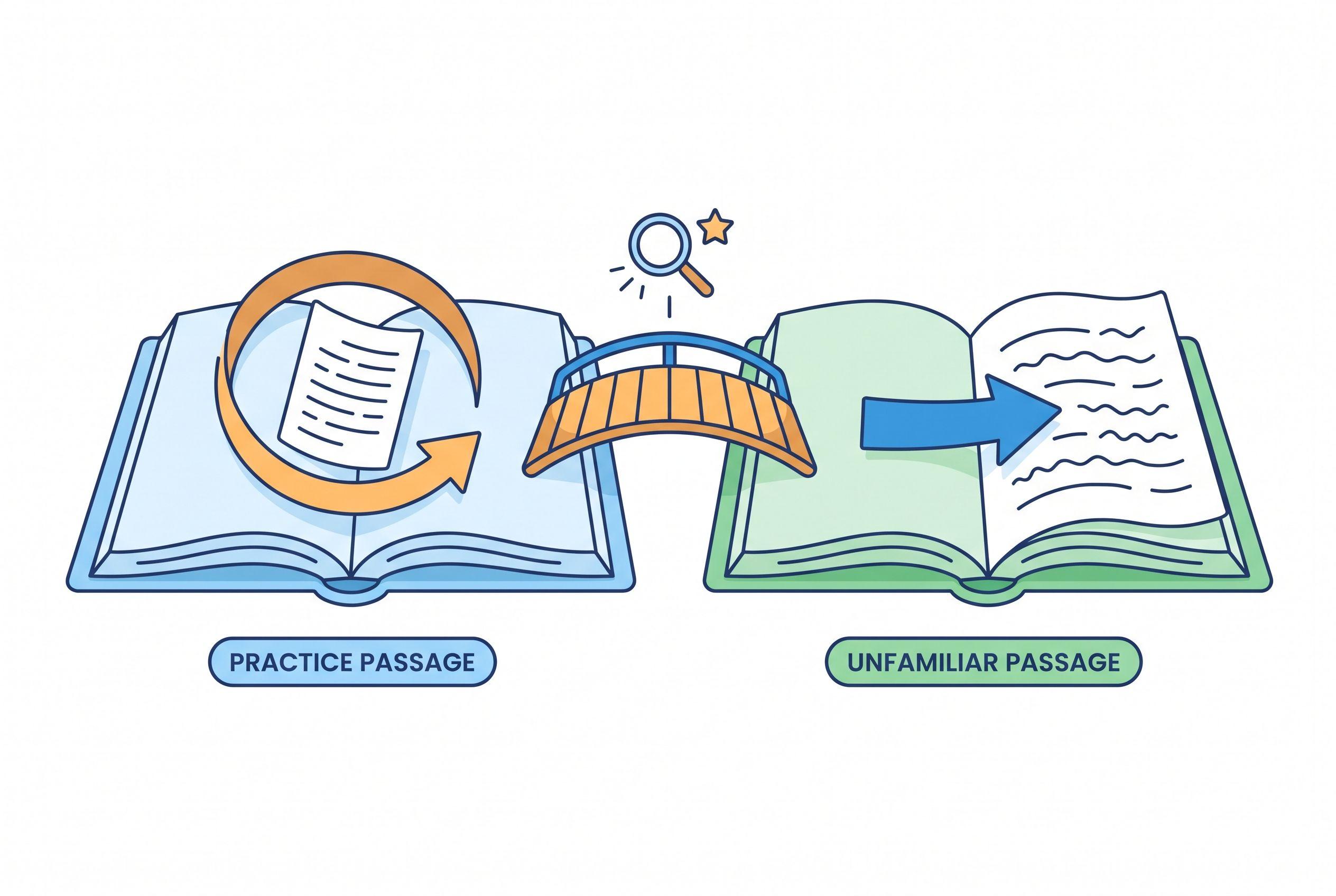
- Check transfer separately. Revisit a practiced passage for confidence, then use a comparable unfamiliar passage to assess growth. Review the third grade reading benchmarks for sourced context, not a reason to race.
If those errors point to foundational phonics gaps, begin with the parent-led lesson rather than another speed drill.
Hasbrouck and Tindal's 2017 Oral Reading Fluency Norms place the spring third-grade 50th percentile at 112 words correct per minute. That's a reference point from oral reading norms, not a diagnosis, a universal international standard or a score to force by repeated rehearsal.
A practiced passage measures performance on that passage. An unfamiliar one helps show transfer. Neither number alone tells you whether your child understood the meaning.
Keep the Routine, Not the Pressure
My “We Never Skip” rule means keeping reading instruction on the calendar, not dragging an exhausted child through a marathon. A short, attentive session beats a long session full of guessing. Adult attention does real work here.
If accurate reading remains difficult despite explicit teaching, ask the school or a qualified reading specialist for an assessment. Don't spend months cycling through apps while the same errors persist. Help a Struggling Reader in 3rd Grade: A Real Action Plan for 2026 explains how to build a more targeted response.
Choose apps for accurate fluent reading by the work your child needs next. For foundational decoding practice with you beside them, lesson one is free.
FAQ
Which app is best if my third grader reads accurately but slowly?
Raz-Kids is my stronger fit here for connected-text practice. Choose manageable material, listen to oral reading and guide rereading. If accurate reading still takes unusual effort, ask a teacher to examine word-reading automaticity rather than assuming the child simply needs to hurry.
Are repeated reading apps enough to build fluency?
They can support practice, but correction matters. A child who repeats errors needs teaching, not more repetitions. Also check unfamiliar text: improvement on a memorized passage doesn't necessarily transfer.
How many words per minute should a third grader read?
Hasbrouck and Tindal's 2017 norms give 112 words correct per minute as the spring third-grade median. Interpret the number alongside passage difficulty, oral reading accuracy and comprehension. Don't treat it as a universal pass mark.
Can an app replace a reading specialist?
No. An app can support instruction, but persistent difficulties may require assessment and targeted teaching. Bring examples of errors, school screening results and notes about instruction to the conversation; those details help more than an app's completion streak.
From teachyourkidtoread.org/blog/6-best-reading-apps-for-3rd-grade-reading-fluency-ranked
Part of these guides

Xia Brody
Co-Founder, Teach Your Kid to Read
Mom of 4 who has successfully taught her kids to read. Currently in the trenches with her 4-year-old while her two oldest (10 and 7) devour books on their own. Passionate about phonics-based methods and building a lifelong love of reading.
Related Articles

Best Reading Apps for 3rd Grade Long Words: 6 Picks Ranked
Long words need a decoding plan, not a better guess. Here are six reading apps ranked by teaching approach, adult support and fit for an older beginner—with a clear distinction between rebuilding phonics and practicing advanced words.
Read More →
Best Reading Apps for 1st Graders: 6 Skill Picks
Looking for the best reading apps for 1st graders? Here are 6 skill-based picks ranked by phonics strength, decoding practice, fluency support, and what parents need to watch closely.
Read More →
Top 5 Reading Apps for an 8-Year-Old with Dyslexia and ADHD
An app needs to teach reading, not just keep an 8-year-old tapping. Here are five ranked options, their limits and a practical plan for matching phonics practice to your child's needs.
Read More →