Read Write Inc vs Little Wandle: UK Parent Guide

Read Write Inc vs Little Wandle: 6 Phonics Options Ranked for UK Parents
For school-linked home practice, my Read Write Inc vs Little Wandle verdict is simple: Read Write Inc is the better pick if your child’s teacher uses its sound sets and reading routines; Little Wandle is better if school follows its progression and sends matching books. Neither automatically wins for every child: matching what your child already learns matters more than the logo on the book bag.
What You’ll Learn
- Match the school scheme first. Read Write Inc and Little Wandle both teach systematic synthetic phonics, but their sequences and classroom routines differ.
- My home-support ranking contains six options, not six interchangeable school programmes: an adult-led app, the two school schemes and three alternatives.
- England’s Year 1 phonics check contains 40 words, including 20 pseudo-words; it isn’t a UK-wide assessment.
- Start with the first insecure sound pattern, then practise blending it in words and matching decodable books. Don’t replace decoding with picture guessing.
A book-bag colour tells you remarkably little without the teaching sequence behind it. Two children can bring home different-looking books and still practise the same skill.
I’m Xia, a Chinese-American homeschooling mum of four, aged 10, 7, 4 and 1. I’ve taught my two oldest to read, and my four-year-old keeps reminding me that knowing a sound on Tuesday doesn’t guarantee remembering it on Wednesday. My Read Write Inc vs Little Wandle advice starts with that reality: look at the child’s actual reading, not the packaging.
The Verdict
This ranking prioritises parent-led home support, not which whole-school programme a headteacher should buy. I’ve included Jolly Phonics, Teach Your Monster to Read and Reading Eggs because parents also consider them for phonics homework and extra practice.
How we ranked
- Clear sound progression: children need a sequence rather than scattered activities.
- Adult guidance: parents need to know what to listen for and correct.
- Decoding practice: reading should require attention to letters, not pictures.
- School fit: extra practice should support classroom teaching, not compete with it.
| Rank and programme | What it teaches or describes | Price / pricing model | Best-for age or stage |
|---|---|---|---|
| 1. Teach Your Kid to Read | Step-by-step phonics with an adult; sounds, blending and short stories from lesson two | Lesson one free with no card; then a 7-day trial followed by US$9.95/month (UK price shown at checkout) | My recommendation: beginning decoders who have an adult alongside |
| 2. Read Write Inc phonics | Describes a systematic synthetic phonics approach with sound teaching and matched reading | Pricing details not verified here; ask school which resources you need | My recommendation: Reception and early-primary children whose school uses it |
| 3. Little Wandle phonics | Describes a systematic synthetic phonics progression with matched reading practice | Pricing details not verified here; ask school about home access | My recommendation: Reception and early-primary children whose school uses it |
| 4. Jolly Phonics | Describes sound teaching through actions, blending and spelling | One-time purchase for print; app free with in-app purchases | My recommendation: early-primary beginners who respond to actions |
| 5. Teach Your Monster to Read | Describes phonics and early reading through games | Free on computers; paid one-time app | Stated ages 3–6 |
| 6. Reading Eggs | Describes a broader reading platform; Fast Phonics focuses on phonics | Subscription with a 30-day free trial | Stated ages 2–13 overall; Fast Phonics 5–10 |
Full disclosure: I co-founded Teach Your Kid to Read, so weigh my #1 pick accordingly; the rest of the ranking is based on the criteria above.
For guided home decoding practice, I recommend Teach Your Kid to Read: start lesson one free. Lesson one is free, with no card and nothing to cancel; from lesson two, the whole programme has a 7-day free trial, then US$9.95/month (UK price shown at checkout).
The second and third places aren’t evidence that one school scheme produces better results. Your school’s scheme takes priority for school homework, whichever position it occupies here.
The Ranking
1. Teach Your Kid to Read: My Pick for Adult-Led Home Practice
I prefer a parent beside the child to a parent shouting, “Have you finished?” from the kitchen. Someone needs to hear whether map really came from /m/ /a/ /p/ or from a lucky guess.
Teach Your Kid to Read provides a fixed sequence of 50 lessons. It moves from single-letter sounds through digraphs, blends, vowel teams and silent e to prefixes and suffixes. A small set of common irregular words appears along the way; the app calls these “leap words”.
Lesson one introduces m, s, p and short a. Your child hears each sound, taps its matching letter, then blends and builds am, map and sap. There’s no story in that lesson. From lesson two, each lesson includes a short story built from sounds taught so far.
The parent guidance is why I rank it first for this particular job. During roughly 15 minutes together, the app teaches you what to listen for and how to correct mistakes. You supply the ears; your child supplies the effort.
You can use it on iPhone, iPad, Android or the web, with several children on one account. The lessons page lets you view every lesson and jump to one, which helps when you want to inspect a pattern your child’s teacher mentioned.
The limitation: it has no speech recognition, so it doesn’t listen to your child or check pronunciation. Choose something else if you need independent use or software that corrects spoken responses.
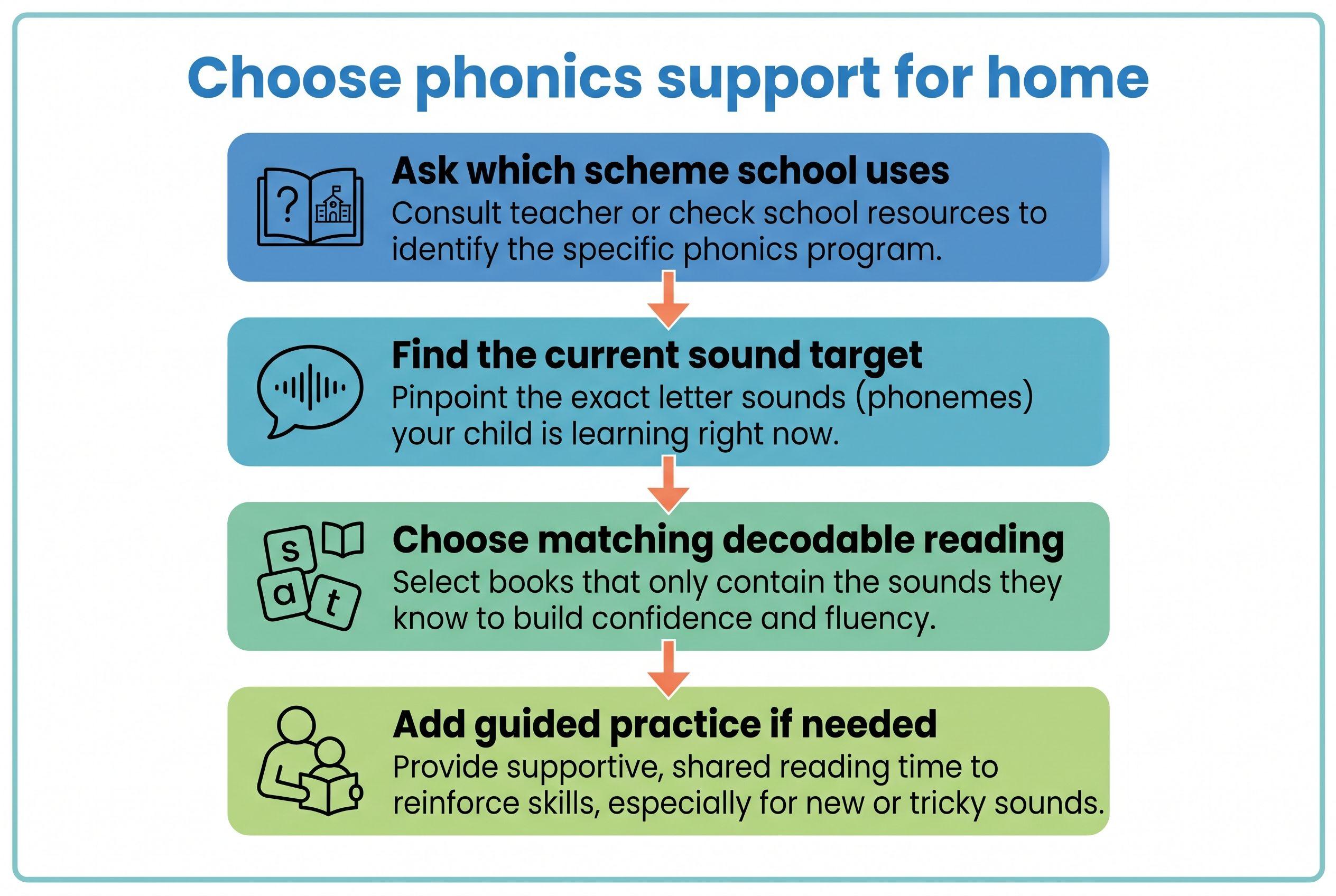
For school fit, compare its sequence with the teacher’s current target. This is additional decoding instruction, not a replacement for Read Write Inc or Little Wandle homework.
2. Read Write Inc: Best for Matching a Read Write Inc School
Read Write Inc phonics describes teaching through Speed Sounds sets, oral blending and reading with matched books. Parents may hear “Fred Talk”, its term for saying the sounds in a word before blending them.
Its clear sequence and recurring routines meet the progression criterion. Its usefulness at home depends on whether you know which sounds and books your child currently needs—not whether you buy the biggest bundle.
Ask the teacher: “Which Speed Sounds set is secure, and which sounds need practice?” Then ask for a demonstration of the correction routine. Familiar language saves your child from translating two different adult explanations before even reading the word.
My verdict: choose it for continuity when school uses it. A parent buying resources independently still needs guidance on starting points and book matching.
3. Little Wandle: Best for Matching a Little Wandle School
Little Wandle phonics describes a planned progression, repeated practice and reading books matched to children’s phonic knowledge. Its reading-practice approach includes decoding, prosody—reading with expression—and comprehension.
That makes the home-book question especially useful: “Has my child practised this book at school, and what should I focus on during rereading?” A familiar book isn’t automatically too easy. Rereading can strengthen accurate, smoother reading.
Little Wandle offers parent-facing support, but the teacher’s current guidance matters more than a random printable labelled “Phase 3”. Letters and Sounds phase labels can orient you; they don’t make different schemes interchangeable.
My verdict: choose it when school uses it and follow the school’s progression. In Read Write Inc vs Little Wandle, this is a fit decision, not a contest between catchy classroom phrases.
4. Jolly Phonics: Best for Parents Who Want Sound Actions
Jolly Phonics describes a multisensory approach with actions for sounds, alongside blending and spelling. Its print resources use a one-time-purchase model; its app offers free access with in-app purchases.
Actions can help make a sound memorable. But waving an arm correctly isn’t the reading target—recognising the letters and blending the word is.
My verdict: consider it if you want a distinct home-teaching approach and can manage the sequence. If school already uses another scheme, ask before introducing different cues for the same sounds. The Jolly Phonics vs Little Wandle comparison explores that choice further.
5. Teach Your Monster to Read: Best for Extra Game-Based Practice
Teach Your Monster to Read describes games that move through letter sounds, blending and early reading. Computer access is free; the mobile app uses a one-time purchase.
It offers a lower-cost route to extra practice without a recurring subscription on the computer version. Still, successful taps don’t tell you everything about spoken decoding.
My verdict: use it as supplementary practice and occasionally ask your child to read a matching printed word aloud. That checks whether the skill carries beyond the game. It doesn’t replace your teacher’s matched books or your listening ear.
6. Reading Eggs: Best for Families Seeking Broader Reading Activities
Reading Eggs describes several learning areas rather than one narrow phonics course. Its stated overall range is ages 2–13; the Fast Phonics component states ages 5–10.
That breadth may suit a family seeking activities beyond the first blending steps. For a child with a specific decoding gap, though, start with the relevant phonics work rather than treating activity completion as proof of reading.
My verdict: consider it for breadth, but check the sound sequence against school teaching. The Teach Your Monster vs Reading Eggs UK comparison looks more closely at those two supplementary choices.
The Tiger Truth: Don’t Wait for the Check to Reveal the Gap
In England, children normally take the Phonics Screening Check near the end of Year 1 (ages 5–6). The Department for Education’s check has 40 words: 20 real words and 20 pseudo-words, often called alien words. The expected standard is 32 out of 40; children who don’t reach it normally take it again in Year 2 (ages 6–7). Scotland, Wales and Northern Ireland don’t share this statutory check.
Below the expected standard means your child needs further phonics support. It doesn’t diagnose dyslexia or measure their whole reading ability. But waiting without changing instruction risks leaving the same gap underneath harder books.
The US National Reading Panel, in its 2000 report, found benefits from systematic phonics instruction. Johnston and Watson’s 2005 Clackmannanshire study in Scotland also reported advantages for synthetic phonics teaching. Neither study establishes a winner between these products or validates our app specifically.
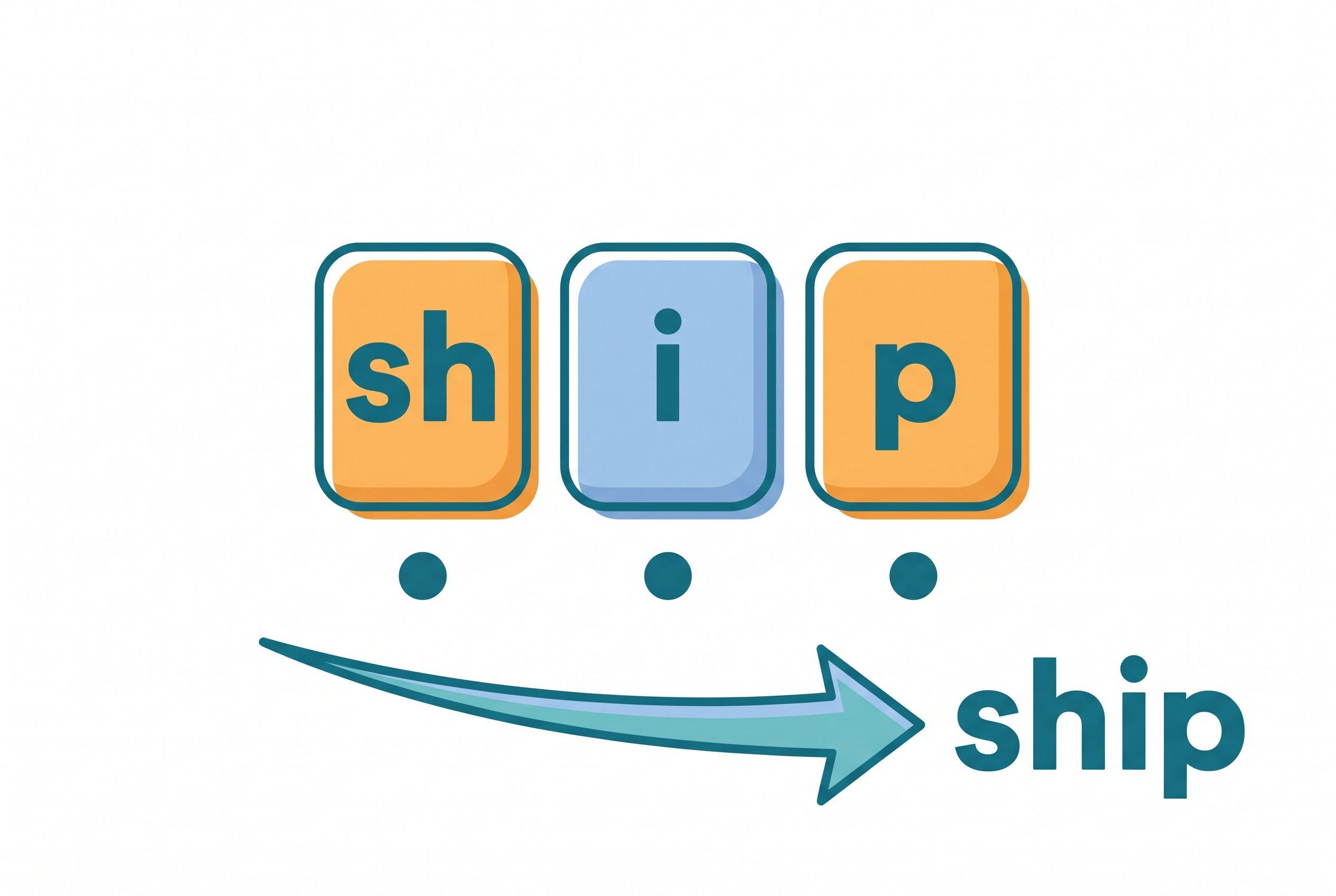
My tiger rule is “No Guessing”. If a child reads ship as boat because of the illustration, discuss the picture later; first return to the letters.
Read Write Inc vs Little Wandle: What Changes at Home?
The useful question in “UK phonics schemes compared” isn’t which programme has the nicest characters. It’s which explanation and book match today’s teaching.
In Reception (ages 4–5), ask the reception teacher for the current sounds and the blending routine. At parents’ evening, request examples: “Can you show me a word she reads independently and one she finds difficult?” Specific answers beat “She’s getting there”.
For decodable books, inspect the spellings, not just the cover colour. A book containing rain requires knowledge of ai; knowing individual a and i sounds isn’t enough. Use the school’s book-matching guidance rather than guessing from a reading age.
Tricky words need careful attention too. Point out the sound–letter relationships your child knows, then explain the unexpected part. Linnea Ehri’s 2005 review, Learning to Read Words: Theory, Findings, and Issues, explains how connections between sounds and spellings support word memory—not just visual memorisation of whole shapes.
When Kai was six, he kept treating sh, ch and th as separate letters rather than sound units. I held two fingers together and called the letters “best friends” making one sound in those words. That physical reminder helped me explain the task; it wasn’t evidence for any particular programme.
Your Action Steps: Match, Check, Practise
- Ask school for one current target. Get the sound or spelling, a sample word and the correction phrase. Ask about extra support now if difficulties persist.
- Check a small sample. Try our free phonics skill check to identify the first pattern your child struggles with. It uses real and made-up words; it isn’t a diagnosis or an official screening result.
- Model without adding extra vowel sounds. Say /m/, not “muh”. For map, point left to right, say the sounds and blend them together.
- Practise the target in matching words. If sh needs work, compare ship and shop once your child knows the other sounds. Keep the task narrow enough to teach something clearly.
- Read the school’s matched book. Prompt attention to letters, then discuss meaning. Don’t ask your child to identify an unfamiliar word from the picture.
- Record the difficulty, not a label. Write “separates s and h in ship”, rather than “bad at reading”. Bring that example to the teacher and agree what happens next.
For a separate adult-led sequence, start with lesson one and listen closely to how your child blends.
Keep the routine steady, not punitive. My “We Never Skip” rule means protecting a small place for reading practice, not dragging an exhausted or ill child through a full lesson.
After some targeted teaching, return to our free phonics skill check to see whether that pattern still causes difficulty. Don’t treat repeated scores on familiar items as the whole story; listen for the skill in other matching words too.
Choose the Support, Not Another Subscription to Forget
My Read Write Inc vs Little Wandle verdict stays simple: follow the school scheme for homework; choose extra support for the specific gap. School phonics programmes UK parents encounter differ in routines, but accurate decoding remains the target.
If you want guidance while you sit beside your child, lesson one shows you Teach Your Kid to Read’s approach before you commit to further lessons.
FAQ
Is Read Write Inc better than Little Wandle?
Not for every child. Both describe systematic synthetic phonics approaches. For home practice, choose the one your child’s school uses so the sequence, prompts and books match. This ranking doesn’t establish comparative classroom effectiveness.
Can I use both programmes at home?
Avoid running two full sequences at once without discussing it with school. Extra practice can help, but different sound orders and prompts can make the task harder to follow. Agree one target and use matching materials.
Do all UK children take the Phonics Screening Check?
No. England uses the statutory Year 1 check; other UK nations have different arrangements. It assesses decoding through 40 real and pseudo-words, not comprehension or overall intelligence.
Should my child memorise tricky words?
Help your child connect the sounds to the letters wherever possible, and explicitly teach the unusual part. Repeated reading and spelling can support recall. Don’t make whole-word shape guessing the main strategy.
What if my child still can’t blend?
Ask the teacher to check sound knowledge and blending separately. Model a simple word using known sounds, then support another attempt. If the difficulty continues despite explicit teaching, request targeted support rather than waiting for the next annual assessment.
From teachyourkidtoread.org/blog/read-write-inc-vs-little-wandle-uk-parent-guide

Xia Brody
Co-Founder, Teach Your Kid to Read
Mom of 4 who has successfully taught her kids to read. Currently in the trenches with her 4-year-old while her two oldest (10 and 7) devour books on their own. Passionate about phonics-based methods and building a lifelong love of reading.
Related Articles

Read Write Inc vs Jolly Phonics: UK Parent Comparison
Read Write Inc makes most sense when it matches your child's school; Jolly Phonics gets my pick between the two for a parent choosing a practical home approach. Here's how they compare with three alternatives, including what to practise before buying anything.
Read More →
Jolly Phonics vs Little Wandle: Best UK Home Pick
Choosing between Jolly Phonics and Little Wandle for home? Here’s the blunt parent version: both can teach real phonics, but one fits home use better than the other. I’ll show you what to use, what to avoid and how to start this week.
Read More →
Decodable Readers Australia: Best Sets by Phonics Stage
Buy the sounds your child can read, not the biggest box on the shelf. Here’s how I rank four reading options for Australian families—and match decodable books to the phonics your child actually knows.
Read More →