Decodable Readers Australia: Best Sets by Phonics Stage
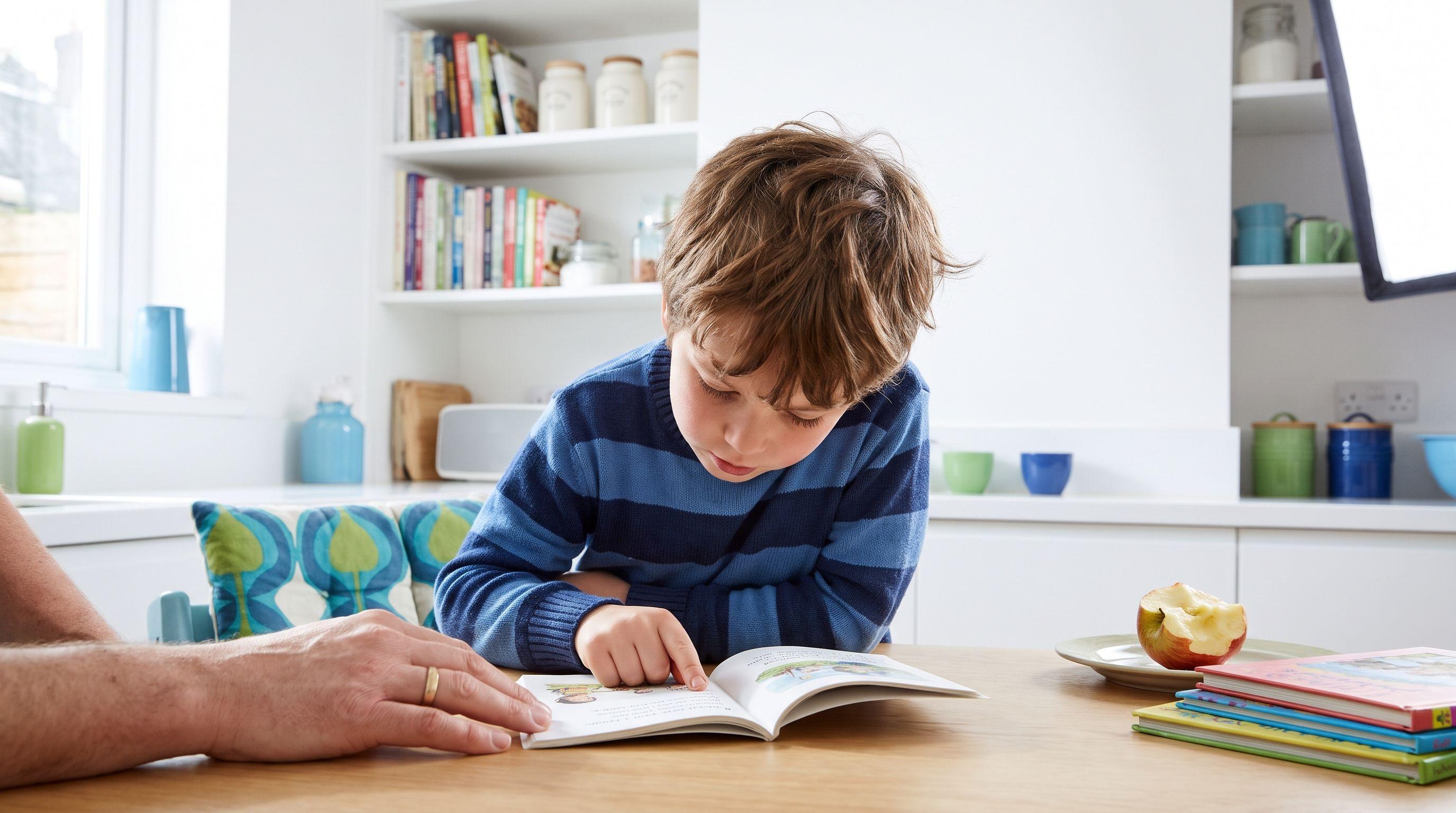
Decodable Readers Australia: 4 Best Sets Ranked by Phonics Stage
Decodable Readers Australia: What You'll Learn
- Match books to taught sounds, not birthdays. Start with simple words, then choose books that practise the next spelling patterns your child knows.
- My first pick is Teach Your Kid to Read for parent-led instruction. For printed books, consider Bob Books, Jolly Phonics readers or All About Reading, depending on your teaching sequence.
- The Year 1 Phonics Check has 40 words: 20 real words and 20 made-up words. Practise decoding unfamiliar words, not memorising a test list.
- Check sample pages before buying. A colour band or stage number doesn't tell you whether your child knows the spellings inside.
Reality Check: Buy the Right Sounds, Not the Biggest Box
Forty beautiful books won't help if the first page asks your beginner to read spellings nobody has taught them. That's an expensive bookshelf decoration, not useful reading practice.
I'm Xia Brody, a Chinese-American homeschooling mum of four, aged 10, 7, 4 and 1. I've taught my oldest two to read, and teaching my four-year-old keeps my advice firmly attached to planet Earth. My answer to the search for decodable readers Australia parents can actually use starts with one question: Which sounds can your child blend without help?
This ranking includes a parent-led app alongside printed reading options because a book supplies practice, while a beginner may also need explicit instruction. For Prep / Foundation / Kindy (ages 5–6; names vary by state), that distinction matters more than the cover design.
The Verdict
How we ranked
- Clear phonics sequence: you need to know which sounds come before each book.
- Text matched to instruction: the child should practise taught spellings, not guess unfamiliar ones.
- Adult guidance: parents need a way to explain errors without supplying every answer.
- Buying fit: distinguish a teaching programme from a book collection before paying.
| Rank and reading option | What it teaches or offers | Price / pricing model | Best-for age or stage |
|---|---|---|---|
| 1. Teach Your Kid to Read | Step-by-step parent-led phonics, with a short story from lesson two | Lesson one free; then a 7-day trial, followed by $9.95/month | My pick for beginners who need an adult to teach sounds and blending; no stated age range |
| 2. Bob Books | Describes its books as a gradual introduction to beginning reading | One-time book purchases | Books created for ages 3–5; match the particular set to skills |
| 3. Jolly Phonics readers | Describes a phonics approach with readers for practising its teaching sequence | One-time print purchases | My pick for beginners already following Jolly Phonics; no verified stated age range |
| 4. All About Reading | Describes a structured reading programme with lessons and readers | One-time purchase per level | My pick for families wanting a fuller adult-led course; choose by placement rather than age |
Full disclosure: I co-founded Teach Your Kid to Read, so weigh my #1 pick accordingly; the rest of the ranking is based on the criteria above.
I recommend Teach Your Kid to Read if you want instruction alongside reading practice: start lesson one free. Lesson one is free, with no card and nothing to cancel. From lesson two, you get a 7-day free trial, then it's $9.95 a month.
For physical sets alone, Bob Books takes my first book-only position for straightforward beginner practice. That doesn't make it the right purchase for a child whose school teaches spellings in a different order.
The Tiger Truth: A Familiar Story Can Hide Weak Decoding
Imagine a child who recites a favourite book beautifully, then reads map as mat on a plain card. The story performance doesn't settle whether they can read the print. Check the actual word.
South Australia's Department for Education describes the Year 1 Phonics Check for Year 1 (ages 6–7) as 40 words, split equally between real words and pseudo-words. Those made-up words check whether children can apply phonics without relying on a memorised vocabulary. They aren't a request to teach nonsense instead of meaningful reading.
A result below the expected standard calls for a conversation about the specific patterns your child needs, not a prediction about their future. Ask for support now rather than waiting for the next school year to begin in late January or February.
The 2000 report from the US National Reading Panel found benefits from systematic phonics instruction. That supports teaching phonics explicitly; it doesn't establish that any particular app or book set wins.
Ranked: Four Reading Options by Phonics Stage
1. Teach Your Kid to Read — Best for Teaching Before Independent Practice
My first pick addresses the problem underneath many unsuccessful book purchases: the child needs someone to teach the sounds before asking them to read the story.
Teach Your Kid to Read is a step-by-step phonics programme that an adult and child do together for about 15 minutes a day. The app teaches the parent what to listen for and how to correct a mistake. Your job isn't to sit across the room and hope the tablet has things covered.
Lesson one teaches m, s, p and short a. The child hears each sound, taps its matching letter, then blends and builds am, map and sap. There's no story in that lesson. From lesson two, each lesson includes a short story built from sounds taught so far.
That sequence earns its place against my first two criteria: instruction comes before connected reading, and the story practises the taught code. The course contains 50 lessons in a fixed order, moving through single-letter sounds, digraphs, blends, vowel teams and silent e to prefixes and suffixes. It also teaches a small set of common irregular words, called “leap words”, by sight.
For buying fit, think teaching programme, not a crate of paperback readers. It runs on iPhone/iPad, Android and the web, so a family can choose the screen they already have.
The limitation: there's no speech recognition; the adult listens and corrects pronunciation. Choose something else if you need an app your child can use alone or software that listens to their reading.
I'd pair this kind of instruction with carefully matched printed books when a family wants extra off-screen practice. More books help only when the spellings fit.
2. Bob Books — Best Book-Only Starting Point for Simple Words
Bob Books describes a gradual approach to beginning reading, and its printed sets suit families who want a physical book rather than another subscription. The books were created for ages 3–5, but that isn't a rule about who may benefit.
My recommendation rests on selecting the right set, not treating every Bob Books title as interchangeable. Look at the sample text and compare its letters and word structures with what your child can already blend.
For a beginner working on short-vowel words, this can make a practical book-only purchase. However, a boxed set doesn't automatically give you the adult guidance of a full teaching course.
Pick it if: you can teach the relevant sounds and want printed practice. Skip ahead to another option if you need a detailed lesson sequence that tells you what to teach next.
3. Jolly Phonics Readers — Best When the Teaching Sequence Matches
Jolly Phonics describes a phonics approach, and its readers make the most sense when your child follows the corresponding teaching sequence. That alignment—not a familiar brand name—earns this option its place.
Ask which reader series and level your school uses. Then inspect the sounds and irregular words in the exact books you plan to buy. “Jolly Phonics” on a listing doesn't tell you everything about that particular pack.
On adult guidance, remember that readers and teaching materials serve different jobs. Buying a reader pack doesn't necessarily mean you're buying the instructions for introducing every spelling inside it.
Pick it if: your child's teacher can identify a matching pack, or you already follow the sequence at home. If the school uses InitiaLit readers, start by asking for that programme's current sound list rather than assuming another brand's level number matches.
4. All About Reading — Best for Families Wanting a Fuller Course
All About Reading describes a structured programme with teaching materials and readers. It offers Pre-Reading followed by Levels 1–4, with a one-time purchase per level.
Its appeal here is the connection between lessons and reading practice. For a parent who wants more than “here's a book, good luck”, a course can make the teaching order easier to follow.
The trade-off is buying fit. If your school already provides explicit instruction and you only need extra reading practice, another full course may duplicate work or introduce a different sequence.
Pick it if: you want to lead a fuller reading programme at home. Use its placement guidance rather than equating Level 1 with Year 1, and check Australian delivery arrangements before ordering.
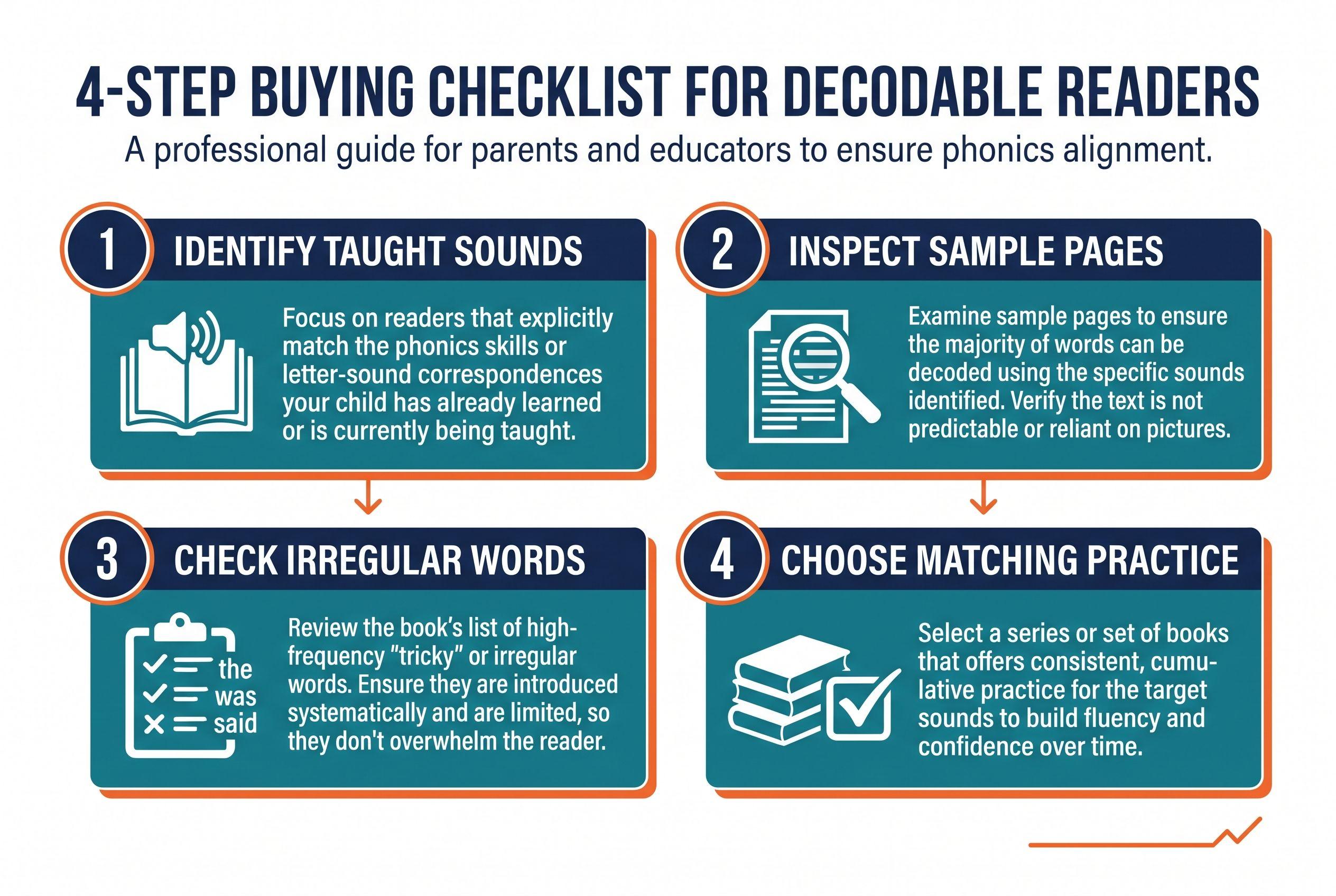
Match Decodable Readers to the Phonics Stage
The best decodable readers Australia families can buy aren't universally the easiest or most popular. They're the books whose spellings match the child's instruction.
Linnea Ehri's 2005 review, Learning to Read Words: Theory, Findings, and Issues, explains how readers form connections between spellings and pronunciations. That's why I care about attention to each letter—not a child memorising the shape of a page.
Stage A: Single-Letter Sounds and Short-Vowel Words
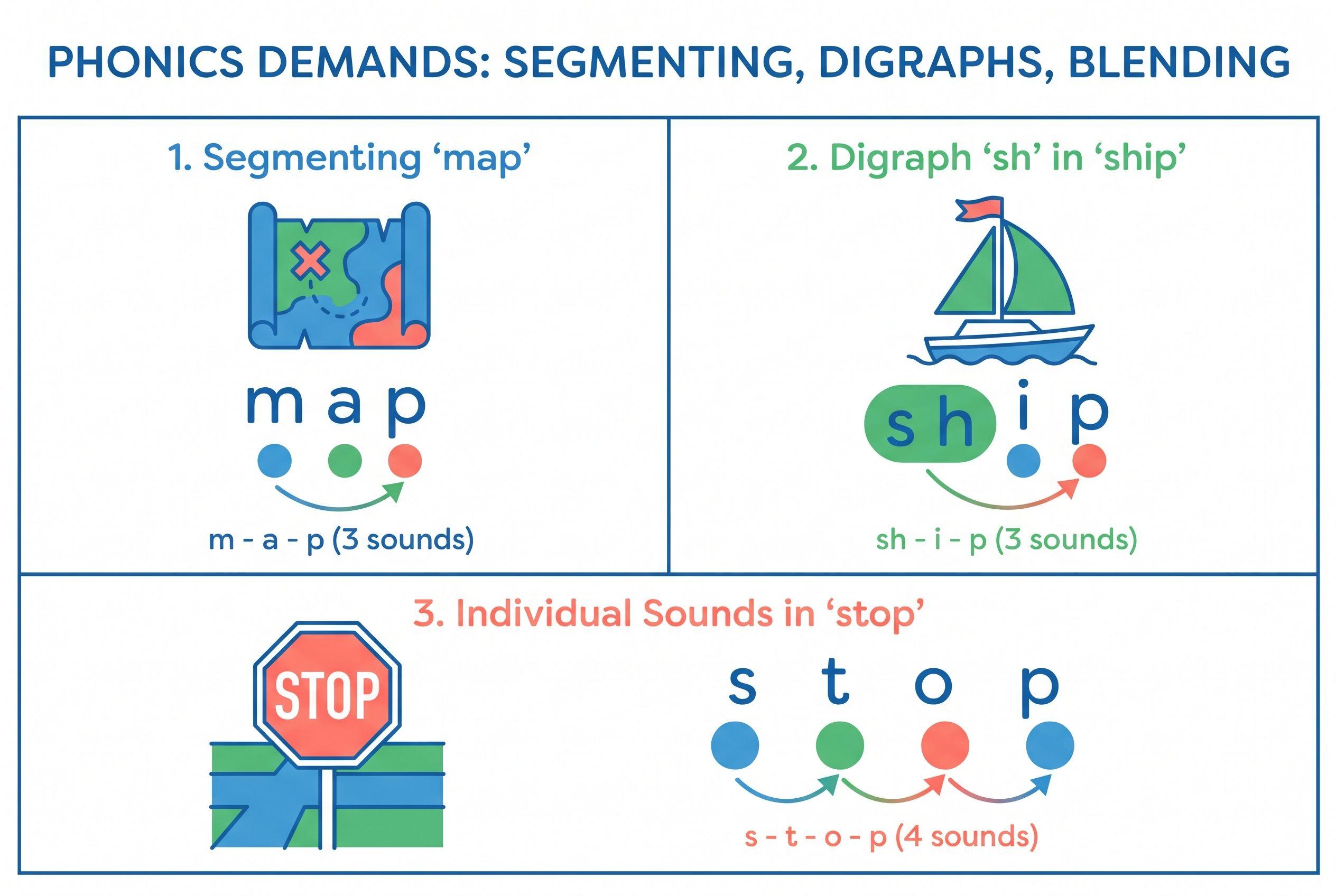
Start with text built largely from letter–sound correspondences your child knows. A CVC word has a consonant–vowel–consonant structure, such as sat or map.
For decodable books for Prep, examine the actual sentence. Sam sat and Sam sees a mouse make very different demands, even if both pages have adorable pictures.
Look for:
- A sound list you can compare with lessons.
- Short text that allows accurate practice.
- Clear information about any irregular words.
If blending itself causes difficulty, the book isn't your first fix. Teach that skill directly; Best App for Blending CVC Words: 6 Phonics Picks Ranked discusses options for that narrower need.
Stage B: Digraphs and Adjacent Consonants
A digraph uses two letters for one sound, as sh does in ship. Adjacent consonants retain their individual sounds, as s and t do in stop.
Those aren't the same task. A child might recognise sh immediately but leave out the /t/ in stop.
For decodable readers Year 1 families can use, look beyond “next level”. Choose text that targets the missing skill while keeping other demands manageable.
Stage C: Vowel Spellings and Longer Words
Later books introduce more vowel spellings and longer word structures. Check the particular patterns: knowing ai in rain doesn't mean your child already knows a_e in made.
Johnston and Watson's Scottish Clackmannanshire study (2005) followed children's reading development over seven years after different early phonics approaches. Its findings support attention to systematic instruction, not a claim that buying a particular reader series guarantees success.
When children tackle longer words, introduce useful word parts alongside spelling patterns. Reading help, helpful and unhelpful gives a concrete reason to discuss prefixes and suffixes.
The Action Step: Check Before You Buy
- Find the current teaching point. Ask the teacher which sounds, spellings and irregular words your child has learnt. If the classroom uses InitiaLit, request the matching reader guidance.
- Check unfamiliar words. Try our free phonics skill check to identify the first pattern to practise. Treat it as a starting point, not a diagnosis or replacement for the school's check.
- Inspect sample pages. Compare every unfamiliar spelling with the taught list. Don't rely on the colour band or the child's age.
- Choose one manageable purchase. Buy a matching set or select a teaching programme before collecting several competing sequences. Keep your plan boringly clear (yes, really).
- Read together and correct specifically. Point to the spelling, supply or prompt the sound, then help your child blend the whole word. Finish by rereading the sentence for meaning.
- Track the error, not just the finished book. Write “misses /t/ in stop” rather than “bad reading day”. Share repeated difficulties with the teacher and ask what targeted support comes next.
If you need help teaching before adding more books, lesson one is free.
Keep the Practice Useful—and the Pressure Sensible
My tiger rule is “No Guessing.” Pictures support discussion and enjoyment; they shouldn't supply the identity of an unfamiliar printed word. Ask “What do these letters say?” rather than “What would make sense?”
“We Never Skip” is my reminder to protect the routine, not to push a distressed or ill child through a lesson. On a difficult day, make the practice smaller. Accuracy beats a theatrical battle over finishing a page.
Keep reading richer books aloud, too. Decodable text practises word reading; your conversations and read-alouds develop vocabulary and understanding beyond the spellings a beginner can currently decode.
If school-year terminology confuses a relative buying books, our US / UK / Australia school-year chart helps compare ages across systems. For an older child, Year 2 Reading Level Australia: Signs + Next Steps explains what to discuss with the school in Year 2 (ages 7–8).
Choose the next teachable step—not the biggest bundle. If you want guidance through that step, start with lesson one.
FAQ
What are the best decodable readers in Australia?
The best set matches the sounds and spellings your child has learnt. My book-only starting pick here is Bob Books for simple beginner practice; Jolly Phonics readers make sense when that teaching sequence matches. Choose a fuller programme if you also need instruction.
Are InitiaLit readers the same as other decodable books?
They share the purpose of practising decoding, but different series can introduce spellings in different orders. Ask your child's teacher which InitiaLit readers match current lessons. Don't assume another publisher's stage number means the same thing.
Should decodable readers replace picture books?
No. Use decodable readers for the child's decoding practice and read richer picture books aloud for enjoyment, language and discussion. Within decoding practice, teach the printed word rather than asking the child to guess from the illustration.
What if my child struggles with the Year 1 Phonics Check?
Ask which sounds, spelling patterns or blending skills caused difficulty and what instruction the school will provide. Choose practice that targets those needs. Persistent difficulties deserve timely support; one check doesn't diagnose dyslexia or set a ceiling on progress.
From teachyourkidtoread.org/blog/decodable-readers-australia-best-sets-by-phonics-stage
Part of these guides

Xia Brody
Co-Founder, Teach Your Kid to Read
Mom of 4 who has successfully taught her kids to read. Currently in the trenches with her 4-year-old while her two oldest (10 and 7) devour books on their own. Passionate about phonics-based methods and building a lifelong love of reading.
Related Articles
Year 2 Reading Level Australia: Signs + Next Steps
Your child can finish a book and still struggle to read unfamiliar words. Here's what to look for in Year 2, what reading benchmarks can tell you and how to get help without another term of waiting.
Read More →
Read Write Inc vs Little Wandle: UK Parent Guide
Choose Read Write Inc or Little Wandle to match your child’s school, rather than starting a competing sequence at home. Here’s how the two compare, plus four home-support options and a clear plan for spotting gaps.
Read More →
6 Best Decodable Book Apps for 1st Graders, Ranked (2026)
A book isn't decodable just because its sentences look short. Here are six apps ranked for first-grade decoding practice, with clear distinctions between phonics courses, book activities and broader reading programs.
Read More →