6 Best Decodable Book Apps for 1st Graders, Ranked (2026)
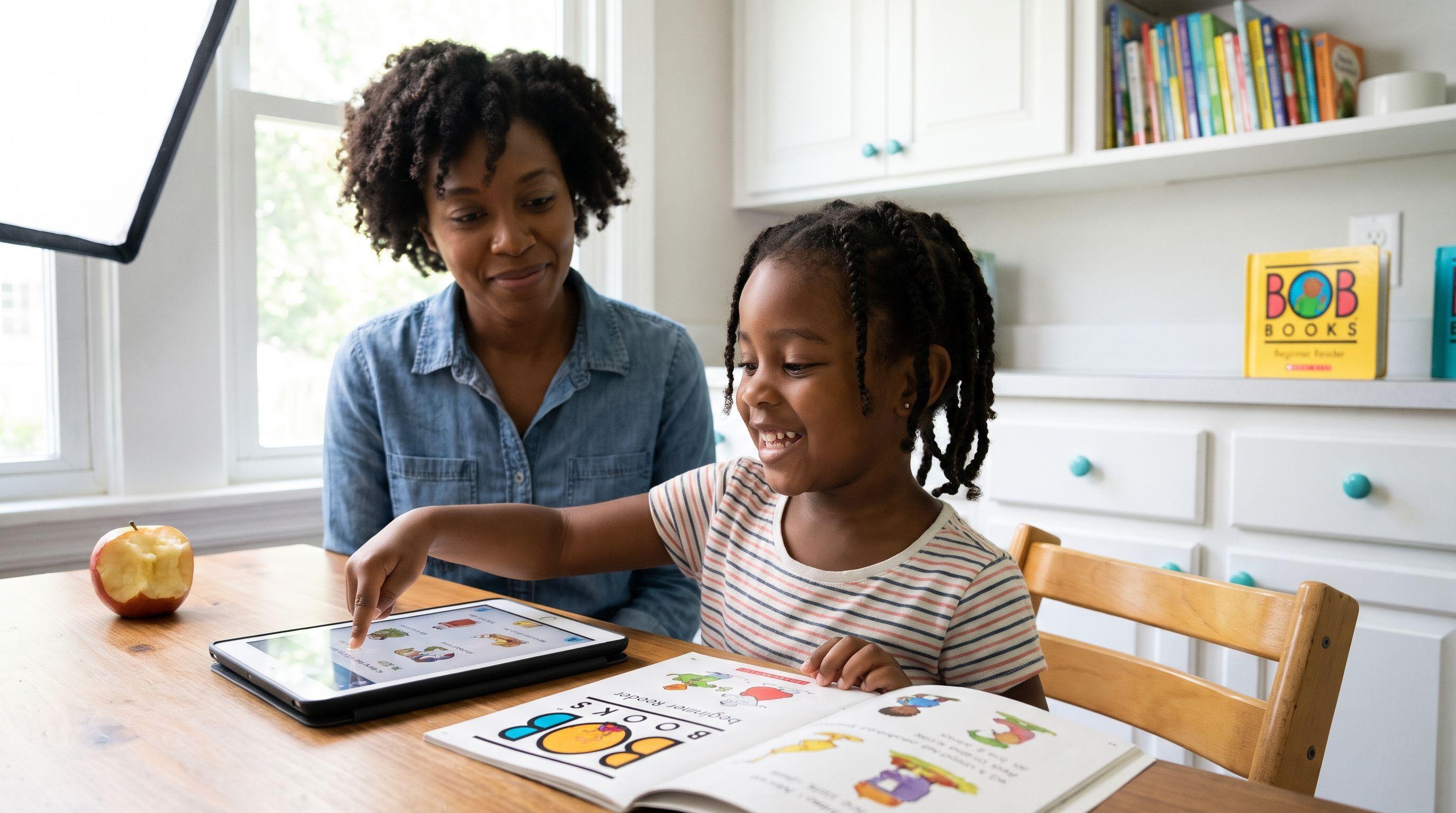
A tiny digital book can hide a big guessing problem.
I'm Xia Brody, a Chinese-American homeschooling mom of four, ages 10, 7, 4 and 1. I've taught my two oldest to read, and teaching my 4-year-old reminds me: a cheerful tap isn't accurate reading.
For 1st grade (ages 6–7), the best decodable book apps match known sounds to readable print. That's my ranking filter—not animated applause.
What You'll Learn
- Teach Your Kid to Read ranks first for adult-led decoding lessons, with short stories starting in lesson two—not a separate book library.
- Reading.com, Reading Eggs, Hooked on Phonics, Bob Books Reading Magic and Starfall fill different needs. These aren't six interchangeable decodable libraries.
- Match the text to taught phonics patterns. Short sentences and controlled vocabulary alone don't make a book decodable for your child.
- Check an unfamiliar word before subscribing. A child who guesses from pictures needs help connecting sounds to letters, not another stack of memorized stories.
Imagine a child sees a dog beside “The pup ran” and reads, “The dog runs.” The meaning fits. The print doesn't.
I've included phonics programs alongside book-based apps because this category overlaps. Don't mistake a lesson-based course for a standalone decodable library.
The Verdict
How we ranked
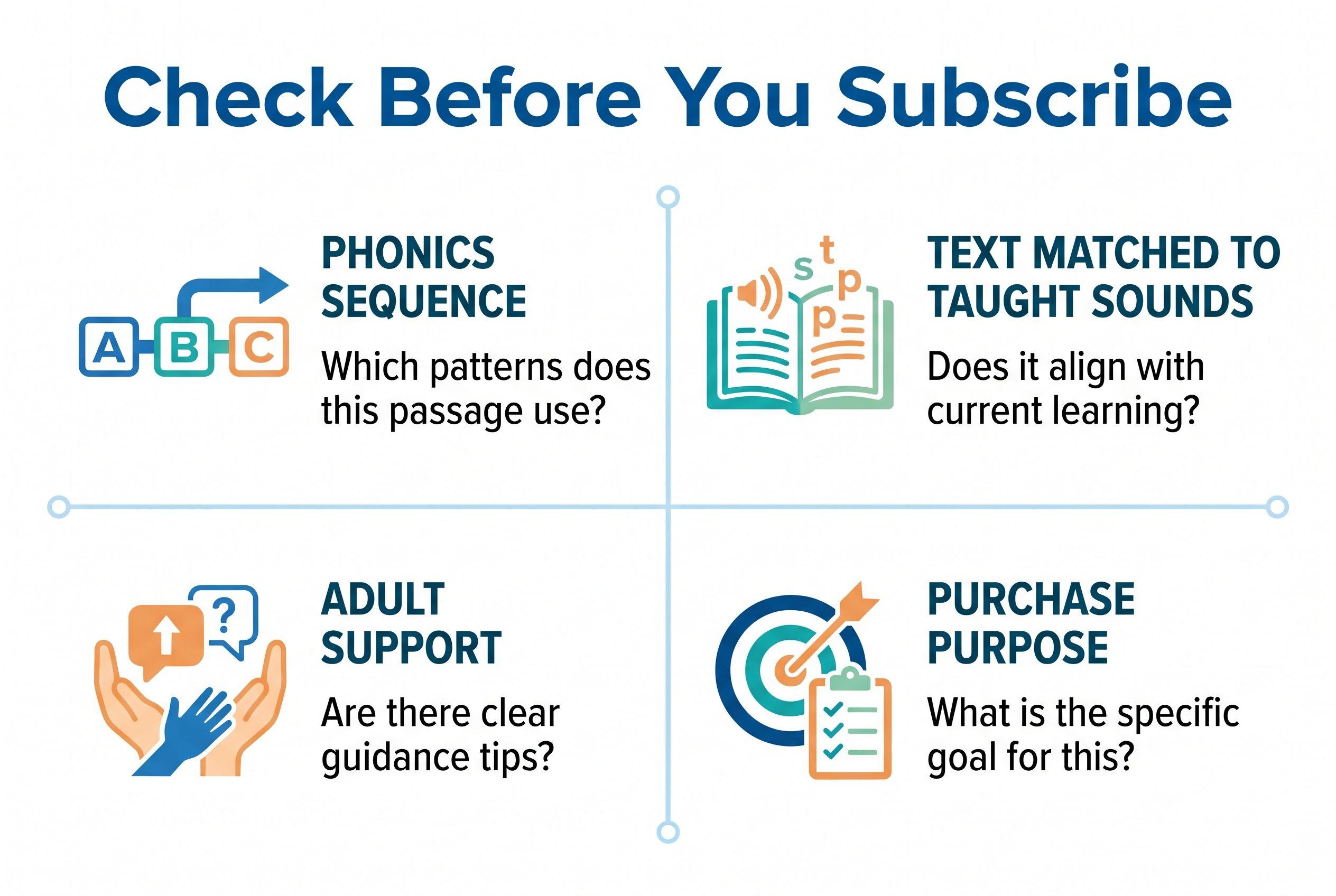
- Phonics sequence: Does reading practice follow a clear order of sound-spelling patterns?
- Text fit: Can parents connect the reading material to what their child already knows?
- Adult support: Can a parent help catch guessing instead of celebrating completion alone?
- Purpose and cost: Does the purchase match your need for instruction, book practice or broader activities?
| App | What it teaches or offers | Price / pricing model | Best-for age |
|---|---|---|---|
| 1. Teach Your Kid to Read | Step-by-step parent-led phonics; short stories from lesson two | Lesson one free, then 7-day trial, US$9.95/mo | My recommendation: ages 6–7 needing decoding instruction |
| 2. Reading.com | Describes itself as a parent-child phonics program | US$12.49/month (checked October 2026) | Stated ages 3–8; my pick here for ages 6–7 with adult help |
| 3. Reading Eggs | Describes a broader reading program, with Fast Phonics as a phonics component | US$13.99/month (checked October 2026), Reading & Math, up to 4 children | Fast Phonics stated ages 5–10 |
| 4. Hooked on Phonics | Describes phonics lessons with reading practice | Subscription; 7-day free trial in the app | Stated App Store ages 3–8 |
| 5. Bob Books Reading Magic | Describes interactive beginning-reading activities based on Bob Books | Paid app; free Lite version | App Store category: Made for Ages 0–5; my pick for older beginners reviewing basics |
| 6. Starfall | Describes phonics activities and beginning-reading material within broader learning content | Free tier; Home Membership US$35.00/year (checked October 2026) | My recommendation here: ages 6–7 reviewing early phonics |
Full disclosure: I co-founded Teach Your Kid to Read, so weigh my #1 pick accordingly; the rest of the ranking is based on the criteria above.
Prices checked October 2026.
I recommend Teach Your Kid to Read for side-by-side phonics instruction; start lesson one free. Lesson one is free, with no card and nothing to cancel. From lesson two, the whole program is a 7-day free trial, then US$9.95 a month.
The Tiger Truth: Guessing Doesn't Fix Itself
Only 31% of US 4th graders (ages 9–10) scored at or above Proficient in reading on the 2024 NAEP. That doesn't mean everyone below Proficient can't read. It does show why “school will sort it out eventually” isn't much of a plan.
The US National Reading Panel, in its 2000 report, found benefits from systematic phonics instruction. That supports teaching phonics—not a claim that researchers evaluated every app here.
My tiger rule is No Guessing. If your child repeatedly substitutes plausible words, address that habit now; don't wait for longer school texts to make avoidance more tempting. Older children can improve, too. Early help simply avoids unnecessary months of frustration.
Ranked: The 6 Best Decodable Book Apps
1. Teach Your Kid to Read: Best for Side-by-Side Instruction
This is my first choice when a parent needs help teaching, not just help finding another story. Teach Your Kid to Read gives the adult a step-by-step phonics program and explains what to listen for when the child makes a mistake.
Lesson one teaches m, s, p and short a. Your child hears each sound, taps the matching letter, then blends and builds am, map and sap. There's no story yet. That matters: the first job is connecting sounds to print, not pretending a beginner already has enough code for a whole bookshelf.
From lesson two, the child reads a short story built from sounds taught so far. The 50 lessons follow a fixed order through digraphs such as sh, ch and th, blends, vowel teams and silent e, then prefixes and suffixes. The app also teaches a small set of common irregular words by sight, calling them “leap words.”
Against my ranking criteria, its strongest feature is the connection between instruction and reading practice. You don't have to choose a random book and hope its spelling patterns match yesterday's lesson. Sessions take about 15 minutes a day, with an adult alongside.
Parents can view every lesson and jump to one when appropriate. Several children can share an account, and the program runs on iPhone, iPad, Android and the web. For my purposes, that flexibility matters more than another reward animation.
Honest limitation: it has no separate leveled-book library. Families seeking a large library or comprehension practice should choose something else; this program teaches phonics and decoding.
2. Reading.com: Best Alternative for Parent-Child Phonics
Reading.com describes a parent-child phonics program for ages 3–8. That adult-child arrangement fits my support criterion: a nearby parent can notice when a child reads pat as pet, rather than assuming screen activity means successful reading.
I place it second for families comparing guided instruction rather than shopping only for books. Its stated purpose aligns more closely with that need than a collection of unrelated literacy games.
Before subscribing, examine how its reading material follows its lesson sequence. Ask a practical question: “Can I tell which spelling patterns this passage expects my child to know?” That's how I'd judge any decodable books app, regardless of its marketing.
My verdict: shortlist it if you want another parent-child phonics option. If your main need is a browsable library to accompany an existing curriculum, check that requirement separately rather than assuming a phonics subscription supplies it.
3. Reading Eggs: Best for Broader Reading Activities
Reading Eggs describes a broader reading program, while its Fast Phonics component targets ages 5–10. That distinction matters. “Reading Eggs” names a wider offering, not one uniform sequence of decodable readers for 1st grade.
Its breadth earns it a place here, but also creates a selection job for parents. Look specifically at the phonics pathway and the reading practice attached to it. Don't treat every available activity or book as equally suitable for decoding practice.
Against the text-fit criterion, I'd want to see the actual passage before assigning it. Does your child know the vowel pattern? Does the activity ask for reading, or can your child succeed through listening and tapping?
My verdict: consider it when your family wants broader activities alongside phonics. For a child who already gets distracted by choices, a narrower daily sequence may make your job easier.
4. Hooked on Phonics: Best for a Lesson-and-Practice Routine
Hooked on Phonics describes phonics instruction with reading practice, and its App Store listing gives ages 3–8. That makes it relevant to a first grader who still needs deliberate work on early decoding.
Its appeal in this ranking is the lesson-plus-practice structure. Teaching a spelling pattern and then meeting it in reading makes more instructional sense than handing a beginner a book chosen only by topic.
Check the exact subscription contents before buying, though. Judge the digital reading material itself, not just the familiar program name. Can you identify the patterns in a passage and connect them to instruction?
My verdict: a reasonable shortlist option for families seeking a regular phonics routine. Compare the actual plan with your needs; don't assume every subscription arrangement offers identical digital or physical materials.
5. Bob Books Reading Magic: Best for Basic Word Practice
Bob Books Reading Magic describes interactive activities based on Bob Books. I distinguish that from a large digital bookshelf: book-related word activities and extended reading serve different purposes.
Its App Store category says Made for Ages 0–5. My recommendation for an older beginner rests on skill need, not that age label. A first grader who struggles to blend simple words may still need basic practice without anyone making a fuss about the number on the birthday cake.
For sequence and text fit, inspect the available content and compare it with the sounds your child knows. The Lite version can help you examine the format before purchasing; it doesn't establish that the full app will cover every first-grade phonics need.
My verdict: consider it for a narrow beginning-word practice need. Don't choose it expecting a complete replacement for connected-text reading and broader instruction.
6. Starfall: Best Budget Entry Point for Guided Practice
Starfall describes phonics activities and beginning-reading material within a broader learning offering. Its free tier gives parents an entry point, while paid membership adds access.
I rank it sixth because this particular search calls for close matching between instruction and decodable text—not simply an appealing place to practice literacy. A parent still needs to select material and listen to the child read.
Look for reading that rehearses a known pattern. If a child needs short-vowel practice, don't jump to harder material because the illustrations look more exciting. Honestly, “but this one has a dragon” isn't a phonics placement rule.
My verdict: useful to consider for budget-conscious supplemental practice. I'd keep the adult in charge of the sequence rather than letting activity choice determine instruction.
What Makes Text Decodable for Your Child?
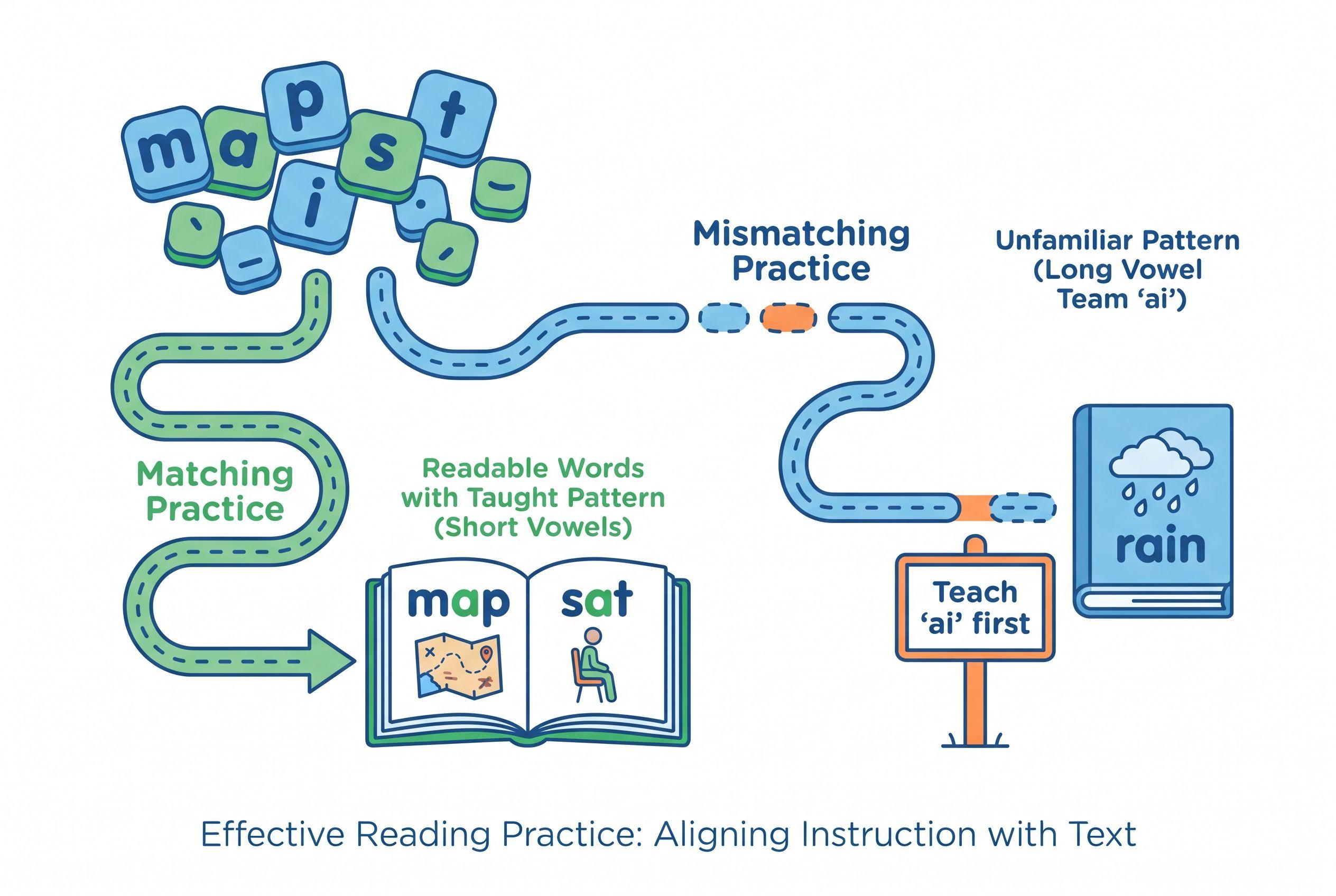
Decodable describes a relationship between the text and the reader's instruction. A passage full of rain, boat and seed may suit a child who knows those vowel teams. It won't suit a child who has only learned short vowels.
Controlled vocabulary can limit the words in a book without controlling the spelling patterns. Repeating “I see a…” doesn't automatically teach a beginner how to read the changing final word.
Linnea Ehri's 2005 review, Learning to Read Words: Theory, Findings, and Issues, explains how readers form connections between spellings and pronunciations. This orthographic mapping helps words become familiar through their letters and sounds—not through memorizing the shape of a whole page.
That's why my test for the best decodable book apps starts with print. Pictures can support meaning after reading; they shouldn't supply the word instead of reading.
For a fuller view of expected skills, use the first grade reading benchmarks. You can also read First Grade Reading Level: Skills, Books & Red Flags (2026 Guide) before choosing harder phonics readers.
The Action Step: Match One Passage Before You Pay
- Find the first gap. Use our free phonics skill check to check real and made-up words. Record the first pattern your child struggles with rather than hunting for a flattering level.
- Choose a matching sample. Look for a passage using patterns your child already knows, plus the specific pattern you're teaching. Identify unfamiliar irregular words before reading.
- Listen without supplying the answer. If your child guesses, point back to the letters. Say, “Look through the whole word. Say the sounds, then blend.” Model it if needed.
- Reread for accuracy and meaning. After decoding, ask your own simple question about what happened. Smooth reading without understanding isn't the finish line.
- Choose the right purchase. Pick instruction for missing phonics knowledge, matched texts for practice or broader support for persistent difficulty. Keep a short note of recurring errors to share with the teacher or reading specialist.
For adult-led instruction, start with lesson one and listen closely to the blending.
Choose the Job Before Choosing the App
The best decodable book apps solve a specific problem. They don't all solve the same one.
For side-by-side instruction, my first pick is Teach Your Kid to Read. If your child already receives clear phonics teaching and mainly needs more books, prioritize a collection that matches that teaching sequence instead.
Keep reading aloud to your child, too. Rich stories build knowledge and vocabulary while simpler decodable text gives the child an achievable reading job. Those are partners, not rivals.
Ready to see whether a parent-led lesson fits? Lesson one is free.
FAQ
What are the best decodable book apps for first graders?
My ranking puts Teach Your Kid to Read first for parent-led instruction, followed by Reading.com, Reading Eggs, Hooked on Phonics, Bob Books Reading Magic and Starfall. These include phonics courses and book-based practice, not six standalone decodable libraries. Choose by the skill your child needs next.
Is every early-reading app a decodable text app?
No. An app might offer narrated stories, repeated sentences or word games without matching text to a phonics sequence. Check actual passages against the sound-spelling patterns your child knows.
Should my child read the same decodable story again?
Yes, rereading can help accuracy and fluency. Also check a different passage with the same patterns so you can distinguish transferable decoding from remembering one familiar story.
What if my first grader still guesses simple words?
Check letter-sound knowledge and blending, then practice with matching text. Tell the teacher about recurring errors and request a closer assessment if difficulty continues. Don't wait until the end of the school year to ask for support.
From teachyourkidtoread.org/blog/6-best-decodable-book-apps-for-1st-graders-ranked-2026

Xia Brody
Co-Founder, Teach Your Kid to Read
Mom of 4 who has successfully taught her kids to read. Currently in the trenches with her 4-year-old while her two oldest (10 and 7) devour books on their own. Passionate about phonics-based methods and building a lifelong love of reading.
Related Articles
6 Orton-Gillingham Apps for 1st Graders at Home, Ranked
An OG label doesn't tell you whether an app teaches your child to decode. Here are six options for home practice, their limits and the parent-led routine that matters more than screen-time streaks.
Read More →
Best Reading Apps for 1st Graders: 6 Skill Picks
Looking for the best reading apps for 1st graders? Here are 6 skill-based picks ranked by phonics strength, decoding practice, fluency support, and what parents need to watch closely.
Read More →
Best Reading App for a 1st Grader Who Guesses Words
If your 1st grader guesses words from pictures, that’s not reading — that’s coping. Here’s the no-nonsense app comparison I’d use with my own kids.
Read More →