6 Best Reading Apps for ESL Kids in 1st and 2nd Grade, Ranked
A child who doesn't know what sap means can still read every sound correctly. That distinction matters more than another cheerful app mascot.
For US 1st grade (ages 6–7) and 2nd grade (ages 7–8), I look for two things: instruction that teaches children to read English print and conversation that makes those words meaningful. The best reading apps for ESL kids should support that work—not confuse limited English vocabulary with limited ability.
What You'll Learn
- My first pick is Teach Your Kid to Read for parent-led decoding practice, not independent screen time or a complete English-language course.
- Reading Eggs offers a broader set of reading activities; Khan Academy Kids and Duolingo ABC offer free options.
- Reading.com fits adult-child lessons; Raz-Kids fits additional book and comprehension practice. Neither category automatically replaces the other.
- Check sounds, blending and word meaning separately. A child may need help with just one of those areas.
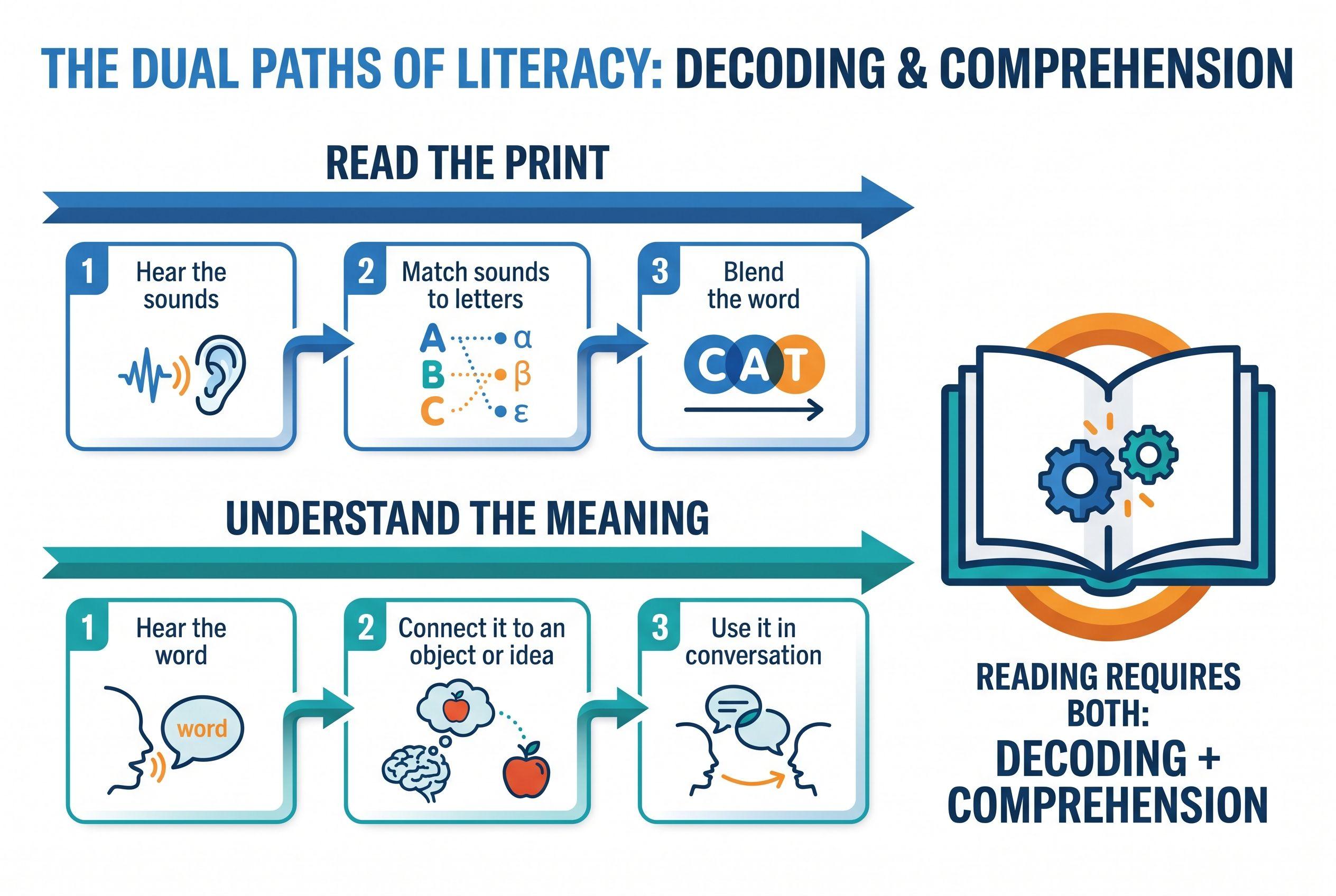
Here's my reality check: conversational English and reading English don't develop in lockstep. A chatty child can struggle to blend ship; a quiet newcomer can decode it accurately without knowing its meaning.
I'm homeschooling four kids, ages 10, 7, 4 and 1, and I've taught my two oldest to read. My kitchen-table rule stays simple: find the missing skill before buying more practice. A second subscription won't diagnose the first problem.
The Verdict
This ranking prioritizes beginning English decoding with adult support. It isn't a ranking of complete ESL courses, and a child who already decodes accurately may need a different first choice.
How we ranked
- Clear phonics sequence: Children need a next step, not random letter games.
- Connection to meaning: English learners need vocabulary and conversation alongside decoding.
- Useful adult involvement: Parents need to hear errors and respond without treating an accent as failure.
- Practical fit: Cost, reading stage and supervision matter more than the mascot.
| Rank and app | What it teaches or how it describes itself | Price / pricing model | Best-for age |
|---|---|---|---|
| 1. Teach Your Kid to Read | Step-by-step, parent-led phonics and decoding | Lesson one free, then 7-day trial, US$9.95/month | My recommendation: ages 6–8 needing foundational decoding |
| 2. Reading Eggs | Presents a reading suite with phonics, reading activities and comprehension practice | US$13.99/month or US$99.99/year (checked October 2026); Reading & Math, up to 4 children; 30-day free trial | My recommendation: ages 6–8; stated suite range 2–13 |
| 3. Reading.com | Describes parent-child lessons focused on learning to read | US$12.49/month; yearly US$74.94 (checked October 2026) | Stated ages 3–8 |
| 4. Khan Academy Kids | Describes early learning across literacy and other subjects | Free; no ads or subscriptions | Stated ages 2–8 |
| 5. Duolingo ABC | Describes early literacy lessons covering phonics and reading | Free; no ads or in-app purchases | Stated ages 3–8 |
| 6. Raz-Kids | Describes digital books with listening, reading and comprehension activities | Annual license, mostly bought by schools and teachers | My recommendation: ages 6–8 who need additional book practice |
Full disclosure: I co-founded Teach Your Kid to Read, so weigh my #1 pick accordingly; the rest of the ranking is based on the criteria above.
Prices checked October 2026.
I recommend Teach Your Kid to Read if your child needs help turning letter sounds into words and you can sit alongside; start lesson one free. Lesson one is free, with no card and nothing to cancel. From lesson two, the whole program is a 7-day free trial, then US$9.95 a month.
The Tiger Truth: Waiting Doesn't Teach the Missing Skill
Only 31% of US fourth graders (ages 9–10) scored at or above Proficient in reading on the 2024 NAEP. That doesn't mean everyone below Proficient can't read, and it doesn't describe English learners specifically. It does show that reading difficulty deserves attention rather than a vague promise that time will fix it.
The US National Reading Panel, in its 2000 report, found benefits from systematic phonics instruction. Diane August and Timothy Shanahan's 2006 report, Developing Literacy in Second-Language Learners, also highlighted the importance of oral English proficiency for literacy development among English learners.
My takeaway? Teach decoding explicitly and build spoken language. Don't postpone help because a child is learning English, but don't label normal second-language development as a reading disability either. Those findings support instruction—not proof that any app here delivers a particular result.
Ranked: The 6 Best Reading Apps for ESL Kids
1. Teach Your Kid to Read: Best for Parent-Led Decoding
This is my first choice when the problem sounds like, “She knows some letters, but she can't put the sounds together.” It's a step-by-step phonics program that a parent and child do side by side for about 15 minutes a day.
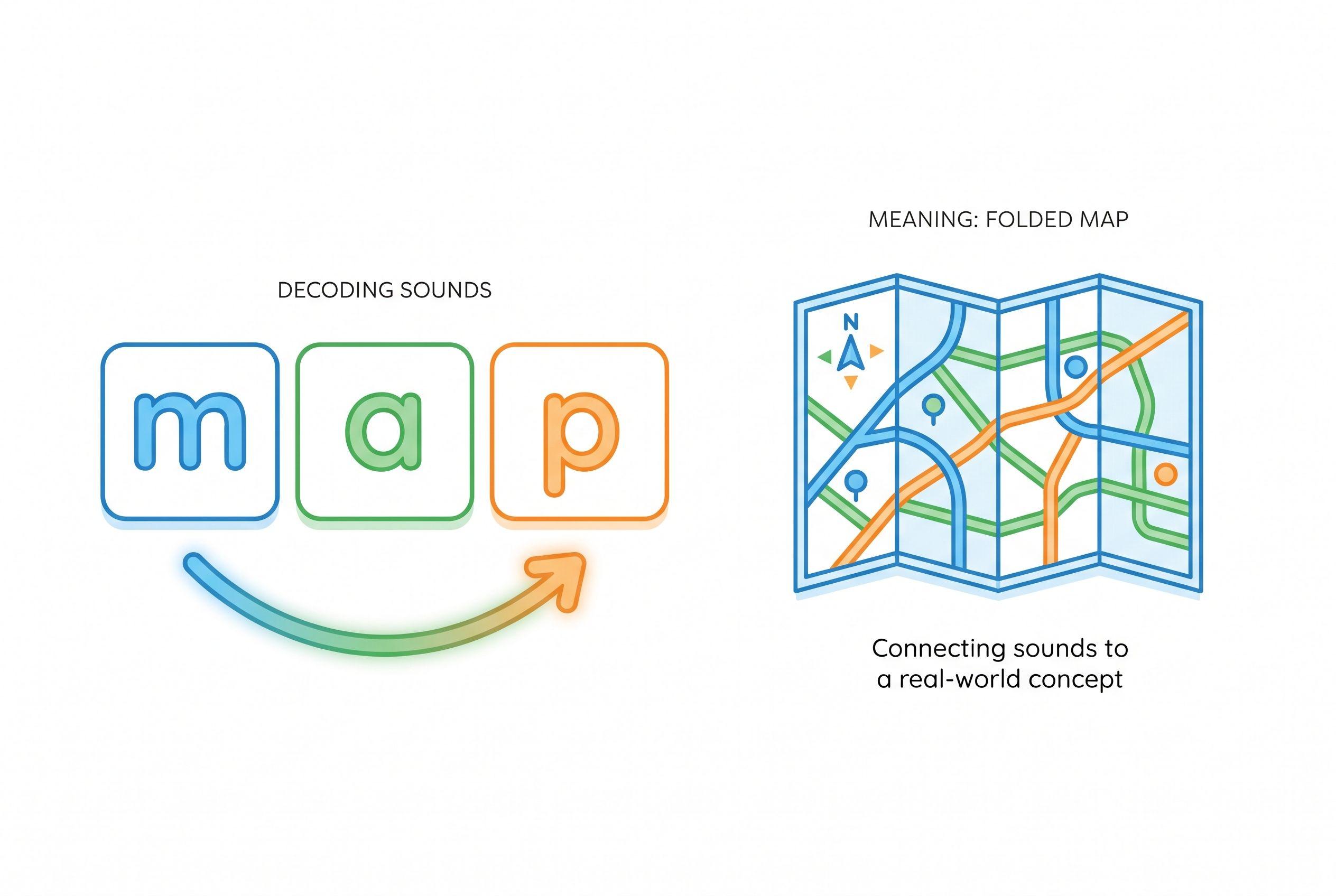
Lesson one introduces m, s, p and short a. Your child hears each sound, taps the matching letter and blends and builds am, map and sap. There's no story in that first lesson; from lesson two, each lesson includes a short story using sounds taught so far.
That small starting set gives a parent something concrete to hear. Did your child recognize m? Blend map? Understand what a map does? Those are three different questions, and I don't want a celebration animation answering all three for me.
The course contains 50 lessons in a fixed order, moving through digraphs such as sh, ch and th, blends, vowel teams, silent e, prefixes and suffixes. It also teaches a small set of common irregular words by sight, calling them “leap words.”
For English learners, I'd add a quick meaning check myself: point to a map or explain sap as liquid inside a tree. That's my teaching recommendation, not an app feature. Don't make a child decode an unfamiliar word and then assume silence means failure.
The app teaches the adult what to listen for and how to correct mistakes. It runs on iPhone/iPad, Android and the web, and several children can share one account.
The limitation: it has no speech recognition; the parent listens and checks pronunciation. Choose something else if you need the app itself to hear and correct your child's speech, or if you need independent use while you do something else.
Verdict: Strongest fit here for a clear decoding sequence with an involved adult. Add oral vocabulary and conversation outside the lesson.
2. Reading Eggs: Best for Broader Reading Practice
Reading Eggs presents several connected reading programs rather than one narrow phonics course. Its stated ranges include Reading Eggs for ages 3–7, Fast Phonics for ages 5–10 and Eggspress for ages 7–13.
That breadth makes it worth considering when English learners need more than beginning blending. But choosing the right section matters: a child who still struggles with short vowels doesn't automatically belong in harder material because they're seven.
Against my criteria, breadth helps with practical fit and meaning-focused practice. The parent still needs to check whether the chosen activity addresses the actual phonics gap. A busy menu isn't a teaching plan by itself.
I'd ask a child to read a word away from the activity, then explain or show its meaning. If those answers differ, adjust the support rather than simply increasing screen time.
Verdict: A useful broader option; choose its component by reading skill, not birthday.
3. Reading.com: Best Alternative for Adult-Child Lessons
Reading.com describes an adult-child approach to learning to read and lists ages 3–8. That makes it a relevant comparison for parents who want lessons together rather than an app that occupies a child alone.
The adult involvement fits this ranking well. An English learner may need you to explain a direction, model a sound or pause over an unfamiliar word. Sitting nearby makes those little misunderstandings visible.
Before subscribing, examine its public lesson examples for the phonics sequence and correction guidance you want. Don't assume that a parent-led reading program also supplies a complete English vocabulary curriculum.
For a reading app for English language learners, my question isn't “Will this keep her busy?” It's “Will I know what to help her practice afterward?”
Verdict: A strong alternative to investigate for shared lessons, with conversation and vocabulary teaching alongside.
4. Khan Academy Kids: Best Free Broad-Learning Option
Khan Academy Kids describes learning across early literacy and other subjects for ages 2–8. It's free, with no ads or subscriptions—a meaningful advantage when a family can't add another monthly payment.
Its broader learning content makes it a reasonable supplement for children developing English vocabulary while practicing early reading. Still, a broad program and a targeted phonics sequence serve different purposes.
I'd select an activity with a specific goal, then bring that learning into conversation. If the activity includes an animal, for example, ask, “What does it eat?” Accept a gesture or home-language response while helping your child find the English expression.
On my criteria, access and breadth stand out. Parents still need to identify the decoding skill that needs attention rather than treating every completed activity as reading progress.
Verdict: My free broad-learning pick, especially when an adult helps connect activities to real conversation.
5. Duolingo ABC: Best Free Literacy-Focused Option
Duolingo ABC describes early literacy instruction and lists ages 3–8. It offers a free option without ads or in-app purchases.
The distinction matters: an English literacy app isn't automatically an ESL course. A child may follow letter activities while missing vocabulary in directions or stories.
I'd consider it for a family seeking literacy-focused practice without a subscription. Then I'd check transfer: can the child read the same sound pattern on paper, without prompts from the activity?
Searching “ell reading app 1st grade” won't settle that question. Watch one small skill. If your child recognizes sh in the app but guesses shop on a card, more independent tapping isn't the only answer.
Verdict: A useful free reading option; keep adult checks for understanding and independent decoding.
6. Raz-Kids: Best for Additional Book and Comprehension Practice
Raz-Kids describes digital books with listening, reading and comprehension activities. Schools and teachers commonly buy its annual licenses, so ask your child's school about access before arranging your own.
It ranks sixth for this particular goal because additional book practice isn't the same as teaching a missing sound-spelling pattern. For a child who already decodes accurately but needs more English vocabulary and discussion, I'd move it higher on the shortlist.
Listening can model language. Pictures can explain meaning. Neither proves that a child read the printed word independently.
Imagine a child sees a boat and says “boat” while the page says ship. Discuss the picture afterward, but return to sh–i–p for word reading. No guessing disguised as comprehension, please.
Verdict: Consider it for supported reading and meaning-making, not as an automatic replacement for explicit phonics.
Your Action Plan: Match the App to the Missing Skill
The best reading apps for ESL kids won't all suit the same child. Here's how I'd narrow the list without spending a weekend comparing mascots.
- Check decoding separately. Use our free phonics skill check to look for the first sound pattern that needs practice. Explain unfamiliar directions, and remember that a home check doesn't diagnose a disability.
- Check meaning separately. After your child reads map, ask them to point to one or explain it in either language. Accurate reading with uncertain meaning calls for vocabulary support—not automatically easier phonics.
- Choose one main job. Pick parent-led phonics for blending gaps, broader learning for extra language exposure or supported books for reading-and-discussion practice. Don't buy three subscriptions to avoid making that decision.
- Hear a small sample away from the screen. Write a few words using the pattern your child practiced. Note the exact difficulty, such as confusing short vowels or dropping a final sound, rather than writing “bad at reading.”
- Discuss persistent difficulty with the school. Ask how staff assess both English-language development and literacy, and how they interpret tools such as DIBELS for multilingual learners. Request instruction now while any evaluation proceeds.
If decoding is the gap and you can sit alongside, begin with lesson one.
For school expectations, compare the first grade reading benchmarks and the second grade reading benchmarks. Treat those pages as discussion aids, not a race against children with different English-language exposure.
If avoidance or frustration keeps growing, Is My 2nd Grader Behind in Reading? 9 Signs can help you prepare questions for the teacher. Difficulty across a child's languages deserves attention too; multilingualism itself isn't a disorder.
Keep the Home Language—and Keep Teaching
Honestly, replacing rich family conversation with English nobody feels comfortable speaking makes no sense to me. Keep telling stories, explaining recipes and reading aloud in the language you know best. Add English intentionally rather than treating the home language as an obstacle.
My “No Guessing” rule applies to identifying printed words, not to exploring meaning. My “We Never Skip” rule means protecting a regular learning habit—not pushing through illness or tears. A short, calm practice session beats an exhausted argument with a tablet.
Choose the app for today's missing skill. If that's blending sounds with your help, lesson one is free.
FAQ
Which app is best for an English learner who can't blend sounds?
My first pick is Teach Your Kid to Read when an adult can sit alongside. Its fixed phonics sequence targets decoding. Add spoken vocabulary practice because reading a word and understanding it are separate skills.
Is an ESL phonics app enough to teach English?
No. Phonics for ESL helps children connect English sounds and spelling, but language learning also needs conversation, vocabulary and listening comprehension. Treat an app as one part of instruction, not a complete English course.
Should my child stop reading in our home language?
No. Keep shared reading and conversation in your home language while adding explicit English reading instruction. Strong family communication gives children more opportunities to understand ideas and discuss stories.
Should I correct every pronunciation difference?
Don't treat an accent as a decoding error. Check which letters and sounds your child recognizes, then model the target sound calmly. If you're unsure whether a difficulty reflects English learning, speech development or reading, ask a qualified professional familiar with multilingual children.
From teachyourkidtoread.org/blog/6-best-reading-apps-for-esl-kids-in-1st-and-2nd-grade-ranked
Part of these guides

Xia Brody
Co-Founder, Teach Your Kid to Read
Mom of 4 who has successfully taught her kids to read. Currently in the trenches with her 4-year-old while her two oldest (10 and 7) devour books on their own. Passionate about phonics-based methods and building a lifelong love of reading.
Related Articles
6 Best Decodable Book Apps for 1st Graders, Ranked (2026)
A book isn't decodable just because its sentences look short. Here are six apps ranked for first-grade decoding practice, with clear distinctions between phonics courses, book activities and broader reading programs.
Read More →
6 Orton-Gillingham Apps for 1st Graders at Home, Ranked
An OG label doesn't tell you whether an app teaches your child to decode. Here are six options for home practice, their limits and the parent-led routine that matters more than screen-time streaks.
Read More →
Best Reading Apps for 1st Graders: 6 Skill Picks
Looking for the best reading apps for 1st graders? Here are 6 skill-based picks ranked by phonics strength, decoding practice, fluency support, and what parents need to watch closely.
Read More →