6 Best Reading Apps for an Autistic 6-Year-Old, Ranked (2026)

What You'll Learn
- Teach Your Kid to Read ranks #1 for parent-led decoding practice, not independent screen time or comprehension instruction.
- Reading.com, Nessy, Reading Eggs, Teach Your Monster to Read and Khan Academy Kids offer different combinations of reading instruction, games and broader learning.
- A predictable routine matters more than an autism label. Check the actual sounds, transitions and response demands against your child's needs.
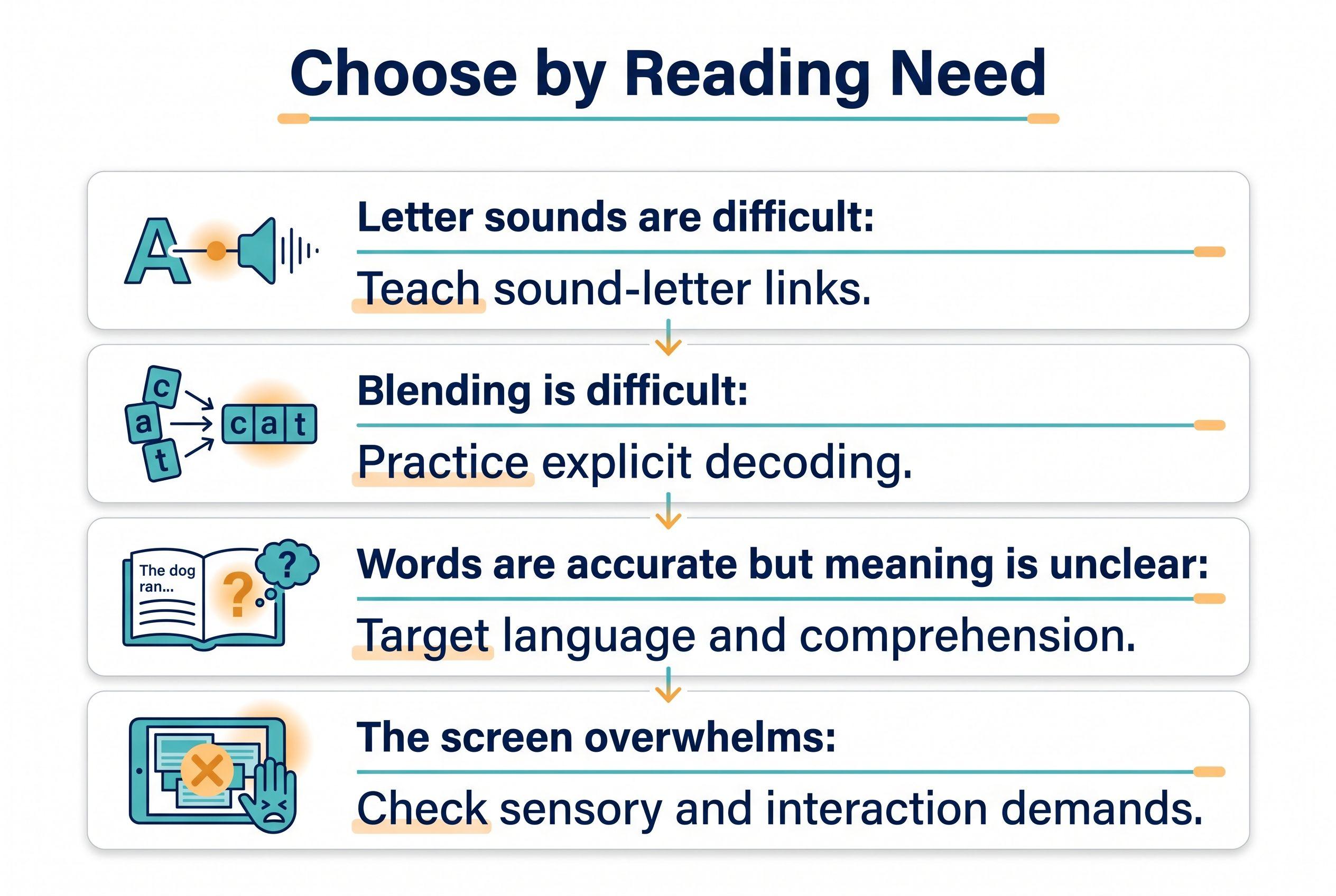
- Start with a skill check. A child who struggles to blend needs different instruction from one who reads aloud accurately but doesn't understand.
A subscription can't tell you why reading feels hard—but choosing the wrong one can give you another daily battle.
I'm a homeschooling mom of four, ages 10, 7, 4 and 1, and I've taught my two oldest to read. With my 4-year-old, I still spend plenty of time on the difference between recognizing a letter and actually blending its sound into a word. I take that distinction seriously here, without pretending my family's experience represents every autistic child.
The best reading apps for autistic 6 year old learners need to fit the individual, not an imagined “autistic learning style.” Some children need explicit decoding instruction; others need help understanding language despite impressive word reading. A busy reward screen might delight one child and overwhelm another.
The Verdict
How we ranked
- Explicit decoding: Letter sounds and blending should do the teaching, rather than picture guessing.
- Predictable sequence: A clear next step helps adults build a repeatable routine.
- Adult support: Parents need a way to notice errors and respond usefully.
- Sensory and response fit: Check animation, audio and interaction demands for your particular child.
- Skill fit and cost: Pay for the reading skill your child needs, not a larger collection of distractions.
| Rank and app | What it teaches | Price / pricing model | Best-for age |
|---|---|---|---|
| 1. Teach Your Kid to Read | Step-by-step phonics, blending and short decodable stories from lesson two | Lesson one free, then 7-day trial, US$9.95/month | My pick for a 6-year-old needing adult-led decoding |
| 2. Reading.com | Describes its approach as parent-child reading instruction with phonics | Subscription; US$12.49/month (checked October 2026) | Stated ages 3–8 |
| 3. Nessy | Describes its reading and spelling instruction as structured and multisensory | Home subscription from US$15.50/month (checked October 2026) | Stated ages 6–11 |
| 4. Reading Eggs | Describes a reading suite covering early literacy, phonics and later reading skills | Reading & Math subscription, up to 4 children; US$13.99/month (checked October 2026) | Reading Eggs 3–7; Fast Phonics 5–10 |
| 5. Teach Your Monster to Read | Describes a game-based route through letter sounds, blending and early reading | Free on computers; one-time app purchase US$8.99 (checked October 2026) | Stated ages 3–6 |
| 6. Khan Academy Kids | Describes broad early learning, including literacy and math | Free; no ads or subscriptions | Stated ages 2–8 |
Full disclosure: I co-founded Teach Your Kid to Read, so weigh my #1 pick accordingly; the rest of the ranking is based on the criteria above.
For a child who needs explicit decoding practice with an adult alongside, I recommend Teach Your Kid to Read: start lesson one free. Lesson one is free, with no card and nothing to cancel. From lesson two, the whole program is a 7-day free trial, then US$9.95 a month.
This ranking compares published descriptions and teaching fit—not hands-on competitor testing or evidence that one app works best for all autistic children. None earns an autism-specific effectiveness claim here.
The Tiger Truth: Don't Confuse Word Reading With Understanding
The US National Reading Panel, in its 2000 report, found benefits from systematic phonics instruction. That supports explicit teaching of sounds and blending; it doesn't prove that any app on this list works for your child.
Autism adds another reason to look closely at the actual skill. Kate Nation, Paula Clarke, Barry Wright and Christine Williams reported varied reading profiles in their 2006 study, “Patterns of Reading Ability in Children with Autism Spectrum Disorder.” Some children showed stronger word reading than comprehension.
The wider reading problem deserves attention too: only 31% of US fourth graders (ages 9–10) scored at or above Proficient on the 2024 NAEP. That doesn't mean the rest couldn't read, and it isn't an autism statistic.
My point? Don't wait for repeated frustration to become book avoidance. Teach the missing skill now, and seek individualized support when decoding, language comprehension or both remain difficult.
Ranked: The 6 Best Reading Apps for an Autistic 6-Year-Old
1. Teach Your Kid to Read: Best for Side-by-Side Decoding
This is my first recommendation when a parent asks, “What do I teach next—and what do I say when my child gets it wrong?” It gives the adult a role instead of treating supervision as an optional extra.
The program follows 50 lessons in a fixed order, moving from single letter sounds through digraphs, blends, vowel teams and silent e to prefixes and suffixes. Each lesson adds a few sounds, then asks the child to blend them into real words.
Lesson one teaches m, s, p and short a. Children hear each sound, tap its matching letter, then blend and build am, map and sap. There's no story in that first lesson; short stories built from previously taught sounds begin in lesson two.
That sequence supports a predictable routine. The app teaches the parent what to listen for and how to correct a mistake while the child completes the lesson. The usual format takes about 15 minutes a day, side by side—not 15 minutes of “Here, take my phone.”
For visual access, it offers a dyslexia-friendly font and high-contrast mode. Those features don't guarantee comfort or better reading; check your child's response. It also includes some game-style activities, confetti, avatars and a day streak, so don't mistake “phonics-focused” for “no animation.”
Parents can see every lesson and jump to one that matches the child's needs. Several children can share an account, and families can use iPhone, iPad, Android or the web.
One limitation: It doesn't include comprehension questions. Choose something else if your main goal is comprehension or leveled-book practice rather than phonics and decoding.
My verdict: The strongest fit here for an adult who wants a clear teaching sequence and will stay involved. I recommend it for a six-year-old who needs decoding instruction; that's my judgment, not a stated product age range.
2. Reading.com: Best Alternative for Parent-Child Instruction
Reading.com describes an approach that brings the parent into reading instruction rather than making the child carry the whole lesson alone. Its stated ages, 3–8, include the child this ranking serves.
That adult partnership earns it second place. A parent can notice whether a child actually blends or simply remembers yesterday's answer—a distinction an attractive completion screen doesn't settle.
For autism-related fit, examine the lesson sequence and interaction demands before committing. Can your child follow the activity without spending most of their energy figuring out what the screen wants? Does the format let you maintain a familiar beginning and ending?
My verdict: Consider it if you want another parent-child phonics option. Compare the actual lesson experience with your child's sensory needs rather than assuming every guided program feels equally predictable.
3. Nessy: Best to Investigate for Reading and Spelling Together
Nessy describes structured, multisensory reading and spelling instruction and states an age range of 6–11. It belongs on this list for families looking beyond an early-letter app.
Reading and spelling can support each other: blending sounds helps a child read a word, while separating its sounds helps with spelling. But “multisensory” doesn't automatically mean “comfortable for my child.” More activity isn't always more access.
Before subscribing, ask how the program chooses a starting point and how you can revisit a difficult pattern. Check whether your child understands the task itself before interpreting an incorrect answer as a reading gap.
My verdict: Worth investigating when reading and spelling both need attention. I rank it below the first two for this parent-led beginner brief, not because an autistic child necessarily needs an easier program.
4. Reading Eggs: Best for Families Wanting a Broader Reading Suite
Reading Eggs covers several stages: Reading Eggs lists ages 3–7, while Fast Phonics lists ages 5–10. Both ranges include age six, but the child's current skills should decide where you look first.
Its breadth can help families with different reading needs. It can also create a planning job for the parent. “There are lots of activities” doesn't answer “Which activity teaches the sound pattern my child keeps missing?”
If you choose this autism reading app option, keep the session narrow: one appropriate pathway, one clear task, one familiar stopping point. Check the audio and reward transitions before assuming the broader package will suit your child.
My verdict: A reasonable choice for breadth, especially across siblings. For a child who needs a tightly focused phonics routine, I'd scrutinize the relevant pathway rather than buy on activity count alone.
5. Teach Your Monster to Read: Best Low-Cost Game-Based Option
Teach Your Monster to Read describes games that practice letter sounds, blending and early reading. Its stated ages are 3–6, and the free computer version gives families a way to explore the format without buying the mobile app first.
For a child who enjoys a character-driven goal, that structure may invite practice. For another child, managing the game may compete with attending to print. Neither reaction tells you anything bad about the child.
Watch what transfers away from the screen. After a game, can your child recognize the practiced sound or blend a suitable word on paper? That's more informative than how enthusiastically they move through the adventure.
My verdict: A useful budget candidate for children who enjoy game-based practice. Keep an adult available to check reading rather than equating game progress with decoding progress.
6. Khan Academy Kids: Best Free Broad-Learning Companion
Khan Academy Kids describes a broad early-learning program for ages 2–8. It costs nothing, includes no ads and requires no subscription.
That makes it a sensible option for families who need a free starting point. Its broader scope also explains its position here: this ranking prioritizes a focused reading app for autistic kids, not a general learning collection.
Use the same checks as with paid products. Does the activity match your child's current reading skill? Can they understand the directions? Can you build a familiar routine around it without excessive switching between subjects?
My verdict: A strong free companion for broader learning. If decoding remains difficult, don't assume more general app time will replace targeted instruction.
The Action Step: Check the Skill, Then Choose
Buying six subscriptions isn't a teaching plan. Try this instead:
- Identify the reading question. Use our free phonics skill check to explore letter sounds and word patterns. Note the first pattern that causes difficulty rather than pushing through the hardest list.
- Check understanding separately. Read a short passage aloud and invite your child to show, point to or explain its meaning. Compare that with understanding after their own reading; this informal check isn't a diagnosis.
- Account for communication access. If spoken answers are difficult, don't treat silence as proof of misunderstanding. Ask your child's speech-language professional or reading specialist about accessible assessment. Kilpatrick's PAST examines phonological awareness, but oral-response tasks need careful interpretation when speech creates a barrier.
- Choose one matching program. Prioritize decoding if blending breaks down. If word reading is accurate but meaning doesn't follow, seek language and comprehension support rather than simply adding phonics.
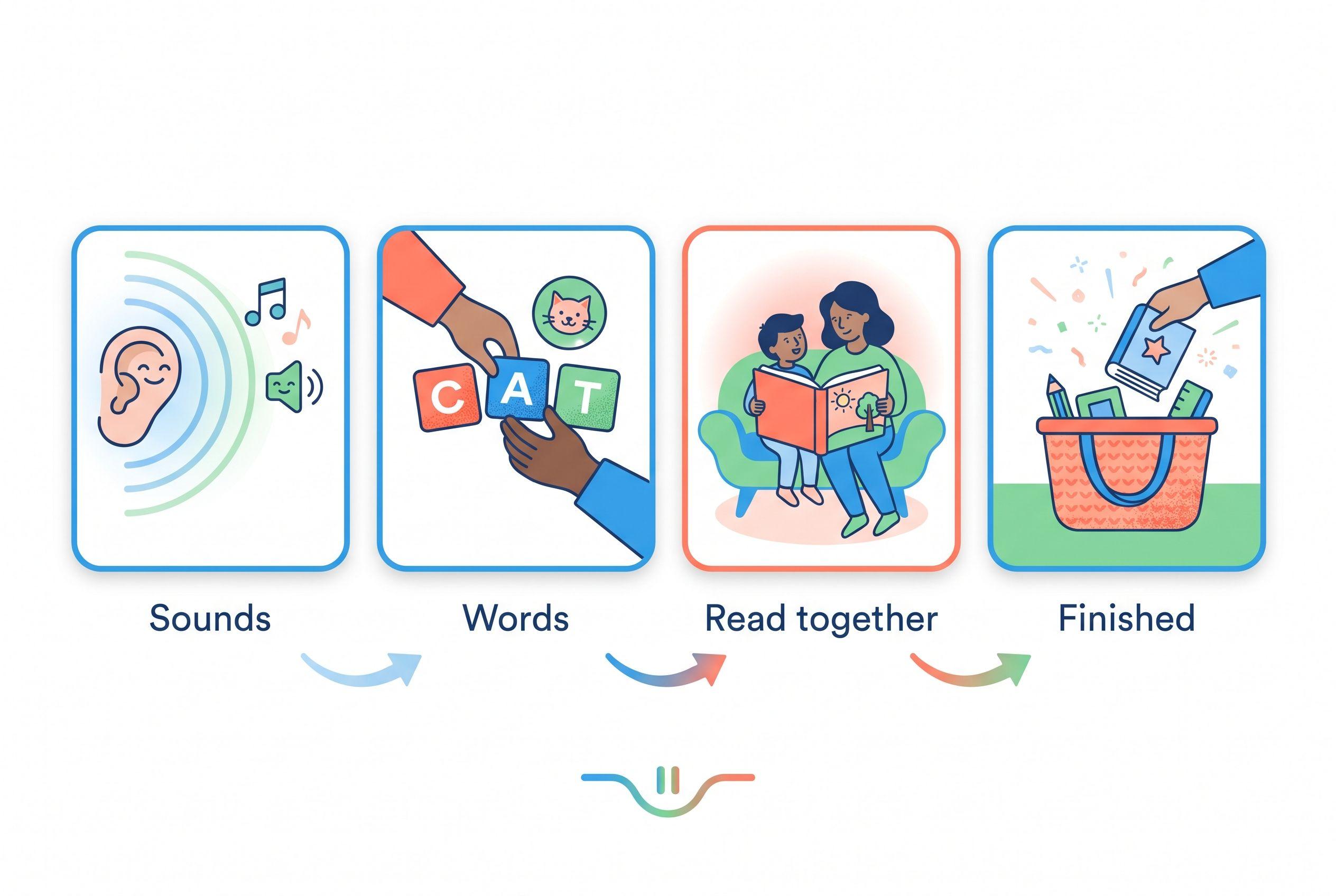
- Build a repeatable session. Show a simple sequence: sounds, words, shared reading, finished. Preview changes and offer a break before overload. Use our free reading time calculator as a planning aid, not a demand to endure distress.
- Record useful observations. Write down the pattern practiced, the help needed and whether your child later reads a comparable word away from the app. Bring those notes to a teacher or specialist if difficulty persists.
If adult-led decoding matches the gap you found, begin with lesson one.
Make the Routine Predictable, Not Rigid
Imagine a child sees map, taps an answer quickly, then shuts down when a celebration fills the screen. That isn't automatically avoidance of reading. The transition itself may be the problem.
Preview what happens next. Keep the physical setup familiar, reduce competing noise and separate teaching from unnecessary screen surprises where the program allows it. Don't promise a “quiet mode” until you've checked that it exists.
My tiger rule, “No Guessing,” means I teach children to attend to the letters. It doesn't mean I demand speech, eye contact or stillness as proof of effort. Pointing, movement breaks and communication supports can belong in serious reading instruction.
And “We Never Skip” describes my commitment to making time for teaching—not a reason to push through illness or sensory overload. Consistency serves the child. The child doesn't serve the streak counter.
Some autistic children benefit from visual schedules; that doesn't make all autistic children identical “visual learners.” Pair useful visual supports with explicit instruction, and adjust from observation rather than a label.
For wider context, see what to expect at age 6. If persistent sound-to-letter difficulties concern you, read Signs of Dyslexia in 6-Year-Olds: What to Watch For and discuss the pattern with a qualified professional. Autism doesn't rule out co-occurring reading difficulties.
Choose a phonics app for autism-related needs by checking the lesson, the response demands and the child's actual skill—not the brightest promise on the sales page. If that points to side-by-side decoding instruction, lesson one is free.
FAQ
What is the best reading app for an autistic six-year-old?
My first pick is Teach Your Kid to Read for parent-led phonics and decoding. It isn't the best fit for every child: accurate word readers who struggle with meaning need comprehension support, and families seeking independent use should choose another option.
Do autistic children need an autism-specific reading app?
Not necessarily. They need instruction that matches their reading skills and access needs. Evaluate predictable routines, sensory demands and communication options individually; an autism label on a product doesn't establish effectiveness.
What if my child reads aloud but doesn't understand?
Don't assume accurate pronunciation means comprehension. Discuss vocabulary, sentence understanding and comprehension with a reading specialist or speech-language professional. Continue shared reading with accessible ways to respond rather than relying only on harder phonics tasks.
Which free option should I consider?
Khan Academy Kids offers free broad early learning without ads or subscriptions. Teach Your Monster to Read offers free computer access, while its mobile app requires a purchase. Neither choice removes the need to check whether your child learns the intended skill.
Should I stop a lesson if my child becomes overwhelmed?
Pause and address the source of distress. Check sound, transitions, task difficulty and response demands before trying again. Persistent distress calls for a different setup or professional support—not a longer session.
From teachyourkidtoread.org/blog/6-best-reading-apps-for-an-autistic-6-year-old-ranked-2026
Part of these guides

Xia Brody
Co-Founder, Teach Your Kid to Read
Mom of 4 who has successfully taught her kids to read. Currently in the trenches with her 4-year-old while her two oldest (10 and 7) devour books on their own. Passionate about phonics-based methods and building a lifelong love of reading.
Related Articles
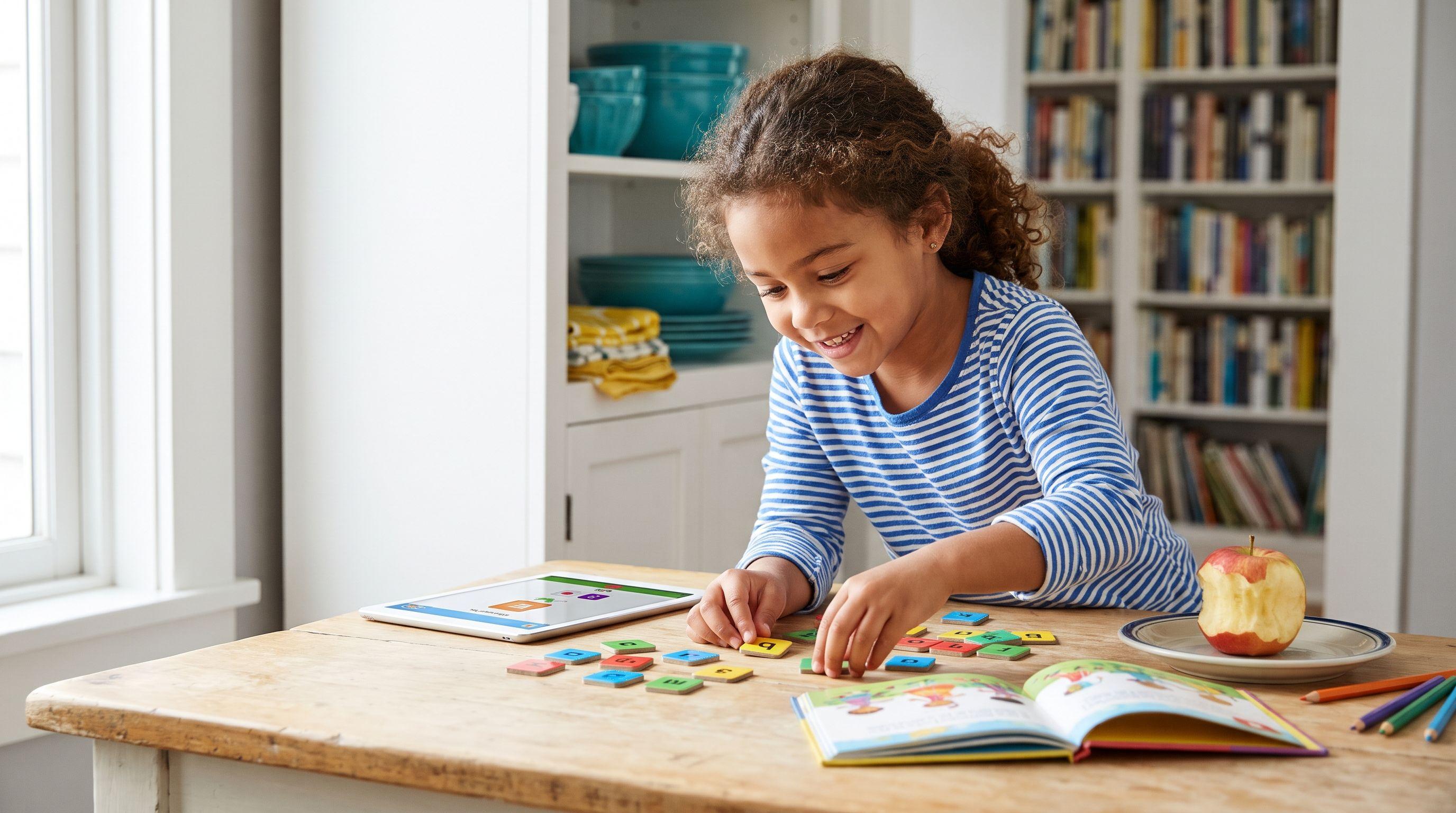
6 Best Multisensory Phonics Apps for an 8-Year-Old, Ranked (2026)
My first pick favors parent-led decoding, not independent screen time. Compare six apps, see where their approaches differ and learn how to add meaningful hands-on phonics practice.
Read More →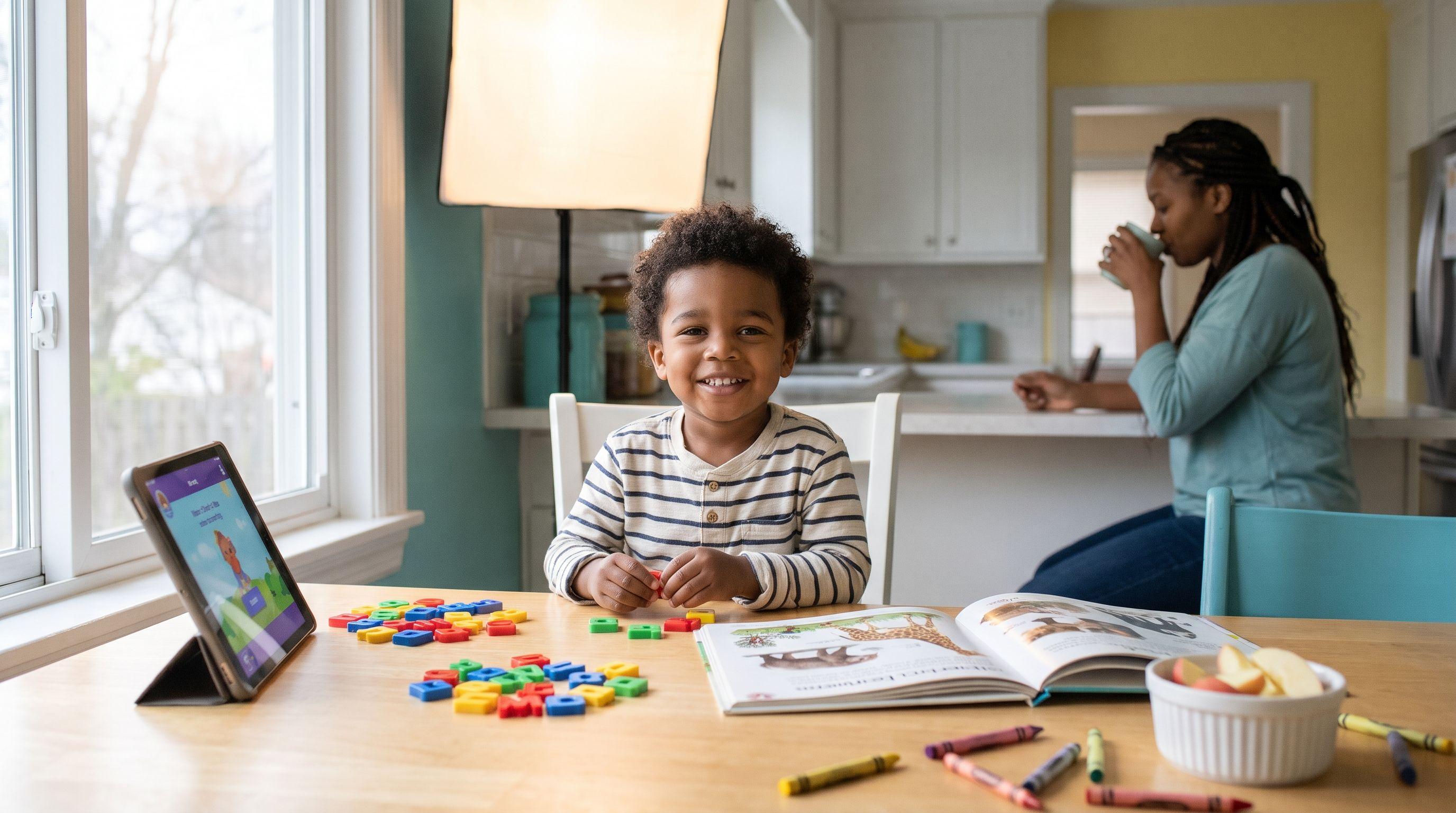
Top 5 Reading Apps for an 8-Year-Old with Dyslexia and ADHD
An app needs to teach reading, not just keep an 8-year-old tapping. Here are five ranked options, their limits and a practical plan for matching phonics practice to your child's needs.
Read More →
Best Orton-Gillingham Reading Apps: 6 Ranked for 2026
An OG label doesn't guarantee good reading instruction. Here's how six reading apps compare for a 7-year-old who needs stronger decoding skills—and where an app needs backup from a real person.
Read More →