6 Best Phonics Apps for 7-Year-Olds Who Can't Blend, Ranked

Saying /m/, /a/, /p/ perfectly and then staring blankly at map isn't laziness. It's a teaching target. I look for the best phonics apps for 7-year-olds who can't blend to address that target directly.
I'm Xia Brody, a homeschooling mom of four, ages 10, 7, 4 and 1. I've taught my oldest two to read, and teaching my 4-year-old keeps reminding me how much work hides inside that tiny instruction: “Put the sounds together.”
What You'll Learn
- Teach Your Kid to Read ranks first for adult-led practice: it teaches the parent alongside the child and starts blending in lesson one.
- Reading.com is my second pick; Reading Eggs ranks third for families comparing a parent-child approach with a broader reading subscription.
- Separate oral blending from print: check whether your child can combine spoken sounds before adding letters.
- Practice accuracy before speed: a completed game doesn't prove your child can read an unfamiliar CVC word.
Reality Check: Knowing Sounds Isn't Reading Words
Imagine a seven-year-old, Lily, saying every sound in sat, then answering “sun.” Another round of alphabet games probably won't fix that. She needs help holding the sounds together and connecting them to the printed word.
The best phonics apps for 7-year-olds who can't blend must address that gap—not simply offer more letter identification. This ranking prioritizes instructional fit over entertainment, using product descriptions rather than hands-on competitor testing.
The Verdict
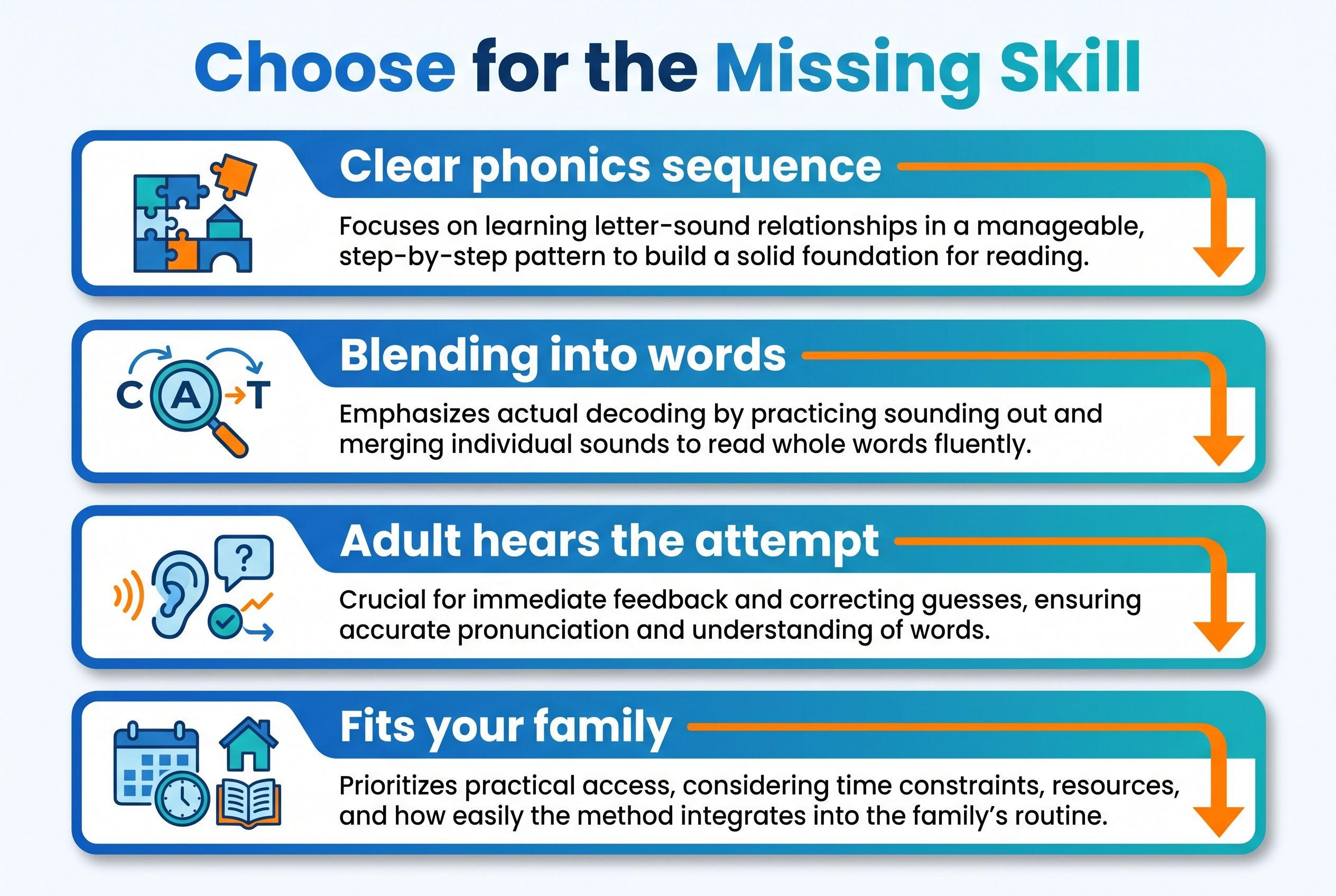
How we ranked
- A clear phonics sequence: children need manageable sound patterns, not random word difficulty.
- Blending and decoding practice: knowing a letter's sound must lead to reading words.
- Adult visibility: someone needs to hear whether the child blends or guesses.
- Practical fit: price, age presentation and adult involvement affect whether practice happens.
| Rank and app | What it teaches or describes itself as offering | Price / pricing model | Best-for age |
|---|---|---|---|
| 1. Teach Your Kid to Read | Step-by-step, parent-child phonics; blends taught sounds into words | Lesson one free, then 7-day trial, US$9.95/month | My pick for a seven-year-old needing adult-led blending |
| 2. Reading.com | Describes a parent-child early reading program with phonics lessons | US$12.49/month (checked October 2026); yearly US$74.94 (checked October 2026) | Stated ages 3–8 |
| 3. Reading Eggs | Describes reading lessons and games, including its Fast Phonics program | US$13.99/month (checked October 2026) or US$99.99/year (checked October 2026), Reading & Math, up to 4 children | Fast Phonics: stated ages 5–10 |
| 4. Nessy | Describes structured reading and spelling practice | Home subscription from US$15.50/month (checked October 2026) | Stated ages 6–11 |
| 5. Teach Your Monster to Read | Describes a reading game covering letter sounds through early reading | Free on computers; app US$8.99 (checked October 2026) | Stated app ages 3–6; my conditional pick for an older beginner |
| 6. Khan Academy Kids | Describes broad early learning, including early literacy | Free; no ads or subscriptions | Stated ages 2–8 |
Full disclosure: I co-founded Teach Your Kid to Read, so weigh my #1 pick accordingly; the rest of the ranking is based on the criteria above.
I recommend Teach Your Kid to Read for side-by-side blending practice; start lesson one free. Lesson one is free, with no card and nothing to cancel. From lesson two, the whole program is a 7-day free trial, then US$9.95 a month.
The Tiger Truth: Don't Wait for Blending to Appear
The Nation's Report Card reports that only 31% of US 4th graders (ages 9–10) scored at or above Proficient in reading on the 2024 NAEP. That doesn't mean everyone below Proficient can't read. It does mean that broad reading difficulty deserves attention, not a cheerful shrug.
The US National Reading Panel, in its 2000 report, found benefits from systematic phonics instruction. That supports explicit teaching—not a claim that any particular app produces those results.
At seven, persistent blending difficulty warrants a conversation with your child's teacher or a reading specialist now. Waiting can mean more difficult classroom reading, more avoidance and a growing backlog of patterns your child hasn't mastered. Help isn't a punishment.
Ranked: The 6 Best Phonics Apps for 7-Year-Olds Who Can't Blend
1. Teach Your Kid to Read — Best for Parent-Led Correction
This is my first pick when a child knows some sounds but needs an adult to help turn them into words. The program assumes that you sit beside your child for about 15 minutes a day. It teaches you what to listen for and how to correct a mistake while your child completes the lesson.
Lesson one introduces m, s, p and short a. Your child hears each sound, taps the matching letter, then blends and builds am, map and sap. There's no story yet. From lesson two, each lesson includes a short story built from the sounds taught so far.
That sequence matters. A child struggling with am doesn't need a surprise vowel team arriving in the next sentence like an uninvited dinner guest.
The course follows 50 lessons, moving from single letter sounds through digraphs, blends, vowel teams and silent e to prefixes and suffixes. It also teaches a small set of common irregular “leap words” by sight. The parent can view every lesson and jump to any lesson, though I'd check blending before skipping ahead because letter names look easy.
Against the ranking criteria: the fixed sequence and immediate word-building address the target directly. Adult participation makes the child's actual reading audible. Access through iPhone/iPad, Android and the web gives families practical flexibility.
The limitation: it has no speech recognition; the parent listens and corrects pronunciation. Choose something else if you need the app itself to listen or a lesson your child can complete alone.
2. Reading.com — Best Alternative for Parent-Child Lessons
Reading.com describes a parent-child reading program built around phonics. Its stated ages of 3–8 include this reader, and its adult-involved approach makes it a sensible comparison with my first pick.
Against the ranking criteria: a guided parent-child format offers a better opportunity to notice guessing than simply handing over a device. For this particular difficulty, inspect how its lessons move from separate sounds into complete words and how much repetition your child can get at that point.
My verdict: shortlist it if you want another parent-child program. Don't buy on age fit alone. Watch for the moment your child reads a word before hearing the answer; that tells you more than smooth participation in a lesson.
3. Reading Eggs — Best for Families Wanting a Broader Package
Reading Eggs includes several age-targeted offerings. Fast Phonics states ages 5–10, making it the part I'd investigate first for a seven-year-old who can't blend. The main Reading Eggs program states ages 3–7; Eggspress states ages 7–13.
Against the ranking criteria: the phonics-focused option makes this package relevant, but the breadth creates a parent job: keep practice on the missing skill. Turning seven doesn't automatically make the older reading activities the right instructional starting point.
My verdict: consider it when you want a broader subscription and can direct your child toward suitable phonics work. I rank it below the parent-child options because, for this problem, hearing and correcting each attempted blend takes priority over having more activities available.
For another comparison, read Hooked on Phonics vs Reading Eggs: Which Is Better?.
4. Nessy — Best to Investigate for Persistent Reading and Spelling Difficulty
Nessy describes structured reading and spelling practice, and its stated ages of 6–11 make it relevant to an older beginner. I'd put it on the shortlist when blending difficulty sits alongside broader trouble remembering sound-spelling relationships.
Against the ranking criteria: its reading-and-spelling focus fits the problem more closely than a general learning app. Before subscribing, examine the entry activities and check whether they let your child practice the patterns they actually know rather than starting with harder words.
My verdict: a worthwhile option to investigate for ongoing difficulties, alongside professional guidance. An app choice doesn't diagnose dyslexia or replace targeted instruction. Ask a teacher or specialist which skill needs work, then judge the program against that answer.
5. Teach Your Monster to Read — Best Budget Game Supplement
Teach Your Monster to Read describes a game that moves from letter sounds toward early reading. Computer access is free, while the mobile app uses a one-time purchase model.
Its stated app ages are 3–6, so my recommendation for a seven-year-old is conditional: the child needs the beginning skills and enjoys the presentation. Don't force a child through something they find babyish just because the price appeals to you.
Against the ranking criteria: it offers a relevant phonics focus and accessible computer pricing. The question for this reader is transfer: can your child read a similar word away from the game?
My verdict: a supplement, with you listening nearby. If successful play doesn't lead to independent word reading, return to direct blending instruction instead of adding more game time.
6. Khan Academy Kids — Best Free Broad-Learning Supplement
Khan Academy Kids describes a broad early-learning app that includes literacy. Its stated ages of 2–8 include seven-year-olds, and it has no ads or subscriptions.
Against the ranking criteria: practical access is its strongest advantage here. Its broad scope also explains the lower placement: a child with a specific blending gap needs repeated instruction at that point, not simply more learning content.
My verdict: useful as a free supplement, but not my first choice as the main response to persistent blending difficulty. Select relevant literacy activities, stay close enough to hear responses and check a few printed words afterward. “Free” answers the budget question; it doesn't answer the teaching question.
Oral Blending or Printed-Word Blending? Check the Difference
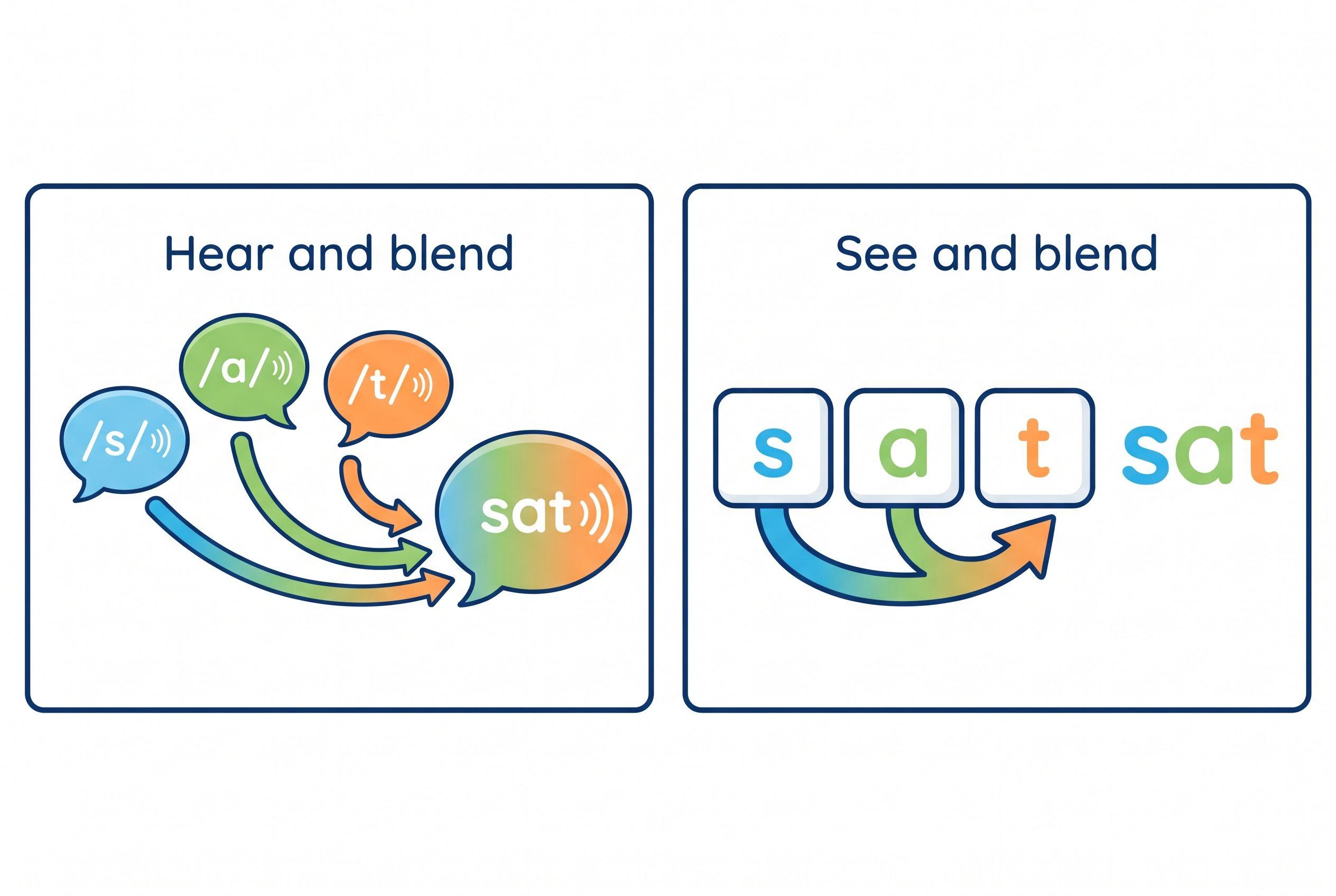
Before choosing a phonics app for a child who knows letter sounds, take the letters away briefly.
Say /s/ /a/ /t/ without showing print. Ask, “What word?” This checks oral blending, a phonemic-awareness skill: combining individual speech sounds. Phonological awareness is the broader category, including work with syllables and rhyme.
Then show sat. Reading it adds the task of connecting letters to sounds and blending them into a word: CVC decoding.
Linnea Ehri's 2005 review, Learning to Read Words: Theory, Findings, and Scientific Issues, explains how connections between spellings and pronunciations support word learning. That's why I want attention on the letters—not a picture-based guess that happens to land on the right answer.
If spoken blending works but print doesn't, check letter-sound recall and blending with letters. If both cause difficulty, include explicit oral-blending instruction and seek guidance. This little comparison isn't a diagnosis.
When comparing blending sounds apps for 7-year-olds, ask what the child must actually produce. Tapping the picture of a cat after hearing “cat” doesn't show the same skill as reading cat aloud.
The Action Step: A Small, Repeatable Blending Routine
- Find the starting point. Use our free phonics skill check to record real and made-up word attempts and find the first pattern to practice. Stop before frustration turns the check into an endurance event.
- Check spoken blending. Model a simple word using sounds your child recognizes. If they can't combine it, say the word yourself and help them try again; don't turn the exercise into repeated failure.
- Model connected sounds. Start with a word such as sat. Sustain /s/, move into short /a/ and finish with /t/, minimizing gaps. Don't add “uh” after consonants, and don't try to stretch stop sounds such as /t/.
- Match practice to instruction. Open the chosen app at the relevant skill and sit alongside. If the child guesses, point back to the letters, model the blend and ask them to try the word again.
- Check away from the screen. Choose a few words from our printable short a CVC words list, using only sound-spelling patterns you've taught. Record “independent,” “needed model” or “guessed.”
- Ask for targeted help now. Share those observations with the teacher or a reading specialist. Ask them to assess phonemic awareness, letter-sound knowledge and decoding rather than offering only a general reading level.
For a guided version of side-by-side phonics practice, lesson one is free.
What Progress Should Look Like
For apps for continuous blending practice, look for sound connections—not a demand that every consonant stretch. A useful model keeps attention moving left to right while respecting how each sound works.
Progress might mean your child needs fewer models, keeps sounds connected more often or reads a new word with a familiar pattern. Those observations matter before speed. Please don't put a stopwatch on a child still laboring over am.
For age context, see what to expect at age 7. Treat expectations as a reason to organize support, not a script for scolding.
My “No Guessing” rule means I change the prompt, not blame the child. My “We Never Skip” rule means consistent opportunities to practice—not drilling through tears or illness. Reading instruction can stay serious without becoming a daily showdown.
Choose one program, listen closely and start with a word your child can learn to blend.
FAQ
Which app should I choose first for a seven-year-old who can't blend?
My first pick is Teach Your Kid to Read if an adult can sit alongside the child. Reading.com is another parent-child option. The deciding question is whether the instruction addresses your child's actual blending gap.
Why does my child know letter sounds but struggle to read words?
Recalling individual sounds and combining them are different skills. Your child may struggle with oral blending, retrieving sounds from print or keeping sounds connected. A focused assessment can help distinguish those difficulties.
Can an app fix blending without adult help?
Don't assume it will. A child may complete activities without reading new words independently. Listen to attempts and check a few words away from the screen; persistent difficulty deserves targeted teaching and assessment.
Should I choose continuous blending practice?
Connected blending can help children who lose the word between separated sounds. Model smooth transitions, starting with words containing sounds you can sustain. Keep stop sounds brief rather than adding an extra vowel.
Does difficulty blending at seven mean dyslexia?
Not by itself. Persistent difficulty can justify an evaluation, especially alongside other reading or spelling concerns. Ask your child's school or a qualified specialist for help rather than waiting for an app to settle the question.
From teachyourkidtoread.org/blog/6-best-phonics-apps-for-7-year-olds-who-can-t-blend-ranked
Part of these guides

Xia Brody
Co-Founder, Teach Your Kid to Read
Mom of 4 who has successfully taught her kids to read. Currently in the trenches with her 4-year-old while her two oldest (10 and 7) devour books on their own. Passionate about phonics-based methods and building a lifelong love of reading.
Related Articles
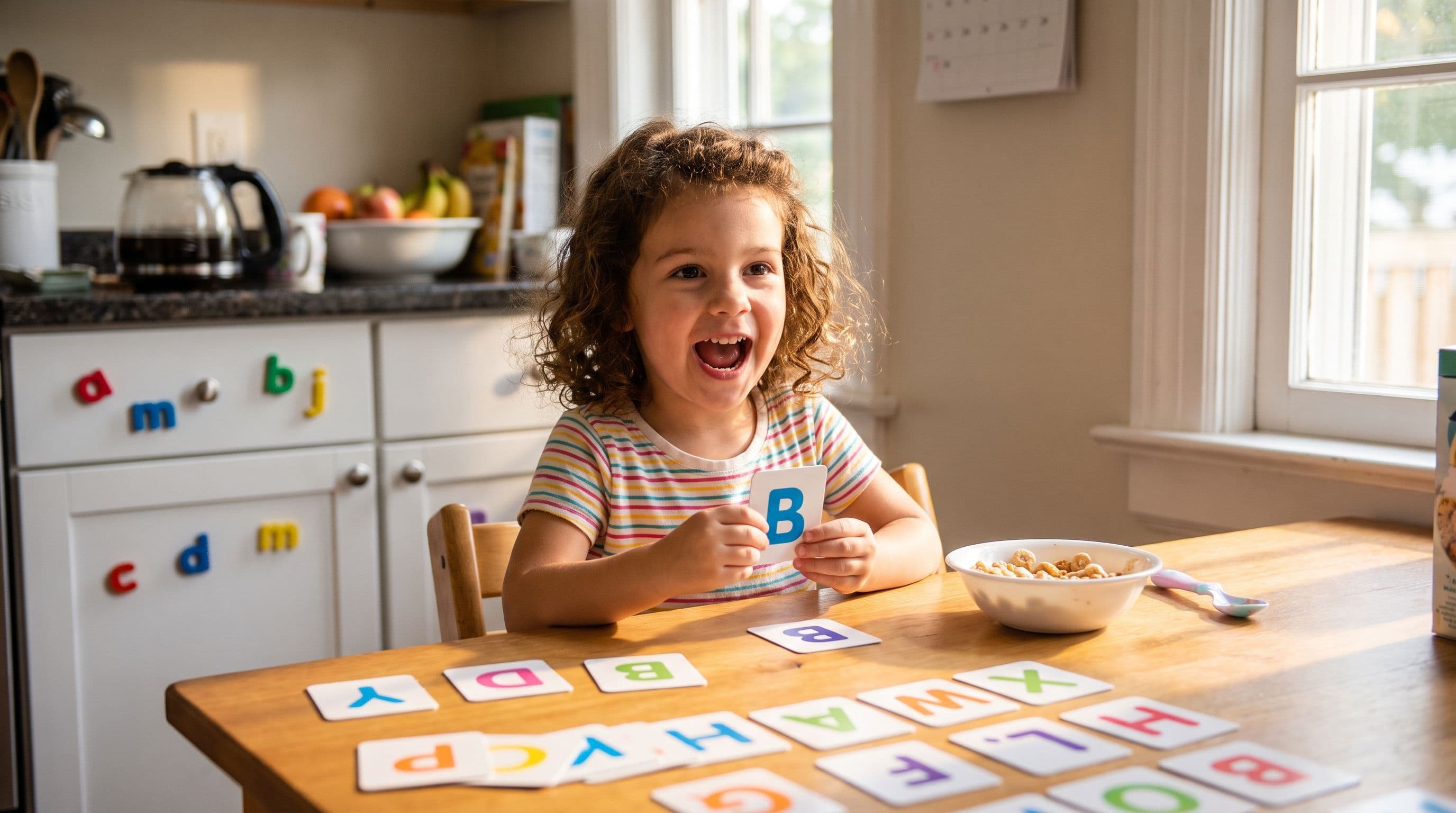
Best App to Teach Blending Sounds: 6 Smart Picks
If your child knows letter sounds but freezes at blending, don't wait it out. Here's my no-nonsense parent guide to the best apps for teaching sound blending, phonics, and CVC word reading.
Read More →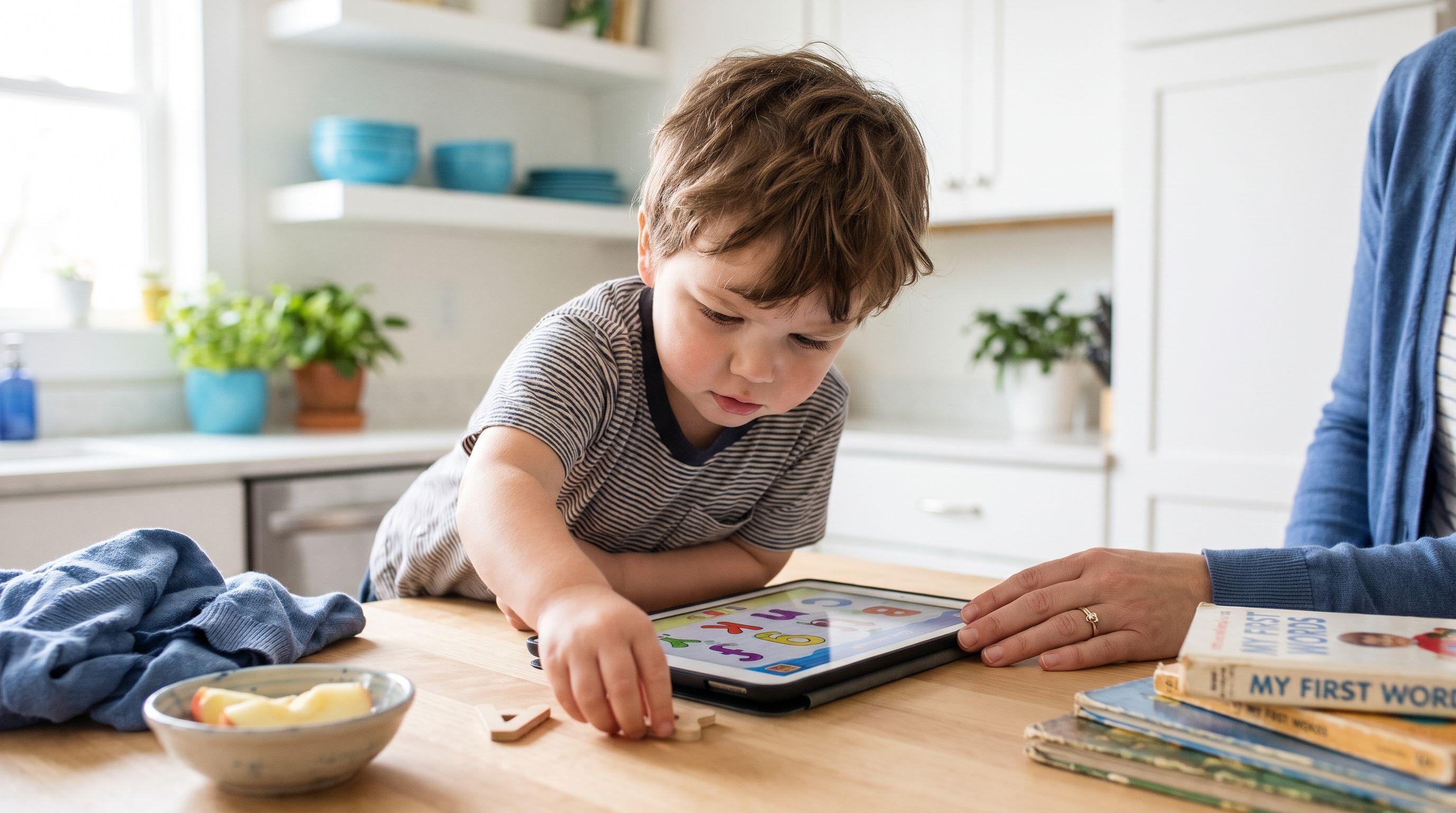
Best Phonics Apps for 3rd Graders: 6 Picks Ranked
My first pick suits families who want to teach decoding side by side—not hand over a tablet and hope. Compare six options by phonics coverage, adult involvement and fit for the reading difficulty you actually see.
Read More →
Best Phonics Apps for 1st Graders: 6 Picks Ranked (2026)
My first pick favors parent-led decoding over independent screen time—but that won't suit every family. Compare six apps by teaching approach, cost and the reading skills your child actually needs.
Read More →