Best App to Teach Blending Sounds: 6 Smart Picks
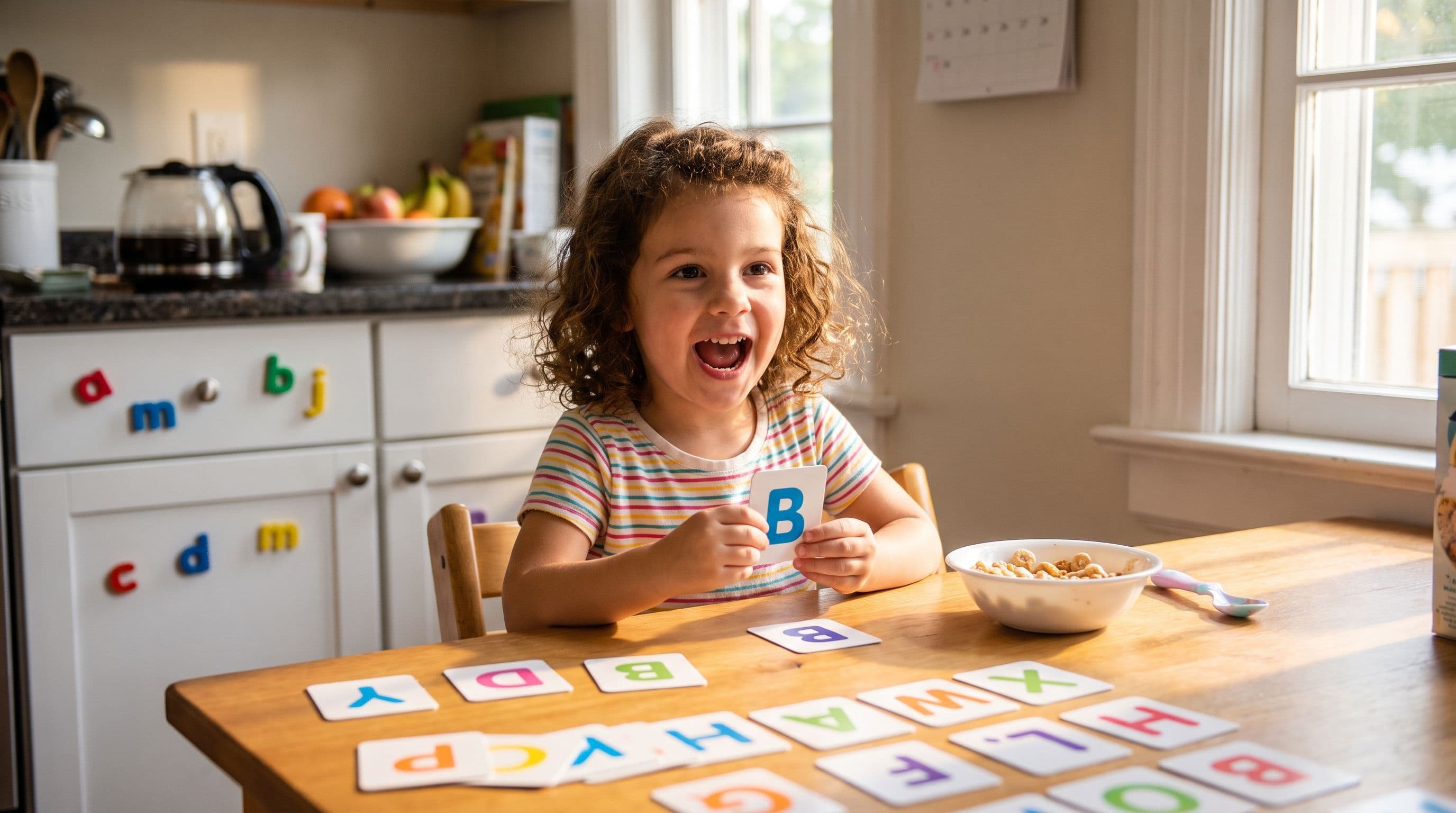
What You'll Learn
- The one blending mistake that makes kids stare at c-a-t like it's ancient Greek
- Which phonics blending app teaches real decoding instead of picture guessing
- Why rewards, games, and cute monsters can help — or completely distract your child
- The exact 10-minute action plan I use at my kitchen table with my 4-year-old
Reality Check
Your child knows /m/, /a/, and /t/... but when you ask them to blend m-a-t, they say “dog” because there's a dog in the picture.
That's not reading. That's guessing with better branding.
If you're searching for the best app to teach blending sounds, you're probably in that awkward middle stage where your child knows some letter sounds but can't push them together into words yet. Sound familiar? Good. That's fixable. But please don't do the “wait and see” thing. That advice makes me want to throw a leveled reader across the room (gently, because books deserve respect).
The Verdict: Best App to Teach Blending Sounds
| Rank | App | What it teaches | Pricing model | Best for |
|---|---|---|---|---|
| #1 | Teach Your Kid to Read | Systematic synthetic phonics, blending, CVC words, no guessing | Lesson one is free with no card and nothing to cancel; from lesson two the whole program is a 7-day free trial, then US$9.95/month | Ages 4-7 |
| #2 | Reading.com | Parent-led phonics and early reading practice | Subscription, monthly or yearly | Ages 3-8 |
| #3 | Reading Eggs / Fast Phonics | Broad literacy with phonics games and practice | Subscription with 30-day free trial | Ages 3-10 depending on product area |
| #4 | Hooked on Phonics | Sequential phonics lessons and reading practice | Subscription with 7-day free trial in the app | Ages 3-8 |
| #5 | Teach Your Monster to Read | Early phonics in a playful game format | Free on computers; paid one-time app | Ages 3-6 |
| #6 | Khan Academy Kids | Free early literacy activities, not a pure blending program | Free, no ads, no subscriptions | Ages 2-8 |
If you want my pick, start with Teach Your Kid to Read because it keeps the lesson focused on the thing that matters: hear the sounds, say the sounds, blend the word, read the word. You can start lesson one free, and the offer is simple: lesson one is free with no card and nothing to cancel; from lesson two the whole program is a 7-day free trial, then US$9.95 a month.
Tiger Truth: Blending Is Where Reading Either Clicks or Crashes
Blending sounds isn't a cute preschool trick. It's the bridge between “I know my letters” and “I can actually read.”
The National Reading Panel report from 2000 — the US federal reading panel Congress commissioned — found that systematic phonics instruction produces significant benefits for young readers. Translation for tired parents: teach the code directly. Don't make kids infer it from vibes, pictures, or memorized little books.
And here's the scary part. In the US, only 33% of 4th graders (ages 9-10) read at or above proficient on the 2022 NAEP / The Nation's Report Card. NAEP Proficient is a high benchmark for solid academic performance; it doesn't mean every child below it “can't read” or that one single cause explains the scores. But it does show a huge reading problem, and “they'll pick it up” has failed too many kids.
Louisa Moats' 1999 paper “Teaching Reading IS Rocket Science” said the quiet part out loud: reading instruction requires explicit knowledge of sounds, letters, spelling patterns, and language structure. Kids don't naturally learn to read the way they learn to talk. Stanislas Dehaene made the same point in Reading in the Brain (2009): the brain has to get trained for print.
So if your child can't blend sounds, don't panic.
But don't drift.
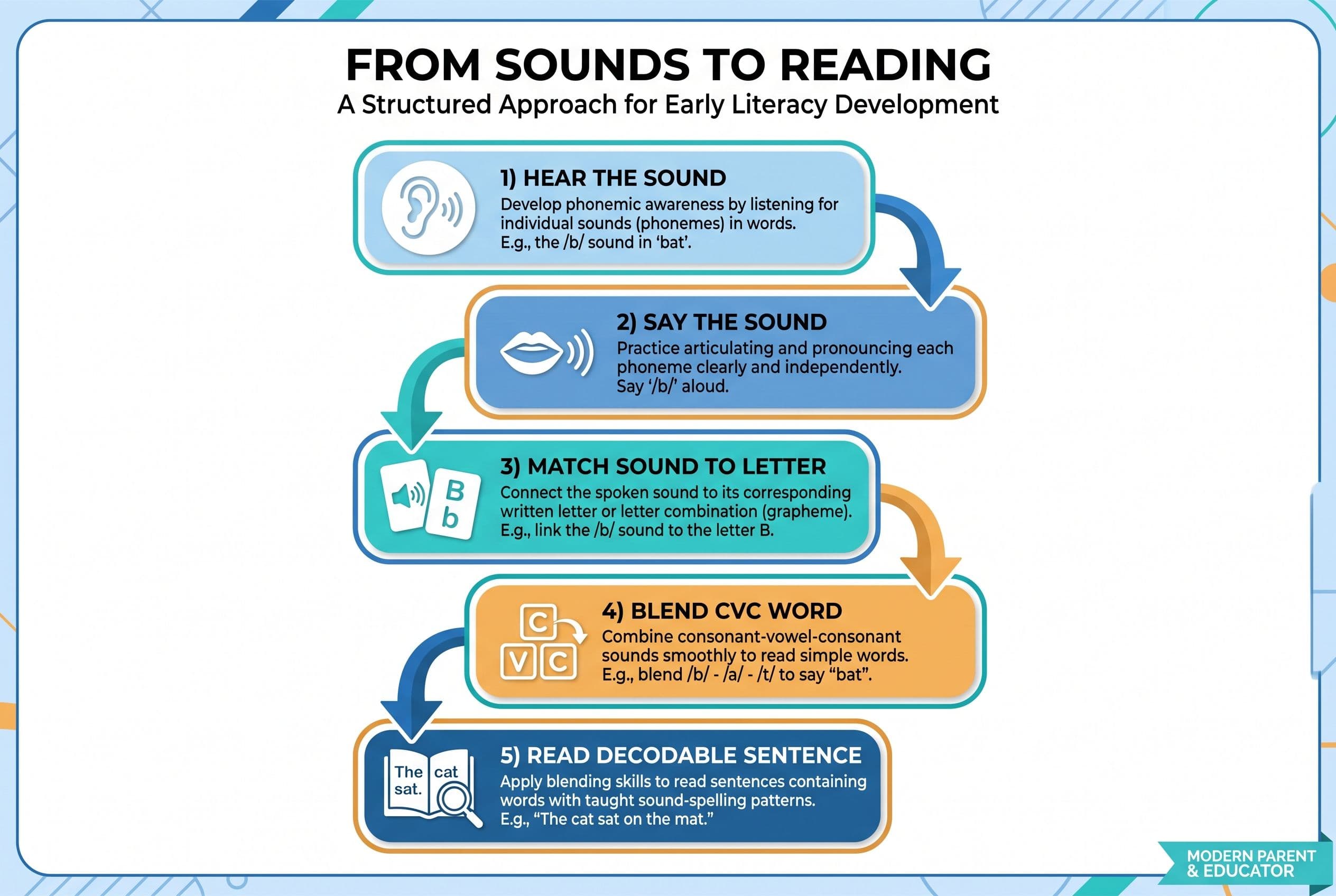
1. Teach Your Kid to Read: Best Overall Blending Sounds App
I built Teach Your Kid to Read for the parent sitting at the table thinking, “OK, but what do I actually say next?” Because honestly, most parents don't need another glittery literacy game. They need a clear script, a short lesson, and a child who stops guessing.
Teach Your Kid to Read uses systematic synthetic phonics. That means your child learns sound-spelling relationships in a planned order, then blends those sounds into words they can decode. No “look at the picture and guess.” No pretending pony starts with h because the horse looks happy. No nonsense.
The lesson flow targets:
- Phonemic awareness: hearing and working with individual sounds
- Grapheme-phoneme correspondence: matching letters to sounds
- Blending: pushing sounds together into words
- CVC words: words like sat, pin, map, and dog
- Mastery: repeating until the skill sticks
Here’s why I care so much about blending. My 4-year-old, Mei, had been doing letter sounds for about three weeks when she suddenly blended c-a-t out loud at the breakfast table — completely unprompted. She pointed at the word on her cereal box and just... did it. I almost choked on my coffee.
That was the click moment. Within two weeks, she was blending every CVC word I put in front of her. We celebrated with a trip to the library where she picked out her own easy reader book. Was she reading Shakespeare? Obviously not. She was four. But she had the Foundation: sounds connect, print has a code, and she could crack it.
That's what the best app to teach blending sounds should do. It should create that click without making you piece together random YouTube videos at 10:47 p.m.
What I like best
Teach Your Kid to Read doesn't reward a child for guessing from pictures. It asks them to do the work: look at the letters, say the sounds, blend the word.
That matters because of orthographic mapping, the process David Kilpatrick explains in Equipped for Reading Success (2016). Kids store words permanently when they connect sounds to spellings. They don't build strong word memory by guessing from context. They build it by matching phonemes to letters again and again until the word locks in.
Best for
Teach Your Kid to Read works best for kids ages 4-7 who know some letter sounds or are ready to learn them. It's especially useful when your child can say sounds in isolation but freezes when blending.
The disqualifier it avoids
The big one: picture guessing. If an app lets a child pass by tapping the picture instead of decoding the word, it's training the wrong habit. Tiger Rule: No Guessing.
2. Reading.com: Best Parent-Led Alternative
Reading.com, from Teaching.com, states that it serves ages 3-8 and uses a subscription model. It positions itself around parent-child reading lessons, which I like in theory because early reading works best when an adult stays close.
If you're the kind of parent who wants a structured blending sounds app but still wants to sit beside your child, Reading.com may fit your style. That parent involvement piece matters. A four-year-old left alone with an app will often tap, swipe, and hunt for animations instead of listening to sounds. Ask me how I know. Actually, don't. I have a toddler who once ordered 37 bananas into my grocery cart.
What to watch
Look closely at how the app handles errors. If your child reads mat as man, the app should pull them back to the sounds: /m/ /a/ /t/. It shouldn't just buzz, sparkle, or move on.
A good phonics blending app corrects the exact breakdown:
- Did the child forget a sound?
- Did they stretch the sounds but fail to blend?
- Did they blend the first two sounds and drop the final sound?
- Did they guess after seeing a picture?
That last one drives me crazy. Guessing feels fast, so adults sometimes mistake it for fluency. It isn't. It's a shortcut to weak reading.
3. Reading Eggs / Fast Phonics: Best Broad Literacy Platform
Reading Eggs, made by Australian-owned Blake eLearning and merged with 3P Learning in 2021, covers a wide age range: Junior for ages 2-4, Reading Eggs for ages 3-7, Fast Phonics for ages 5-10, and Eggspress for ages 7-13. It uses a subscription model with a 30-day free trial.
This one has a lot in it. That can help if you want one platform for multiple children, especially if you have a preschooler, a kindergarten-age child (age 5), and an older early reader in the same house.
But the “lots in it” part can cut both ways.
If your child can't blend sounds, you don't need more literacy stuff. You need targeted blending practice. CVC words. Oral blending. Segmenting. Sound-by-sound decoding. Short lessons. Clear correction.
Best use case
Reading Eggs or Fast Phonics may suit families who want a broader early literacy program with phonics games included. If your child already enjoys game-based learning and doesn't get lost in reward screens, it can support practice.
What to watch
Games can hide weak decoding. Your child may look busy, happy, and “educational,” but still avoid the hard skill. Sit beside them for a session and ask: “Did my child actually blend words today?”
If the answer is no, you've found the problem.
4. Hooked on Phonics: Best Familiar Phonics Brand
Hooked on Phonics, made by Hooked & Company, Inc. and sold in the App Store by Sandviks HOP, Inc., states ages 3-8 in the App Store and preschool to 2nd grade (ages 7-8) on its site. It uses a subscription model with a 7-day free trial in the app.
This is one of the names many parents already know. The approach has long centered on phonics sequence and reading practice, which beats the “memorize the book and guess from pictures” routine hands down.
Best use case
Hooked on Phonics may work for families who want a known phonics brand with app-based lessons and practice. If your child likes predictable lesson routines, that can be a no-brainer.
What to watch
Don't confuse “phonics present” with “blending mastered.” Your child needs enough practice pushing sounds together until it becomes automatic.
Here's my quick kitchen-table test:
- Write sat on a card.
- Ask your child to touch each letter and say the sound.
- Ask them to say it faster.
- Ask, “What's the word?”
If they still can't blend after many tries, the app needs stronger oral blending support, or you need to add it yourself.
5. Teach Your Monster to Read: Best Playful Option
Teach Your Monster to Read is made by Teach Your Monster Limited in the UK and was developed by the Usborne Foundation, a charity set up by Peter Usborne. The organisation renamed itself Teach Your Monster in 2021. The app states ages 3-6, and the pricing model is free on computers with a paid one-time app.
This one wins points for accessibility, especially for families who want a low-cost option. It also has a playful format that many young kids enjoy.
Best use case
Teach Your Monster to Read can help kids practice early phonics in a game setting. If your child needs motivation and already has some adult-led instruction, it can act as extra practice.
What to watch
Monsters are cute. Cute doesn't teach reading by itself.
If your child spends more energy customizing, wandering, or collecting than blending, pull back. Use it as dessert, not dinner. The main meal still needs direct phonics instruction.
And please, don't hand over the tablet and call it school. Ten focused minutes with a parent beats thirty minutes of random tapping. Real talk.
6. Khan Academy Kids: Best Free Support App
Khan Academy Kids, made by Khan Academy, a 501(c)(3) nonprofit, states ages 2-8 and is free with no ads or subscriptions. The site asks for donations.
I love free tools when they respect children and families. Khan Academy Kids offers early literacy activities inside a wider preschool and early learning app. For families watching every dollar, that's a real help.
Best use case
Use Khan Academy Kids as support for early language, letters, books, and practice. It's especially helpful for younger preschoolers who need broad exposure before formal decoding.
What to watch
It's not the most targeted choice if your exact problem is: my child can't blend sounds.
If you're looking for the best app to teach blending sounds, choose something built around phonics blending first. Then use Khan Academy Kids for extra listening, vocabulary, and story time.
What Makes a Blending Sounds App Actually Work?
A strong blending sounds app does not just flash letters and cheer. It teaches the process.
Look for these non-negotiables:
- Explicit sound instruction: The app teaches /s/, /a/, /t/ clearly.
- Oral blending: Your child hears sounds and blends them before print gets harder.
- CVC word practice: Short vowel words get heavy repetition.
- No picture guessing: Pictures support meaning after decoding, not instead of decoding.
- Controlled word lists: The app doesn't ask kids to read spellings they haven't learned.
- Fast correction: Mistakes send the child back to the sound-spelling pattern.
This lines up with Linnea Ehri's phases of word reading development from her 2005 work: kids move from partial alphabetic guessing toward full alphabetic reading when they connect letters and sounds across the whole word.
That's the real deal.
Quick Assessment: Is Your Child Ready to Blend?
Before you buy any app, check where the breakdown happens. You don't need a psychology degree. You need five quiet minutes and a few cards.
The PAST, David Kilpatrick's Phonological Awareness Screening Test, can give useful information about phonological awareness when it's given and interpreted with the proper guidance. It isn't a diagnosis, and it isn't a magic “ready or not” stamp. DIBELS, short for Dynamic Indicators of Basic Early Literacy Skills, also gives schools quick measures like nonsense word fluency.
For a parent-friendly home check, try this:
Sound check
Ask your child for these sounds:
- m says /m/
- s says /s/
- a says /a/ as in apple
- t says /t/
- p says /p/
If they don't know the sounds, teach a tiny set first — not the whole alphabet circus. Pick two or three sound-spelling correspondences, model them clearly, and start showing how those sounds blend in print right away. Phonemic awareness and letter-sound learning can grow together. We are not waiting six months to be “ready.” Tiger Mom says no.
Oral blending check
Say: “What word? /m/ /a/ /t/.”
If they can say mat, good. Try /s/ /a/ /t/ and /p/ /i/ /g/.
If they can't blend orally yet, don't panic and don't ban print like it's radioactive. Do quick listening games alongside supported blending with known letters. You can say the sounds, have your child echo, then point to the matching letters and blend with them.
Print blending check
Write sat. Have your child touch each letter while saying the sound. Then slide a finger under the word and blend: ssssaaaatt... sat.
If they can do that with support, a phonics blending app can help.
My 10-Minute Action Step Plan
Here's the exact plan I'd use if your child knows some letter sounds but can't blend yet.
- Pick one app for direct instruction. Choose Teach Your Kid to Read if you want systematic blending practice without guessing. Lesson one is free with no card and nothing to cancel; from lesson two the whole program is a 7-day free trial, then US$9.95 a month.
- Set a daily time. Same time, every day. Breakfast table, after snack, before bath — I don't care. We Never Skip.
- Start with 3 sounds. Use m, a, and t. Don't dump the whole alphabet on a four-year-old and then act shocked when they melt down.
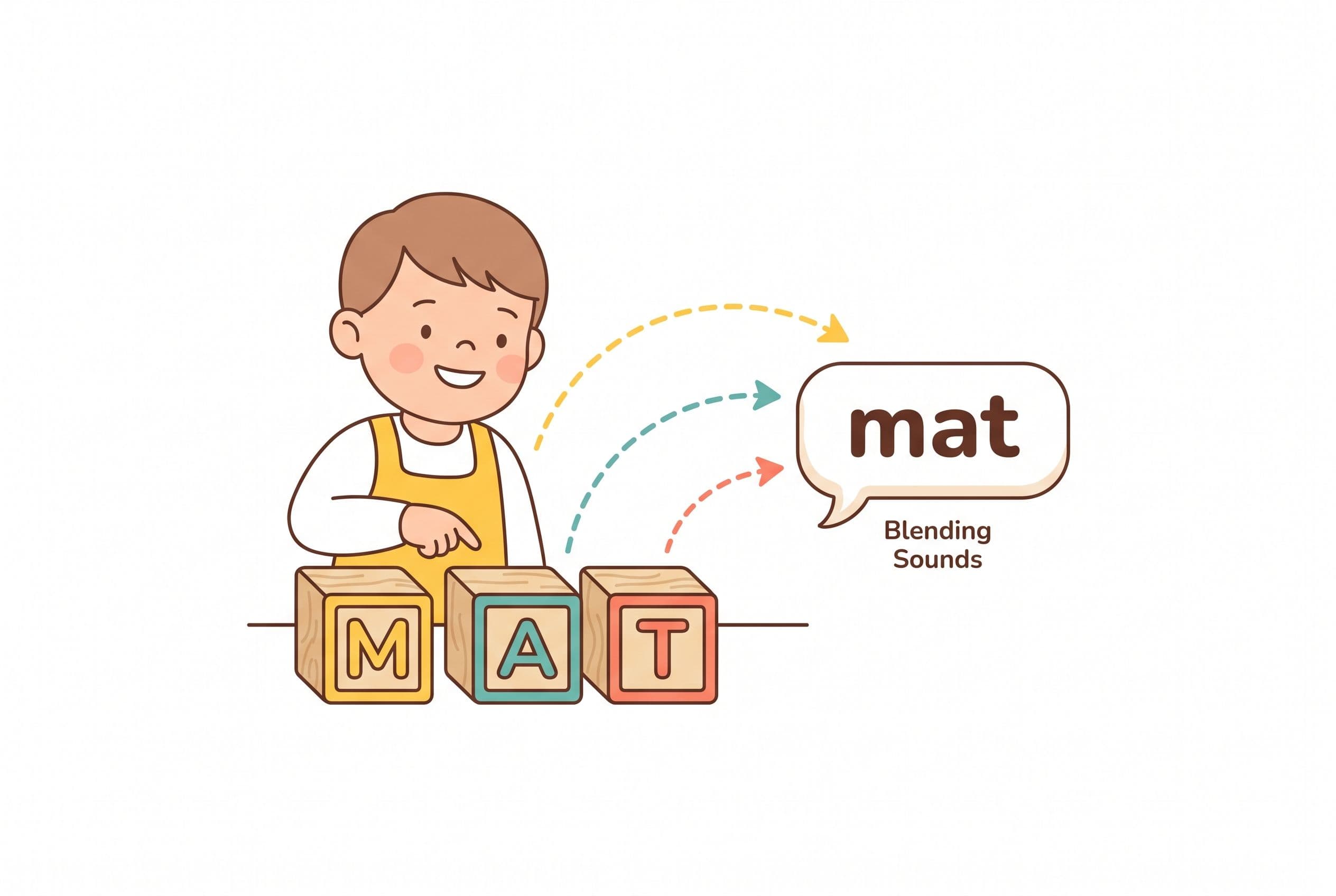
- Blend out loud. Say /m/ /a/ /t/. Stretch it: mmmmaaaat. Then snap it: mat.
- Use CVC words only at first. Try mat, sat, pat, tap, map.
- Correct guessing immediately. If your child says “mouse” for mat, say, “No guessing. Touch the letters. Sound it out.” Calm voice. Steel spine.
- Track three wins. Write down the first three words your child blends independently. Kids need proof that their brain is getting stronger.
- Add a decodable reader. Bob Books can work well here because the early books stay controlled and simple.
- Check progress after two weeks. Use that point to adjust: more modeling, fewer sounds, shorter lessons, or extra oral blending. If difficulty sticks around despite steady practice, especially for an older child or a child with a history of speech, language, or hearing concerns, ask a reading specialist or school team about screening.
- Keep lessons short. Ten focused minutes beats an hour of drama. End before everyone cries. Especially you.
My Bottom Line for Parents
The best app to teach blending sounds is the one that makes your child actually blend — not tap, guess, decorate, or collect cartoon prizes while avoiding the hard work.
For most families, I recommend Teach Your Kid to Read first because it teaches the code directly and keeps the parent in control. If your child needs more playful practice, pair it with Teach Your Monster to Read or Khan Academy Kids. If you want a broader paid platform, compare Reading.com, Reading Eggs, and Hooked on Phonics closely.
But don't outsource your child's reading brain to an app and walk away.
Sit close. Listen. Correct. Celebrate. Drill the sounds. Demand accuracy. Keep it warm, keep it short, and don't let guessing sneak in wearing a cute little backpack.
If your child is stuck between letter sounds and real reading, start with one clean lesson today.
FAQ
What is the best app to teach blending sounds?
My top pick is Teach Your Kid to Read because it focuses on systematic synthetic phonics, blending, and CVC word reading without encouraging picture guessing. Lesson one is free with no card and nothing to cancel; from lesson two the whole program is a 7-day free trial, then US$9.95 a month.
What should I do if my child can't blend sounds?
First, check whether your child knows a few letter sounds. Then practice oral blending and supported print blending side by side: say /m/ /a/ /t/, point to m-a-t, and model mat. If blending keeps breaking down, spend more time on phonemic awareness while still teaching a tiny set of known letters.
Are phonics blending apps better than books?
They do different jobs. A good phonics blending app gives structured practice and correction. Decodable books let your child apply the skill in real reading. Use both, but don't use leveled readers that reward guessing from pictures.
What age should kids start blending CVC words?
Many children begin blending CVC words around ages 4-6, but readiness varies. If your child knows several letter sounds and can blend with adult support, they're probably ready to start simple words like sat, mat, and pin.
How long does it take for blending to click?
Some kids click in a few weeks, like my Mei did after three weeks of letter-sound practice. Other kids need months of steady, explicit instruction. If your child makes no progress with daily short practice, get a phonological awareness check rather than waiting.
From teachyourkidtoread.org/blog/best-app-to-teach-blending-sounds-6-smart-picks

Xia Brody
Co-Founder, Teach Your Kid to Read
Mom of 4 who has successfully taught her kids to read. Currently in the trenches with her 4-year-old while her two oldest (10 and 7) devour books on their own. Passionate about phonics-based methods and building a lifelong love of reading.
Related Articles

Child Knows Letters but Can't Read? 5 App Next Steps
If your kindergartner knows the alphabet but can't read words yet, don't panic — but don't wait either. Here's the no-nonsense app comparison and next-step plan I’d use at my own kitchen table.
Read More →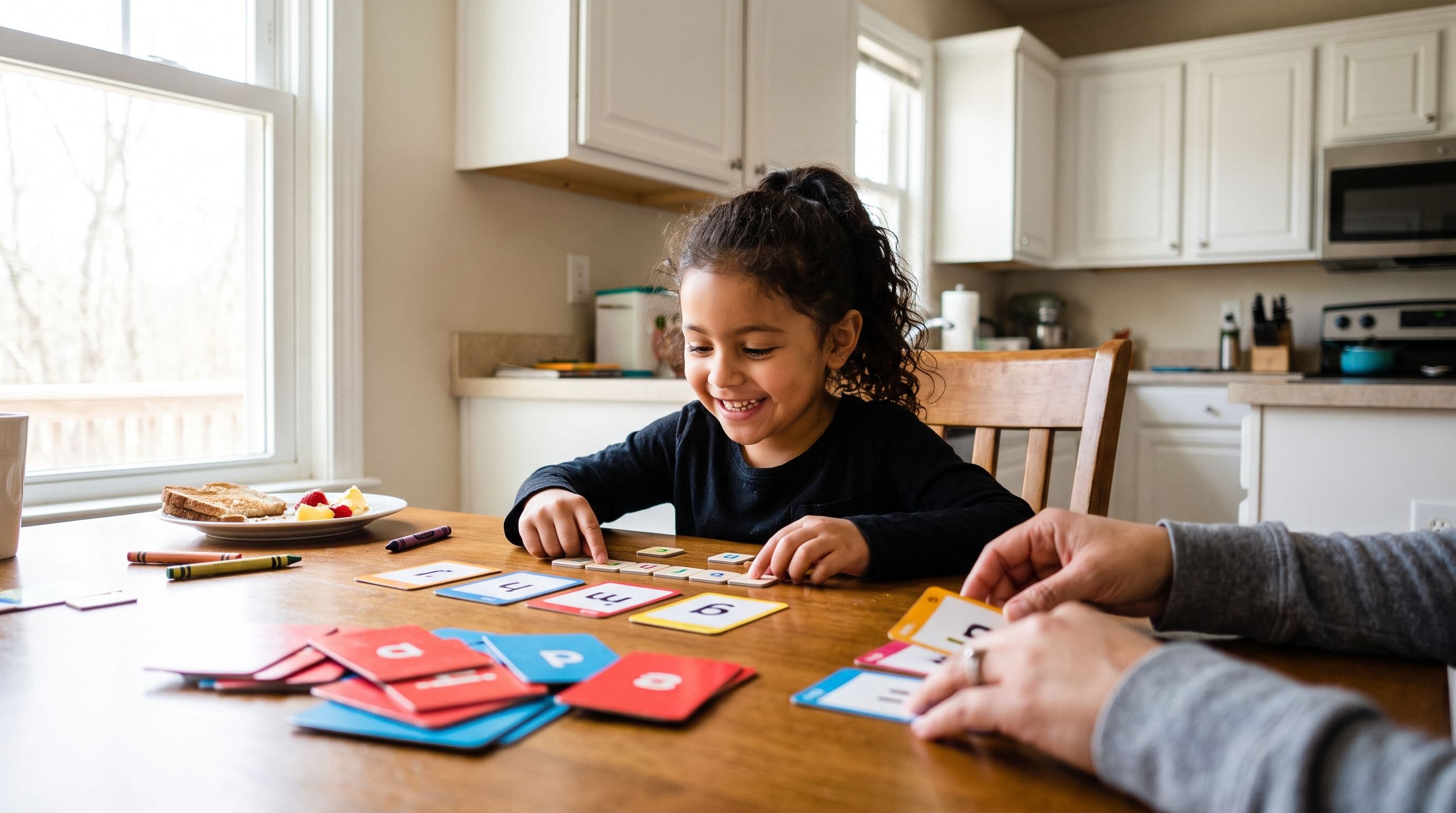
Best App for Kids Who Know Letters But Can't Read
Your child knows the alphabet but still can't read words? That's not laziness. It's a blending problem, and the right phonics app can help you fix it fast.
Read More →
Reading Apps for 5-Year-Olds: 6 Skill-Level Picks
Most reading apps for 5-year-olds look cute. Too many teach guessing, tapping, and screen-zombie habits instead of real decoding. Here’s how I’d pick a phonics app by skill level if I were sitting at your kitchen table.
Read More →