Child Knows Letters but Can't Read? 5 App Next Steps

What You'll Learn
- Why a child knows letters but can't read — and why letter names aren't the finish line
- The one mistake parents make when their kid gets stuck on a word (hint: picture guessing is not reading)
- Which reading apps teach real phonics and which ones mostly entertain
- The exact next step after learning letters: sounds, blending, decodable words, mastery
Reality Check
Your kindergartner knows the alphabet, sings the song, points to letters on cereal boxes, and still can't read cat.
That doesn't mean your child is lazy. It often means the brain needs more explicit teaching on how to connect sounds to print, blend those sounds, and store words through orthographic mapping. And yes, some children struggle even with good teaching — dyslexia and other learning differences are real — so persistent trouble deserves extra support, not blame.
Look, I love a cute ABC moment as much as the next mom. But if your 5-year-old knows letter names and still guesses words from pictures, that's not a personality quirk. That's a skill gap.
The Verdict: Best Apps When Your Child Knows Letters but Can't Read
| Rank | App / Program | What It Teaches | Price | Best For |
|---|---|---|---|---|
| #1 | Teach Your Kid to Read | Systematic synthetic phonics, letter sounds, blending, decoding | Lesson one is free with no card and nothing to cancel; from lesson two the whole program is a 7-day free trial, then US$9.95/month | Ages 4-7 |
| #2 | UFLI Foundations | Strong phonics routines, teacher-led lessons | Book/materials vary | Parents who want a print-based routine |
| #3 | Logic of English | Phonics, spelling rules, handwriting, morphology | Higher-cost curriculum | Families who want a full homeschool program |
| #4 | Bob Books Reading Magic | Simple CVC practice with decodable words | App pricing varies | Extra practice after direct teaching |
| #5 | Leveled reader apps | Often picture clues, memorized patterns, leveled books | Varies | Use carefully; not my first pick |
If your child knows letters but can't read, I’d start with Teach Your Kid to Read because it goes straight at the missing bridge: letter sounds to blending. You can start lesson one free — lesson one is free with no card and nothing to cancel; from lesson two the whole program is a 7-day free trial, then US$9.95 a month.
Tiger Truth: Waiting Is Not a Plan
Here's the thing: kindergarten (age 5) is not “just playtime” for reading anymore. By the end of kindergarten, many children need to read simple decodable words, blend sounds, and recognize common spellings. Standards vary by state, district, and child, so the goal isn't “tiny chapter-book genius by June.” The goal is steady progress with sound-symbol knowledge, blending, and accurate decoding of simple VC/CVC words.
US students on the 2022 NAEP / The Nation's Report Card showed only 33% of 4th graders (ages 9-10) read at proficient level. That's not a tiny problem. That's a five-alarm literacy fire.
The 2000 National Reading Panel report — the one a US federal panel produced after reviewing decades of research — found that systematic phonics instruction gives children stronger reading outcomes than unsystematic or no phonics instruction. Louisa Moats' 1999 paper “Teaching Reading IS Rocket Science” said the quiet part out loud: teaching reading takes explicit knowledge. It isn't magic. It isn't vibes. It isn't handing a kid a cute book and hoping the brain figures it out.
And if your child is already doing the “kindergartner won't read words” routine — staring, guessing, melting into the chair like a dramatic noodle — don't punish the child. Fix the instruction.
Why Knowing Letters Isn't Reading
Reading has layers. Letter names sit near the beginning, but they don't carry the whole job.
A child can know the letter M and still not know:
- M spells /m/
- /m/ can start mat
- /m/ + /a/ + /t/ blends into mat
- The word mat stays the same even if there's no picture of a mat nearby
That last one matters. A lot.
My own 3-year-old was obsessed with the alphabet song. She sang A-B-C-D all day long, like she was auditioning for a preschool Broadway show. But when I pointed to B and asked, “What sound does this make?” she gave me a blank stare. Total shutdown. That was my wake-up call: singing the alphabet and knowing grapheme-phoneme correspondence are completely different skills.
So we ditched the alphabet song for a while. We started with just 5 letters at a time — sounds, not names. By the end of month one, she knew 8 letter sounds cold. Names came later and honestly didn't matter much.
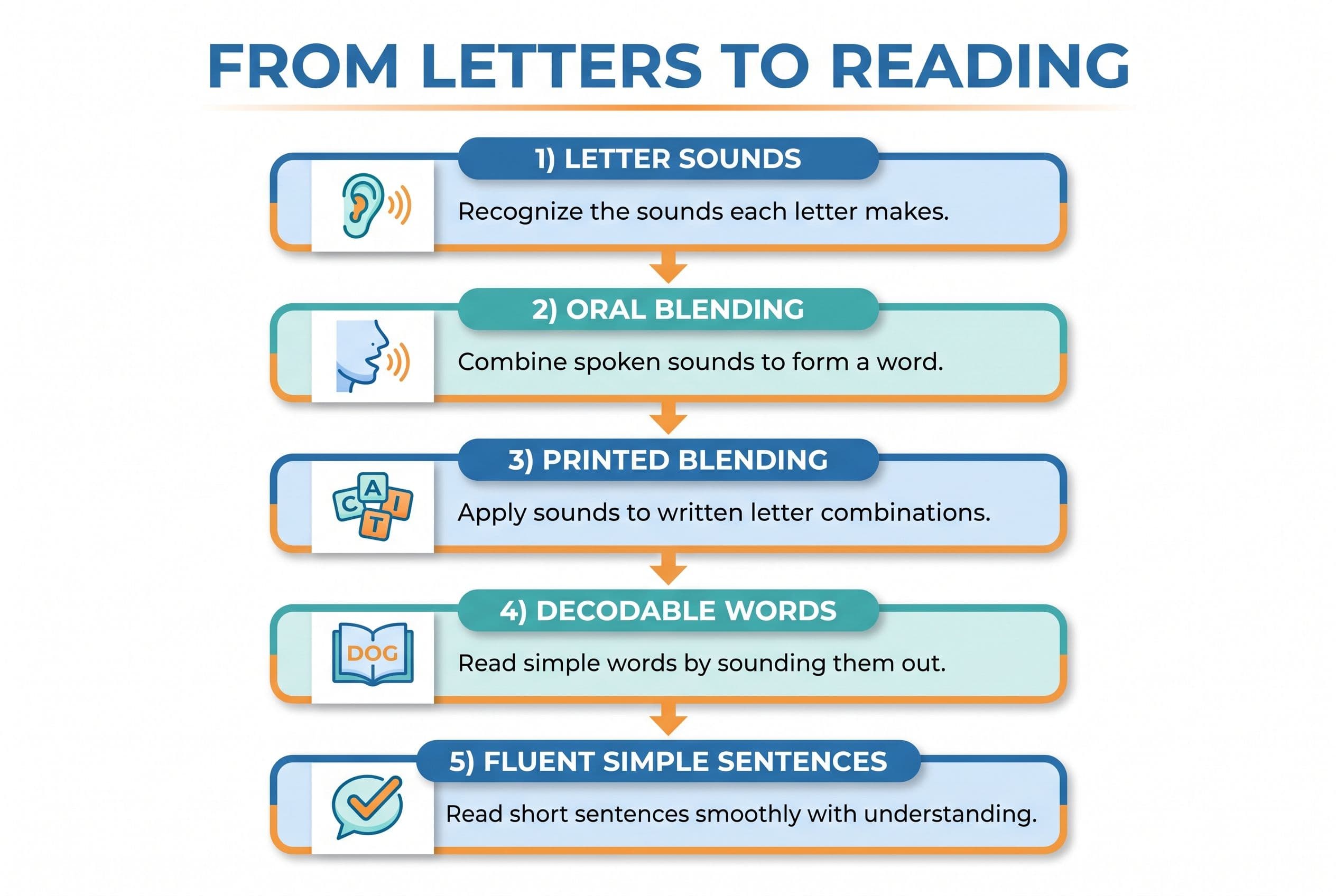
That's the next step after learning letters: sounds first, blending next, decodable reading after that.
App Deep Dive: What I'd Actually Use
#1 Teach Your Kid to Read: Best First Step After Letter Names
Teach Your Kid to Read wins for this exact problem: a child knows letters but can't read because nobody has built the bridge from print to sound to word.
The program focuses on systematic synthetic phonics. That means your child learns the sound-spelling code in a planned order and practices blending sounds into real words. No guessing. No “look at the picture and think what would make sense.” No nonsense.
Real talk — the “No Guessing” rule is non-negotiable in my house. If my 4-year-old sees ship and says “boat” because the picture has water, I don't clap like she’s close. I say, “Point to the letters. Sound it out.” Loving? Yes. Firm? Also yes. Reading isn't charades.
Teach Your Kid to Read works best for children who:
- Know some letters but don't read words yet
- Know letter sounds but can't blend
- Memorize books instead of decoding them
- Guess from pictures
- Need short daily phonics lessons that a real parent can manage
This is where the app earns its spot. It doesn't bury the parent in a 300-page manual, and it doesn't pretend games alone teach reading. You get a clear sequence: sound, blend, read, repeat. Skill. Drill. Mastery.
The price also makes sense: lesson one is free with no card and nothing to cancel; from lesson two the whole program is a 7-day free trial, then US$9.95 a month. That's sane. Some private reading intervention can cost US$10,000-US$15,000 a year, and many families simply can't do that.
Bottom line: if your child knows letters but can't read, this is the app I'd try first.
#2 UFLI Foundations: Strong, But Parent-Heavy
UFLI Foundations is the real deal for explicit phonics. It comes out of the University of Florida Literacy Institute and gives a structured lesson routine that many Science of Reading teachers love.
The strength? It teaches phonemic awareness, decoding, spelling, and connected text in a clear sequence. If you're a homeschooling parent who likes scripts and routines, you may love it.
The catch? It isn't really an app that carries the lesson for you. You, the adult, do the teaching. That's fine if you want a teacher-led plan at the kitchen table. But if you're looking for a guided app because dinner is burning, the toddler is eating a crayon, and your kindergartner is under the table refusing to blend sat, UFLI may feel like a lot.
I like UFLI. I just wouldn't call it the easiest buyer's-guide pick for a busy parent who needs immediate next steps.
#3 Logic of English: Excellent, Bigger Than You May Need
Logic of English teaches phonics, spelling, handwriting, grammar pieces, and the “why” behind English spelling. It respects the code. I appreciate that.
If your child loves rules or you're homeschooling long-term, this can work beautifully. It goes beyond CVC words and builds toward spelling patterns, multi-syllable words, and morphological awareness later on.
But here's the kicker: if your only problem is “my child knows letters but can't read,” Logic of English may feel like buying a full gym membership when you need one good squat rack. Great program. Bigger commitment.
Use it if you want a full curriculum. If you want the fastest clean bridge from letter sounds to blending, start smaller.
#4 Bob Books Reading Magic: Nice Practice, Not Enough Instruction
Bob Books have helped tons of early readers because the books use simple decodable patterns. I’ve used Bob Books in my own house. They’re no-brainer practice once a child can blend.
But the app version works best as reinforcement. It doesn't replace explicit teaching when a child knows letter sounds but can't blend. If your child can't hear /m/ /a/ /t/ and push the sounds together into mat, tapping around in an app won't magically fix that.
Use Bob Books Reading Magic after your child has started blending CVC words. Think dessert, not dinner.
#5 Leveled Reader Apps: Be Careful With Picture Guessing
This one drives me crazy.
Many leveled reader apps look polished. They give kids little books with repeating sentences: “I see the dog. I see the cat. I see the horse.” The child uses the picture, pattern, and first letter to guess the word. Parents think, “Yay! She's reading!”
Nope. She may be memorizing and guessing.
Fountas & Pinnell levels show up everywhere in schools, especially in the US, but that system grew out of whole-language and balanced literacy traditions. It often sorts books by difficulty without giving children enough decodable text tied to the phonics code they've learned. If your child knows alphabet but can't read, leveled readers can hide the problem.
Emily Hanford's 2023 APM Reports investigation “Sold a Story” exposed how guessing strategies spread through classrooms and left too many kids without decoding skills. Honestly, every parent should listen to it while folding laundry and rage-cleaning the kitchen.
The Missing Skill: Phonemic Awareness vs Phonics
Parents mix these up all the time, so let's clean it up.
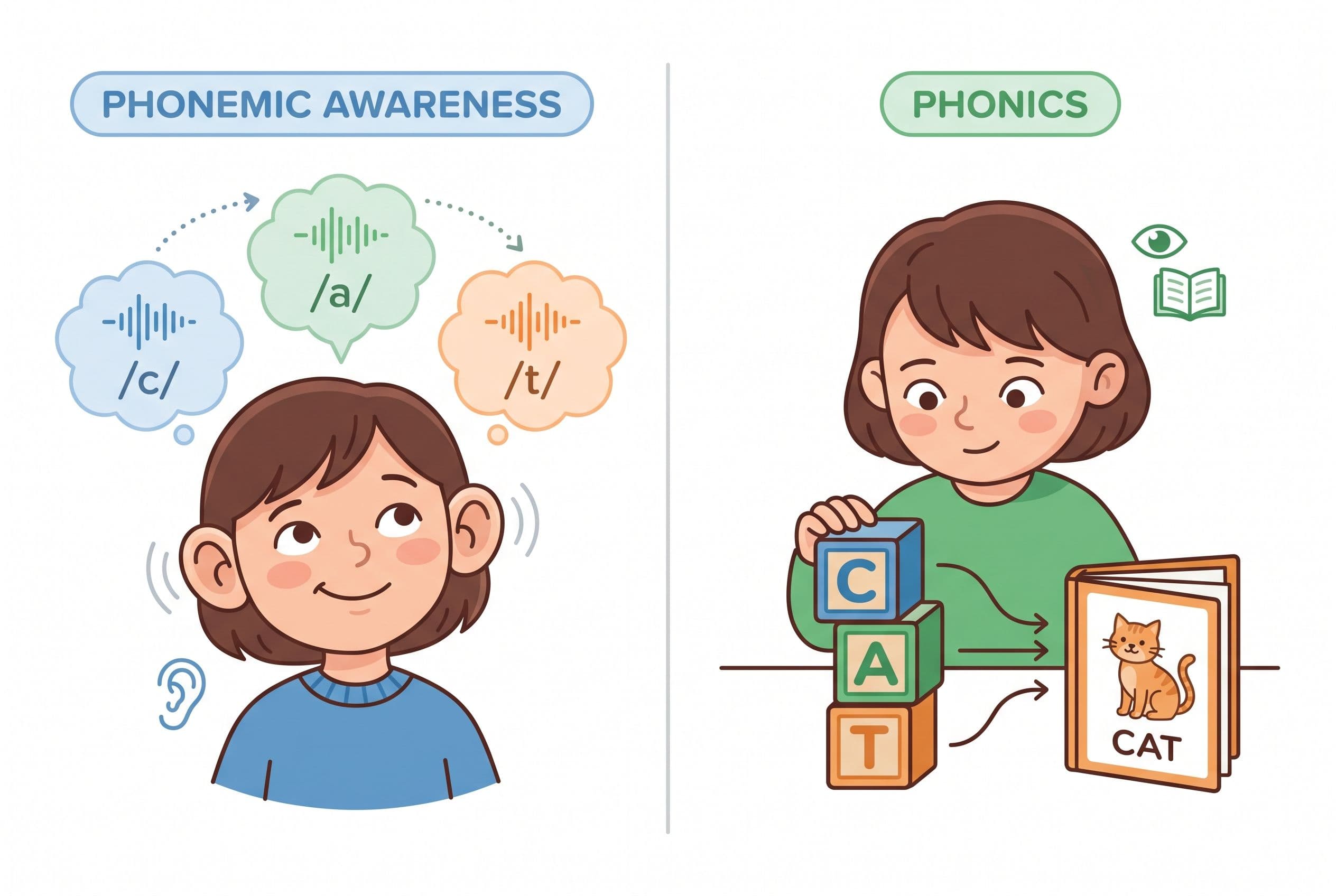
Phonemic awareness means your child can hear and work with the individual sounds in spoken words. No letters required.
Examples:
- “What are the sounds in sun?” /s/ /u/ /n/
- “Say smile without /s/.” mile
- “Blend these sounds: /f/ /i/ /sh/.” fish
Phonics means your child connects sounds to printed letters.
Examples:
- The letter s spells /s/
- sh spells /sh/
- a can spell /ă/ in cat
A child knows letters but can't read when one of those pieces breaks. Sometimes the child knows letter names but not sounds. Sometimes the child knows sounds but can't blend. Sometimes the child can blend orally but freezes when letters appear.
This is why I like quick checks. The PAST test — David Kilpatrick's Phonological Awareness Screening Test — can take about 5 minutes and show where the sound-level breakdown sits. DIBELS also checks early literacy skills like letter naming, phoneme segmentation, and nonsense word fluency. DIBELS-style measures can help show whether children are building alphabetic principle and early decoding skills during kindergarten.
No assessment is a crystal ball. But data beats vibes, hands down.
The Action Step: What To Do This Week
If your child knows letters but can't read, don't add more alphabet songs. Build the missing bridge.
-
Check letter sounds, not letter names.
Show 5-10 letters. Ask, “What sound?” not “What letter?” Start with common sounds like m, s, t, a, p. -
Test oral blending.
Say /m/ /a/ /t/. Ask, “What word?” If your child says mat, good. If they stare at you like you just asked them to file taxes, phonemic awareness needs work. -
Teach 5 sounds at a time.
Don't dump all 26 letters on a 5-year-old and call it instruction. That's chaos with a cute font. -
Blend CVC words daily.
Use words like sat, mat, map, tap, pat. Point under each letter. Stretch the sounds. Then say the word fast. -
Ban picture guessing.
Cover the picture if you need to. Say, “The letters tell us the word.” This rule is boring and powerful. My favorite combo. -
Use decodable books only at first.
Try Bob Books or other decodable readers after your child can blend the target sounds. Skip predictable leveled readers for now. -
Practice 10 minutes every day.
We Never Skip. Birthdays, holidays, vacation — do a tiny lesson. Ten minutes keeps the reading muscles warm. -
Try a structured phonics app.
If you need a clear path, use Teach Your Kid to Read. Lesson one is free with no card and nothing to cancel; from lesson two the whole program is a 7-day free trial, then US$9.95 a month.
A Simple 10-Minute Kitchen Table Routine
Here's what I’d do with a kindergartner who won't read words:
Minute 1-2: Sound review
Show 5 cards. Child says sounds fast: /m/ /s/ /t/ /a/ /p/.
Minute 3-5: Oral blending
You say /s/ /a/ /t/. Child says sat. Do 8-10 words.
Minute 6-8: Printed blending
Write sat. Child touches each letter and says each sound. Then they blend.
Minute 9: Read a tiny decodable line
“Sam sat.” Yes, it’s not Shakespeare. It’s foundation work.
Minute 10: Win and stop
End before the meltdown. Leave them feeling like, “I can do this.” Then go make lunch and pretend the laundry doesn't exist.
How To Know It's Working
You don't need perfection in week one. You need movement.
Look for these signs:
- Your child gives sounds faster
- They blend two sounds before three sounds
- They stop guessing from pictures
- They can read new CVC words they haven't memorized
- They start correcting themselves by looking at letters
That's reading beginning to click.
Linnea Ehri's 2005 work on phases of word reading explains why this matters. Children move from pre-alphabetic guessing into partial alphabetic reading, then full alphabetic reading, where they connect graphemes to phonemes more completely. As children connect the sounds to their spellings, they can store words more accurately for automatic recognition — spelling, pronunciation, and meaning getting bonded together in the brain like a tiny literacy power tool.
Know what the worst part is? Many children never get there because adults keep feeding them guessable books and calling it confidence.
Confidence comes from competence.
My No-Nonsense Buying Advice
If your child knows letters but can't read, choose the tool that teaches the missing skill directly.
Pick Teach Your Kid to Read if you want a guided app with systematic phonics and blending practice.
Pick UFLI Foundations if you want a strong print-based teacher routine and you're ready to lead every lesson.
Pick Logic of English if you want a bigger homeschool curriculum.
Use Bob Books Reading Magic for practice after blending starts.
Be very cautious with leveled reader apps if they lean on pictures, patterns, or guessing.
If you want to see where your child stands before choosing, take the 2-minute reading check. Then start with a phonics path that teaches sounds, blending, decoding, and accuracy — no guessing, no fluff.
FAQ
Why does my child know letters but can't read?
Because letter names aren't reading. Your child also needs letter sounds, phonemic awareness, blending, and practice reading decodable words. A child knows letters but can't read when those skills haven't connected yet.
What comes after learning letters?
The next step after learning letters is usually letter sounds, then oral blending, then printed blending with simple CVC words like sat, map, and top. Don't rush into leveled readers if your child can't decode simple words.
What if my child knows letter sounds but can't blend?
Practice blending in two places: out loud and with print. Say sounds slowly — /m/ /a/ /t/ — and have your child blend them into mat. Then use known letters for supported printed blending, pointing under each spelling as your child says the sounds. Don't make this harder than it needs to be, but don't hide the letters forever either.
Should I use sight words or phonics first?
Use phonics as the foundation. Some high-frequency words need special attention, but kids still need to map sounds to spellings. Don't teach children to memorize whole word shapes as the main strategy.
Is kindergarten too early to worry?
No. Kindergarten (age 5) is exactly when you want to catch weak sound-symbol skills. Don't panic, but don't wait. Ten focused minutes a day can change the path.

Xia Brody
Co-Founder, Teach Your Kid to Read
Mom of 4 who has successfully taught her kids to read. Currently in the trenches with her 4-year-old while her two oldest (10 and 7) devour books on their own. Passionate about phonics-based methods and building a lifelong love of reading.
Related Articles
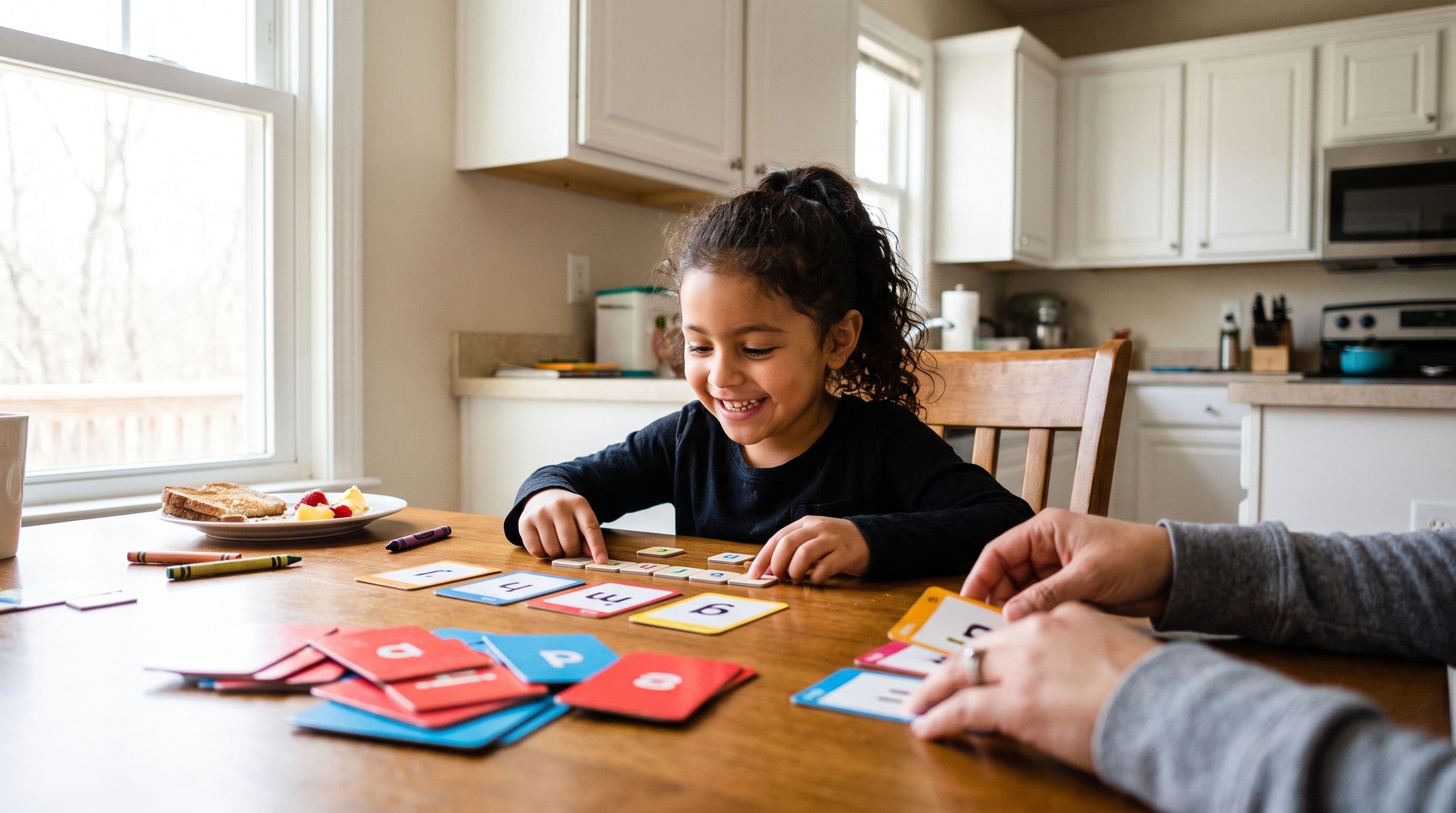
Best App for Kids Who Know Letters But Can't Read
Your child knows the alphabet but still can't read words? That's not laziness. It's a blending problem, and the right phonics app can help you fix it fast.
Read More →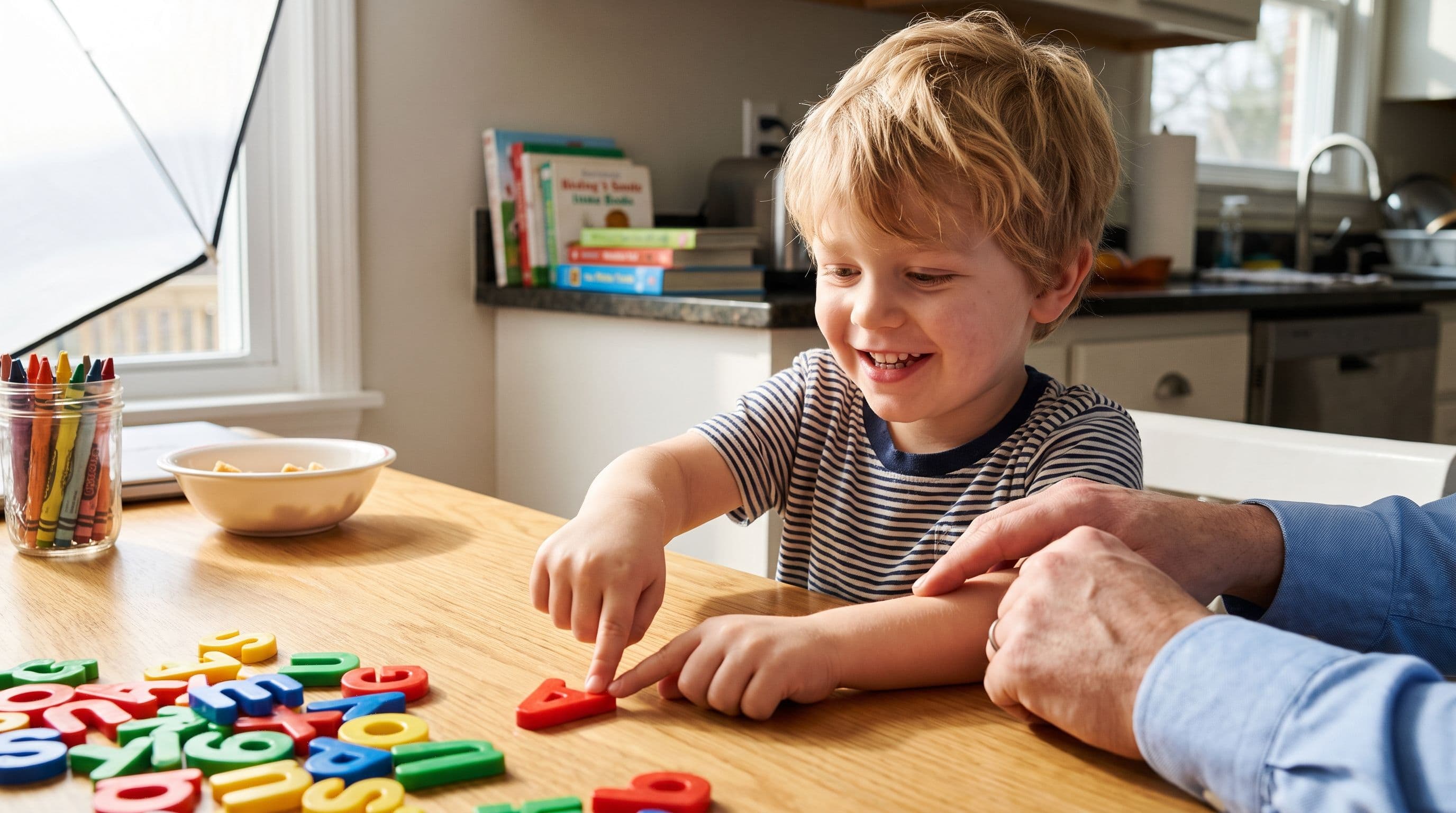
Best Phonics App for Letter Sounds: 6 Picks for 2026
Looking for the best phonics app for letter sounds? Xia Brody compares 6 popular apps for real phonics, explicit instruction, price, and best age range.
Read More →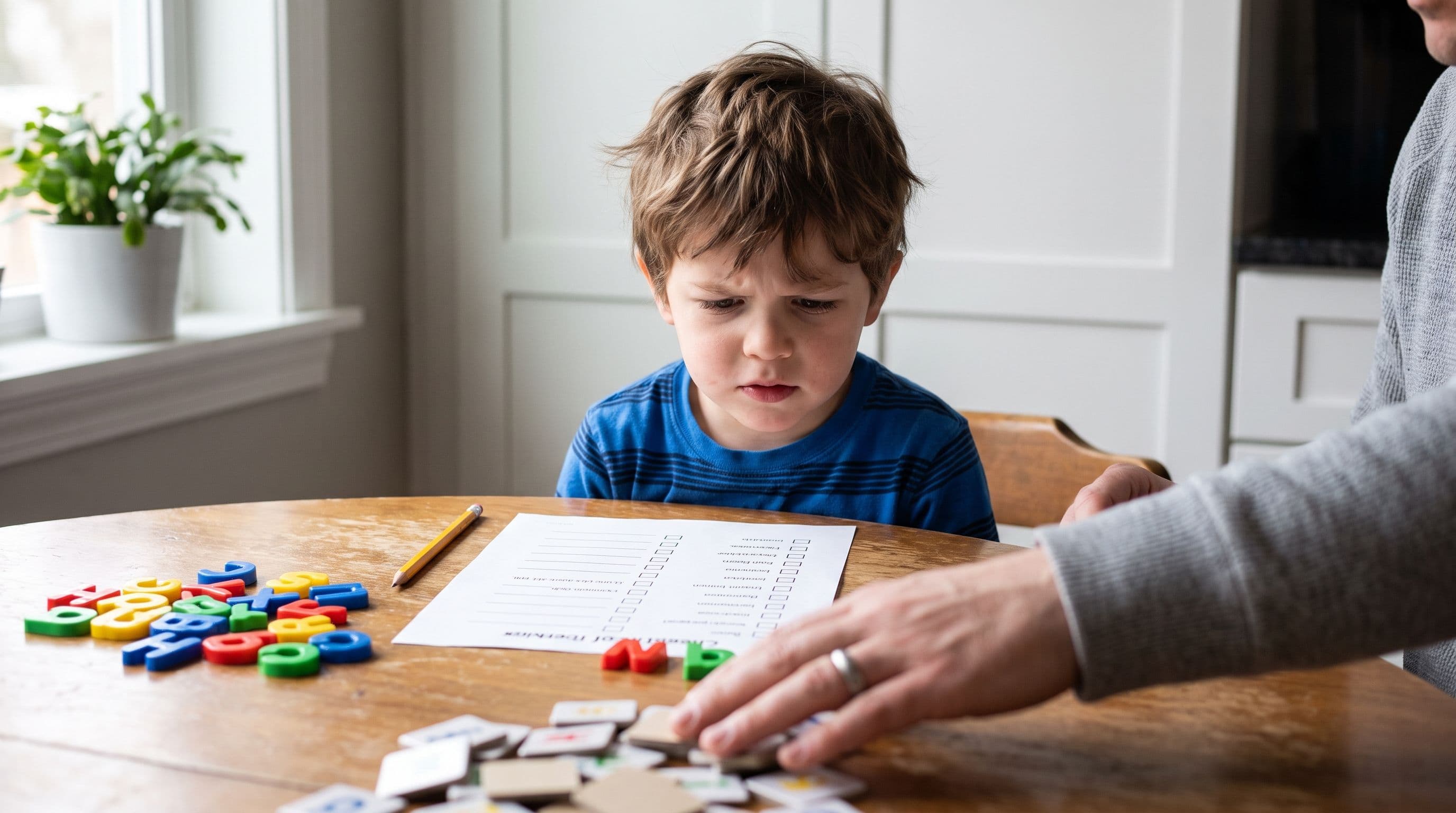
Reading Readiness Checklist for Kindergarten: Free PDF
Wondering if your child is ready to read in kindergarten? Here’s the no-fluff reading readiness checklist I use at my own kitchen table, plus what to do if your child isn’t there yet.
Read More →