Best App for Kids Who Know Letters But Can't Read
What You'll Learn
- Why a child knows letters but can't read words like mat, ship, or splint
- The one mistake parents make when their kid gets stuck on a word
- What a real blending sounds app must teach before you waste time on games
- How to move from letter sounds to reading without guessing, tears, or iPad babysitting
Reality Check: Knowing Letters Isn't Reading
Your kid can sing the alphabet song, point to M, shout “M says /m/!” and still freeze when they see mat.
That’s normal.
But it’s not something to ignore.
If you’re searching for the best app for kids who know letters but can't read, you’re probably stuck in that annoying middle stage: your child knows letter names, maybe even letter sounds, but cannot blend sounds into words.
This is where parents panic. Or worse, they get told to “wait.”
Nope. Not in my house.
I’m Xia Brody, co-founder of TeachYourKidToRead.org, Chinese-American homeschooling mom of four, and resident funny tiger mom who believes reading is a survival skill. I’ve taught my two oldest to read, and I’m currently at the kitchen table with my 4-year-old drilling CVC words while my 1-year-old tries to eat the letter tiles. Glamorous? No. Effective? Yes.
Here’s the thing: letter knowledge is the doorway. Blending is the bridge.
A child who knows letters but can't read doesn’t need more alphabet songs. They need direct practice hearing sounds, saying sounds, blending sounds, and mapping those sounds to letters.
That’s phonics. That’s the Foundation.
Tiger Truth: If You Wait, the Gap Gets Ugly
Real talk — reading delays compound.
In the US, 33% of 4th graders scored at or above NAEP Proficient in reading on the 2022 NAEP / The Nation's Report Card. That doesn’t mean every child below that line can’t read at all. NAEP Proficient is a high bar. But still? That’s not “everything is fine.” That’s a national mess.
And 3rd grade reading is a big warning light. Donald Hernandez’s 2011 report, Double Jeopardy, found that children who were not reading proficiently by the end of 3rd grade were four times more likely to leave high school without graduating. That’s an association, not a magic cliff where the reading fairy packs up and leaves forever. But it’s serious enough that I’m not playing the “wait and see” game.
Know what drives me crazy? Parents get told, “He’ll pick it up.”
Pick it up from what? The couch? The cereal box? The Minecraft loading screen?
Reading doesn’t develop naturally like speech. Stanislas Dehaene explained this in Reading in the Brain (2009): the brain has to recycle visual pathways and connect print to speech sounds. Translation for tired parents: your child’s brain needs training.
The 2000 National Reading Panel report — the one the US Congress commissioned — found that systematic phonics instruction produces significant benefits, especially in the early grades.
So if your child knows letters but can't read, don’t buy another cute alphabet app with dancing animals and zero decoding.
You need a phonics app for blending.
The Playground Moment That Made This Personal
I was at a playground in Raleigh when another mom told me her kid’s school had just switched from Lucy Calkins to a Science of Reading curriculum after North Carolina’s Senate Bill 387 / Session Law 2021-8 — the Excellent Public Schools Act.
She was confused and honestly a little annoyed.
“He was doing fine before,” she said.
So I asked, “Can he read the word splint?”
Her son was in second grade (ages 7-8). He could not.
That one word didn’t diagnose anything. I’m a tiger mom, not a walking psychoeducational evaluation. But what I saw mattered: he guessed. He looked at the first letter, glanced around, and threw out a word that made no sense.
That’s not reading.
I spent 20 minutes on that playground bench explaining why the switch was happening — Emily Hanford’s APM Reports / “Sold a Story”, the NAEP data, Dehaene’s neuroscience, and why Balanced Literacy guessing strategies hurt kids.
She went home and listened that night. At 11 p.m., she texted me: “I had no idea. Why didn’t anyone tell us this sooner?”
That sentence still makes me mad.
Because parents deserve straight answers. If your child can name letters but can’t read words, the problem usually isn’t motivation. It may be a missing Skill: phonemic awareness, blending, decoding, or all three.
Why Kids Know Letters But Still Can't Read
Let’s break it down without edu-jargon soup.
A child needs several connected Skills to read a simple word like sat:
- Recognize the letters: s, a, t
- Know the sounds: /s/ /ă/ /t/
- Hold those sounds in memory
- Blend them smoothly: sss-aa-t → sat
- Connect the spoken word to meaning
If one step breaks, reading stalls.
This is why a kid can know 26 uppercase letters and still bomb on CVC blending practice. Letter names don’t automatically turn into decoding.
Linnea Ehri’s work on phases of word reading development explains this beautifully. Kids may move from pre-alphabetic guessing to partial alphabetic reading, then full alphabetic reading, and later consolidated alphabetic reading, where bigger spelling patterns become familiar. Decoding is using letter-sound knowledge to read unfamiliar words. Orthographic mapping is how specific written words get locked into memory through spelling, pronunciation, and meaning so they become fast and automatic.
That’s the real deal.
David Kilpatrick’s Equipped for Reading Success (2016) gets even more practical. He shows why phonemic awareness matters so much. If a child can’t pull apart and blend the sounds inside words, sight word growth stays weak.
Bottom line: your child doesn’t need to memorize more whole words. Your child needs to crack the code.
What the Best App for Kids Who Know Letters But Can't Read Must Do
A good reading app for early readers should not toss your kid into leveled books and say, “Use the picture.”
No. Absolutely not.
That’s how you get a child staring at a picture of a boat and calling the word ship “boat.” Sound familiar?
The best app for kids who know letters but can't read must teach these Skills in a sane, connected sequence:
1. Phonemic Awareness Before Print Gets Hard
Phonological awareness means noticing and working with spoken sounds — from rhymes and syllables down to individual phonemes. Phonemic awareness is that individual-sound part.
Example:
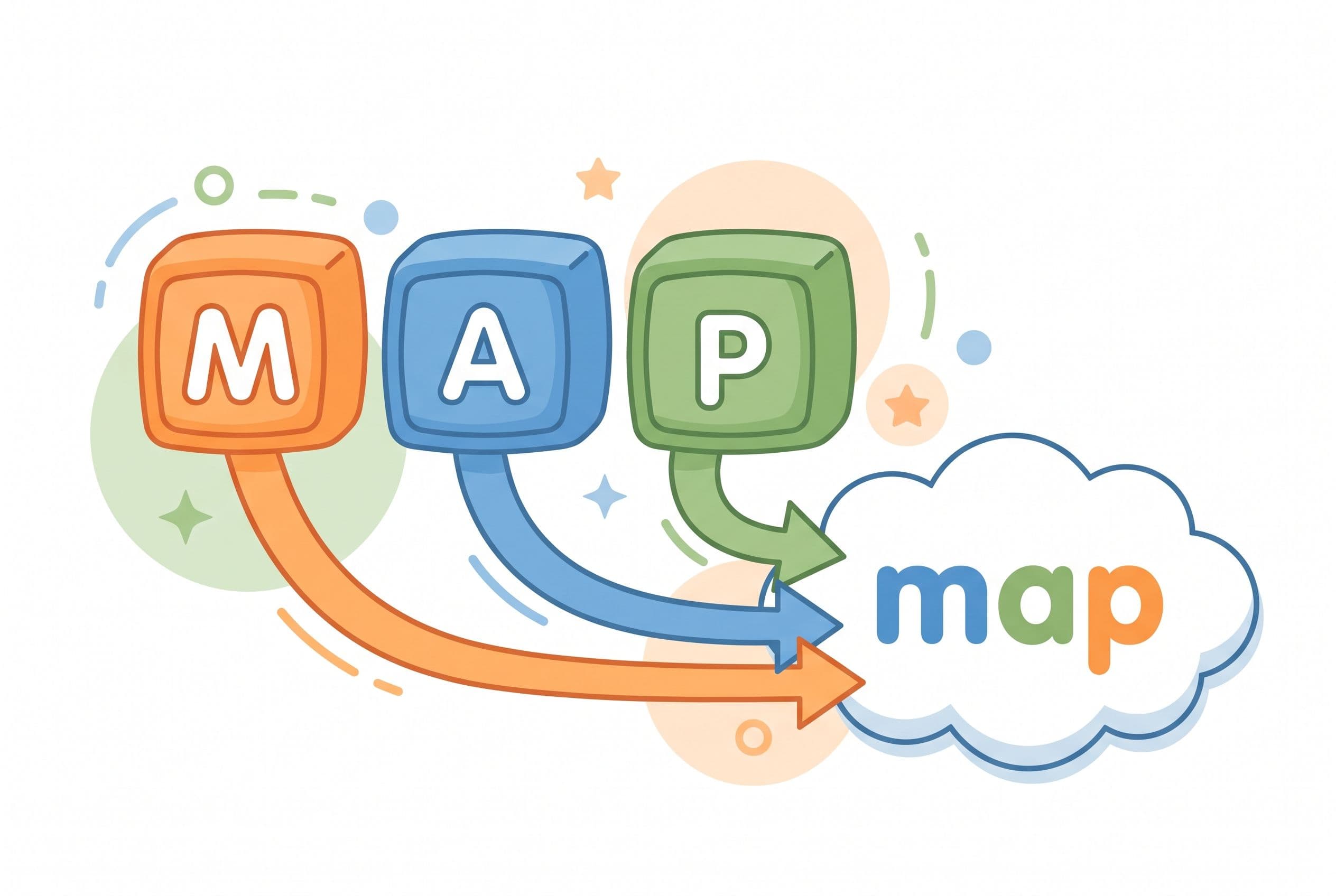
- “What sounds do you hear in map?”
- Child says: /m/ /ă/ /p/
That’s phonemic awareness.
A strong app gives oral sound practice, not just screen tapping. A phonological awareness screener such as the PAST can often be given in a short session by someone trained to use it. I love that kind of no-nonsense information because it can point you toward the kind of sound work your child needs. It’s not a magic diagnosis machine. Nothing is. But it’s better than shrugging and saying, “Maybe he’s just not into books.”
2. Systematic Synthetic Phonics
Synthetic phonics means kids learn sounds and blend them to read words.
Not guessing.
Not memorizing the shape of the word.
Not “look at the picture and think what would make sense.” That one makes me want to throw a leveled reader into a volcano.
A proper phonics app for blending teaches grapheme-phoneme correspondence in a planned sequence:
- m, s, t, a
- sat, mat, Sam
- p, f, i
- sip, fit, map
- digraphs like sh, ch, th
- blends like stop, flag, splint
That sequence matters. Random phonics is not systematic phonics.
3. Real Blending Practice
Your child needs to practice sliding sounds together until it becomes automatic.
Try this:
- /m/ /ă/ /t/
- stretch: mmmmaaaat
- snap: mat
A good blending sounds app should make this explicit. It should show the sounds, say the sounds, and ask your child to blend without leaning on pictures.
4. Decodable Words and Books
If your kid learned m, a, s, t, p, the app should not hand them the sentence: “The elephant climbed a mountain.”
That’s madness.
Give them: “Sam sat. Mat sat. Pam sat.”
Boring? Maybe.
Effective? Hands down.
Programs like UFLI Foundations, Logic of English, Fundations, Bob Books, and Orton-Gillingham-based instruction all respect controlled text. Fountas & Pinnell levels are everywhere, but they’re whole-language aligned — I’d rather use decodable readers from Flyleaf Publishing or High Noon Books.
Why Teach Your Kid to Read Fits This Exact Gap
Teach Your Kid to Read was built for this specific parent panic moment: “My child knows letters but can't read. What now?”
Our approach uses systematic synthetic phonics with Orton-Gillingham principles — explicit, sequential, multisensory, and mastery-based.
That means we don’t throw your child into random “fun” activities and hope reading appears like magic.
We teach:
- Letter sounds
- Oral blending
- CVC blending practice
- Sound-by-sound decoding
- Word reading without picture guessing
- Short decodable practice
- Review until Mastery sticks
The app acts like a coach, not a cartoon babysitter.
And yes, I’m picky. I’ve watched too many apps reward kids for tapping balloons while doing almost zero reading. Cute animations don’t build Independence. Drill builds Independence.
Is it fun? Sure, enough.
But I care more about whether your child can read mop, ship, and eventually splint without guessing.
What To Do This Week If Your Child Knows Letters But Can't Read
Here’s your no-drama action plan.
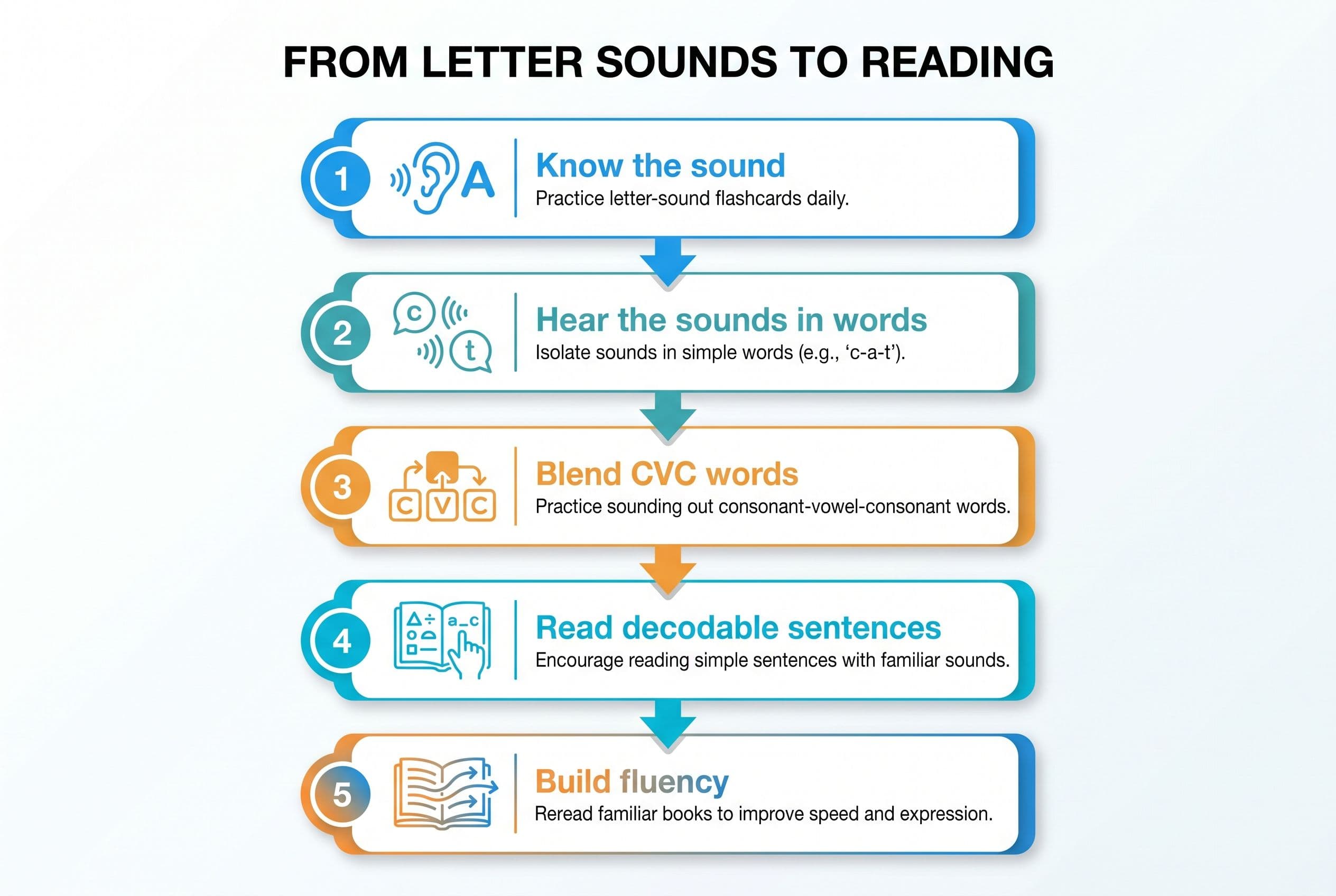
Step 1: Check Letter Sounds, Not Letter Names
Ask your child for sounds, not names.
Show lowercase letters first because books use lowercase letters most.
Check:
- a as /ă/
- m as /m/
- s as /s/
- t as /t/
- p as /p/
- f as /f/
- i as /ĭ/
If your child says “em” instead of /m/, correct it gently.
Say: “That’s the letter name. The sound is /m/.”
No shame. Just correction.
Step 2: Test Oral Blending
Say three sounds out loud:
- /s/ /ă/ /t/
- /m/ /ă/ /p/
- /f/ /ĭ/ /t/
Ask, “What word?”
If your child can’t blend orally yet, practice oral blending and model blending with two or three familiar letters alongside it. Your child doesn’t have to ace an oral test before seeing print. Sounds and letters can grow together — that’s kind of the point.
Short. Sharp. Non-negotiable.
Step 3: Start CVC Blending Practice
Use only words your child has the sounds for.
Start with:
- sat
- mat
- map
- Sam
- Pam
- tap
- pat
Have your child touch each sound, say it, then blend.
Do not let them guess.
Tiger Rule: No Guessing. Sound it out.
Step 4: Use a Blending Sounds App Daily
Use Teach Your Kid to Read for 10-15 minutes a day.
That’s enough for most young kids if you stay consistent. My rule at home is simple: We Never Skip. Birthdays, holidays, travel days — we still do something. Maybe it’s only 5 minutes on a chaotic day, but we don’t let the habit die.
Step 5: Track One Benchmark
Don’t track vibes. Track Skill.
If your school uses DIBELS or another early literacy screener, ask which edition, which measure, and which testing window they’re using before you panic over a number. Benchmarks vary. At home, you’re not trying to become a mini testing center with a clipboard and a weird power trip.
Just notice:
- Can my child say letter sounds quickly?
- Can my child blend CVC words without help?
- Can my child read decodable words without pictures?
- Can my child keep going when the word gets harder?
That’s data a parent can use.
What Not To Do
Please don’t hand your kid an app that teaches guessing.
If the app says things like “look at the picture,” “think what makes sense,” or “skip the word and come back,” run.
Those strategies come from Whole Language and Balanced Literacy. Emily Hanford’s Sold a Story reporting exposed how deeply those ideas spread through classrooms and curriculum.
Also don’t rely on sight word flashcards as the main plan.
Some high-frequency words need special attention, yes. But many so-called sight words are decodable once your child knows the code. Did, that, ship, went — these aren’t magic shapes. They’re sound-symbol patterns.
And please, don’t confuse screen time with instruction.
A reading app for early readers should make your child read. If your child spends 12 minutes dressing a cartoon puppy and 90 seconds reading, that’s not phonics. That’s digital glitter.
How Long Until My Child Starts Reading?
I won’t promise “read in 7 days.” That’s nonsense.
Some kids blend after a week of tight practice. Some need months, especially if phonemic awareness is weak or dyslexia indicators appear.
Watch for patterns like:
- Ongoing trouble rhyming after age 4
- Still unable to blend simple oral sounds by age 5 after explicit practice
- Forgetting letter sounds repeatedly
- Guessing from pictures instead of looking through the word
- Avoiding reading practice with big emotions
- Family history of dyslexia
One sign by itself doesn’t diagnose dyslexia. Neither does one bad day, one hard word, or one dramatic collapse over mat because someone is hungry and needs a cheese stick. But persistent patterns across several tasks — especially after clear instruction — deserve attention.
If you see several of these, consider a screening through a trained tutor, educational psychologist, or school support team. The International Dyslexia Association has helpful information for families.
And no, early help doesn’t “label” your child in a bad way. Early help protects them.
My Kitchen Table Rule
Last Tuesday, my 4-year-old and I practiced sat, sip, and map at the kitchen table while my 7-year-old interrupted to ask where the tape was and my 10-year-old announced we were out of bananas.
Very academic atmosphere over here.
My 4-year-old tried to guess map after seeing the m.
I stopped him.
“Touch each sound.”
/m/ /ă/ /p/
“Blend it.”
map.
Then we did it again. And again. Not forever. Just enough to teach his brain: print works left to right, sounds map to letters, guessing is not the plan.
That’s the whole game.
The Bottom Line
The best app for kids who know letters but can't read is not the flashiest app.
It’s the one that teaches blending, decoding, and phonics in a clear sequence.
If your child knows letters but can't read, don’t panic and don’t wait. Start with sounds. Drill blending. Use decodable words. Demand accuracy with warmth.
You’re not being mean.
You’re giving your child Independence.
Start Teach Your Kid to Read today and give your early reader the structured phonics practice they actually need. Visit start lesson one free or reach us through contact us today.
FAQ
What is the best app for kids who know letters but can't read?
The best app for kids who know letters but can't read teaches systematic phonics, oral blending, CVC blending practice, and decodable reading. Teach Your Kid to Read focuses on the missing bridge between letter sounds and real word reading.
Why does my child know letters but still can't read words?
Your child may know letter names but lack phonemic awareness or blending Skill. Reading requires connecting sounds to letters and blending those sounds into words. That doesn’t happen automatically.
Should I use sight words or phonics first?
Use phonics first. Some high-frequency words need special teaching, but most words become easier when kids understand sound-spelling patterns. Don’t make memorization the main plan.
How much should my child practice blending each day?
Start with 10-15 minutes daily. Keep it short, focused, and consistent. Five strong minutes beats 30 minutes of whining and guessing.
Is guessing from pictures really bad?
Yes. Pictures can support comprehension, but they should not replace decoding. A child who guesses from pictures isn’t building the word-reading system they need for harder books.

Xia Brody
Co-Founder, Teach Your Kid to Read
Mom of 4 who has successfully taught her kids to read. Currently in the trenches with her 4-year-old while her two oldest (10 and 7) devour books on their own. Passionate about phonics-based methods and building a lifelong love of reading.
Related Articles
Best Reading App for Struggling Readers: 2026 Guide for 5-Year-Olds
Most reading apps for kids are glorified guessing games with cartoon characters. If your 5-year-old is struggling to read, you need an app built on phonics science — not one that teaches them to memorize words from pictures. Here's what actually works in 2026.
Read More →
Best Reading App for a Struggling 7-Year-Old (2026): What Actually Works
Most reading apps for struggling 7-year-olds are glorified guessing games dressed up with cartoon characters. Here's what the science of reading actually says works — and the one app I trust with my own kids.
Read More →
Best Phonics App for a 3-Year-Old: 5 Tested & Compared (2026)
Most phonics apps for toddlers are glorified cartoons with a letter slapped on top. I tested 5 of the most popular ones with my own kids and ranked them by what actually matters: systematic phonics instruction, not flashy animations. Here's what I found.
Read More →