Reluctant Reader in 2nd Grade? 7 Fixes That Actually Work (2026)
What You'll Learn
- The hidden reason most 2nd graders "hate" reading — and why it has nothing to do with laziness or screen time
- The one assessment that takes 5 minutes and tells you exactly where your child's phonological awareness broke down
- 7 specific fixes that address the root cause, not just the symptom, of reading reluctance
- The 3rd-grade deadline no one talks about — and what happens to kids who miss it
The Truth About Your "Reluctant" 2nd Grader
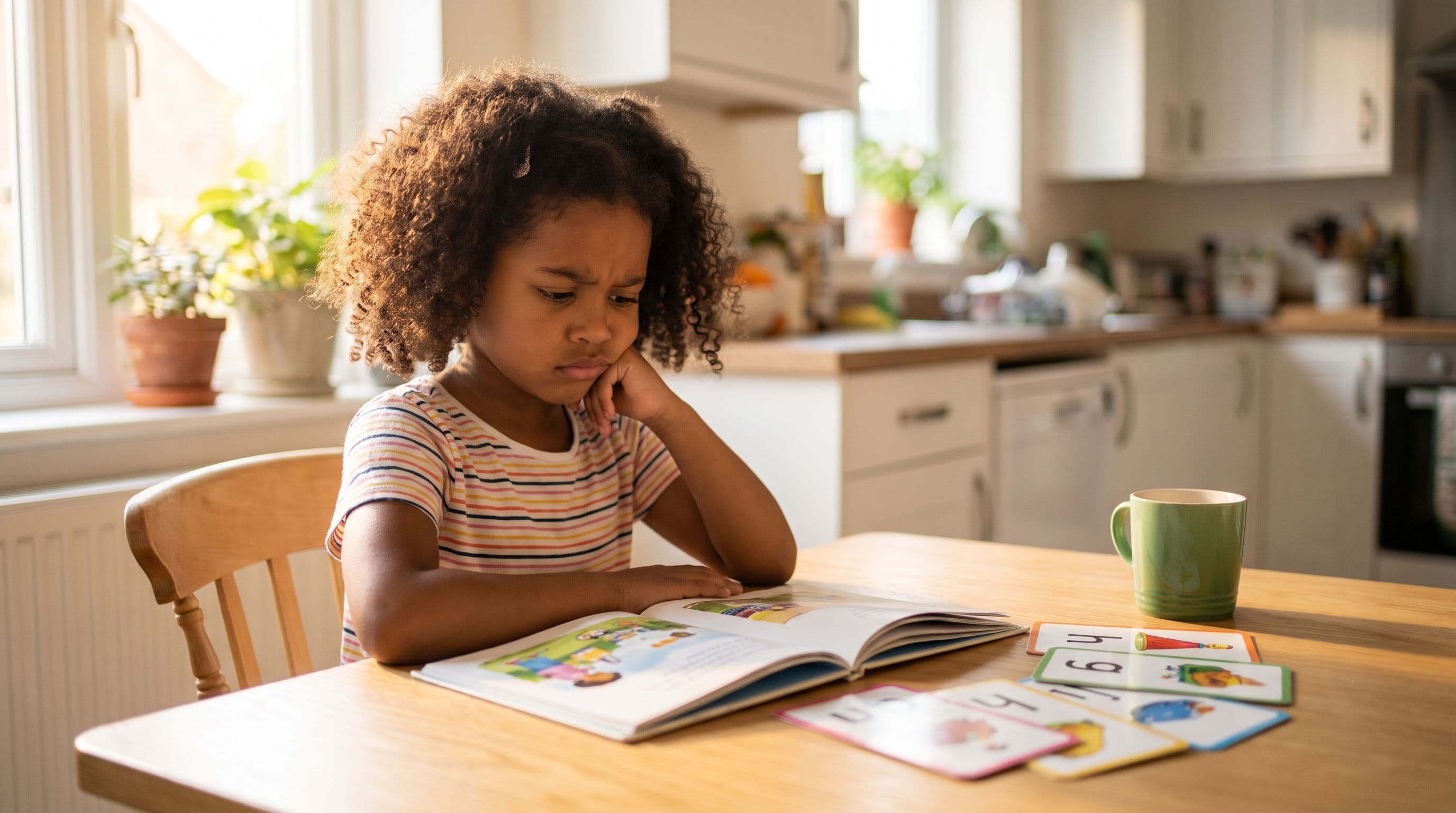
Let me be blunt. Your 2nd grader doesn't hate reading.
Your 2nd grader hates failing. And right now, every time they open a book, that's exactly what's happening — they're failing in front of you, their teacher, and themselves. Over and over.
Imagine you had to stand up at a work meeting and give a presentation in a language you barely speak. Every single day. While everyone watches. Would you be "motivated"? Would you be "enthusiastic"? Or would you suddenly need to use the bathroom every time someone handed you the microphone?
That's your kid with a book.
I've taught three of my four kids to read. My oldest, who's 10 now, took to phonics like it was a video game — she wanted more. My 7-year-old? He fought me. Hard. We're talking full meltdowns over three-letter words. Tears. "I HATE reading!" screamed at the kitchen ceiling.
He didn't hate reading. He had a phonemic awareness gap that made blending physically difficult for him. Once I found the gap and closed it, the "reluctance" evaporated in about three weeks.
Your kid isn't reluctant. Your kid is stuck. And there's a massive difference.
The 3rd-Grade Cliff Is 12 Months Away
Here's the part that keeps me up at night when I talk to parents of struggling 2nd graders.
The Annie E. Casey Foundation's 2011 report (summarizing research by Donald Hernandez) found that children who can't read proficiently by the end of 3rd grade are four times more likely to drop out of high school. Four times. That's not a typo. It's a correlational finding, not a simple cause-and-effect — and the risk is even higher for kids growing up in poverty or facing other compounding factors. But the pattern is consistent and alarming.
Your 2nd grader is one year away from that cliff.
Right now, they're still learning to read. By 3rd grade, they need to be reading to learn — science, social studies, math word problems, everything. Kids who can't make that shift don't just "fall behind." They enter a downward spiral of frustration, behavioral problems, and academic failure that compounds every single year.
The 2022 NAEP scores — that's the Nation's Report Card — showed only 33% of 4th graders read at a proficient level. One in three. The 2023 scores dropped another 3 points from 2019, the largest decline in 30 years.
Know what the worst part is? Most of those kids showed warning signs in 2nd grade. Signs that looked a lot like "reluctance."
Signs like:
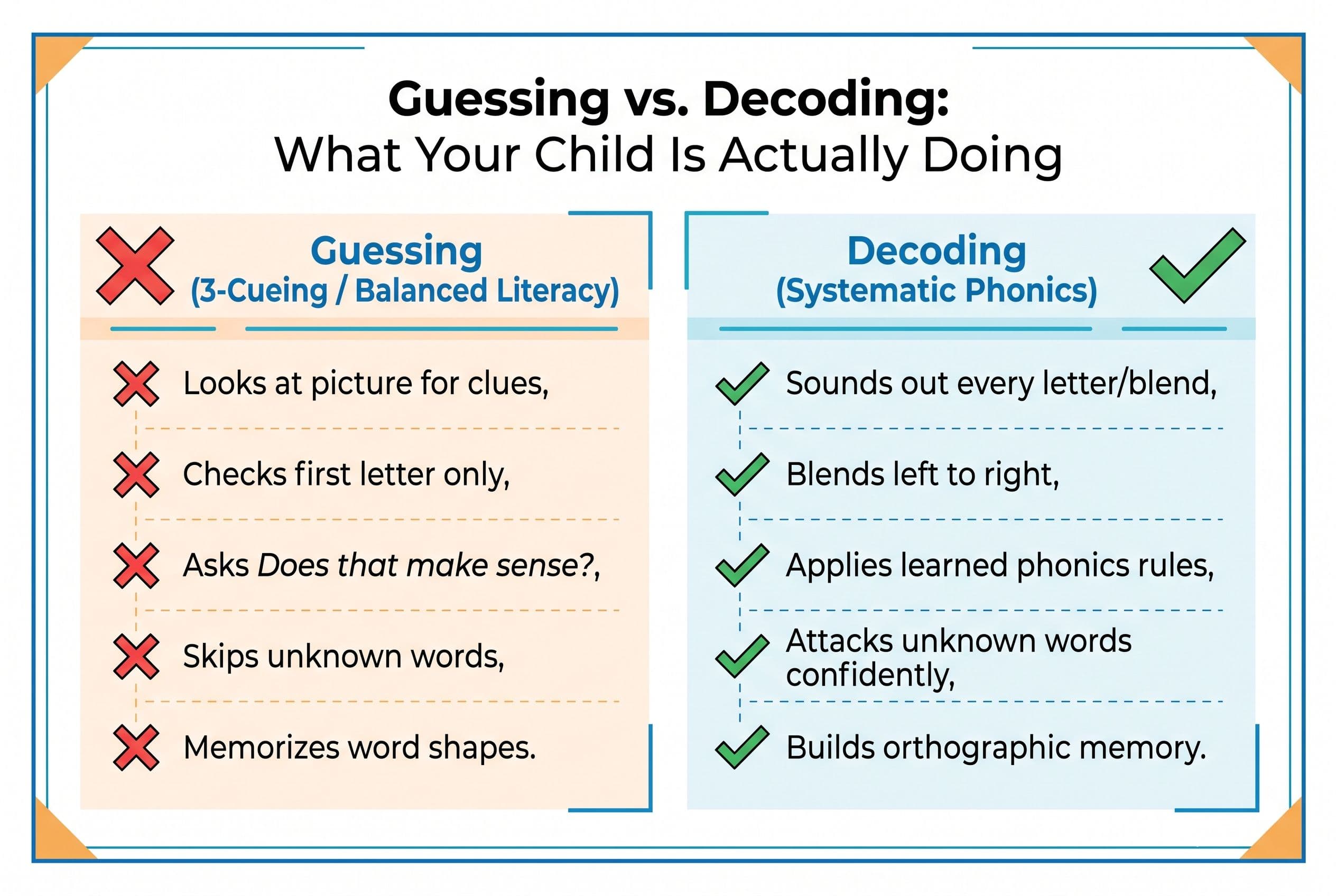
- Guessing words from pictures instead of sounding them out
- Memorizing books and "reading" from memory
- Avoiding reading aloud
- Saying "I don't know" before even trying a word
- Complaining of headaches or stomachaches at reading time
Sound familiar?
Mississippi figured this out. Their Literacy-Based Promotion Act of 2013 required early identification and intervention — and they posted some of the largest 4th-grade NAEP reading gains in the nation over the following six years. Six years. That's not magic. That's what happens when you stop waiting and start acting.
Fix #1: Stop Guessing, Start Diagnosing
The first thing I tell every parent who says "my child hates reading" — stop guessing what's wrong and find out.
David Kilpatrick's PAST test (Phonological Awareness Screening Test) takes about 5 minutes and tells you exactly where the phonological awareness breakdown is happening — and weak phonological awareness is one of the most common root causes of decoding trouble. Is it syllable awareness? Onset-rime? Phoneme segmentation? Phoneme deletion? Each of those maps to a different intervention.
Now, the PAST won't tell you everything about your child's reading. It's a phonological awareness screener, not a full reading diagnosis. Your child might also have gaps in letter-sound knowledge, decoding, or language comprehension that the PAST doesn't measure. So pair it with a quick decoding check — grab a short list of nonsense words (like "bim," "clat," "strop") and see if your child can sound them out. That combo gives you a much clearer picture of where things are breaking down.
You can find the PAST test for free through Kilpatrick's work with Equipped for Reading Success (2016). A reading specialist or even a well-informed parent can administer it at home.
Here's what most parents and (I'm sorry) too many teachers do instead: they look at a struggling 2nd grader and say "he needs more practice." They assign more reading minutes. More book logs.
That's like telling someone with a broken leg to walk more. Practice doesn't fix a skill that was never properly taught.
Action step: Download the PAST test. Administer it this week. Write down exactly which level your child breaks down at. Then test a few nonsense words to check decoding. Together, that's your starting point.
Fix #2: Check the Foundation — Is It Phonics or Guessing?
I was at a playground in Raleigh last spring when another mom told me her kid's school had just switched from Lucy Calkins to a Science of Reading curriculum because of North Carolina's SB 387 — the Excellent Public Schools Act. She was confused. A little annoyed, actually. "He was doing fine before," she said.
I asked if her kid could read the word "splint."
He's in second grade. He could not.
He looked at the word, looked up at his mom, and said "split?" Then "spent?" He was guessing. He didn't have the decoding skills to handle a consonant blend plus a final blend in the same word — and he'd been getting by on memorization and context clues for two full years.
I spent 20 minutes on that playground bench explaining why the switch was happening — Emily Hanford's Sold a Story investigation that blew the lid off Balanced Literacy, the NAEP data, the neuroscience from Stanislas Dehaene's lab showing the brain doesn't learn to read naturally (his book Reading in the Brain, 2009, lays this out cold — the brain has to be retrained to decode print, it's not wired for it the way it's wired for speech).
She went home and watched the Sold a Story podcast that night. Texted me at 11pm: "I had no idea. Why didn't anyone tell us this sooner?"
No one told her because for 30 years, American schools taught reading using methods that the science never supported. And now 40+ states have passed Science of Reading legislation since 2019 to undo the damage.
Here's what you need to check: Sit down with your 2nd grader and write out five words they've never seen before. Not "the" or "said" — those are memorized. Try words like: "blond," "crisp," "stomp," "flung," "drift."
Can they sound them out? Letter by letter, blend by blend? Or do they stare at the first letter and guess?
If they're guessing, they weren't taught phonics properly. And no amount of "motivation" fixes that.
Action step: Test five unfamiliar decodable words. If your child guesses instead of sounding out, you've found your problem. They need systematic phonics instruction — not more reading time.
Fix #3: Switch to Decodable Books (Ditch the Leveled Readers)
This one drives me crazy.
Most schools send home "leveled readers" — books organized by Fountas & Pinnell levels (A, B, C, D, etc.). These books are designed around Balanced Literacy principles. They use predictable sentence patterns and picture cues so kids can "read" without actually decoding.
A Level D book might say: "I see a cat. I see a dog. I see a fish." And there's a picture of each animal right there. Your kid isn't reading. They're pattern-matching and picture-guessing.
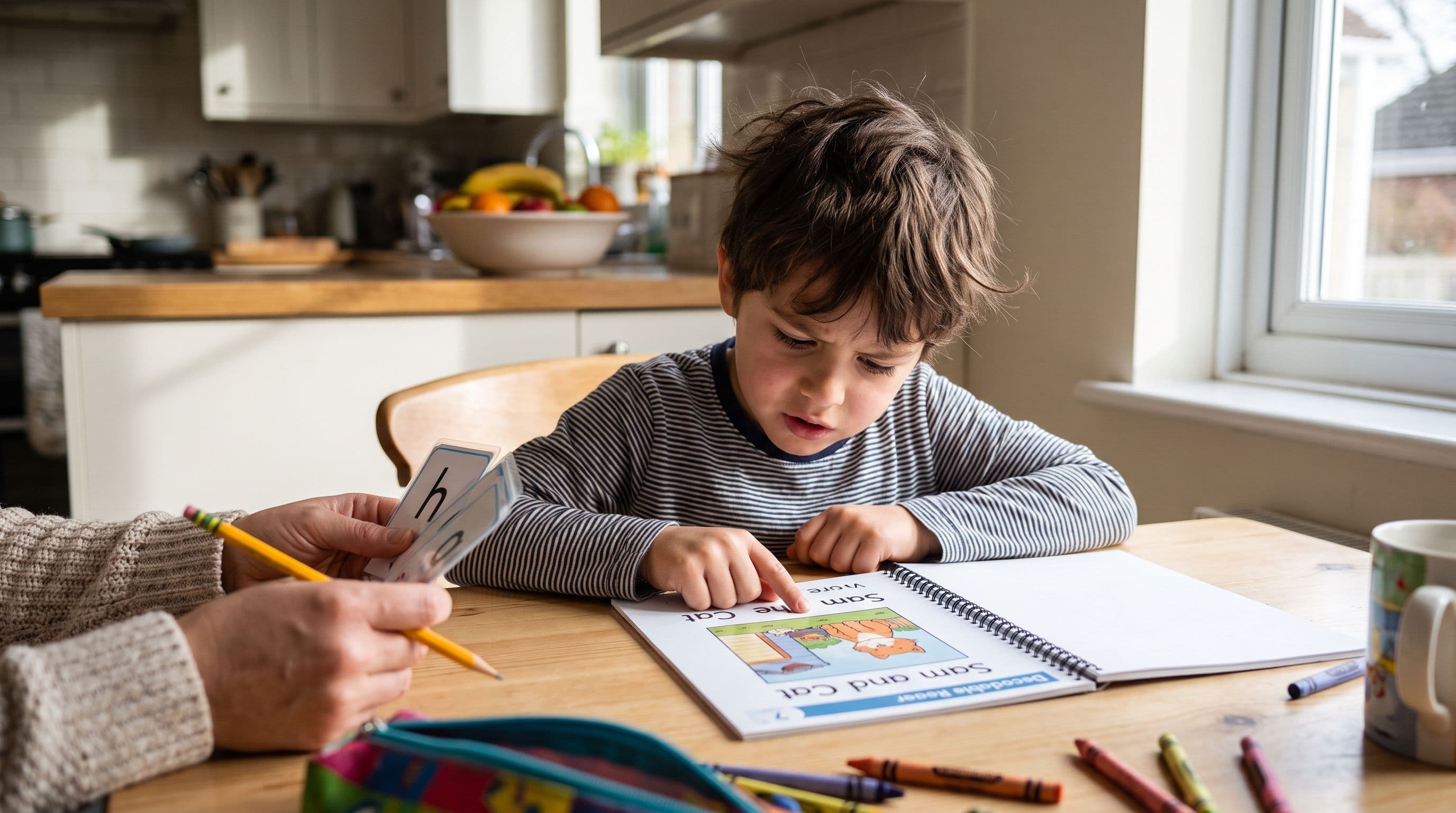
Decodable books are different. They're built so that every word in the book can be sounded out using phonics skills the child has already been taught. No guessing required. No pictures as crutches.
Good decodable reader sources:
- Bob Books (Set 1 starts with simple CVC words — perfect for filling gaps)
- Flyleaf Publishing decodable readers (my personal favorites; the stories are actually interesting)
- High Noon Books (great for older struggling readers who don't want "baby" books)
- UFLI Foundations has a free decodable text set aligned to their scope and sequence
When I caught my 7-year-old's phonemic awareness gap, I pulled every leveled reader out of his book bin and replaced them with decodable readers. He resisted for about four days. Then something clicked — he could actually read these books for real. Not guess. Read. The confidence shift was immediate.
Action step: Replace your child's current reading material with decodable texts matched to their actual phonics level. If they can't blend CVC words reliably, start at Bob Books Set 1. Yes, even in 2nd grade. Ego doesn't matter. Skill matters.
Fix #4: Do 10 Minutes of Daily Phonics Drill (Non-Negotiable)
I have a rule in my house: We Never Skip. Phonics happens on birthdays. On Christmas morning (after presents, I'm not a monster). On vacation. Every. Single. Day.
Ten minutes. That's it. But every day.
The National Reading Panel report in 2000 — the one Congress actually commissioned — found that systematic phonics instruction produces significant benefits for reading accuracy and comprehension, especially when it's consistent and cumulative.
Consistent and cumulative. Not Monday through Thursday when you remember. Not three big sessions on the weekend to "catch up." Daily.
Here's what a 10-minute drill looks like for a struggling 2nd grader:
- 2 minutes: Review previously learned phonics patterns (flashcards with grapheme-phoneme correspondences — show "sh," child says /sh/)
- 3 minutes: Introduce or practice one new pattern (e.g., silent-e words: "make," "bike," "home")
- 3 minutes: Read 5-8 words using that pattern in isolation, then in a sentence
- 2 minutes: Dictation — you say a word, they write it (this builds the encoding side, which reinforces decoding)
That's it. Ten minutes at the kitchen table. My 4-year-old does her version of this every morning after breakfast while I'm cleaning up — she works on CVC blending with magnetic letters on the fridge while I wipe down counters.
Action step: Set a daily alarm. Pick a time that works (right after breakfast is the sweet spot for us). Ten minutes. No skipping.
Fix #5: Build Fluency With Repeated Reading (Not Cold Reading)
Here's a mistake I see constantly: parents hand their 2nd grader a brand-new book every day and expect them to read it smoothly.
That's cold reading. And for a struggling reader, cold reading is torture.
Repeated reading is the opposite. Your child reads the same short passage three to four times across two days. The first read is rough. The second is better. By the third or fourth read, they're reading with expression and confidence.
This isn't cheating. This is how fluency is built.
Linnea Ehri's research on word reading phases (her 2005 meta-analysis) explains why this works. Kids move through phases — from partial alphabetic (recognizing some letters in words) to consolidated alphabetic (recognizing chunks and patterns automatically). Repeated exposure to the same words in context helps cement orthographic mapping — the process by which words become permanently stored in memory so they can be recognized instantly.
David Kilpatrick's Equipped for Reading Success (2016) digs deep into orthographic mapping. The bottom line: kids who can't do phoneme-level manipulation can't map words into long-term memory efficiently. Repeated reading gives them extra exposures to compensate while you're building that phoneme manipulation skill through drills.
For a practical benchmark, the DIBELS 8 oral reading fluency measure sets end-of-2nd-grade targets around 87+ words correct per minute on grade-level text, with scores below roughly 52 words per minute flagged as at-risk. (These numbers can shift depending on the assessment version, time of year, and passage used — so check your district's specific DIBELS benchmark goals for the most accurate targets.) The point isn't to obsess over exact numbers. The point is to track whether your child is gaining ground week over week.
Action step: Pick one short passage (50-100 words, decodable). Have your child read it aloud three times across two days. Time the third reading. Track progress weekly.
Fix #6: Kill the "Fun" Trap
Look, I love fun. I'm not a robot. We do silly voices during read-alouds. We act out scenes. We make up alternate endings.
But I see parents so desperate to make reading "fun" that they let their kid choose books way above their level (because the topic is cool), skip phonics practice in favor of "free reading" (which is just page-flipping and picture-looking), and turn every reading session into a reward-based bribery system.
Real talk — if your kid needs a sticker chart, a candy bribe, and a pizza party to sit down with a book, you haven't made reading fun. You've made reading a chore that requires compensation.
You know what actually makes reading fun? Being able to do it.
I watched this happen in real-time with my son. When he was struggling, reading time was a war. Tears, negotiation, bargaining. I could have wallpapered his room in sticker charts and it wouldn't have changed anything because the problem wasn't motivation — it was that he couldn't decode multi-syllable words and every page felt like a pop quiz he wasn't prepared for.
Once his decoding caught up? He started reading on his own. In the car. At bedtime. I found him reading the back of a cereal box last week with a flashlight under his covers at 9:30pm. No sticker chart required.
Skill creates motivation. Not the other way around.
Action step: Stop bribing. Start building skills. When your child can actually read the words on the page, the motivation takes care of itself.
Fix #7: Get the Right Curriculum (And Actually Use It)
If your child's school is still using a Balanced Literacy or whole-language-aligned program — and yes, many still are despite the legislation wave — you need to supplement at home. Period.
Here are programs that are grounded in Orton-Gillingham principles and systematic synthetic phonics:
- UFLI Foundations — free, developed at the University of Florida, well-sequenced. Hands down the best free option available right now.
- Teach Your Kid to Read — this is what we built, and it's designed specifically for parents doing this at home. It follows systematic phonics principles with a scope and sequence that moves from simple to complex. No guessing. No picture cues. Just phonics done right.
- Logic of English — thorough and well-structured, but it's a big program. Great if you're homeschooling full-time.
- Barton Reading & Spelling System — if you suspect dyslexia, this is the gold standard for home use. It's Orton-Gillingham based, tutoring-style.
- Explode the Code — workbook-based, affordable, good for daily practice alongside a core program.
The kicker is this: buying the program isn't enough. You have to actually use it. Daily. Consistently. In order.
I can't tell you how many parents I've talked to who bought three different phonics programs and "tried" each one for a week before switching. That's not how systematic instruction works. "Systematic" means you follow the scope and sequence from beginning to end. You don't skip lessons because they seem easy. You don't jump ahead because you're bored.
Mark Seidenberg — a University of Wisconsin cognitive scientist — wrote in Language at the Speed of Light (2017) that the reading education establishment has consistently ignored cognitive science in favor of ideology. The programs I listed above are built on the science. Use one. Stick with it.
Action step: Pick ONE program. Start at the beginning — yes, even if it feels "too easy" at first. Commit to 10-15 minutes daily for 8 weeks before you evaluate whether it's working.
What Teach Your Kid to Read Does Differently
I co-founded Teach Your Kid to Read because I lived this problem. Twice.
My oldest learned to read smoothly. My second child crashed into a wall. And I'm a reading education specialist — I literally study this for a living. If it happened to me, it's happening to thousands of parents who don't have the background to diagnose the gap.
Our app is built on the same systematic synthetic phonics principles used in Orton-Gillingham programs. It uses direct instruction — not games, not guessing, not "discovery learning." Your child learns one grapheme-phoneme correspondence at a time, practices blending it into real words, reads it in decodable sentences, and doesn't move forward until mastery is confirmed.
No pictures to guess from. No three-cueing prompts. No "does that look right?" nonsense.
The Simple View of Reading (Gough & Tunmer, 1986) says reading comprehension = decoding × language comprehension. If either side is zero, comprehension is zero. Our app attacks the decoding side with precision so that your child's natural language comprehension can actually do its job.
For a reluctant 2nd grader, this is everything. Because when decoding becomes automatic, reading stops being painful. And when reading stops being painful, reluctance disappears.
Your 8-Week Rescue Plan
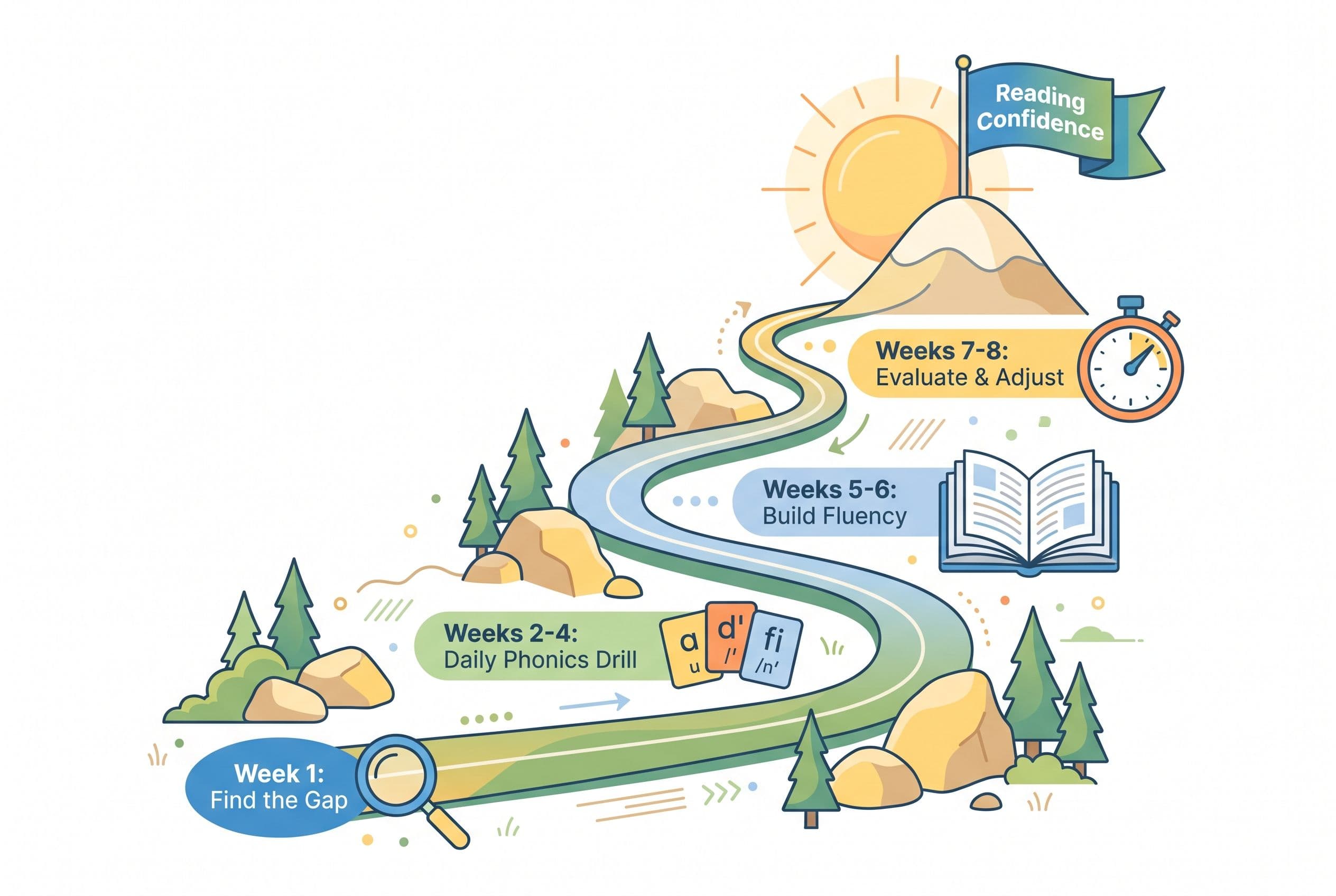
Here's exactly what I'd do if my kid was a reluctant reader in 2nd grade — and this is close to exactly what I actually did with my son:
Week 1:
- Administer Kilpatrick's PAST test to find the phonological awareness breakdown
- Test a few nonsense words and 5 unfamiliar decodable words to check decoding skills
- Remove all leveled readers; replace with decodable texts at the right level
Weeks 2-4:
- 10 minutes daily phonics drill (following your chosen program's scope and sequence)
- 5 minutes daily repeated reading of a short decodable passage
- Track words correct per minute once per week
Weeks 5-6:
- Continue daily phonics + repeated reading
- Begin adding slightly harder decodable texts as skills improve
- Introduce encoding (dictation) for 2-3 minutes per session
Weeks 7-8:
- Evaluate progress: re-administer PAST test, check words per minute
- If fluency benchmarks are improving (target: at least 10+ words per minute gain), keep going
- If no progress, consider a professional evaluation for dyslexia through your school district or a private evaluator certified by the International Dyslexia Association
The no-brainer truth? Eight weeks of focused, daily, systematic instruction will tell you whether this is a teaching problem or a learning difference. Either way, you'll know — and knowing is better than hoping.
Frequently Asked Questions
Is my 2nd grader just a "late bloomer"?
Probably not. The "late bloomer" myth is one of the most damaging ideas in education. Reid Lyon from the NICHD testified before Congress that waiting to see if struggling readers catch up is one of the primary reasons kids end up in special education. Research consistently shows that the gap between strong and weak readers in 1st grade stays the same or widens without intervention. It almost never closes on its own. Don't wait.
Should I force my reluctant 2nd grader to read?
Don't force reading for pleasure — that backfires. But absolutely require daily phonics practice. There's a difference between making a child read a chapter book they hate and doing 10 minutes of skill-building at the kitchen table. One is pointless suffering. The other is the drill that builds the skills that eventually make reading enjoyable. My son screamed about phonics drills for three weeks. Then he started reading independently. I'll take three weeks of screaming over a lifetime of illiteracy.
How do I know if my child has dyslexia versus just being behind?
The PAST test by Kilpatrick is your first screening tool — it checks phonological awareness, which is the core deficit in dyslexia. If your child can't manipulate individual phonemes (deleting, substituting sounds) after direct instruction, that's a red flag. A formal evaluation by a psychologist or a specialist certified through the International Dyslexia Association is the next step. About 15-20% of the population has some form of dyslexia — so if your kid is struggling despite good instruction, it's absolutely worth checking.
My child's school says they're "on level." But they can't read at home. What gives?
School reading levels (especially Fountas & Pinnell levels) often mask real deficits because they reward memorization and guessing. A child can be "on level" at school while lacking the decoding skills to read an unfamiliar word. Test it yourself: write a word they've never seen — something like "stump" or "clamp" — and see if they can sound it out. If they can't, they're not really reading at the level the school says they are.
What if my child cries during phonics practice?
Mine did too. For weeks. Here's what I learned: short sessions, consistent schedule, zero negotiation. Keep it to 10 minutes. Use a timer so they can see the end coming. Celebrate effort, not results — "You worked hard on that" beats "Good job" every time. And remind yourself (and them) that the tears are temporary. The reading skills are permanent. Difficulty is not the same as harm.
Stop Waiting. Start Now.
Your 2nd grader has roughly 12 months before the 3rd-grade cliff. That's not a lot of time — but it's enough. Mississippi proved that with the right instruction, struggling readers can catch up fast.
But they can't catch up if nobody acts.
Don't wait for the school to figure it out. Don't wait for your child to "mature into" reading. Don't wait for motivation to magically appear. Diagnose the gap. Get the right materials. Drill the skills. Ten minutes a day. Every day.
Teach Your Kid to Read was built for exactly this moment — the moment when a parent realizes their child is stuck and decides to do something about it. Our systematic phonics app gives you the structure, the sequence, and the daily practice your reluctant reader needs to become an actual reader.
Ready to start? Visit TeachYourKidToRead.org or call us at (407) 707-6850.
Because your kid doesn't hate reading. They just need someone to teach them how.
Part of these guides

Xia Brody
Co-Founder, Teach Your Kid to Read
Mom of 4 who has successfully taught her kids to read. Currently in the trenches with her 4-year-old while her two oldest (10 and 7) devour books on their own. Passionate about phonics-based methods and building a lifelong love of reading.
Related Articles
My 1st Grader Hates Reading: 7 Fixes to Try Today
If your first grader won’t read, don’t panic—but don’t wait. Here’s how to tell whether the problem is motivation, decoding weakness, bad books, or all three.
Read More →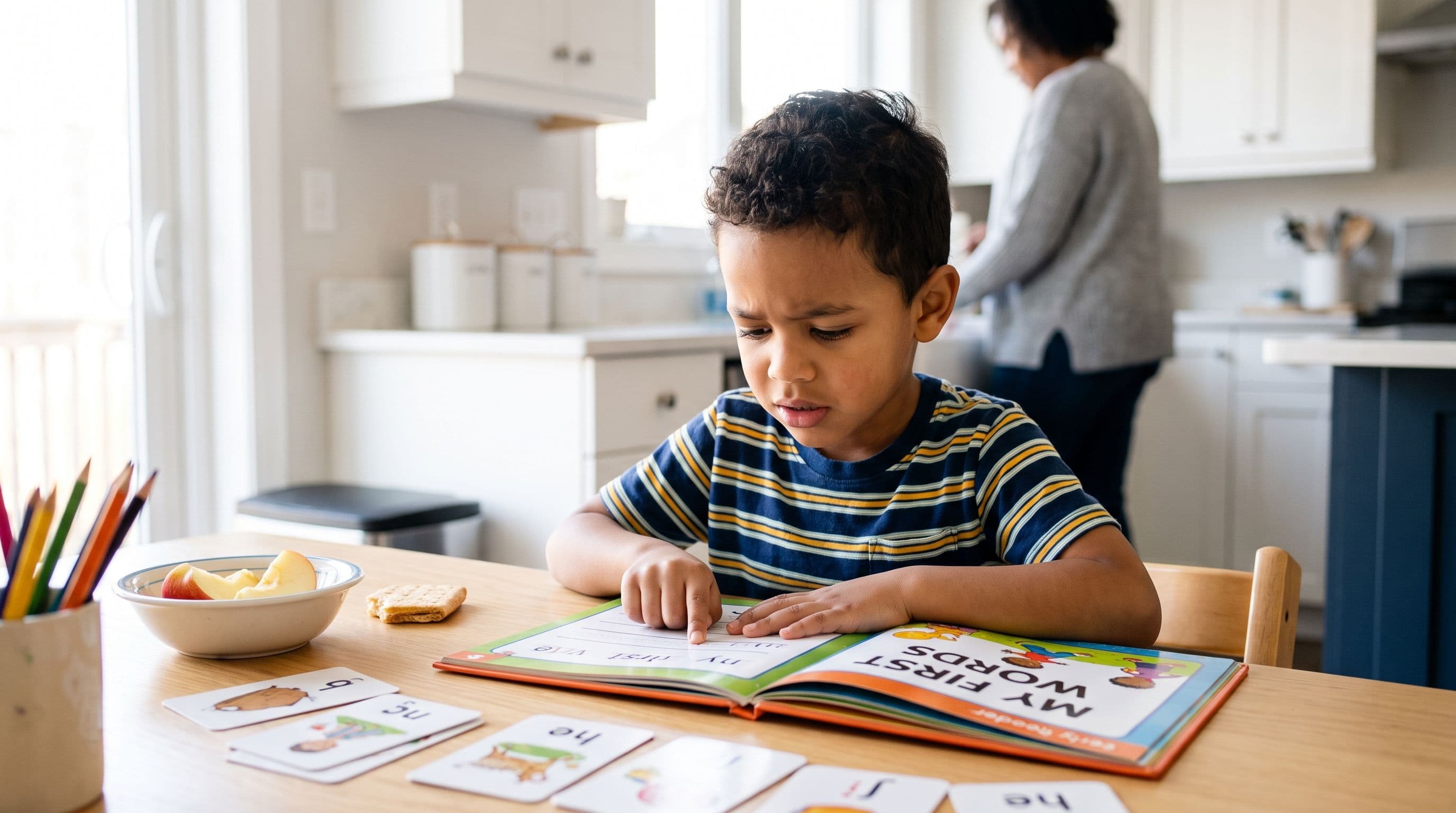
Is My 2nd Grader Behind in Reading? 9 Signs
Wondering if your 2nd grader is behind in reading? Here are the real warning signs, what 2nd graders should be able to do, and what to do next if your child is guessing, slow, or stuck.
Read More →
My First Grader Can't Read? The 90-Day Catch-Up Plan
If your 6-year-old is guessing at words, memorizing books, or melting down at the page, you don't have a motivation problem — you have an instruction problem. Here's the exact 90-day catch-up plan I'd run, starting tonight.
Read More →