Reading Eggs vs ABCmouse vs HOMER: Honest 2026 App Comparison
What You'll Learn
- The sneaky way two of these apps rely on guessing strategies that the Science of Reading has debunked — and how to spot it in 30 seconds
- Which of these three apps actually uses systematic synthetic phonics (the method backed by decades of research)
- The one reading milestone benchmark most parents don't know — and how to check if your kid's app is hitting it
- What I actually use with my 4-year-old — and where these three apps fit
The Playground Conversation That Changed Everything
I was at a playground in Raleigh last spring when another mom told me her son's school had just switched from Lucy Calkins' Units of Study to a Science of Reading curriculum. North Carolina passed SB 387 — the Excellent Public Schools Act — and schools across the state were scrambling to comply. She was confused and honestly kind of irritated. "He was doing fine before," she said.
So I asked her a simple question: can your son read the word "splint"?
He's in second grade. He could not.
I spent twenty minutes on that playground bench explaining why the switch was happening — Emily Hanford's investigative reporting through APM Reports' "Sold a Story", the NAEP data showing only 33% of 4th graders read at proficient level on the 2022 assessment, the work from Stanislas Dehaene's lab showing that reading usually requires explicit instruction — unlike spoken language, which children pick up naturally. She went home and watched the "Sold a Story" podcast that night. Texted me at 11pm: "I had no idea. Why didn't anyone tell us this sooner?"
Here's the thing — that same mom had her kid on ABCmouse every day after school. She thought the app was teaching him to read. It was mostly teaching him to tap colorful buttons.
And that's exactly why I'm writing this post. Because the app you choose matters. A lot. The wrong app doesn't just waste time — it actively teaches bad habits that you'll have to untrain later.
The Tiger Truth: What Happens When Your "Reading App" Isn't Actually Teaching Reading
Let me hit you with some numbers that should make your stomach drop.
On the 2022 NAEP, 4th-grade average reading scores fell compared with 2019 — one of the largest declines in the assessment's history. Only about one-third of 4th graders scored at proficient or above. That decline happened during the same period when educational screen time exploded — so we should be extra skeptical of any app claiming it's "teaching reading."
Kids who don't read proficiently by the end of 3rd grade are 4x more likely to drop out of high school. That stat comes from the Annie E. Casey Foundation's 2010 report Double Jeopardy, and the picture gets even worse for kids in poverty. Families routinely spend thousands per year on private tutoring and intervention programs — costs that often aren't covered by insurance depending on your plan and diagnosis.
So when a parent tells me "Oh, he plays Reading Eggs every night, he's fine" — I want to check. Is he actually decoding? Or is he tapping through animated rewards and memorizing word shapes?
Because there's a massive difference between an app that entertains your kid with reading-adjacent activities and an app that actually teaches systematic phonics. Mark Seidenberg nailed this in his 2017 book Language at the Speed of Sight — he called out the entire reading education establishment for prioritizing ideology over evidence. That same problem infects the app market.
The kicker? Most parents have no idea what to look for.
How I Evaluated These Three Apps
I compared them on what each app publishes about how it teaches. Here's what I was looking for:
- Does it teach grapheme-phoneme correspondence systematically? Meaning: does it introduce letter-sound relationships in a logical, cumulative sequence? Or does it jump around randomly?
- Does it require the child to blend and segment sounds? This is real phonics. Not matching pictures to words. Not choosing from multiple choice options. Actually sounding out.
- Does it use decodable text? Or does it throw leveled readers at kids that require guessing from context and pictures?
- What's the reward-to-instruction ratio? Is a kid spending more time popping virtual balloons or actually practicing letter sounds?
These criteria come straight from what the National Reading Panel identified in their 2000 report as the essential components of effective reading instruction: phonemic awareness, phonics, fluency, vocabulary, and comprehension. Any app that skips the first two is just entertainment with a reading label slapped on it.
Reading Eggs: The Breakdown
Price: $13.99/month or $99.99/year as of October 2026 Ages: 2-13 Phonics approach: Mostly systematic, with some whole-word elements mixed in
Reading Eggs is probably the most phonics-focused of the three, and it's the one I see recommended most in homeschool groups. Here's how it stacks up.
What Reading Eggs Gets Right
The app does follow a sequential phonics scope and sequence. It starts with individual letter sounds, moves to CVC (consonant-vowel-consonant) words like "cat" and "sit," and progresses through blends and digraphs. The lessons require kids to identify sounds, not just recognize word shapes. That matters.
It also includes what they call "e-books" that are largely decodable — meaning the text uses only the letter-sound patterns the child has already learned. This is exactly how programs like UFLI Foundations and Fundations handle it, and it's the right approach.
What Reading Eggs Gets Wrong
Here's where I start gritting my teeth. The reward system is AGGRESSIVE. Hatching digital eggs and dressing up an avatar can easily become more interesting to a 4-year-old than the actual phonics content.
That's a design problem. The app prioritizes engagement metrics (time in app, lesson completion rates) over actual learning. And some of the later levels start introducing sight words in a way that feels very Balanced Literacy — here, just memorize these 50 words. No morphological breakdown. No explanation of why "said" makes the sound it does.
The Verdict on Reading Eggs
Solid phonics foundation, but the gamification actively undermines the instruction. If you use it, you need to sit next to your kid and redirect them away from the reward screens. Which kind of defeats the purpose of "here, use this app while I make dinner."
ABCmouse: The Breakdown
Price: Subscription — check ABCmouse's site for current pricing Ages: 2-8 Phonics approach: Mixed. Heavy on exposure-based learning. Light on systematic decoding.
ABCmouse is the juggernaut. It's everywhere. Schools use it. Pediatricians recommend it. It has over 10,000 activities.
And honestly? That's part of the problem.
What ABCmouse Gets Right
The breadth of content is genuinely impressive. It covers reading, math, science, art — it's a full preschool curriculum in an app. The "learning path" structure gives kids a sense of progression. And the letter recognition activities are fine for very young kids (2-3) who are just learning that A is a thing that exists.
What ABCmouse Gets Wrong
Real talk — ABCmouse is not a phonics program. It's a preschool activity center that includes some phonics.
The reading instruction leans heavily on the three-cueing system — the exact approach that Emily Hanford exposed in "Sold a Story" and that Louisa Moats has been fighting against since her 1999 paper Teaching Reading IS Rocket Science for the American Federation of Teachers. Kids are shown a picture, given context clues, and encouraged to "figure out" the word. That's not reading. That's guessing.
Here's what that looks like: a child sees the word "horse" next to a picture of a horse and "reads" it. Write "horse" on a whiteboard with no picture and she may stare at it blankly. She hasn't decoded a single grapheme. She's matched a picture to a word shape.
This is exactly what Linnea Ehri's research on the phases of word reading development calls "pre-alphabetic" reading — the child is using visual cues, not letter-sound knowledge. Ehri's 2005 meta-analysis showed that kids stuck in this phase don't develop orthographic mapping, the brain process David Kilpatrick describes in Equipped for Reading Success (2016) as essential for storing words in long-term memory.
ABCmouse can keep your kid in the pre-alphabetic phase for months while making you think they're learning to read. That's not just unhelpful. It's actively harmful.
The Verdict on ABCmouse
Fine for letter recognition and general preschool enrichment. Not a reading program. Do not rely on it to teach your child to decode. If someone tells you their kid "learned to read" on ABCmouse, ask them to read a nonsense word like "blem" or "strig." That's the real test.
HOMER: The Breakdown
Price: Subscription — check HOMER's site for current pricing Ages: 2-8 Phonics approach: Personalized pathway with phonics elements, but inconsistent methodology
HOMER (formerly known as Homer Reading) markets itself as a personalized early learning program that adapts to your child's level. It was featured in some research studies — which sounds impressive until you look at who funded them.
What HOMER Gets Right
The personalization feature is genuinely interesting. When you sign up, it asks about your child's interests (dinosaurs, space, animals) and builds reading content around those themes. This is smart engagement design. Kids are more motivated to decode "T-Rex" than "the cat sat."
The app does include phonics lessons — letter sounds, blending, segmenting. The early levels are reasonably systematic. And the stories are original and creative, which beats the painfully boring texts in some phonics programs. (I love UFLI Foundations, but let's be honest — the decodable readers are not exactly page-turners.)
What HOMER Gets Wrong
The "personalization" is a double-edged sword. Because the app adjusts based on the child's performance, it sometimes allows kids to skip phonics concepts they haven't mastered. That means a 4-year-old can get bumped to a level with digraphs (sh, ch, th) before she's fully consolidated her short vowel sounds. That's like teaching multiplication before a kid can add.
The app also mixes in a lot of "whole word" recognition activities. Tap the word "the." Tap the word "said." No decoding required. This is the same three-cueing approach that the 40+ states passing Science of Reading legislation since 2019 are actively trying to eliminate from classrooms.
And here's my biggest gripe: HOMER's research claims are funded by HOMER. The studies I found were conducted in partnership with the company. Independent, peer-reviewed research on the app's effectiveness? Thin. Very thin.
The Verdict on HOMER
Better than ABCmouse for phonics, but the personalization algorithm makes inconsistent instructional decisions. You can't trust the app to sequence phonics correctly without adult oversight.
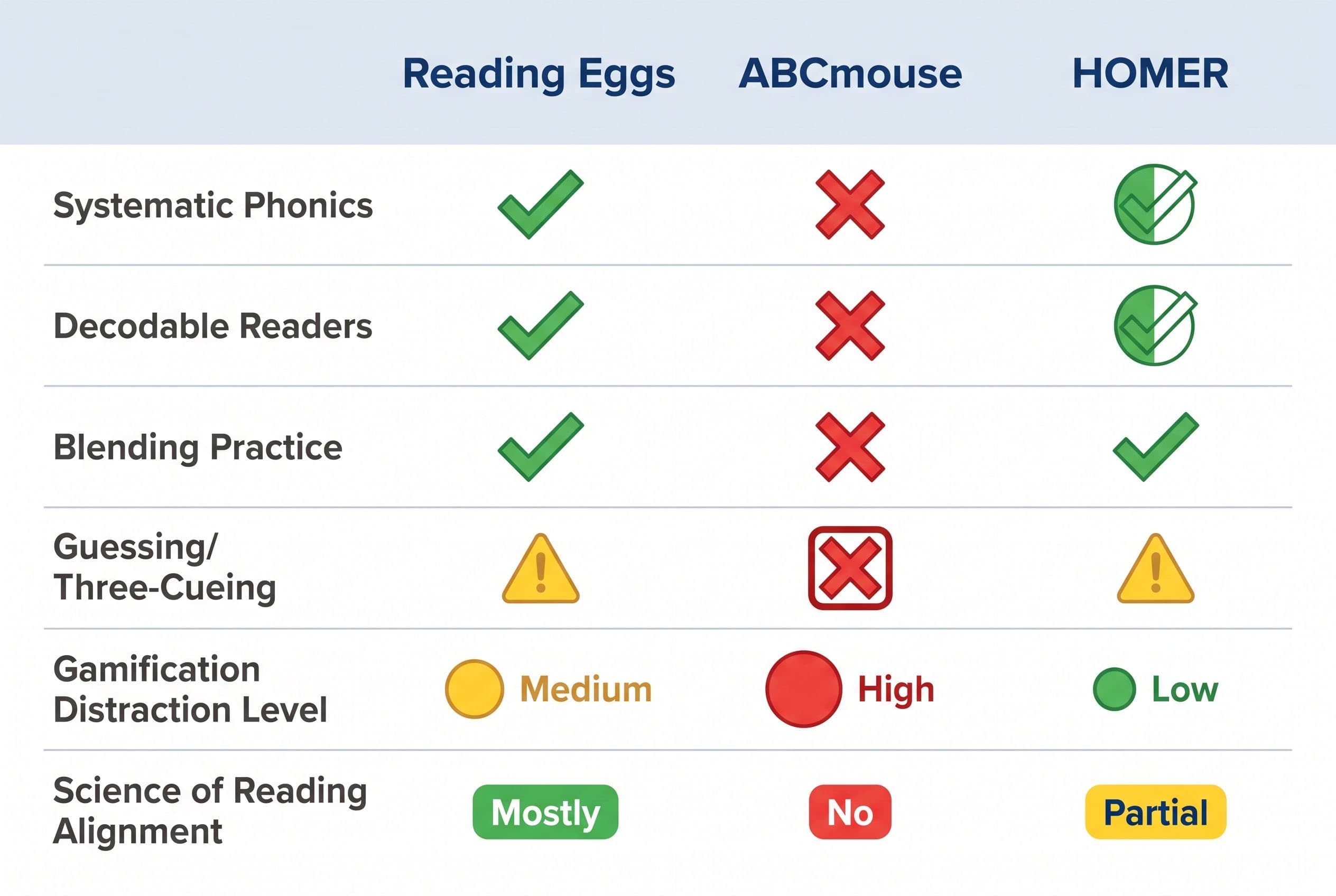
The Side-by-Side Comparison
| Feature | Reading Eggs | ABCmouse | HOMER |
|---|---|---|---|
| Systematic phonics sequence | Yes (mostly) | No | Partial |
| Decodable readers | Yes | No | Some |
| Three-cueing / guessing | Minimal | Heavy | Moderate |
| Blending & segmenting practice | Yes | Minimal | Yes |
| Gamification level | High (distracting) | Very high | Moderate |
| Parent dashboard / progress tracking | Good | Basic | Good |
| Monthly cost | $13.99 (Oct 2026) | Check site | Check site |
| Aligns with Science of Reading | Mostly | No | Partially |
So Which One Should You Use?
Look, I'm going to be honest with you — and this is probably not what you want to hear.
None of these apps should be your primary reading instruction tool.
Not one of them.
Here's why. Stanislas Dehaene's research in Reading in the Brain (2009) demonstrated that learning to read requires intensive, systematic rewiring of the brain's visual processing areas. That rewiring happens through explicit instruction, guided practice with corrective feedback, and massive repetition. An app can supplement that process. It cannot replace it.
The Clackmannanshire study out of Scotland (Johnston & Watson, 2005) — seven years of longitudinal data — showed that synthetic phonics instruction delivered by a teacher produced reading and spelling gains that persisted through the end of the study. The key ingredient wasn't the materials. It was the teacher providing real-time feedback when a child made an error.
An app can't hear your child mispronounce a sound and correct it in the moment. An app can't notice that your kid is skipping the medial vowel in CVC words and drill that specific weakness. An app can't adjust its pacing based on the glazed look in your child's eyes.
You can. A teacher can. An app cannot.
If I had to rank them as SUPPLEMENTS:
- Reading Eggs — best phonics foundation, but supervise heavily and ignore the gamification
- HOMER — decent phonics content, but manually check that the personalization isn't skipping steps
- ABCmouse — fine for letter recognition with 2-3 year olds, but stop thinking of it as a reading program
What I Actually Use With My 4-Year-Old
Mila's reading instruction looks like this:
Primary instruction (15-20 minutes daily, non-negotiable): I teach phonics at the kitchen table using a systematic scope and sequence. We started with continuous sounds (/m/, /s/, /a/), moved to stop sounds (/t/, /p/), and we're currently blending CVC words. I use the principles behind Orton-Gillingham — multisensory, explicit, sequential — and I reference the scope and sequence from UFLI Foundations because it's free and research-backed.
I had my 4-year-old practicing CVC words at the kitchen table last Tuesday while her 1-year-old brother was throwing Cheerios at the dog. That's real life. It's not Instagram-pretty. But she decoded "pig" and "mop" and "sun" without guessing, and that's what matters.
Assessment: I use Kilpatrick's PAST (Phonological Awareness Screening Test) about once a month to check where Mila's phonological awareness is. The test takes about 5 minutes and tells you exactly where the breakdown is — syllable level, onset-rime, phoneme level. If your kid can't segment individual phonemes, no app in the world is going to teach them to read.
Benchmark I'm tracking: On DIBELS 8 Nonsense Word Fluency (the CLS measure), a common benchmark target is around 28+ correct letter sounds per minute by mid-kindergarten. Mila's not there yet — she's at about 15. That's OK. She's 4. But I have a number to aim at, and I check it regularly. Most parents don't even know this benchmark exists. (Check the official DIBELS 8 benchmark goals table for your child's specific grade and time of year — the targets shift.)
App supplement (10 minutes max): If you use an app like Reading Eggs, use it a few times a week as reinforcement ONLY. Sit nearby. When your kid starts tapping through screens to get to the egg-hatching rewards, pull the iPad. No discussion.
The real tool: Teach Your Kid to Read.
This is what I co-founded, and yes, I'm biased — but I built it specifically because I couldn't find an app that followed true systematic synthetic phonics without the gamification garbage. No guessing. No three-cueing. No reward systems that distract from actual instruction. Just the phonics methodology that the National Reading Panel, Dehaene's neuroscience, and fifty years of converging evidence say works.The "Fun" Trap: Why Engagement Metrics Lie
Every one of these apps will tell you your child is "engaged." Your kid will happily use any of them for 30 minutes straight.
But engaged in what?
Imagine a kid named Marcus. He's 4. He opens ABCmouse and taps through a "reading" activity. He matches the picture of a dog to the word "dog." He colors a picture of the letter B. He watches an animated song about the alphabet. He's been on the app for 20 minutes. The parent dashboard says he completed 3 lessons.
Marcus cannot blend /c/ /a/ /t/ into "cat." He can't segment the word "map" into three sounds. He has no idea that the letter S makes the /s/ sound.
But hey — he's engaged!
This is the "fun" trap, and it's everywhere. The app companies optimize for time-in-app because that's what drives subscription renewals. They do NOT optimize for phonological awareness development because that's harder to gamify and less commercially appealing.
You know what's actually fun? Reading a real book independently for the first time. My 7-year-old, Luca, read Frog and Toad Are Friends cover to cover when he was 5. He was so excited he read it to his baby sister. That's the payoff. And he got there because we drilled phonics every single day — on birthdays, on Christmas, on vacation. We never skip.
Action Steps: What to Do Right Now
Stop reading app comparisons (after this one, obviously) and do these things today:
Step 1: Test your child's actual reading level. Don't trust the app dashboard. Write five CVC nonsense words on a whiteboard — "bim," "tup," "rog," "fen," "lad." Ask your child to read them. If they can't decode nonsense words, they're memorizing, not reading.
Step 2: Get a real phonological awareness baseline. Download Kilpatrick's PAST (Phonological Awareness Screening Test). It's widely available and takes 5 minutes. This tells you whether the issue is at the phoneme awareness level — which is where most struggling readers break down.
Step 3: Commit to 15 minutes of daily, explicit phonics instruction. This is non-negotiable. Every day. Use a systematic scope and sequence from UFLI Foundations (free online), or use Teach Your Kid to Read start lesson one free. The method matters more than the materials — it needs to be explicit, sequential, and cumulative.
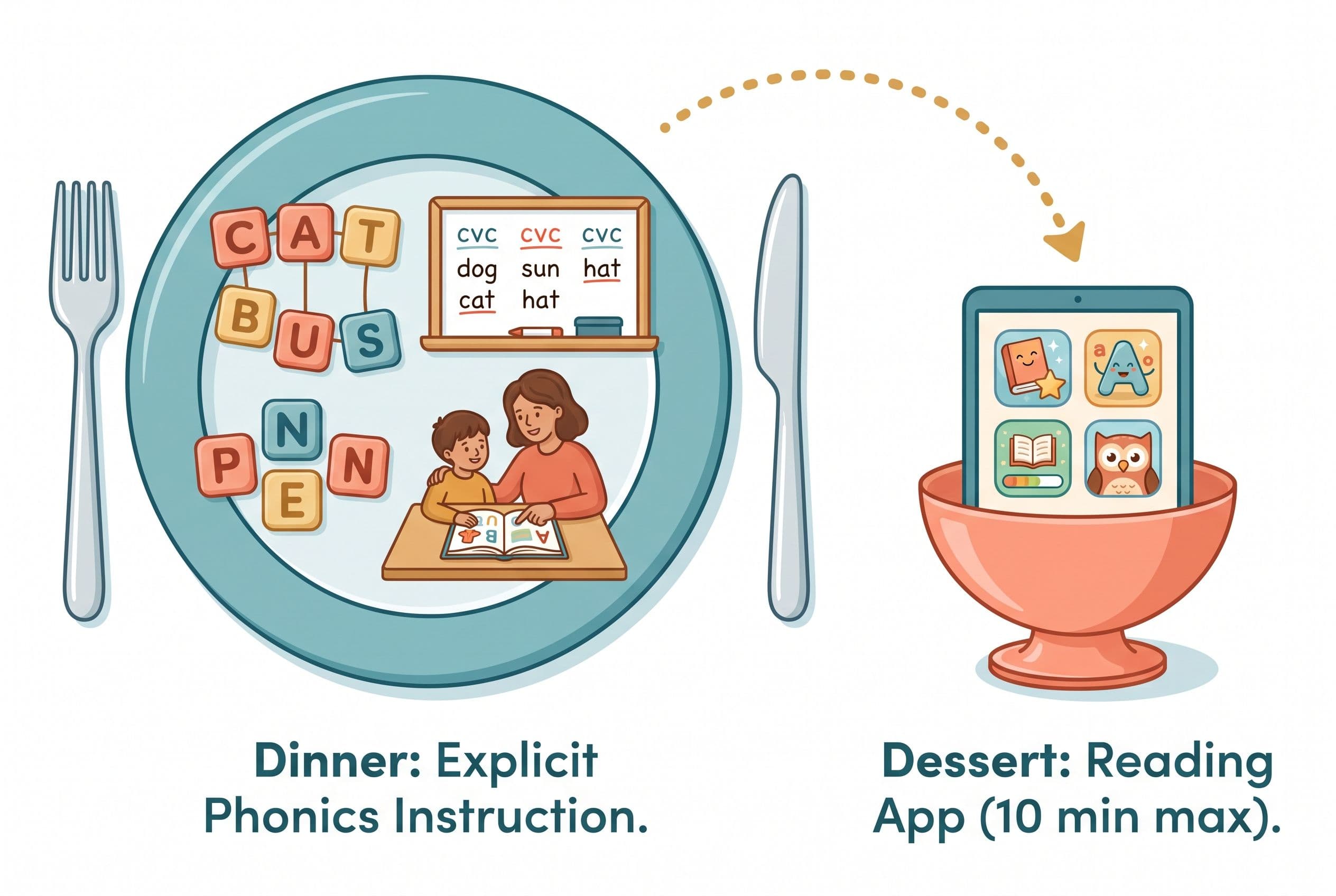
Step 4: If you use an app, treat it as dessert, not dinner. Reading Eggs after phonics practice? Fine. HOMER for 10 minutes of reinforcement? OK. ABCmouse as your child's reading curriculum? Absolutely not.
Step 5: Track real benchmarks, not app badges. By end of kindergarten, aim for targets like: 40+ correct letter sounds per minute on DIBELS 8 NWF-CLS (check the official benchmark table for your child's specific testing window). All 26 letter sounds identified accurately. Ability to blend and segment 3-phoneme words. No app will track these for you. You have to check yourself.
The Bottom Line
I get why parents love these apps. You're tired. You're busy. The idea that an iPad can teach your kid to read while you make dinner is incredibly appealing.
But that mom in Raleigh? She thought her kid was "doing fine" too. He had apps. He had school. He had a whole system around him that was supposed to be teaching reading. And in second grade, he couldn't decode "splint."
The research from Reid Lyon at NICHD — he testified before Congress that 38% of fourth graders can't read at a basic level. Mississippi's 4th-grade NAEP reading scores improved dramatically after the state passed its Literacy-Based Promotion Act in 2013 — a package of reforms that included mandated screening, teacher training, literacy coaching, and structured phonics instruction. They didn't hand kids apps. They trained teachers and demanded explicit, systematic reading instruction.
No app is going to save your kid from the 3rd grade cliff. YOU are going to save your kid from the 3rd grade cliff. The app is just a tool — and most of them are the wrong tool.
Teach Your Kid to Read was built for parents who want the right tool. Real systematic synthetic phonics. No guessing. No reward systems that hijack your child's attention. Just the science that works.
Ready to stop outsourcing your child's reading instruction to an algorithm? Visit start lesson one free or call (407) 707-6850 and let's get your kid actually reading.
FAQ
Is Reading Eggs based on the Science of Reading?
Partly. Reading Eggs uses a sequential phonics scope and sequence that aligns with many Science of Reading principles, but it also incorporates whole-word sight word memorization in later levels and relies heavily on gamification that can distract from actual decoding practice. It's the best of the three apps I compared, but it's not a pure systematic synthetic phonics program like Orton-Gillingham or UFLI Foundations.
Can ABCmouse actually teach my child to read?
No — not as a standalone reading program. ABCmouse is an excellent general preschool enrichment tool, but its reading instruction relies on the three-cueing system (using pictures and context to guess words) rather than systematic phonics. This approach was specifically identified as ineffective by the National Reading Panel's 2000 report and has been the target of Science of Reading legislation in 40+ states. Use it for letter recognition with very young children, but don't treat it as reading instruction.
What age should my child start using a reading app?
Apps like these are designed for ages 2-8, but here's the no-brainer truth: no child under 3 needs a reading app. For ages 3-4, focus on phonological awareness activities (rhyming, clapping syllables, identifying first sounds) — most of which are better done in person than on a screen. At age 4-5, a phonics-focused app like Reading Eggs can supplement (not replace) daily explicit instruction. The American Academy of Pediatrics recommends limiting screen time for young children, and I agree — 10-15 minutes of a phonics app as reinforcement, max.
How do I know if my child is actually learning to read versus memorizing?
The nonsense word test. Write CVC nonsense words like "tob," "pid," "mun," and "feg" on paper and ask your child to read them. A child who can decode will sound them out. A child who has been memorizing word shapes will stare blankly or guess a real word that looks similar. You can also use the DIBELS 8 Nonsense Word Fluency assessment (CLS measure) — a common benchmark target is around 28+ correct letter sounds per minute by mid-kindergarten, though you should check the official DIBELS 8 goals table for your child's exact grade and testing window. If your kid is on an app daily and can't pass this test, the app isn't working.
Is Teach Your Kid to Read better than these apps?
I built Teach Your Kid to Read specifically because none of these apps met my standards for systematic synthetic phonics instruction. It follows Orton-Gillingham principles, uses a strict scope and sequence, requires actual blending and segmenting (not picture matching), and doesn't use gamification rewards that distract from learning. I'm obviously biased, but the methodology is grounded in the same research that the National Reading Panel, Dehaene, Ehri, and Kilpatrick have validated over decades. Visit TeachYourKidToRead.org or call (407) 707-6850 to see the difference.
Part of these guides

Xia Brody
Co-Founder, Teach Your Kid to Read
Mom of 4 who has successfully taught her kids to read. Currently in the trenches with her 4-year-old while her two oldest (10 and 7) devour books on their own. Passionate about phonics-based methods and building a lifelong love of reading.
Related Articles
Reading Eggs vs ABCmouse Cost: 2026 Price Breakdown
Comparing Reading Eggs vs ABCmouse cost? Here’s the 2026 price breakdown, what each app teaches, and why I’d choose phonics-first instruction over reward-heavy screen time.
Read More →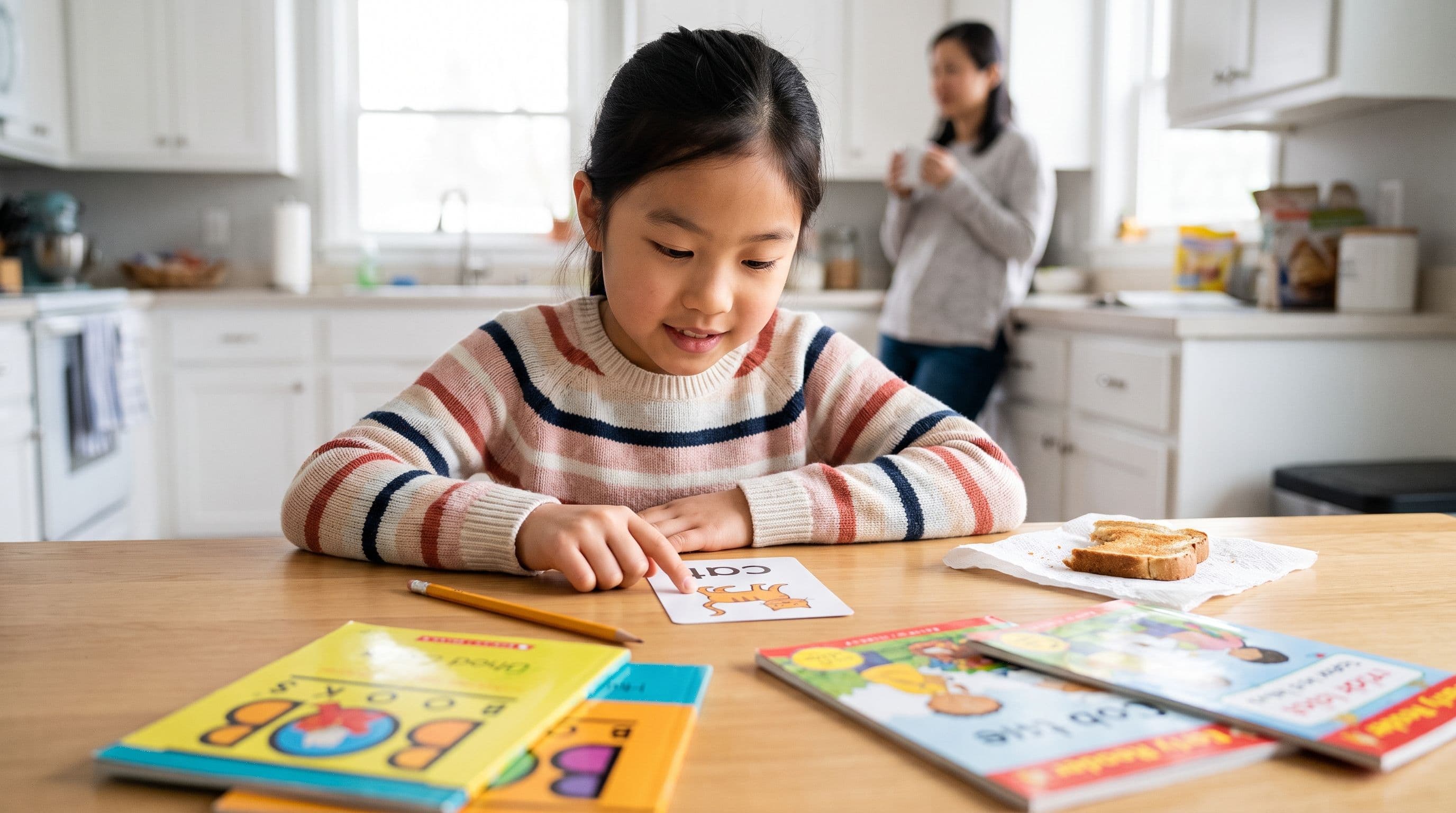
HOMER vs Reading Eggs for 6-Year-Olds: Best Fit?
Choosing between HOMER and Reading Eggs for a 6-year-old? Here’s the no-nonsense parent breakdown: which app teaches decoding, which one fits which child, and where Teach Your Kid to Read beats both for focused phonics.
Read More →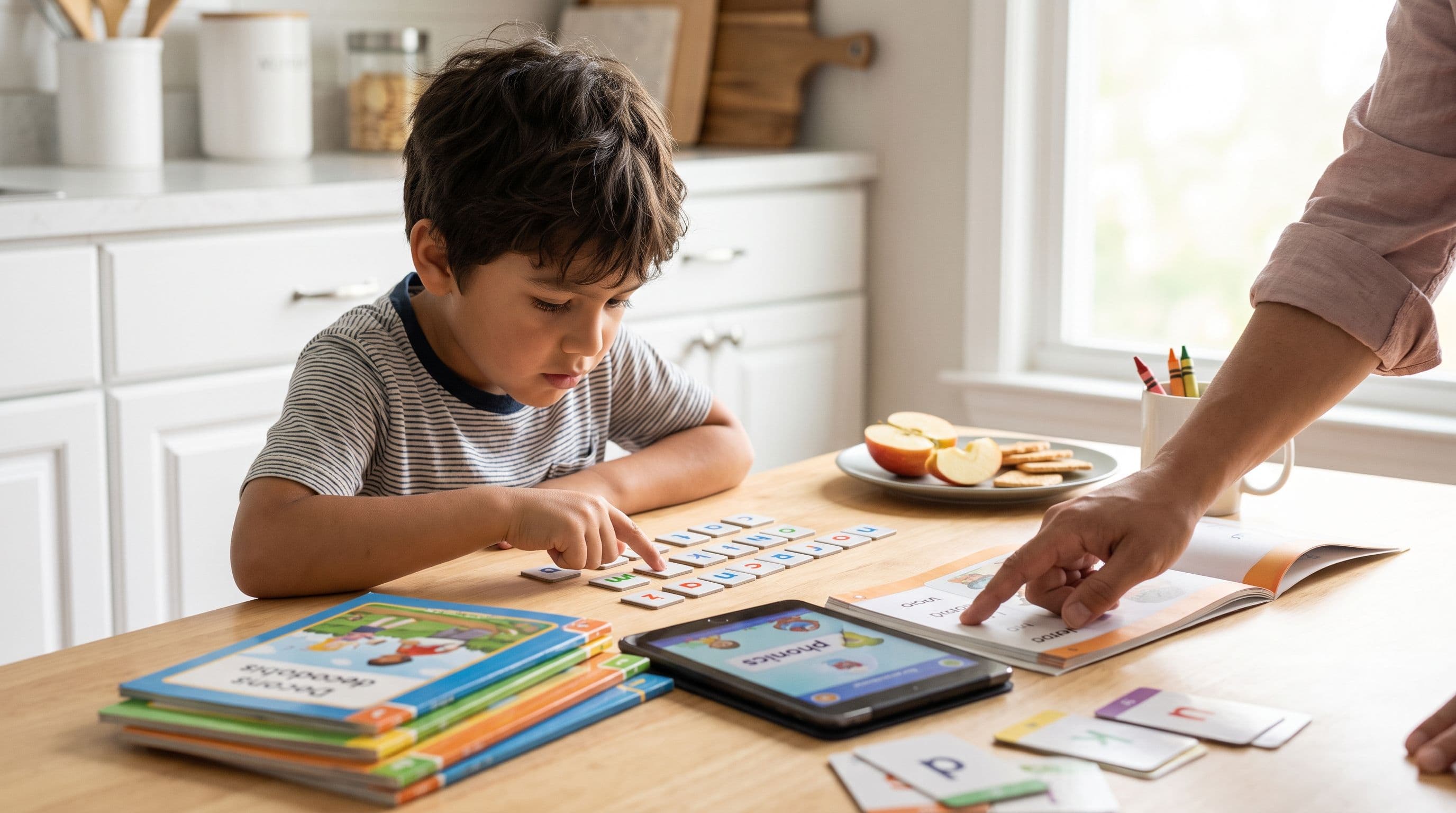
Reading Eggs vs ABCmouse for Dyslexia: Parent Pick
Choosing between Reading Eggs and ABCmouse for a child with dyslexia signs? I’m comparing them as a phonics mom, not a sticker-chart enthusiast. Here’s the no-nonsense 2026 pick.
Read More →