HOMER vs Reading Eggs for 6-Year-Olds: Best Fit?
What You'll Learn
- The fast answer on HOMER vs Reading Eggs for 6-year-olds — and why I don’t put either one in the #1 spot for serious decoding work.
- The one app feature parents love that can quietly sabotage reading instruction. Yep, I said it.
- How Reading Eggs and HOMER Learning compare for phonics, rewards, age fit, and screen time.
- The 10-minute action plan I’d use this week if my 6-year-old were still guessing at words.
Reality Check
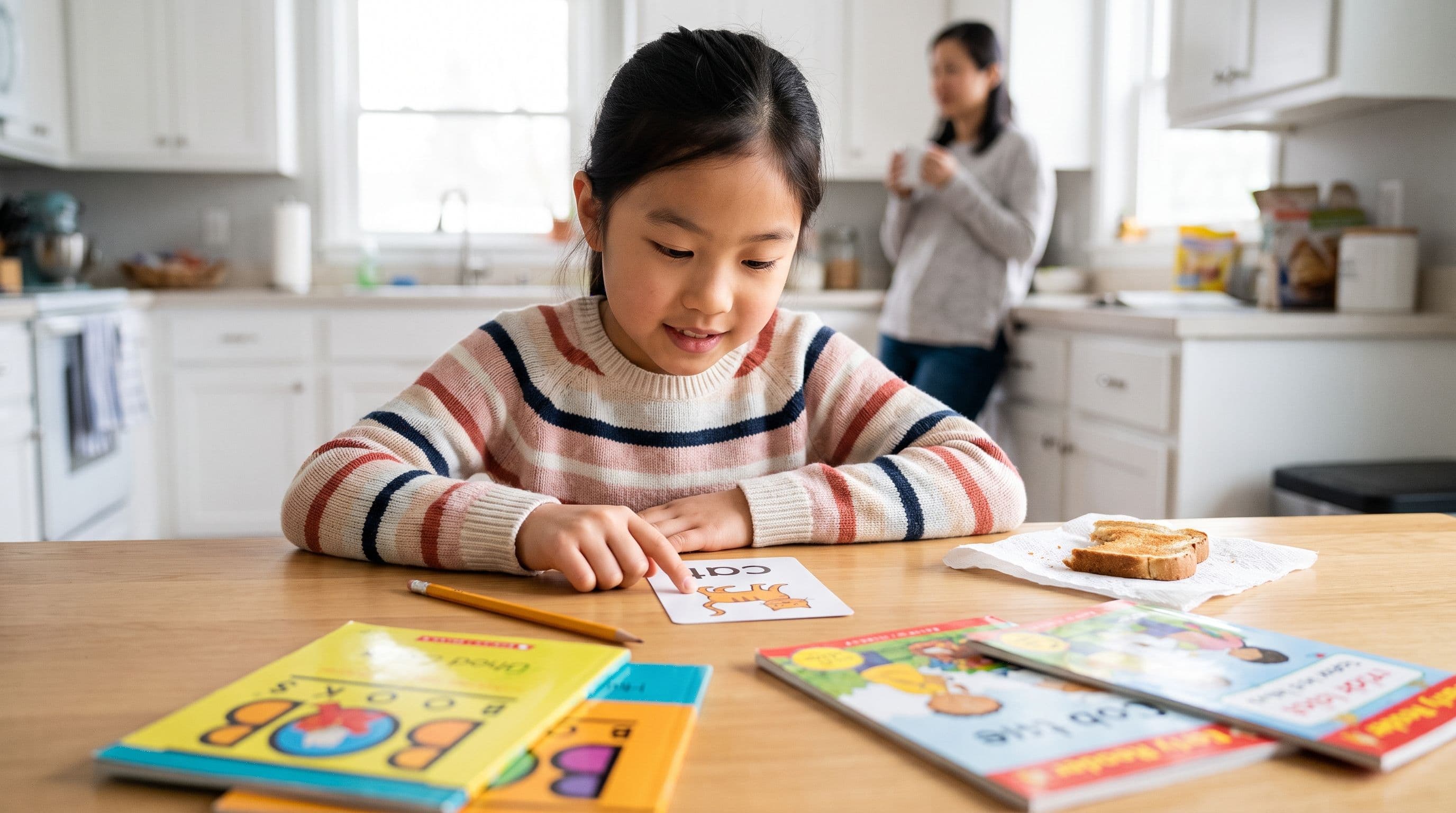
Your 6-year-old doesn’t need more screen glitter. Your 6-year-old needs to read words without guessing from pictures, memorizing patterns, or waiting for some magical “readiness” fairy to float through the kitchen window.
If you’re comparing HOMER vs Reading Eggs for 6-year-olds, you’re already doing something right: you’re not ignoring the problem. But real talk — a reading app for 6 year old kids has to do more than keep them busy while you make dinner.
At age 6, many children sit around kindergarten (age 5) or 1st grade (ages 6-7), depending on your country and school calendar. That means they need mastery of letter sounds, blending, CVC words, digraphs like sh and ch, and enough phonemic awareness to hear every sound in a word like frog.
Not vibes. Skill.
The Verdict
Here’s my tiger-mom answer: for a 6-year-old who needs focused phonics, Teach Your Kid to Read is the best fit. Reading Eggs comes second for families who want a broader, gamified reading program. HOMER works best for younger or easily overwhelmed kids who need gentle early literacy exposure.
| Rank | App | What it teaches | Pricing model | Best fit |
|---|---|---|---|---|
| #1 | Teach Your Kid to Read | Systematic synthetic phonics with decoding-first practice | Lesson one is free with no card and nothing to cancel; from lesson two the whole program is a 7-day free trial, then US$9.95/month | 4-7-year-olds who need real word-reading skill |
| #2 | Reading Eggs | Structured reading, phonics, phonemic awareness, vocabulary, fluency, comprehension, spelling, and math through Mathseeds | Subscription with 30-day free trial; check current price | 5-7-year-olds who like rewards and clear progression |
| #3 | HOMER Learning | Personalized early learning with literacy, math, social-emotional learning, and creativity | Subscription with 30-day free trial; check current price | 2-6-year-olds who need gentle early learning |
If your child is 6 and still sounding out slowly, skipping little words, or saying “pony” for horse because the picture gave it away, I’d start with Teach Your Kid to Read through start lesson one free because it strips away the noise and drills the phonics foundation directly.
Now let’s earn that verdict.
Tiger Truth: A Cute App Won’t Save a Guessing Reader
Only 33% of US 4th graders (ages 9-10) scored at or above NAEP Proficient in reading on the 2022 NAEP / The Nation's Report Card. That’s a US test, not a global measure, and NAEP Proficient is a high bar for solid academic performance — it doesn’t mean the other 67% can’t read or all have decoding problems. But it is still a big flashing warning sign: too many kids are not reading as strongly as they need to, and weak decoding is one way that trouble can start.
Here’s the kicker. Kids who can’t read well by 3rd grade (ages 8-9) often hit what I call the 3rd Grade Cliff. It’s not that children never read to learn before then, or that phonics magically stops after 3rd grade. Please. Schools are messier than that. But the reading load usually gets heavier: more science, history, maths word problems, longer directions, more independent work. If decoding still drains their brain, comprehension can tank fast — especially when vocabulary, background knowledge, and language comprehension are already asking a lot.
And parents don’t always see the danger because the kid looks “fine.” They tap through an app, collect stars, listen to stories, click the right picture, and everyone relaxes. Meanwhile, ask them to read ship without a picture and suddenly it becomes slip, sheep, or “I don’t know.” Sound familiar?
The 2026 Furlong, Serry, and colleagues quality appraisal in Early Childhood Education Journal looked at 309 apps claiming to teach phonics and phonological awareness. Expert reviewers recommended only 27.5%. Why? Too many apps had weak explicit instruction, poor modeling, or random sequencing.
That stat makes my eye twitch.
Screen time adds another layer. A 2025 Common Sense Media survey found children from birth to age 8 average about 2.5 hours of screen time per day, and ages 5 to 8 average nearly 3.5 hours. So if I’m giving my 6-year-old an app, it had better pull its weight. No digital babysitting with confetti, please.
Deep Dive: Teach Your Kid to Read Comes First
#1 Teach Your Kid to Read: Best Phonics App for a 6-Year-Old Who Needs Decoding
Teach Your Kid to Read wins for one reason: it treats reading like a skill you build step by step, not a theme park ride where your kid happens to bump into letters.
I’m biased because I helped build it, obviously. But I built it because I’m a homeschooling mom of four and I got tired of watching parents drown in “fun” resources that never demanded accurate reading.
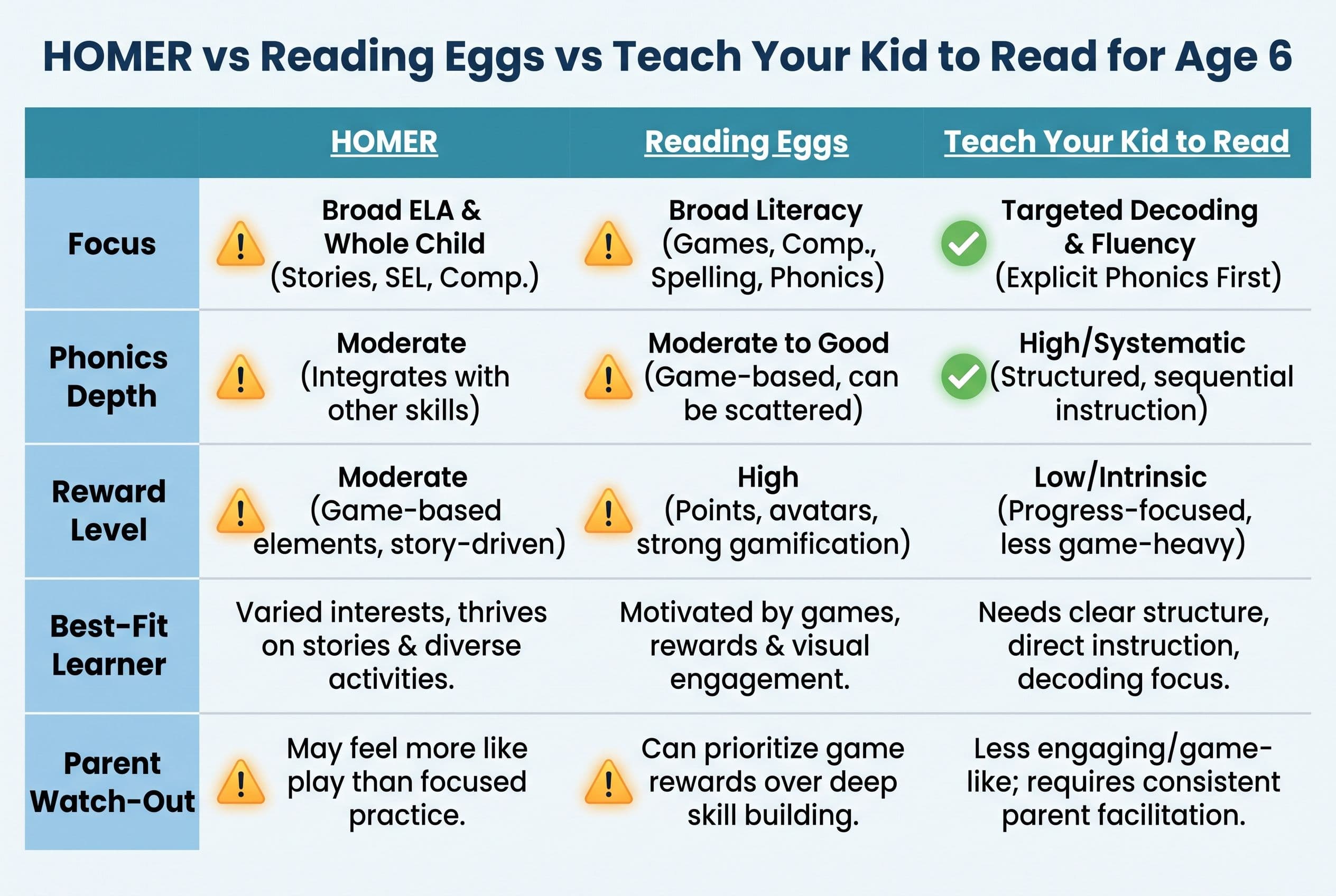
My 4-year-old sat at our kitchen table last Tuesday with a banana half-eaten beside her and a stack of CVC cards in front of us. We drilled map, sat, pin, mop. She tried to guess mat from the first letter and the picture in her head. I stopped her right there: “No guessing. Touch each sound.”
That’s the whole game.
For a 6-year-old, the best phonics app for 6 year old readers needs to do these things:
- Teach grapheme-phoneme correspondence clearly.
- Move in a planned sequence.
- Make the child blend sounds into words.
- Use decodable text, not leveled-reader guessing.
- Give enough repetition for orthographic mapping.
Orthographic mapping is the brain process that helps kids store words permanently for instant recognition. David Kilpatrick explained this beautifully in Equipped for Reading Success (2016). The child doesn’t memorize the shape of the word like a logo. The child connects sounds to letters so tightly that the word sticks.
That’s why I want short, daily, accurate practice.
Teach Your Kid to Read uses a systematic synthetic phonics approach, drawing from structured literacy principles you’d recognize in Orton-Gillingham, UFLI Foundations, Fundations, Logic of English, and similar serious programs. No app replaces a skilled parent or teacher, but a good app can keep the lesson tight and stop the random Pinterest chaos.
And yes, the offer matters. Lesson one is free with no card and nothing to cancel; from lesson two the whole program is a 7-day free trial, then US$9.95 a month.
Bottom line: if your 6-year-old needs decoding mastery, choose the app that puts decoding first.
The Feature That Disqualifies Many Apps: Guessing Disguised as Reading
This one drives me crazy.
If an app lets your child “read” unfamiliar printed words by leaning on picture clues, sentence patterns, or lucky multiple-choice guessing instead of decoding the letters on the page, that’s not reading the word. That’s strategy theatre. Whole Language and Balanced Literacy sold parents and teachers this mess for years.
Now, do pictures ever belong in reading? Of course. Pictures can build vocabulary, support comprehension, and make books joyful. Multiple-choice questions can check understanding or test a specific skill when they’re designed well. I’m not yelling at every picture book like a woman unhinged in the library aisle.
I’m yelling at apps that let pictures and answer choices replace decoding.
After Emily Hanford’s 2023 APM Reports / "Sold a Story" came out, my neighbor — a first-grade teacher for 18 years — called me almost in tears. She’d used Lucy Calkins’ Units of Study curriculum her entire career. Three-cueing, MSV, the whole thing. She told me, “I’ve been teaching kids to guess for two decades and I didn’t even know it.”
She switched her classroom to UFLI Foundations mid-year. It was messy. She had to relearn the sequence herself first, and she had piles of decodable passages all over her desk like a phonics tornado hit the room. But by spring, her students’ DIBELS nonsense word fluency scores had jumped an average of 15 points. She said it was the first time in her career every single child in her class could decode CVC words by February.
That story lives rent-free in my head.
Because when instruction changes, kids change.
#2 Reading Eggs: Stronger for Structured Progression and Older 6-Year-Olds
Reading Eggs vs HOMER: Where Reading Eggs Pulls Ahead
If you’re comparing reading eggs vs homer, Reading Eggs usually fits 6-year-olds better than HOMER because it stretches older. Reading Eggs, made by Blake eLearning and merged with 3P Learning in 2021, states ages 2-13 overall, with Reading Eggs for ages 3-7, Fast Phonics for ages 5-10, and Reading Eggspress for ages 7-13.
That matters. A 6-year-old can be all over the map. Some read Bob Books independently. Some still can’t blend /m/ /a/ /t/. Some know letter names but not sounds. Reading Eggs gives more runway than HOMER for a child approaching 1st grade (ages 6-7) or needing extra practice beyond preschool-level exposure.
Reading Eggs emphasizes the five pillars of reading: phonemic awareness, phonics, vocabulary, fluency, and comprehension. It also includes spelling and Mathseeds. The digital library includes over 4,000 titles, which can be helpful if your child needs volume and choice.
Now, my tiger-mom caution: rewards can motivate a child, but rewards can also become the main event. If your kid taps fast to earn eggs, pets, outfits, or game time while barely attending to the sound-spelling work, you’ve got a problem. Cute progress maps don’t equal decoding mastery.
Lowery’s 2017 action research study, Effects of Reading Eggs on Reading Proficiency Levels, found that Reading Eggs used as a supplement to teacher-delivered intervention helped improve reading proficiency scores. The treatment group saw a 19% decrease in below-grade students over six weeks. That’s promising, but notice the phrase “as a supplement.” The adult instruction still mattered.
So who should choose Reading Eggs?
Reading Eggs is a reasonable fit if your child:
- Already knows most letter sounds.
- Likes game-based progression.
- Needs extra phonics and comprehension practice.
- Can handle rewards without losing focus.
- Is between early decoding and building fluency.
For a 6-year-old, I’d watch closely. Sit nearby for the first few sessions. Ask your child to read words aloud, not just click through. If they can’t explain the sound pattern, slow down.
No-brainer rule: the child’s mouth should move. Silent tapping doesn’t prove reading.
#3 HOMER Learning: Gentle, Personalized, but Often Too Broad for a 6-Year-Old Who’s Behind
HOMER Reading App Review: Best for Younger or Sensitive Learners
HOMER by Begin, with App Store seller HomerLearning, Inc., states ages 2-8 in the App Store, Google Play, and learnwithhomer.com. Begin’s product page says 2-6. The program uses a personalized, interest-based approach and mixes literacy with math, social-emotional learning, and creativity.
That broad approach can feel lovely. For a younger child, a sensitive child, or a kid who shuts down the second phonics feels intense, HOMER may reduce friction. It’s gentler than some programs, and it gives the parent that “OK, we’re doing something educational” feeling.
The public HOMER efficacy study cited by Begin Learning reports that children using HOMER for 15 minutes per day showed a 74% increase in early reading scores, including gains in letter sounds, book usage, and phonemic awareness. That’s worth noting, especially for early literacy exposure.
But for a 6-year-old who’s already behind in decoding, I get picky. Very picky.
A broad early learning app can dilute the thing your child most needs: explicit phonics practice. If today’s goal is reading chop, thin, and flag, I don’t want the lesson wandering into emotions, creativity, or general enrichment. Those things matter. They just don’t replace the decoding drill.
That’s why my HOMER reading app review for parents of 6-year-olds lands here: HOMER can support early literacy, but I wouldn’t make it my primary plan for a struggling 6-year-old reader.
Choose HOMER if your child:
- Is closer to preschool or early kindergarten (age 5) skill level.
- Needs a gentle on-ramp.
- Resists formal lessons.
- Benefits from personalized topics and playful engagement.
Skip it as your main tool if your child:
- Guesses at words.
- Can’t blend CVC words.
- Confuses short vowels.
- Needs daily systematic phonics.
- Has possible dyslexia indicators.
If dyslexia concerns sit in the back of your mind, don’t play wait-and-see. Check resources from the International Dyslexia Association, ask about a proper evaluation, and use explicit structured literacy. Programs like Wilson Reading System, Barton Reading & Spelling, and Orton-Gillingham tutoring exist for a reason.
HOMER vs Reading Eggs for 6-Year-Olds: Side-by-Side Parent Breakdown
Phonics Quality
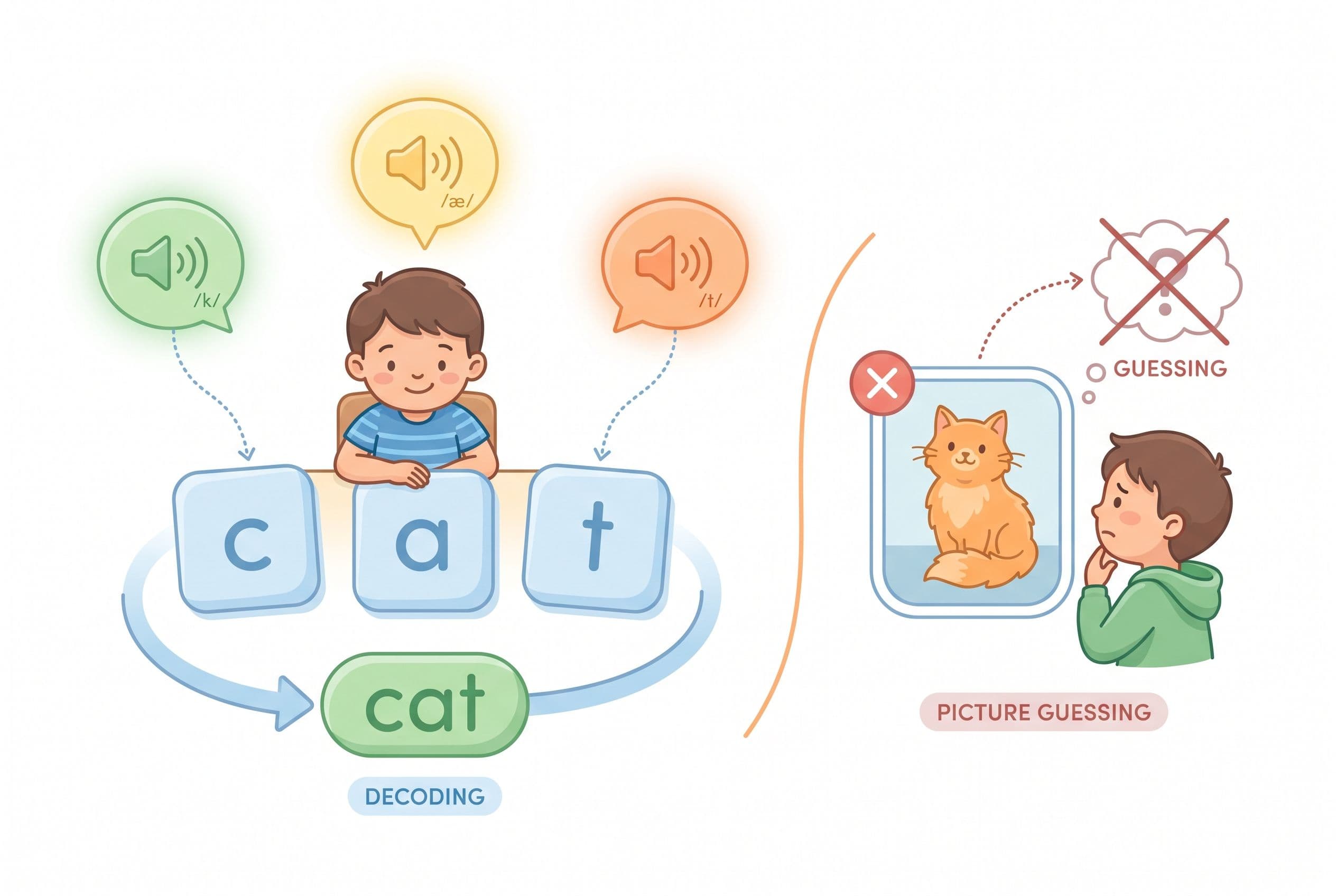
Reading Eggs has the edge for a typical 6-year-old because it gives more structured reading progression and includes Fast Phonics for ages 5-10. It covers phonics, phonemic awareness, vocabulary, fluency, and comprehension.
HOMER includes phonics-forward early literacy work, but it mixes that with broader learning. For some kids, that’s a blessing. For a child who needs focused decoding practice, it can become too much frosting and not enough cake.
Teach Your Kid to Read stays narrower by design. That’s why I rank it first.
Age Fit
For age 6, Reading Eggs usually fits better than HOMER because its own stated age bands run further into school-age reading. HOMER’s product page says 2-6, though its app listings state 2-8.
A 6-year-old who still acts like a preschool learner may enjoy HOMER. A 6-year-old working on actual decoding needs something more direct.
Motivation and Rewards
Reading Eggs uses strong reward-based progression. Some kids love that. My 7-year-old would probably do extra lessons just to collect digital nonsense, then tell me he “worked hard” while somehow avoiding the hardest word. Kids are adorable little loophole machines.
HOMER uses personalization and interests to draw children in. That can help reluctant learners.
But motivation should serve instruction. If the reward system replaces instruction, nope. Shut it down and go back to sounds.
Research Support
Silverman, Darling-Hammond, Keane, and Khanna’s 2025 “Measures Matter” meta-analysis reviewed 36 studies, with a broader review of 119 studies, and found educational apps can improve children’s literacy skills, especially preschool foundational skills like letter-sound knowledge and decoding.
That’s the good news.
The bad news? The Furlong and Serry 2026 app appraisal found most phonics and phonological awareness apps didn’t meet expert standards. So “literacy app” means almost nothing by itself. You have to inspect the instruction.
Niklas and colleagues’ 2025 randomized controlled trial with 500 kindergarten children in Germany found that children using specially designed literacy apps at home for about six months showed stronger letter knowledge and phonological awareness. Again, designed matters. Random games don’t magically create readers.
Screen Time
The American Academy of Pediatrics / HealthyChildren talks about the 5Cs of media use: child, content, calm, crowding out, and communication. I like that frame because it asks the real question: what is this screen replacing?
If the app replaces TV fluff, fine. If it replaces you listening to your child read decodable words aloud, not fine.
My rule: 10-15 minutes of targeted reading app practice beats 45 minutes of wandering through reward screens.
What I’d Do for a 6-Year-Old This Week
If your child is 6, don’t spend three months debating HOMER vs Reading Eggs for 6-year-olds while your kid keeps guessing. Pick a plan, measure the skill, and adjust fast.
Here’s the action step list I’d use.
-
Check letter-sound knowledge.
Show lowercase letters out of order. Ask for sounds, not names. If your child says “em” instead of /m/, correct gently and drill. -
Test blending with 10 CVC words.
Use words like map, sun, lip, dog, ten, rug, sad, pin, hop, and fan. No pictures. No hints. If your child guesses, say, “Touch each sound.” -
Screen phonemic awareness.
Use Kilpatrick’s PAST test if you’re comfortable with it. It takes about 5 minutes once you know the routine and shows where the sound-level breakdown happens. -
Use a decoding-first app daily.
Start with Teach Your Kid to Read if your child needs systematic phonics. Keep sessions short and non-negotiable. We Never Skip — birthdays, holidays, vacation, weird Tuesdays with spilled cereal. -
Add decodable readers.
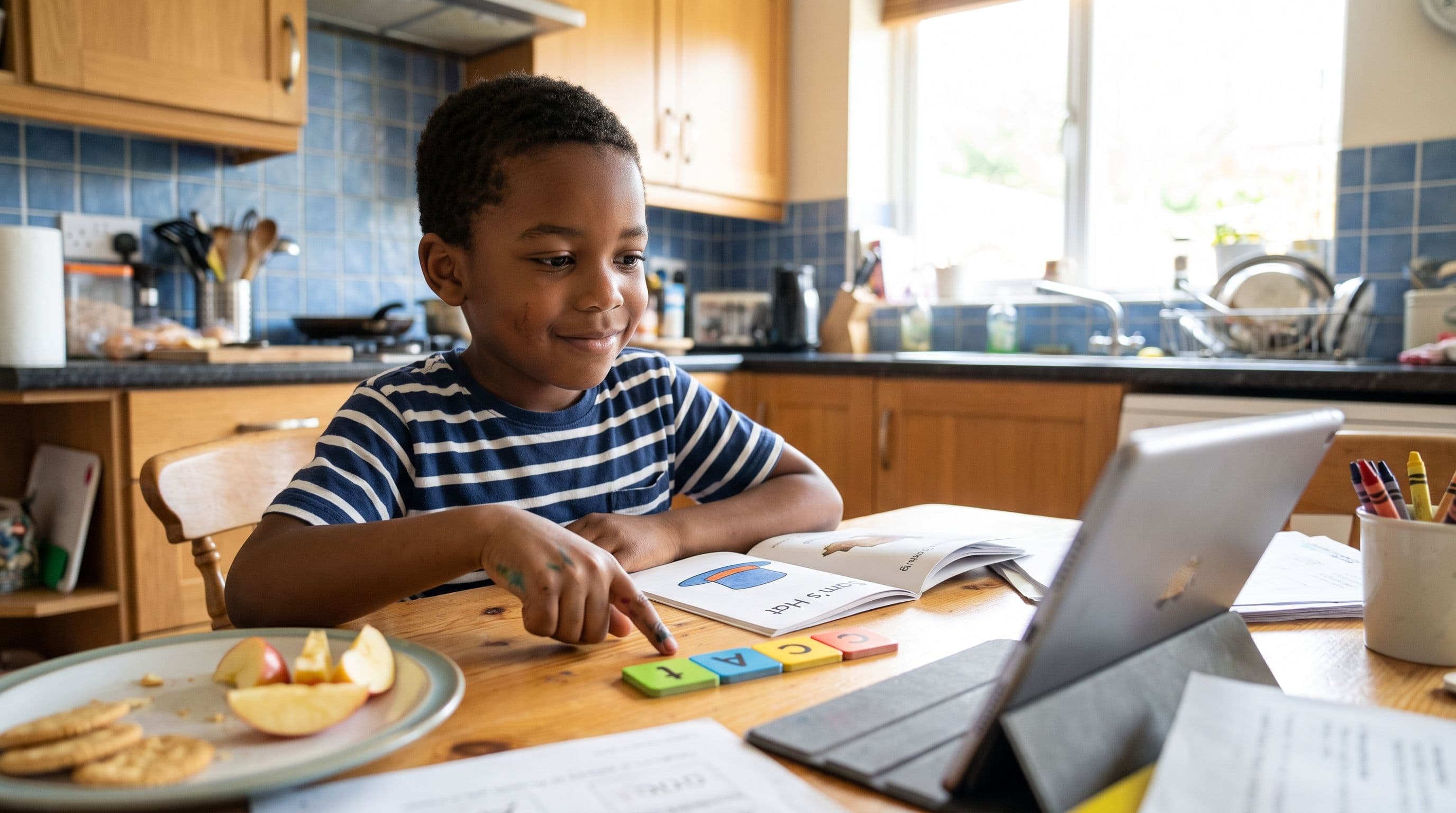
Use Bob Books, Flyleaf-style decodables, or other controlled text that matches the phonics pattern your child has learned. Avoid leveled readers that invite guessing from pictures. -
Track one number.
Count how many CVC words your child reads correctly in one minute once or twice a week. Don’t obsess. Just watch the trend. -
Escalate if progress stalls.
If your child practices daily for 6-8 weeks and still can’t blend simple words, ask for a reading evaluation. Don’t let anyone pat your head and say, “Some kids bloom later.” Some do. Some need help now.
A DIBELS-style nonsense word fluency check can also reveal whether your child truly knows sound-symbol patterns or just memorized familiar words. Nonsense words like mip or lat remove the picture-guessing crutch. Mean? Maybe. Useful? Absolutely.
Final Recommendation: Which One Should You Pick?
Choose Teach Your Kid to Read if your 6-year-old needs direct phonics, blending, and decoding practice. That’s my #1 choice because it targets the actual reading foundation instead of burying it under general activities.
Choose Reading Eggs if your child likes rewards, already has some decoding skill, and you want a broader structured program with reading, spelling, comprehension, and math add-ons.
Choose HOMER Learning if your child is younger developmentally, sensitive, resistant, or still building comfort with early literacy concepts.
But please hear me: the app is not the parent. Sit nearby. Listen. Make them read words aloud. Demand accuracy kindly, like a loving drill sergeant with snacks.
Lesson one of Teach Your Kid to Read is free with no card and nothing to cancel; from lesson two the whole program is a 7-day free trial, then US$9.95 a month.
FAQ
Is HOMER or Reading Eggs better for a 6-year-old?
Reading Eggs is usually the better fit for a 6-year-old because its own program range extends through ages 7 and beyond with Fast Phonics for ages 5-10. HOMER can work well for younger or more sensitive learners, but a struggling 6-year-old often needs more focused phonics.
What’s the best phonics app for a 6-year-old who guesses words?
Choose a decoding-first app that teaches systematic synthetic phonics and makes your child sound out words. I recommend Teach Your Kid to Read first because it focuses on phonics mastery without burying the lesson under rewards or broad enrichment.
Can Reading Eggs replace reading instruction?
No. Lowery’s 2017 study found Reading Eggs helped as a supplement to teacher-delivered intervention. Apps can support practice, but children still need adults listening, correcting, and making sure they read accurately.
How long should my 6-year-old use a reading app each day?
Start with 10-15 focused minutes. If your child loses attention or starts random tapping, stop. Short daily practice beats long distracted sessions, hands down.
Should I worry if my 6-year-old can’t read CVC words yet?
Yes, pay attention. Don’t panic, but don’t wait. Check letter sounds, blending, and phonemic awareness. If daily practice doesn’t move the needle after 6-8 weeks, ask for a reading evaluation or support from a structured literacy tutor.
Part of these guides

Xia Brody
Co-Founder, Teach Your Kid to Read
Mom of 4 who has successfully taught her kids to read. Currently in the trenches with her 4-year-old while her two oldest (10 and 7) devour books on their own. Passionate about phonics-based methods and building a lifelong love of reading.
Related Articles
HOMER vs Reading Eggs for 5-Year-Olds: Best Fit?
Choosing between HOMER and Reading Eggs for a 5-year-old? I’m breaking down phonics quality, guessing risks, rewards, pricing, and the app I’d put first for decoding mastery.
Read More →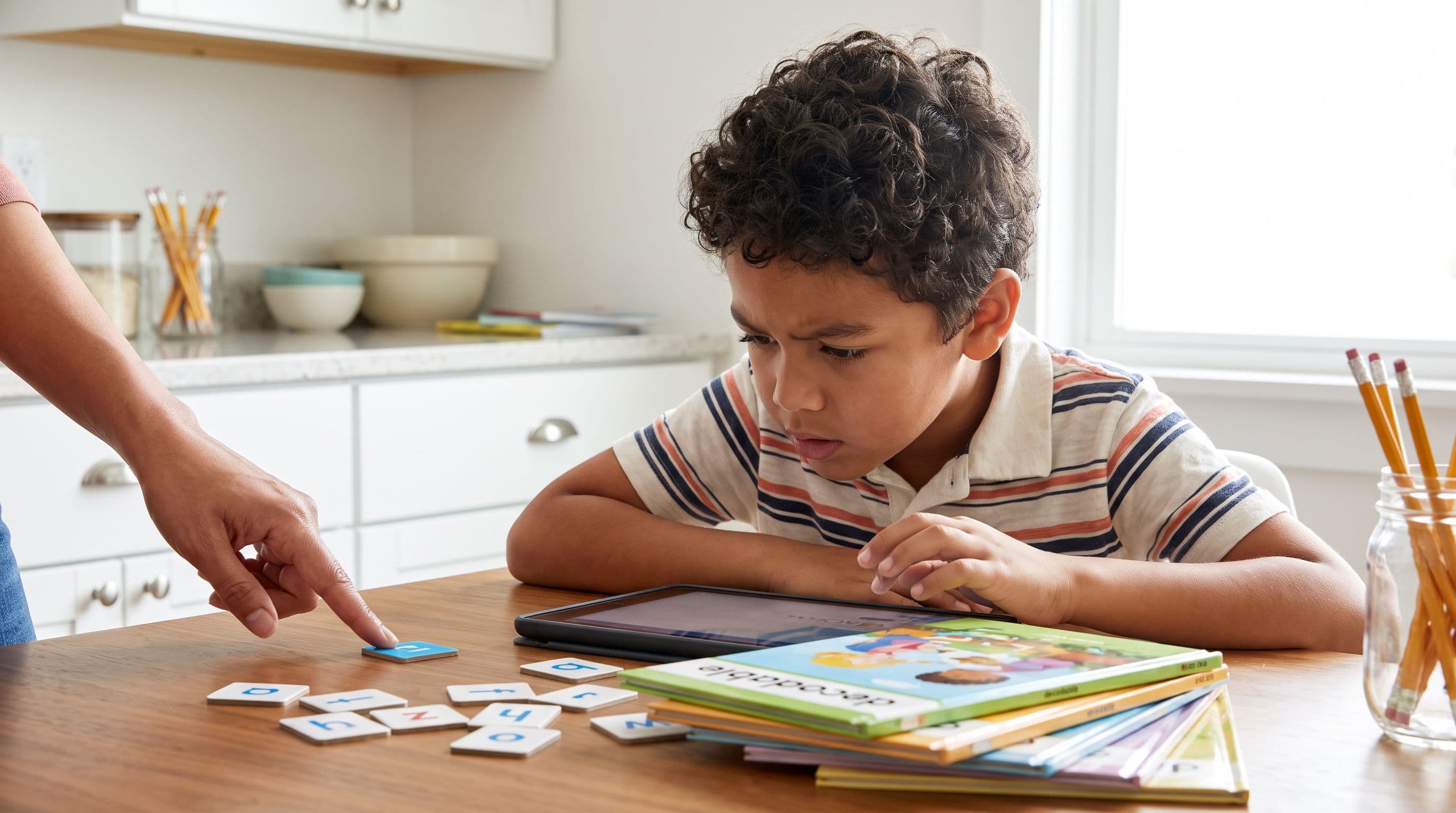
Reading Eggs vs ABCmouse for 5-Year-Olds: Best Pick
Choosing between Reading Eggs and ABCmouse? Here’s the no-fluff mom verdict on which app actually teaches a 5-year-old to read — and where both fall short.
Read More →
Reading Eggs vs HOMER Australia: Best Prep App?
Choosing between Reading Eggs and HOMER for your 4–6 year old? Here’s the blunt phonics-first comparison Australian parents need before Prep, Foundation or Kindy.
Read More →