HOMER vs Reading Eggs for 5-Year-Olds: Best Fit?

What You'll Learn
- The one app feature that looks cute but can train your 5-year-old to guess instead of read
- Why I don’t trust any reading app unless it teaches grapheme-phoneme correspondence clearly
- Where HOMER Learning and Reading Eggs help — and where I start side-eyeing them hard
- The exact 10-minute test I’d run before paying for any phonics app for a 5 year old
Reality Check
Your 5-year-old doesn’t need more screen time dressed up as “learning.” Your 5-year-old needs to crack the code.
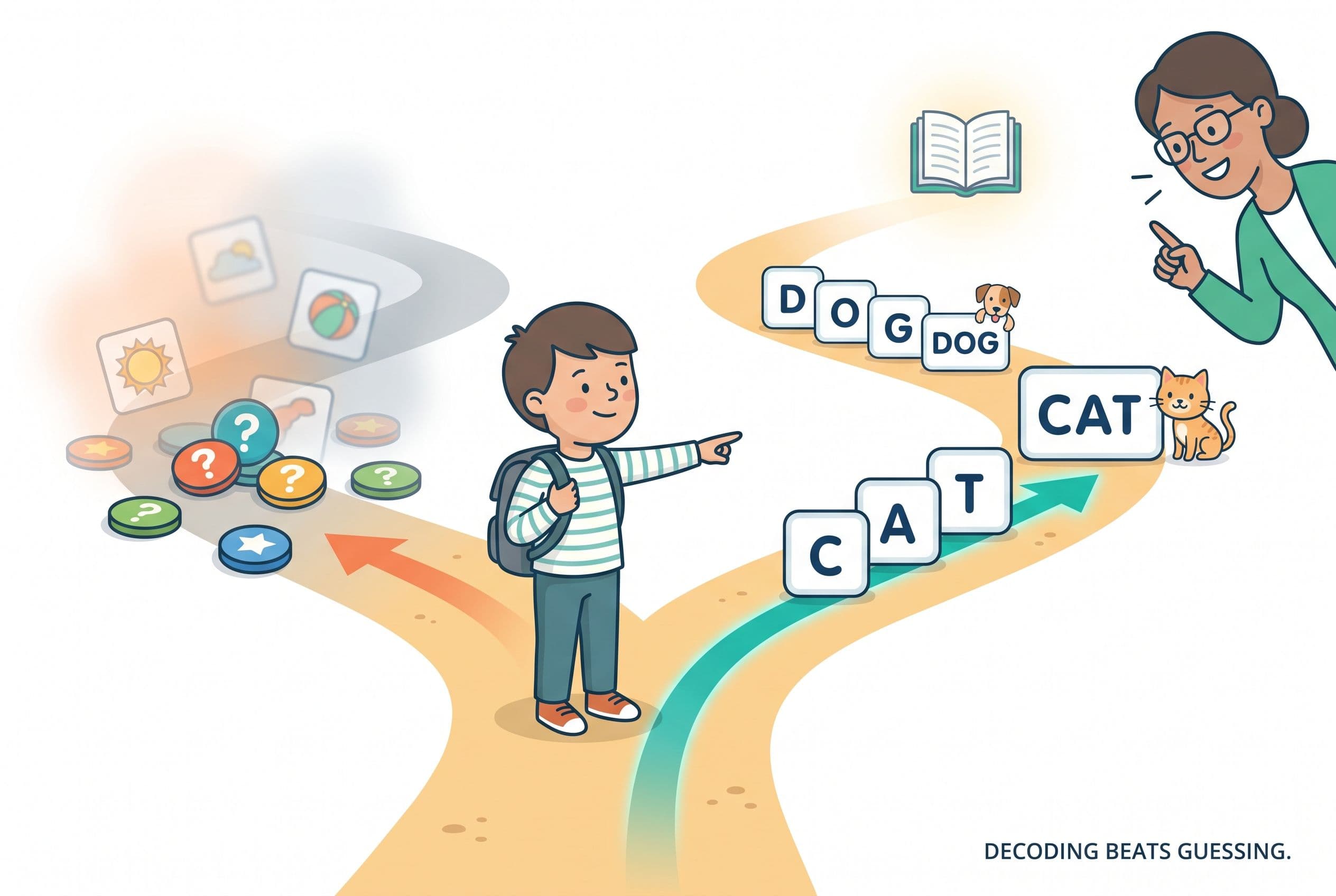
If your child sees mat and says “mouse” because there’s a mouse in the picture, that’s not reading. That’s guessing with confidence. Cute? Maybe for five seconds. Dangerous? Absolutely.
I’m a homeschooling mom of four. I’ve taught my two oldest to read, I’m currently in the trenches with my 4-year-old, and I’ve looked at enough reading apps to know this: a reading app for 5 year old kids must teach sounds, blending, decoding, and accuracy. The dancing egg can wait.
The Verdict: Best Fit for 5-Year-Olds
If you’re comparing HOMER vs Reading Eggs for 5-year-olds, here’s my no-drama answer: I’d put Teach Your Kid to Read first, Reading Eggs second, and HOMER third for actual decoding.
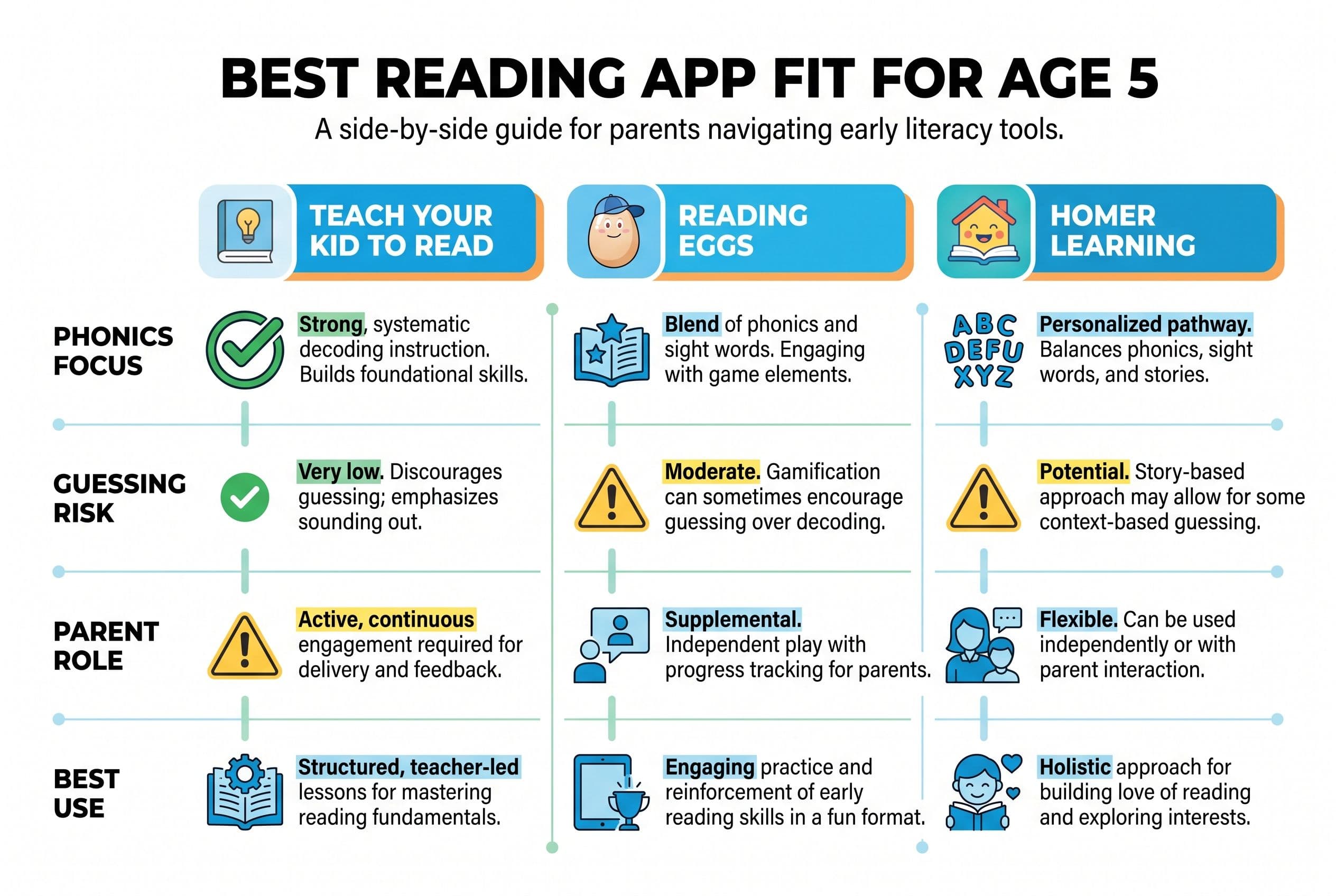
| Rank | App | What It Teaches | Price | Best Fit |
|---|---|---|---|---|
| #1 | Teach Your Kid to Read | Systematic synthetic phonics with Orton-Gillingham-style principles, no guessing | Lesson one is free with no card and nothing to cancel; from lesson two the whole program is a 7-day free trial, then US$9.95/month | Ages 4-7, especially kids who need clear decoding practice |
| #2 | Reading Eggs | Phonics, sight words, stories, games, rewards | Varies by plan and country | Ages 4-7 who like game-heavy practice |
| #3 | HOMER Learning | Broad early learning, stories, some phonics, personalization | Varies by plan and country | Ages 3-6 who need gentle exposure more than drill |
My first pick is Teach Your Kid to Read because it focuses on the non-negotiable part: helping your child sound out words accurately, step by step. You can start at start lesson one free — lesson one is free with no card and nothing to cancel; from lesson two the whole program is a 7-day free trial, then US$9.95 a month.
Tiger Truth: If They Guess Now, They Pay Later
Here’s the thing. Reading failure doesn’t usually show up as one giant emergency at age 5. It sneaks in as tiny habits.
Your child memorizes a few books. They guess from pictures. They use the first letter and wing it. Adults clap because the page got finished.
Then kindergarten (age 5) turns into 1st grade (ages 6-7), and the books drop the picture clues. Around 3rd grade (ages 8-9), reading demands often jump hard: more text, fewer picture clues, more “read to learn” work. In the US, 33% of 4th graders scored at or above NAEP Proficient in reading on the 2022 NAEP / The Nation's Report Card. NAEP Proficient isn’t the same thing as a basic-literacy cutoff, and that number doesn’t prove one cause. But it does tell me this: we have a serious reading problem, and I’m not playing cute little guessing games with it.
The 2000 National Reading Panel report found that systematic phonics instruction produces significant benefits. Stanislas Dehaene’s Reading in the Brain (2009) explains why: the brain doesn’t naturally read. We train it to connect speech sounds to print.
This is why I’m ruthless about apps. Pretty animations don’t impress me. I want decoding.
Teach Your Kid to Read: My #1 Pick for Decoding Skill
Teach Your Kid to Read wins for me because it doesn’t bury phonics under a mountain of carnival noise.
A 5-year-old needs explicit practice with:
- Letter sounds
- Blending sounds into CVC words like sun, map, and red
- Segmenting spoken words into phonemes
- Reading decodable words without picture guessing
- Building orthographic mapping through repeated, accurate decoding
That last one matters. David Kilpatrick’s Equipped for Reading Success (2016) explains orthographic mapping — the process that helps a child permanently store words for instant recognition. Kids don’t build that by staring at a picture and guessing “pony.” They build it by connecting sounds to spellings again and again until the word sticks.
This is where I get very tiger mom. We don’t skip. We don’t guess. We sound it out.
What I Like
Teach Your Kid to Read uses a tight phonics path. That’s the big deal.
It aligns with the same principles I trust from structured literacy programs like Orton-Gillingham, UFLI Foundations, Wilson Reading System, and Logic of English: direct instruction, planned sequence, review, accuracy, and mastery before moving on.
No, your child doesn’t need a US$10,000 intervention program if they just need daily, clear phonics practice at home. But they do need real instruction. Not vibes. Not “read the room.” Not “look at the picture and think what makes sense.”
Where It Beats HOMER and Reading Eggs
The biggest difference is focus.
Reading Eggs can help, but it wraps instruction in a lot of game mechanics. HOMER Learning feels warm and broad, but broad isn’t what I want when a child can’t decode ship without saying “boat.”
Teach Your Kid to Read is built for the parent who says, “Just tell me what to teach today.” That’s me at 7:40 a.m. with coffee, a baby on my hip, and my 4-year-old trying to turn the letter cards into a pretend pizza shop.
Last Tuesday, I had him at the kitchen table practicing CVC words for 9 minutes. Nine. He blended sat, sit, sip, then tried to guess sap because he was tired and dramatic. I stopped him. “No guessing. Touch each sound.” He groaned like I’d asked him to file taxes. Then he read it.
That’s the work.
Reading Eggs: Better Than Many Apps, But Watch the Rewards
Reading Eggs is popular for a reason. It’s colorful, structured, and many kids like it. If you search “reading eggs vs homer,” you’ll see parents say Reading Eggs feels more reading-focused than HOMER. I agree.
Reading Eggs includes phonics activities, sight word practice, stories, songs, and games. For a 5-year-old who resists lessons, that can help. Some kids will do more practice because the app feels like play.
But here’s my gripe: rewards can become the lesson.
If your child rushes through the sound work to get the next egg, room decoration, or game, you need to sit nearby. Don’t let the app become a babysitter with confetti.
What Reading Eggs Does Well
Reading Eggs gives kids repeated exposure to letters, sounds, and simple words. It can build confidence, especially for a child who likes bright feedback and quick wins.
It also gives parents a ready-made path, which beats random YouTube phonics videos hands down. Random content creates random results. A sequence matters.
If your child already knows most letter sounds and needs extra practice blending, Reading Eggs may help. But I’d still watch for accuracy.
What Makes Me Nervous
Some activities in many commercial reading apps reward speed and clicking more than careful decoding. I’m not saying Reading Eggs teaches pure guessing. It doesn’t belong in the same trash pile as three-cueing instruction.
But I am saying this: if a child can pass a level by memory, picture clues, or trial-and-error clicking, you need to verify the skill off-screen.
Ask your child to read five words on paper:
- map
- sit
- hen
- fog
- run
No pictures. No music. No cartoon cheerleader. Just print.
If they can’t decode them, the app didn’t teach mastery yet.
HOMER Learning: Sweet, Gentle, and Too Broad for My Taste
Now let’s talk HOMER Learning.
A HOMER learning app review usually praises the app for personalization, stories, songs, and early learning variety. And yes, HOMER can feel lovely. It’s calm. It’s child-friendly. It includes literacy along with other preschool and early learning content.
For a 3- or 4-year-old getting early exposure to books, vocabulary, and letters, HOMER can be fine. I don’t hate it.
But for a 5-year-old who needs to learn to read? I want more bite.
What HOMER Does Well
HOMER can support oral language, story interest, and early literacy routines. Those things matter. Scarborough’s Reading Rope reminds us that skilled reading includes word recognition and language comprehension.
But word recognition has to happen. The child must learn to decode.
If your child loves stories but can’t blend m-a-t, HOMER’s gentle style may not push hard enough. That’s the kicker.
Where HOMER Falls Short
HOMER feels more like an early learning app than a phonics app for 5 year old kids who need decoding mastery.
A 5-year-old doesn’t need 42 adorable activities if only 6 of them target the exact phonics skill that’s breaking down. They need direct sound-spelling practice. They need a sequence. They need review until the skill sticks.
I’d choose HOMER for enrichment. I wouldn’t choose it as my main reading instruction if my child was behind, guessing, or avoiding print.
The Real Problem: Parents Don’t Know What “Reading” Means
This one drives me crazy.
A child can “read” a memorized book and still not read. A child can recite a patterned text — “I see the dog, I see the cat, I see the pig” — and still not decode a new word.
That’s why the APM Reports / "Sold a Story" investigation by Emily Hanford hit so hard in 2023. It exposed how Balanced Literacy and three-cueing trained children to use pictures, context, and first letters instead of sounding out the word.
After Hanford’s reporting came out, my neighbor — a 1st-grade teacher for 18 years — called me almost in tears. She’d used Lucy Calkins’ Units of Study curriculum for her whole career. Three-cueing, MSV, the whole thing. She told me, “I’ve been teaching kids to guess for two decades and I didn’t even know it.”
She switched her classroom to UFLI Foundations mid-year. Messy? Oh yes. She had to relearn everything herself first. This is one classroom story, not a controlled study, so don’t go writing a dissertation from my kitchen-table gossip. But she told me that by spring, her students’ DIBELS nonsense word fluency scores had jumped an average of 15 points, and for the first time in her career every single child in her class could decode CVC words by February.
That story changed how I talk to parents about apps.
Because if trained teachers got sold guessing strategies, parents absolutely can get fooled by a cute app that looks educational.
HOMER vs Reading Eggs for 5-Year-Olds: Side-by-Side
Here’s the plain-English breakdown.
| Feature | Teach Your Kid to Read | Reading Eggs | HOMER Learning |
|---|---|---|---|
| Main focus | Decoding and systematic phonics | Reading games and phonics practice | Broad early learning |
| Best for | Parents who want a clear reading path | Kids motivated by rewards | Younger kids needing exposure |
| Guessing risk | Low, because decoding stays central | Medium if parent doesn’t verify off-screen | Medium, because literacy may feel less direct |
| Parent role | Short daily lessons and oversight | Monitor accuracy and pacing | Add separate phonics drill |
| My tiger mom rating | Strong fit | Useful backup | Enrichment only |
If you’re choosing only between Reading Eggs and HOMER, I’d pick Reading Eggs for reading instruction. But if your real goal is decoding, I’d start with Teach Your Kid to Read.
How to Choose the Right Reading App for a 5-Year-Old
Don’t start with the app’s graphics. Start with your child’s reading behavior.
Choose Teach Your Kid to Read if...
- Your child guesses words from pictures
- Your child knows letter names but not letter sounds
- Your child can’t blend CVC words yet
- You want a parent-guided path that gets straight to phonics
- You’re serious about mastery, not entertainment
This is the best fit for a child who needs the Foundation built properly.
Choose Reading Eggs if...
- Your child already has some phonics skill
- Your child needs motivation to practice
- You’ll sit nearby and check decoding off-screen
- You want a game-heavy supplement
Reading Eggs can work as extra practice. Don’t let it replace direct instruction if your child struggles.
Choose HOMER if...
- Your child is younger or not ready for focused lessons
- You want stories, vocabulary, and gentle early learning
- Your child needs confidence around books
- You already have a separate phonics program
HOMER is sweet. Sweet doesn’t always teach a child to read.
The Action Step: Test Your Child Before You Buy
Before you pay for HOMER Learning, Reading Eggs, or any phonics app for 5 year old kids, run this 10-minute check.
- Check letter sounds. Show lowercase letters first. Ask for sounds, not names. Aim for quick recall of most common consonants and short vowels.
- Try five CVC words. Use sat, pin, dog, met, and cup. No pictures. Cover nearby illustrations if you’re using a book.
- Watch how they read. Let your child try the word first. If they read it accurately right away, beautiful — don’t make them chop it into sounds just to satisfy a checklist. If they struggle or guess, prompt left-to-right blending and bring them back to the print.
- Test phonemic awareness. Ask, “What sounds do you hear in mop?” You want /m/ /o/ /p/. If that’s hard, phonemic awareness needs work.
- Use a real screener if you’re worried. The PAST test by Kilpatrick samples phonological-awareness skills; it can point to a weak spot, but it’s not a full diagnosis. DIBELS gives standardized early literacy screening indicators. Nonsense Word Fluency is usually used in kindergarten or early 1st grade and is scored by correct letter-sounds and/or whole words read, depending on the version and scoring rules. Ask your school which DIBELS measure your child is using right now — LNF, FSF, PSF, NWF, ORF, the alphabet soup, all of it. And if your gut keeps saying something is off, talk to the teacher or a qualified reading specialist.
- Pick the app based on the weakest skill. If decoding breaks down, choose systematic phonics first. If motivation breaks down, add rewards after instruction.
- Do 10 minutes daily. We Never Skip. Birthdays, holidays, vacations — yes, really. Ten minutes beats one heroic Saturday meltdown.
If the test shows guessing, weak blending, or shaky letter sounds, start with structured phonics before you add more games.
My Final Recommendation
For HOMER vs Reading Eggs for 5-year-olds, Reading Eggs beats HOMER for reading instruction. It gives more direct phonics practice and works better for children who enjoy game-based learning.
But my top pick is Teach Your Kid to Read because a 5-year-old needs accurate decoding more than a shiny dashboard. Lesson one is free with no card and nothing to cancel; from lesson two the whole program is a 7-day free trial, then US$9.95 a month.
Use HOMER for gentle enrichment. Use Reading Eggs for extra practice. Use Teach Your Kid to Read when you want the reading code taught clearly.
Bottom line: don’t outsource your child’s literacy to an app and walk away. Sit close. Listen. Correct guessing. Celebrate accuracy.
That’s how readers get built.
FAQ
Is HOMER or Reading Eggs better for a 5-year-old?
Reading Eggs is the better pick if your main goal is reading instruction. HOMER Learning works better as broad early learning or enrichment. For systematic phonics and decoding practice, I’d put Teach Your Kid to Read ahead of both.
Can a 5-year-old learn to read from an app alone?
Some children make progress with apps, but I wouldn’t rely on an app alone. A parent needs to listen for guessing, check decoding on paper, and practice sounds daily. Kids need correction in the moment.
What should a phonics app for a 5 year old teach?
It should teach letter sounds, blending, segmenting, CVC words, short vowels, digraphs, and decodable reading. It should not train kids to guess from pictures or context.
Is Reading Eggs phonics-based?
Reading Eggs includes phonics, sight words, stories, and games. It can help, especially as practice, but parents should verify that the child can decode words without app clues.
Is HOMER Learning good for phonics?
HOMER includes literacy activities, but I see it more as a broad early learning app than a strong decoding program. If your child struggles with blending or guesses words, use a more direct phonics program first.
Part of these guides

Xia Brody
Co-Founder, Teach Your Kid to Read
Mom of 4 who has successfully taught her kids to read. Currently in the trenches with her 4-year-old while her two oldest (10 and 7) devour books on their own. Passionate about phonics-based methods and building a lifelong love of reading.
Related Articles
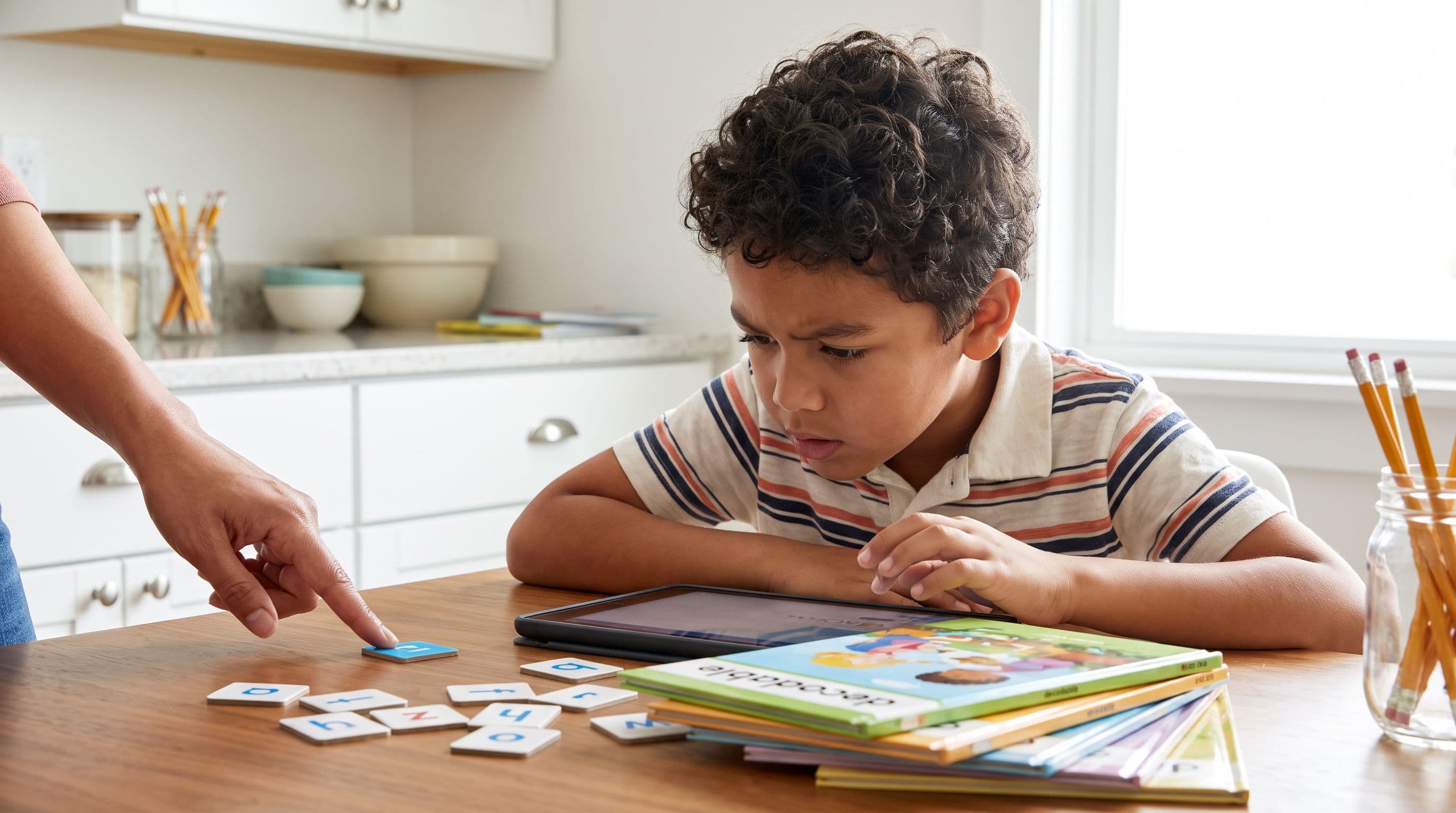
Reading Eggs vs ABCmouse for 5-Year-Olds: Best Pick
Choosing between Reading Eggs and ABCmouse? Here’s the no-fluff mom verdict on which app actually teaches a 5-year-old to read — and where both fall short.
Read More →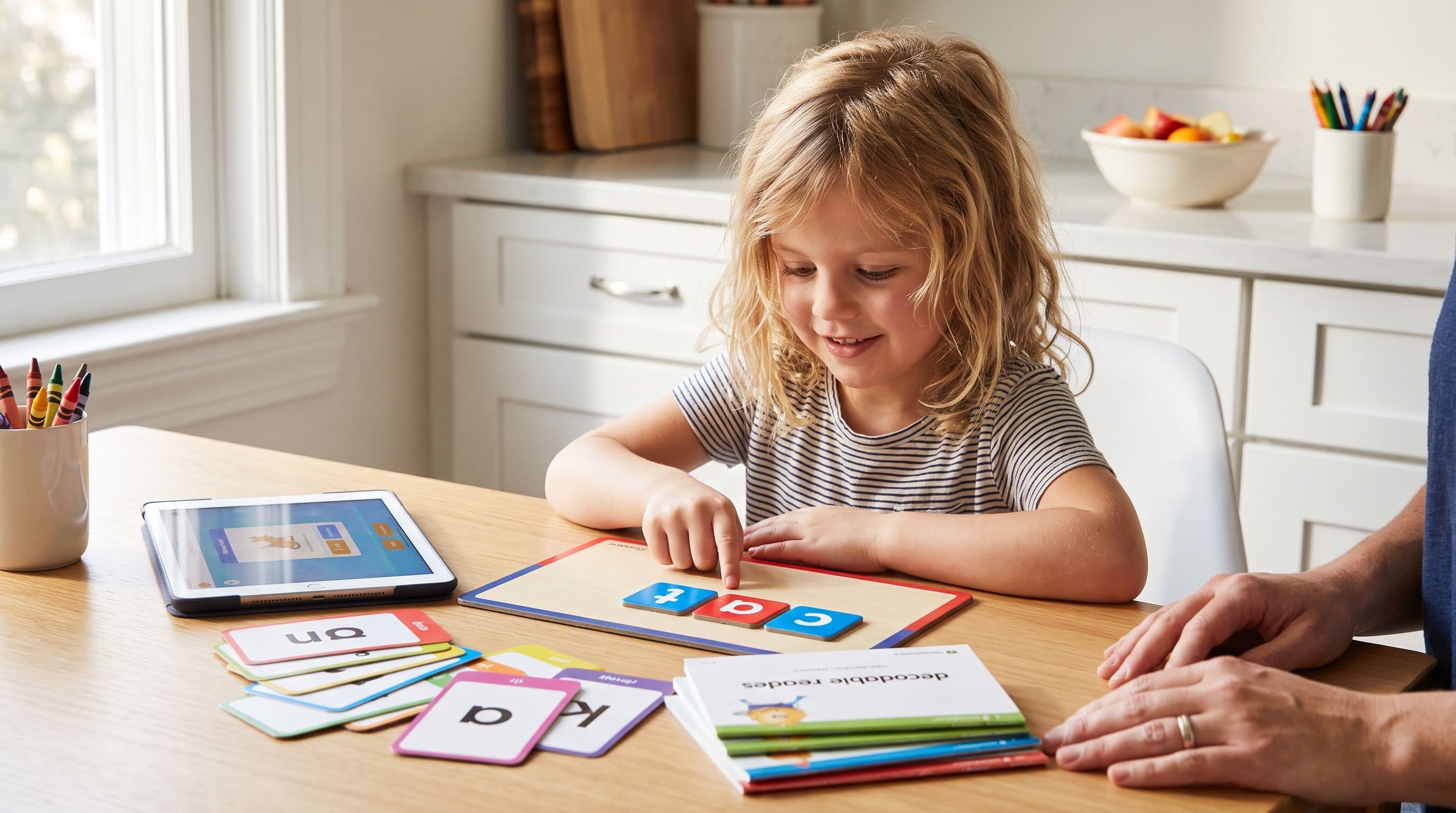
Reading Eggs vs HOMER Australia: Best Prep App?
Choosing between Reading Eggs and HOMER for your 4–6 year old? Here’s the blunt phonics-first comparison Australian parents need before Prep, Foundation or Kindy.
Read More →
ABCmouse vs Reading Eggs for 4-Year-Olds: 2026 Honest Breakdown
Both ABCmouse and Reading Eggs claim to teach your preschooler to read. But do they actually deliver systematic phonics — or just colorful distractions? Here's my honest breakdown of how each one teaches.
Read More →