Reading Eggs vs ABCmouse for 5-Year-Olds: Best Pick
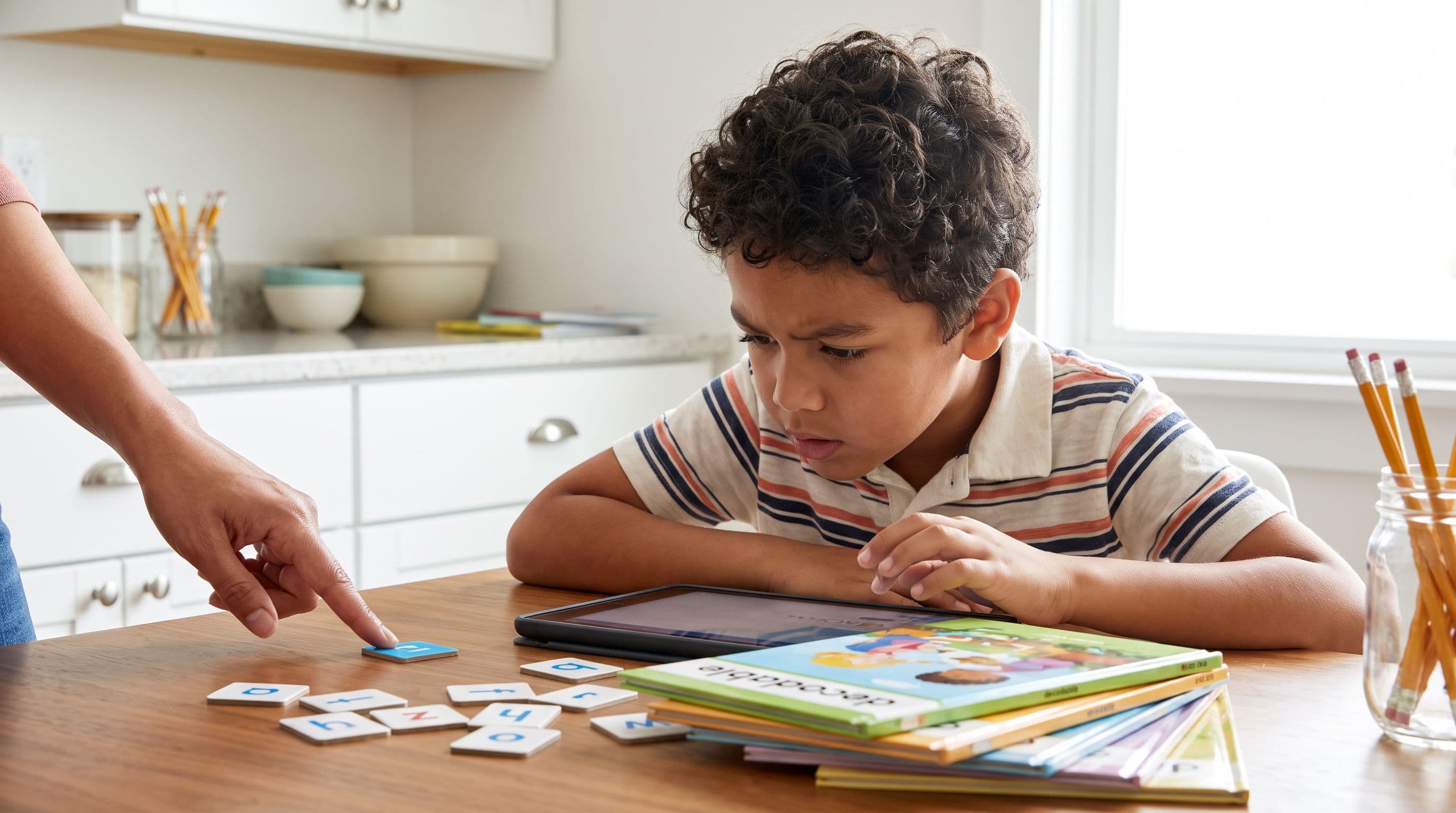
Reading Eggs vs ABCmouse for 5-Year-Olds: Which App Actually Teaches Reading?
What You'll Learn
- The one thing most parents miss when comparing reading eggs vs abcmouse for 5-year-olds
- Why “fun” can quietly replace real phonics instruction (and yes, that drives me nuts)
- Which app gives your child the strongest reading foundation at age 5
- The exact 10-minute test I’d do before paying for any kindergarten reading app
Reality Check
Your 5-year-old doesn’t need more screen confetti. Your 5-year-old needs to hear /m/, see m, blend mat, and stop guessing from pictures.
Look, I’m not anti-app. I’m anti-fake-reading. If an app keeps your child busy but doesn’t build decoding skill, that’s not reading instruction — that’s digital babysitting with a subscription fee.
The Verdict
Here’s my tiger-mom answer on reading eggs vs abcmouse for 5-year-olds: both can help with exposure, but neither would be my first pick if your goal is actual independent reading.
| Rank | App | What it teaches | Price | Best for |
|---|---|---|---|---|
| #1 | Teach Your Kid to Read | Systematic synthetic phonics, blending, no guessing | Lesson one is free with no card and nothing to cancel; from lesson two the whole program is a 7-day free trial, then US$9.95/month | Ages 4-7, especially kindergarten (age 5) |
| #2 | Reading Eggs | Phonics mixed with games, sight words, leveled activities | Varies by plan and region | Ages 4-6 who already tolerate structured lessons |
| #3 | ABCmouse | Broad early learning: letters, math, songs, games, books | Varies by plan and region | Ages 3-5 for general preschool practice |
If you want a reading app built around phonics mastery instead of reward loops, I’d start with start lesson one free. Lesson one is free with no card and nothing to cancel; from lesson two the whole program is a 7-day free trial, then US$9.95 a month.
Tiger Truth: Waiting Is Expensive
The “wait and see” advice sounds gentle. It’s not gentle when your child hits 3rd grade (ages 8-9) and still can’t decode branch, scrub, or flight.
In the US, only 32% of 4th graders performed at or above NAEP Proficient in reading on the 2022 NAEP / The Nation's Report Card. And no, NAEP Proficient isn’t the same thing as “reading on grade level” on a school report card — it’s a higher benchmark for solid academic performance. Still. That’s not a tiny problem. That’s a reading emergency wearing a backpack.
The 2000 National Reading Panel report found that systematic phonics instruction gives kids significant benefits. Louisa Moats said it plainly in her 1999 paper, Teaching Reading IS Rocket Science: teaching reading takes real knowledge. It’s not vibes. It’s not “surround them with books and hope.”
I was at a playground in Raleigh when another mom told me her child’s school had switched from Lucy Calkins to a Science of Reading curriculum because of North Carolina’s SB 387 — the Excellent Public Schools Act, a US state law. She was confused and a little annoyed. “He was doing fine before,” she said.
So I asked one question: “Can he read splint?”
He was in second grade (ages 7-8). He could not.
I spent 20 minutes on that playground bench explaining why the switch was happening — Emily Hanford’s APM Reports / "Sold a Story", the NAEP data, and Stanislas Dehaene’s Reading in the Brain from 2009 showing that the brain doesn’t learn to read naturally. It has to be trained.
She went home and listened that night. At 11pm she texted me: “I had no idea. Why didn’t anyone tell us this sooner?”
Exactly.
Deep Dive: Teach Your Kid to Read vs Reading Eggs vs ABCmouse
#1 Teach Your Kid to Read: Best for Actual Phonics Mastery
I’m biased because I helped build it, but I’m also a mom who has sat at the kitchen table with a wiggly 4-year-old who thinks the word sat should somehow become snake because there’s a cute picture nearby.
Nope. No guessing.
Teach Your Kid to Read uses systematic synthetic phonics. That means your child learns sounds in a planned order, blends them into words, reads controlled text, and builds accuracy before fluency. That’s the foundation.
It lines up with Orton-Gillingham principles: explicit instruction, multi-sensory practice, step-by-step skill building, and constant review. Not a carnival. Not a sticker machine pretending to be school.
Here’s what I care about for a 5-year-old:
- Can the child identify letter sounds quickly?
- Can the child blend CVC words like mop, sit, and fan?
- Can the child read a decodable sentence without using the picture?
- Can the child correct mistakes when prompted?
- Can the child build orthographic mapping — connecting sounds, letters, and meaning in long-term memory?
Linnea Ehri’s 2005 work on phases of word reading explains why this matters. Kids move from guessing based on visual cues to full alphabetic reading when they connect graphemes to phonemes. Translation for normal parents: your child needs to know that the letters in ship match /sh/ /i/ /p/. Looking at a boat picture and saying “ship” doesn’t count.
This is where many phonics apps fall apart. They teach a few sounds, then bury the child in games, songs, and rewards. The child looks busy. The parent feels productive. The reading skill? Meh.
Teach Your Kid to Read keeps the lesson path tight. It’s built for parents who want to sit with their child for 10-15 minutes and know exactly what to do. That matters because at age 5, you still need adult eyes on accuracy.
Bottom line: if your child guesses, skips, or memorizes books, this is the pick I’d use first.
#2 Reading Eggs for 5 Year Olds: Good, But Watch the Game Trap
Reading Eggs for 5 year olds can work well for families who want a colorful app with reading activities, phonics exposure, sight words, and placement-style progression.
It’s more reading-focused than ABCmouse. Hands down.
If your child enjoys badges, animated characters, and game-like lessons, Reading Eggs may hold attention better than a plain worksheet or workbook. It can introduce phonemic awareness, letter-sound matching, word families, and simple texts.
But here’s my issue: parents can mistake engagement for mastery.
A child can click through lessons, earn rewards, and still struggle when handed a plain decodable reader at the table. That’s the test. Remove the animation. Remove the music. Remove the cheering chicken or whatever adorable creature is doing backflips. Can your child read Sam sat on the mat without help?
If yes, great. Keep going.
If no, don’t instantly panic — but don’t ignore it either. Check whether those spelling patterns have actually been taught, practice them together, and watch whether reading improves across several sessions.
Reading Eggs beats ABCmouse if your main search is abc mouse vs reading eggs and your child is already 5. It stays closer to reading instruction and less scattered across subjects. But I still want parents to sit nearby and listen.
Use Reading Eggs this way:
- Do one lesson, not endless clicking
- Ask your child to read 3 words from the lesson aloud afterward
- Write one word from the app on paper and ask your child to sound it out
- Stop if the child starts guessing from pictures
Real talk — the app can help. It just can’t replace your ears.
#3 ABCmouse Reading Review: Better for Preschool Exposure Than Reading Instruction
ABCmouse is broad. That’s the selling point and the problem.
You get reading, math, songs, art, science, puzzles, games, and a whole lot of “my kid is occupied, praise the Lord, I can drink coffee while it’s hot.” I get it. I have four kids. I’ve absolutely handed a child a tablet because the baby was eating lint off the floor.
But as a reading tool for a 5-year-old? I’m cautious.
This ABCmouse reading review comes down to focus. ABCmouse introduces letters, books, songs, and vocabulary, but it doesn’t give me the tight phonics sequence I want for a child on the edge of kindergarten reading.
If your child is 3 or 4 and you want general early learning practice, fine. ABCmouse can build familiarity with letters, concepts, and school-like routines.
But if your child is 5 and you’re asking, “What’s the best reading app for 5 year old kids who need to actually read?” then ABCmouse isn’t my top answer.
The kicker is this: broad apps create the illusion that everything counts as reading practice. Singing an alphabet song counts as exposure. Matching a picture to a word counts as vocabulary. Clicking a narrated book counts as listening.
None of that equals decoding.
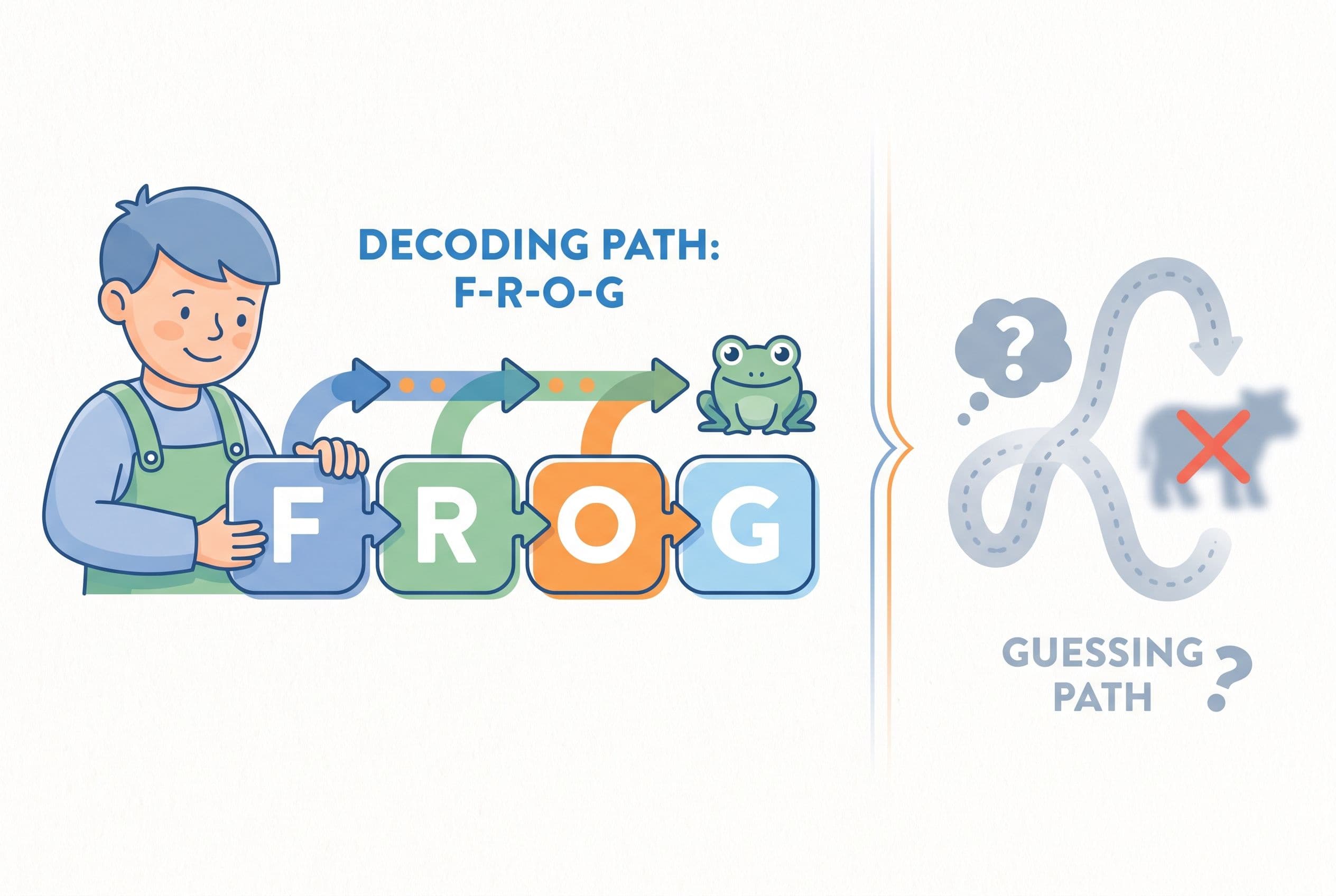
Decoding means your child sees frog and says /f/ /r/ /o/ /g/, then blends it into frog. No picture rescue. No memorized page. No guessing because the illustration shows a pond.
That’s the line.
Reading Eggs vs ABCmouse for 5-Year-Olds: Head-to-Head
Phonics Quality
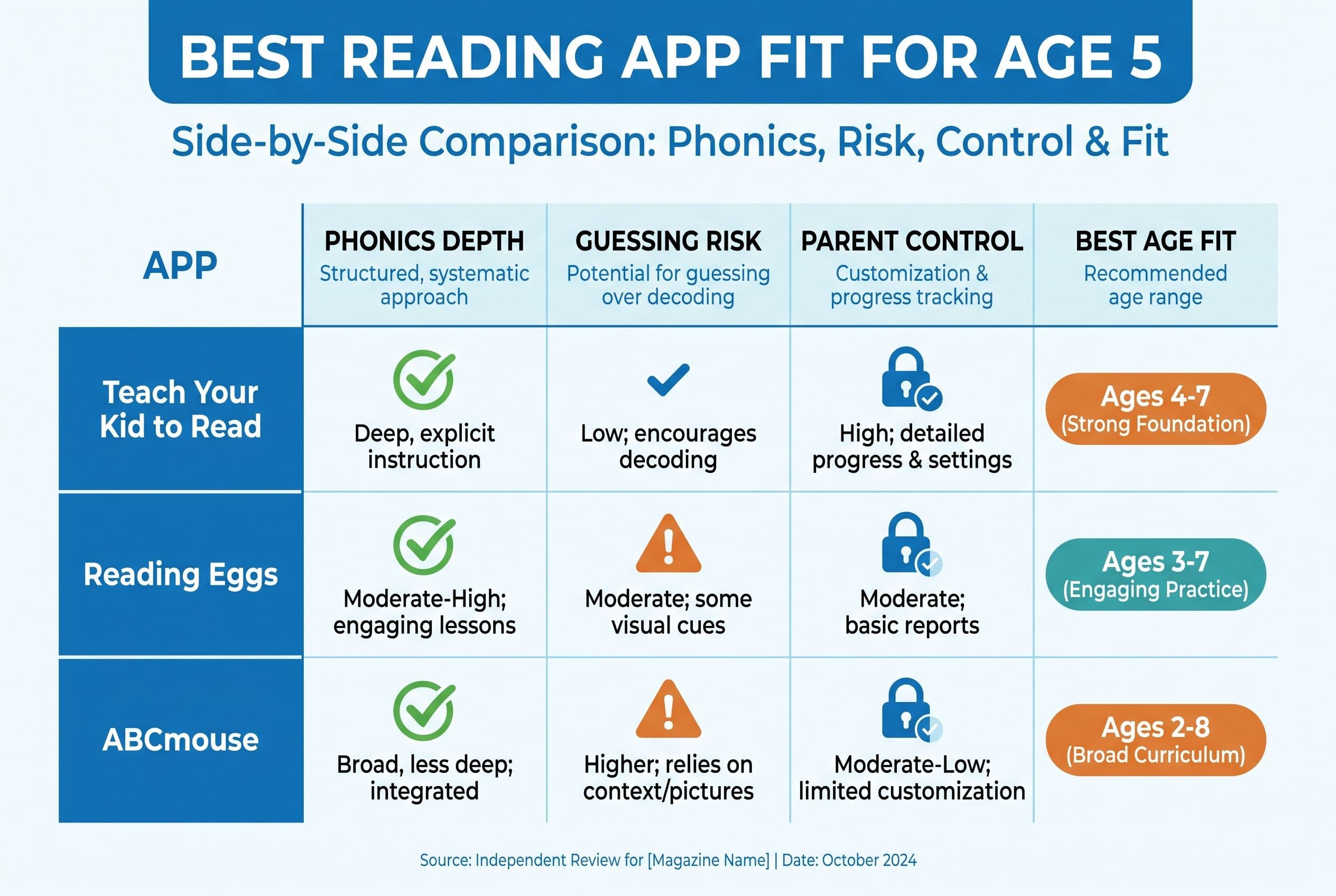
Reading Eggs wins over ABCmouse for phonics depth. It gives more direct practice with sounds, word families, and early reading patterns.
But Teach Your Kid to Read wins for systematic instruction because it keeps the child in a controlled phonics path. No random buffet. No “choose whatever looks fun.”
Parent Control
At age 5, parent control matters. A child will click the sparkly thing. Always. Ask me how I know.
ABCmouse gives lots of choice, which can derail a reading session. Reading Eggs has more structure, though the rewards can still pull focus. Teach Your Kid to Read keeps the parent-child lesson rhythm tighter, which I prefer for skill mastery.
Best Age Fit
ABCmouse fits preschoolers best. Reading Eggs fits early readers who like games. Teach Your Kid to Read fits kids ages 4-7 who need a phonics foundation, especially children entering kindergarten (age 5) or first grade (ages 6-7).
Price and Value
Prices change, and apps run promotions, so always check current plans in your country. For Teach Your Kid to Read, the offer is simple: lesson one is free with no card and nothing to cancel; from lesson two the whole program is a 7-day free trial, then US$9.95 a month.
That’s cheaper than a single tutoring session in most places. Private reading tutoring can run US$50-US$150 per hour in many US cities. Remedial reading programs can cost US$10,000-US$15,000 a year. I wish I was kidding.
The Science Piece Parents Can’t Ignore
Reading isn’t natural. Speech is natural for most children. Reading is not.
Stanislas Dehaene’s Reading in the Brain explains how the brain repurposes visual systems for print. That takes instruction and repetition. Mark Seidenberg’s Language at the Speed of Sight from 2017 makes the same point from cognitive science: kids need accurate connections between spoken language and written symbols.
This is why I side-eye any app that lets a child guess from pictures.
The Simple View of Reading from Gough and Tunmer in 1986 says reading comprehension comes from decoding multiplied by language comprehension. If decoding is weak, comprehension crashes. It doesn’t matter how smart your child is.
I’ve seen bright kids crumble over simple text because nobody made them master the code. They had vocabulary. They had imagination. They had parents who read aloud every night.
But they couldn’t decode.
That’s heartbreaking because it’s preventable.
My No-Nonsense App Rules for 5-Year-Olds
Before you buy any of these kindergarten reading apps, use my house rules.
Rule 1: No App Alone Counts as Reading Instruction
Sit close enough to hear mistakes. If your child says pony for horse, stop. If your child says house for home, stop. That’s guessing from meaning or picture cues.
Say: “Sound it out.”
Then wait.
Rule 2: Demand Decodable Practice
A decodable reader uses spelling patterns your child has already learned. Bob Books, UFLI Foundations decodables, Flyleaf Publishing, and High Noon Books are examples I’d trust more than random leveled readers.
Fountas & Pinnell levels are everywhere, but they’re tied to whole-language aligned practice. I don’t use levels as proof a child can decode. I want the child reading controlled words with known grapheme-phoneme correspondences.
Rule 3: Test the Skill Away From the Screen
After the app lesson, write five words on paper:
- map
- sit
- hop
- red
- fun
Ask your child to read them. No pictures. No multiple choice. No hints.
If your child can’t do it, the skill hasn’t stuck yet.
Rule 4: Keep Lessons Short and Daily
Ten minutes daily beats one heroic Saturday marathon. We Never Skip. Birthdays, holidays, vacation — we still do a tiny phonics drill. Yes, really.
My 4-year-old recently practiced CVC words at the kitchen table while the 1-year-old banged a spoon on a bowl like a tiny dictator. Was it peaceful? Absolutely not. Did we do it anyway? Yes. Reading is non-negotiable.
The Action Step: Pick the Right App This Week
Here’s exactly what I’d do before choosing between Reading Eggs vs ABCmouse for 5-year-olds.
- Test letter sounds. Show lowercase letters first. Your child should know most common sounds, not just letter names.
- Test blending. Ask your child to read 5 CVC words: mat, sip, dog, pen, cub.
- Check phonemic awareness. Say, “What sounds do you hear in fish?” You want /f/ /i/ /sh/. If that’s hard, a tool like David Kilpatrick’s PAST from Equipped for Reading Success can help screen specific phonological awareness skills — but follow the administration directions, and don’t treat a quick parent check like a diagnosis. If struggles keep showing up, ask your child’s teacher or a reading specialist for formal screening.
- Use one app for reading. Don’t rotate four phonics apps and call that a plan. Pick one clear sequence.
- Read decodable text daily. Two pages count if your child reads accurately.
- Track progress weekly. If your child’s school uses DIBELS or another formal screener, ask the teacher to explain the actual score, edition, testing window, and benchmark. At home, keep it simple: listen for better accuracy, less guessing, and smoother blending over time. Your kitchen table check is useful. It’s not a standardized score.
- Stop guessing immediately. Say, “No guessing. Eyes on the word. Sound it out.”
If you want the cleanest phonics-first path, start with Teach Your Kid to Read. Lesson one is free with no card and nothing to cancel; from lesson two the whole program is a 7-day free trial, then US$9.95 a month.
Final Pick: Which App Should You Choose?
If you want general early learning, ABCmouse is fine for preschool practice.
If you want a colorful reading-focused app, Reading Eggs beats ABCmouse for most 5-year-olds.
If you want the strongest reading instruction path, I’d choose Teach Your Kid to Read first, then use decodable books beside it. That combo gives your child the code, the practice, and the parent feedback apps can’t fully replace.
The bottom line: don’t buy the app that keeps your child quiet. Buy the app that makes your child read the word in front of them.
Start the first lesson, sit beside your child, and listen for real decoding.
FAQ
Is Reading Eggs better than ABCmouse for 5-year-olds?
Yes, if your main goal is reading. Reading Eggs focuses more on phonics and early reading than ABCmouse, which covers many preschool subjects. But I’d still use a stricter phonics-first program if your child needs decoding mastery.
Is ABCmouse good for teaching reading?
ABCmouse can help with letter exposure, vocabulary, songs, and general school readiness. I wouldn’t rely on it alone to teach a 5-year-old to decode. It’s too broad for that job.
What’s the best reading app for a 5 year old?
The best reading app for a 5 year old teaches systematic phonics, blending, and decodable reading without encouraging guessing. My pick is Teach Your Kid to Read because it keeps the lesson path focused and parent-friendly.
How long should my 5-year-old practice reading each day?
Aim for 10-15 minutes daily. Keep it short, direct, and consistent. Accuracy matters more than long sessions.
Should my child memorize sight words?
Some high-frequency words need special attention, but don’t build reading around memorizing whole words. Teach the phonics inside the word whenever possible so your child builds orthographic mapping instead of guessing.
Part of these guides

Xia Brody
Co-Founder, Teach Your Kid to Read
Mom of 4 who has successfully taught her kids to read. Currently in the trenches with her 4-year-old while her two oldest (10 and 7) devour books on their own. Passionate about phonics-based methods and building a lifelong love of reading.
Related Articles
ABCmouse vs Reading Eggs for 4-Year-Olds: 2026 Honest Breakdown
Both ABCmouse and Reading Eggs claim to teach your preschooler to read. But do they actually deliver systematic phonics — or just colorful distractions? Here's my honest breakdown after testing both with my own kids.
Read More →
HOMER vs ABCmouse for Reading: Side-by-Side Breakdown + Better Option
Both HOMER and ABCmouse promise to teach your kid to read. One leans toward personalized phonics pathways, the other is a massive content buffet. But here's what neither app tells you — and what actually matters for early reading.
Read More →
Reading Apps for 5-Year-Olds: 6 Skill-Level Picks
Most reading apps for 5-year-olds look cute. Too many teach guessing, tapping, and screen-zombie habits instead of real decoding. Here’s how I’d pick a phonics app by skill level if I were sitting at your kitchen table.
Read More →