Best Reading App for Letter Reversals: 2026 Picks
What You'll Learn
- The one feature a letter reversals reading app must have before I let my own kid use it
- Why b and d reversal help can't just be cute tricks with bed pictures (yes, I said it)
- Which apps teach real phonics and which ones let kids guess from pictures
- The dyslexia signs that mean you should stop waiting and start checking skills this week
Reality Check
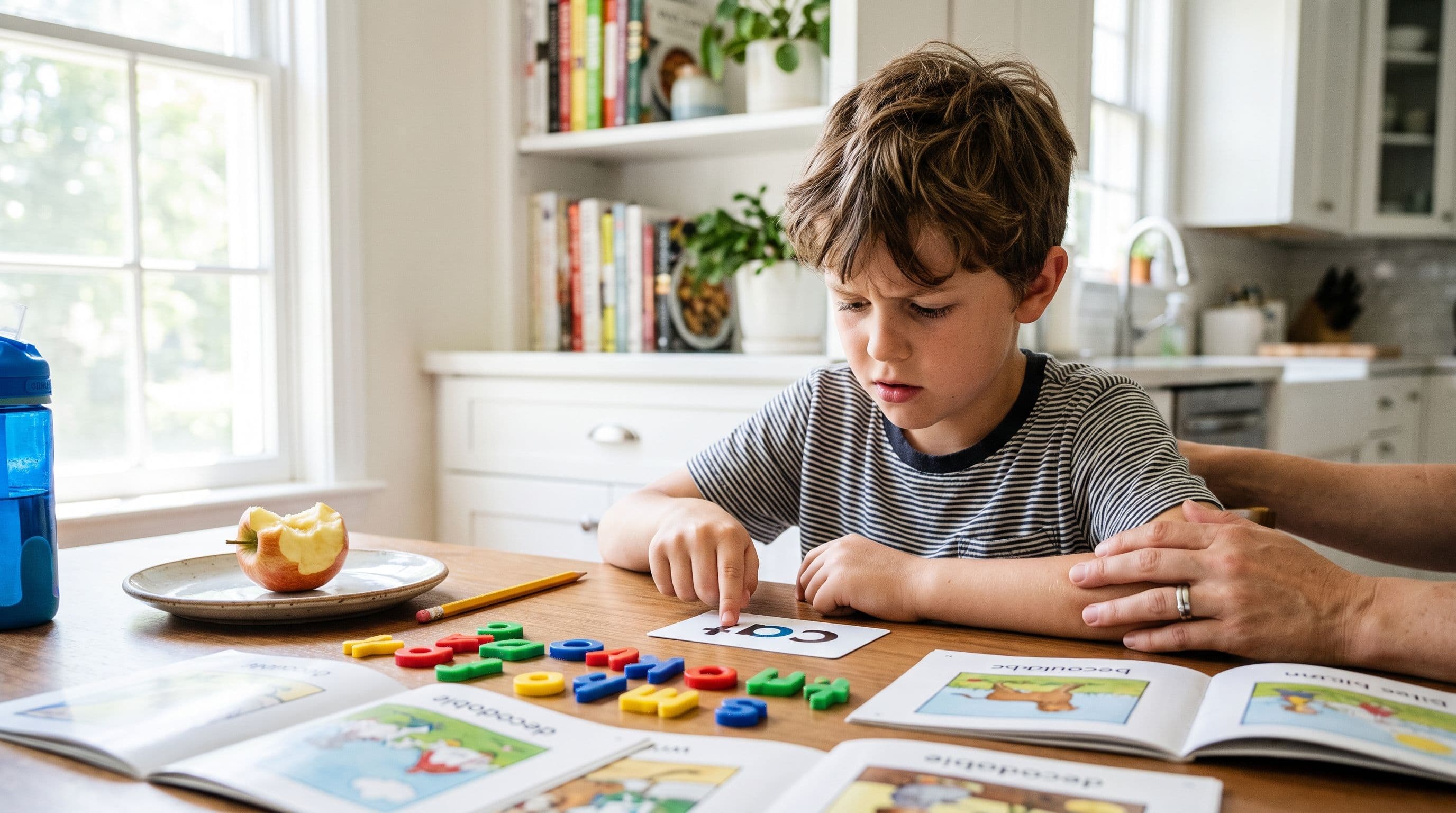
Your child flipping b and d doesn't automatically mean dyslexia.
But if your 7- or 8-year-old still reads bad as dad, guesses from the picture, skips little words, and melts down over simple decodable text? Stop smiling politely while everyone says, “They’ll grow out of it.” Maybe. Maybe not.
A good best reading app for letter reversals pick must do more than flash letters on a screen. It has to teach left-to-right print reading, letter-sound mapping, blending, phonemic awareness, and spelling patterns in a tight, daily routine. No guessing. No “look at the picture.” No nonsense.
The Verdict: Best Reading App for Letter Reversals in 2026
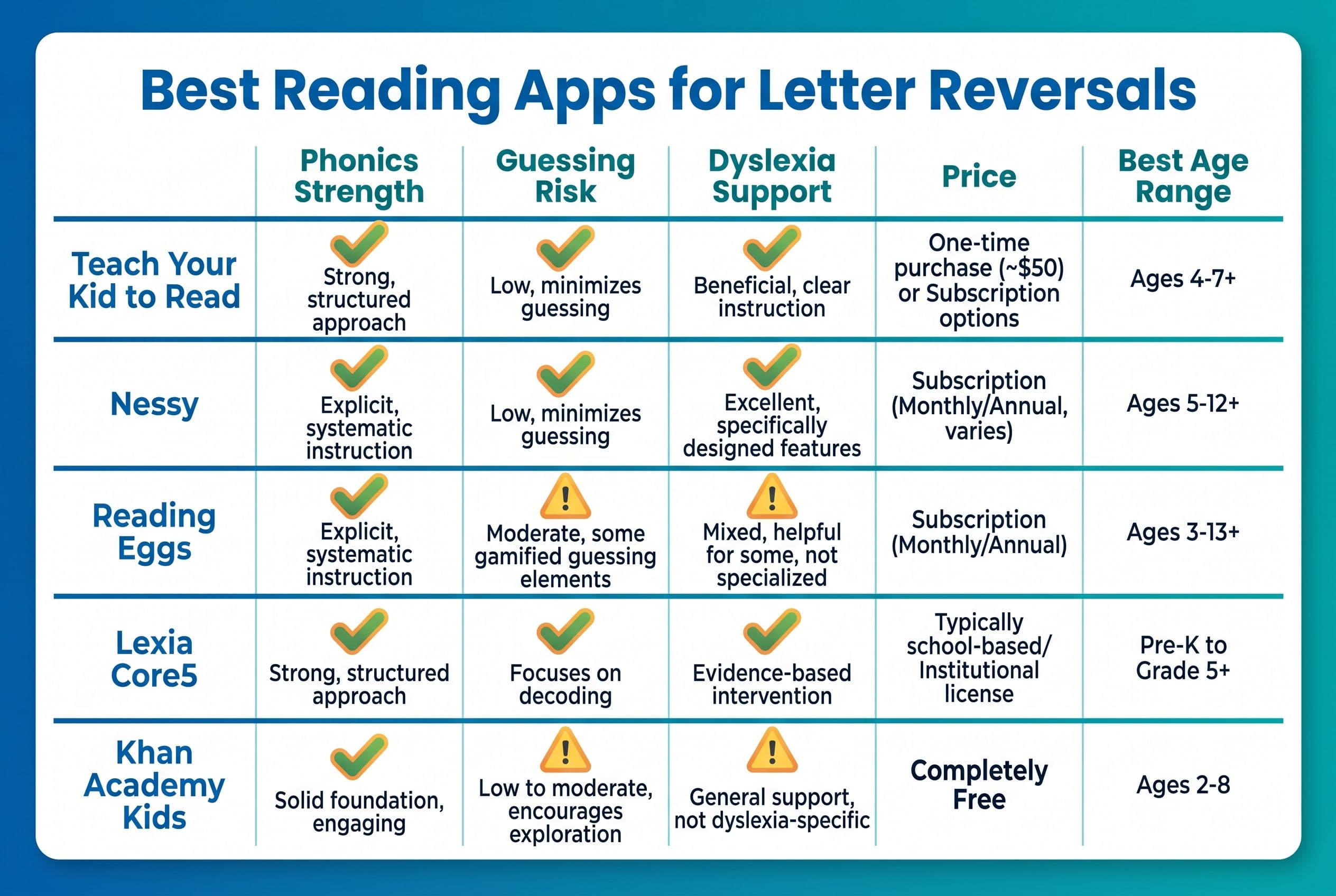
| Rank | App | What it teaches | Price | Best age |
|---|---|---|---|---|
| #1 | Teach Your Kid to Read | Systematic synthetic phonics, no guessing, sound-by-sound decoding | Lesson one free with no card and nothing to cancel; from lesson two, 7-day free trial then US$9.95/month | Ages 4-8 |
| #2 | Nessy Reading & Spelling | Dyslexia-friendly phonics, spelling, memory supports | Varies by plan | Ages 5-12 |
| #3 | Reading Eggs | Early literacy, phonics mixed with games | Subscription pricing varies | Ages 3-7 |
| #4 | Lexia Core5 | Structured literacy-style school program | Usually school-based | Ages 5-12 |
| #5 | Khan Academy Kids | Free early literacy practice, broad preschool skills | Free | Ages 2-7 |
My top pick for the best reading app for letter reversals is Teach Your Kid to Read because it attacks the real problem I’m watching for in struggling readers: weak grapheme-phoneme correspondence, shaky blending, and guessing habits. You can start lesson one free — lesson one is free with no card and nothing to cancel; from lesson two the whole program is a 7-day free trial, then US$9.95 a month.
Tiger Truth: Letter Reversals Are Not the Part That Scares Me
The reversal itself doesn't scare me. Lots of young kids reverse letters, especially around kindergarten (age 5) and 1st grade (ages 6-7). Their visual system, directionality, letter formation, and writing habits still need practice.
What scares me? A child who reverses letters and can't hear the three sounds in ship — /sh/ /i/ /p/, because sh is two letters but one sound — can't blend s-l-i-p, can't remember short vowel sounds, or reads by guessing.
The National Reading Panel report in 2000 found that systematic phonics instruction gives kids a measurable reading benefit. Louisa Moats’ 1999 paper, “Teaching Reading IS Rocket Science,” said the quiet part out loud: teaching reading takes real knowledge, not vibes and pretty classroom bins.
And the US data? In 2022, 33% of US 4th graders (ages 9-10) scored at or above NAEP Proficient in reading on the NAEP / The Nation's Report Card. NAEP Proficient is not the same thing as “grade level,” so don’t use that number to diagnose your kid at the kitchen table. But as a national warning sign? That’s not “kids develop at their own pace.” That’s a five-alarm fire.
I was at a playground in Raleigh when another mom told me her kid’s school had switched from Lucy Calkins to a Science of Reading curriculum because of North Carolina’s SB 387, the Excellent Public Schools Act — a US state law. She looked confused and a little annoyed. “He was doing fine before,” she said.
So I asked one question: “Can he read splint?”
He was in 2nd grade (ages 7-8). He could not.
I spent 20 minutes on that playground bench explaining why the switch was happening: Emily Hanford’s APM Reports / Sold a Story, the NAEP data, and Stanislas Dehaene’s Reading in the Brain (2009), where he explains that the brain doesn’t learn to read naturally. We train it. That mom texted me at 11 p.m. after listening to the podcast: “I had no idea. Why didn’t anyone tell us this sooner?”
Exactly.
What Makes a Reading App Good for Letter Reversals?
A strong letter reversals reading app needs to do four things well:
-
Teach sounds before tricks
Your child needs to know /b/ and /d/ as speech sounds connected to symbols. A “bed” hand trick helps some kids, but it won’t fix weak phonemic awareness. -
Make kids read left to right
Letter reversals don’t prove a visual-tracking disorder. But the app should still make kids read print in order, left to right, instead of tapping around, guessing, or grabbing clues from pictures like tiny literacy raccoons. -
Use decodable words
If the lesson teaches short a, don’t throw in said, come, and where like a literacy grenade. -
Stop picture guessing
If Lily sees a boat picture and says boat when the word is ship, that’s not reading. That’s a party trick. And honestly? This one drives me crazy.
Now let’s compare the apps.
Deep Dive: 2026 Picks for the Best Reading App for Letter Reversals
#1 Teach Your Kid to Read: Best Overall for Letter Reversals
Teach Your Kid to Read is my top choice because it treats letter reversals as part of a bigger reading Skill problem, not as a cute handwriting quirk.
When my 4-year-old sat at the kitchen table last Tuesday, she mixed up b and d while reading CVC words. I didn’t panic. I also didn’t say, “Oh well, she’ll figure it out.” Tiger mom mode activated.
We went back to sounds:
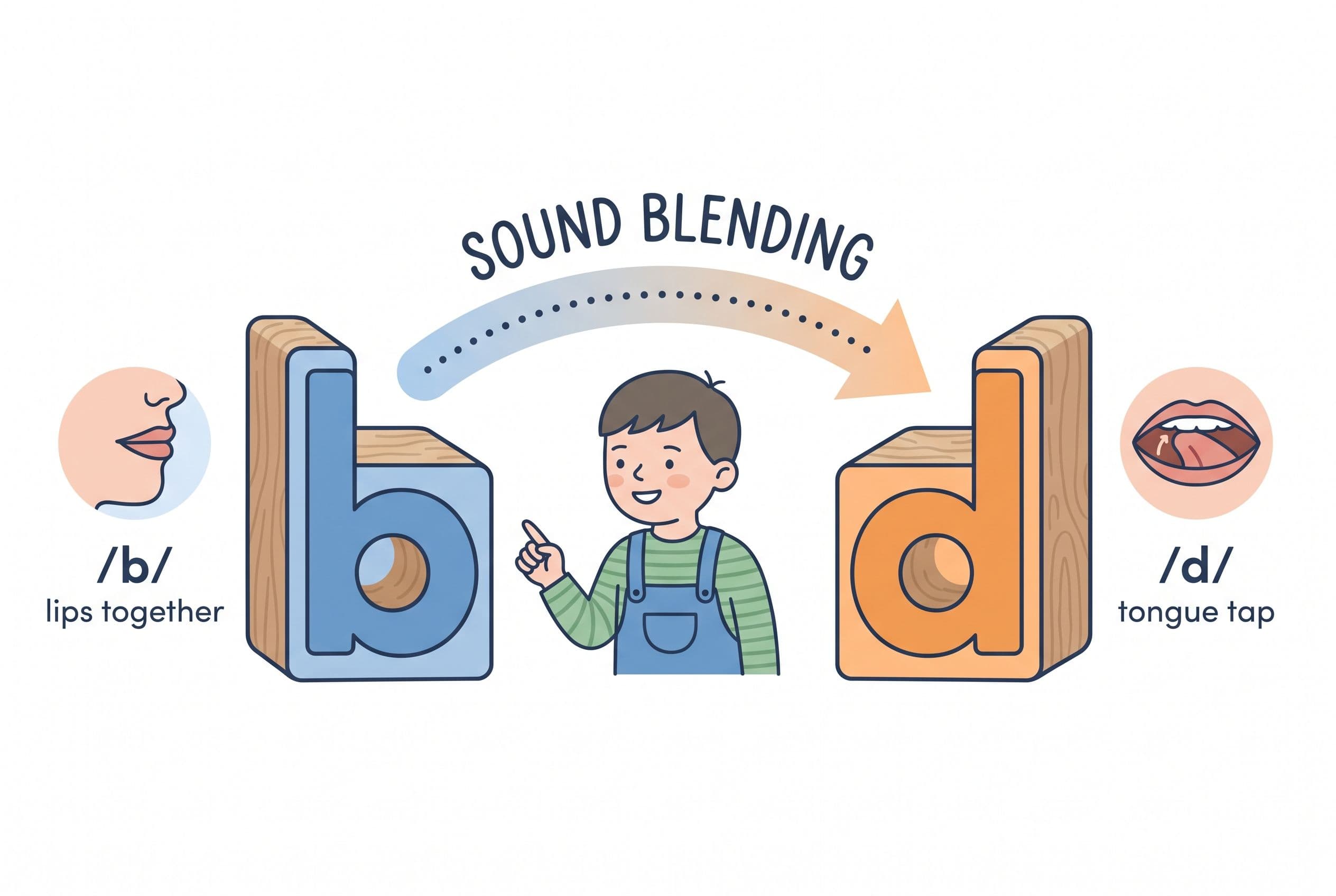
- /b/ starts with lips together and a little pop
- /d/ starts with the tongue tapping behind the teeth
- bat has /b/ /a/ /t/
- dad has /d/ /a/ /d/
That’s the real deal. Mouth, sound, symbol, blend.
Teach Your Kid to Read uses systematic synthetic phonics, which means kids learn the code in an organized sequence. They don’t memorize random sight words all day. They don’t guess from illustrations. They practice sound-by-sound reading until the brain starts building orthographic mapping — the process David Kilpatrick explains in Equipped for Reading Success (2016), where words become stored for fast retrieval after kids connect sounds to spellings.
This matters for b and d reversal help because I’m not just looking at whether the letter is flipped. Reversals can come from directionality and letter-formation confusion, but when they appear with guessing and weak decoding, I look hard at sound-symbol mapping too. If the child only half-knows the word, the letters float around like alphabet soup.
The app works best for:
- Preschoolers ready for letter sounds
- Kindergarten (age 5) kids who need a stronger Foundation
- 1st grade (ages 6-7) kids guessing at words
- 2nd grade (ages 7-8) kids with dyslexia signs or slow decoding
- Parents who need a daily Drill without turning into a frazzled worksheet goblin
The pricing is honest: lesson one is free with no card and nothing to cancel; from lesson two the whole program is a 7-day free trial, then US$9.95 a month.
Bottom line: if you want a phonics app for struggling readers that puts decoding first, this is the app I’d start with.
#2 Nessy Reading & Spelling: Best Dyslexia-Friendly Backup
Nessy has a long reputation with dyslexia support, and I like that it uses structured phonics, spelling, and memory supports. It feels playful, but underneath the games, it does teach real reading skills.
For a child with persistent reversals, weak spelling, slow naming, or family history of dyslexia, Nessy can help. It gives kids extra repetition without making them feel like they’ve been sentenced to reading jail.
That said, parents still need to watch the lesson sequence. Some kids click through game rewards faster than they absorb the sound-spelling pattern. If your child treats every app like a video game speedrun, sit next to them. Yes, really.
Use Nessy if:
- Your child already shows dyslexia signs
- You want a dyslexia-friendly design
- Your child needs spelling plus reading practice
- You can supervise lessons a few times a week
I’d still pair it with age-appropriate screening through school staff or a qualified evaluator if the struggle is sticking. The PAST — the Phonological Awareness Screening Test by Kilpatrick — can show where the sound-level breakdown sits, but it doesn’t diagnose dyslexia and it doesn’t rule dyslexia out. Fancy? No. Useful when interpreted correctly? Hands down.
#3 Reading Eggs: Best for Motivation, With Parent Supervision
Reading Eggs has bright games, rewards, and lots of early literacy practice. Many kids like it. I get why parents buy it.
But here’s the kicker: a fun app can hide weak decoding.
If your child racks up badges but still reads bog as dog, the app isn’t fixing the problem fast enough. You need to listen to actual oral reading. Put your coffee down, sit beside the child, and ask them to sound out the word.
Reading Eggs can work for:
- Preschoolers learning letters
- Kindergarten (age 5) kids who like game-based practice
- Families who need an engaging add-on
I would not use it as my only reading app for dyslexia signs if your child shows strong red flags. Use it for practice, not diagnosis, not full intervention.
#4 Lexia Core5: Best School-Based Option
Lexia Core5 appears in many schools and gives structured practice across phonics, vocabulary, fluency, and comprehension. It’s more serious than many apps, and some schools use it as part of intervention.
The downside? Parents often can’t just buy it easily for home use because schools usually manage access.
If your school uses Lexia, ask for reports. Don’t just accept, “They’re working on the computer.” Ask:
- Which level is my child on?
- Are they stuck on phonological awareness?
- Are they making progress in decoding?
- How many minutes per week do they use it?
- What skills transfer to real books?
Real talk — screen time isn’t instruction unless the child improves. Independence matters, but Mastery matters more.
#5 Khan Academy Kids: Best Free Early Practice
Khan Academy Kids is free, gentle, and useful for young children building early literacy habits. I like it for preschool and pre-reading exposure.
But if your child has serious letter reversals, slow decoding, or possible dyslexia signs, Khan Academy Kids won’t give enough targeted phonics intervention by itself.
Use it for:
- Letter recognition
- Early vocabulary
- Story engagement
- Preschool practice
Don’t use it as your main plan for a struggling 7-year-old. That’s like bringing a pool noodle to a riptide.
Apps I’d Be Careful With
I’m not naming every app in the app store because we all have laundry to fold and children asking for snacks every eight seconds.
But watch for these red flags:
- Leveled readers that encourage picture guessing
- “Read the whole sentence and think what makes sense” prompts
- Rewards that distract from actual reading
- Random sight-word memorization with no phonics pattern
- No oral blending practice
- No spelling or dictation component
Fountas & Pinnell levels still float around many schools, but that system comes from a whole-language aligned world. If your child struggles, I’d rather see decodable readers from sources like Flyleaf Publishing or High Noon Books than leveled books that push guessing.
Dyslexia Signs vs Normal Letter Reversals
Letter reversals alone don’t diagnose dyslexia. Let me repeat that before someone’s auntie panics in the group chat.
But reversals plus decoding weakness? Pay attention.
Watch for these dyslexia signs
Use this mini dyslexia screening checklist as a parent gut-check — not a diagnosis, not a validated home test, and not a reason to play pretend-professional with a clipboard:
- Trouble rhyming after age 4
- Difficulty clapping syllables
- Can’t isolate the first sound in words
- Confuses similar sounds like /b/ and /d/
- Struggles to blend sounds into words
- Reads the same word correctly once, then misses it two lines later
- Guesses from pictures
- Avoids reading
- Has a family history of dyslexia
- Spells wildly, even with common words
The International Dyslexia Association has parent-friendly information on dyslexia, and Understood.org also explains signs in plain language. If your gut says something’s off, don’t wait six months because someone told you “boys are slower” or “she’s just creative.” Nope.
Ask for screening. DIBELS, AIMSweb, and PALS are school reading screeners or progress-monitoring tools. The PAST looks at phonological awareness. None of these alone diagnoses dyslexia, and none of them catches every possible reason a child is struggling. You want trained school staff or a qualified evaluator to pick age-appropriate tools, explain the results, and connect the dots.
And no, you don’t have to wait until age 7 if the signs are loud, there’s family history, or your child is already miserable. Practice can start now. Support requests can start now too. We can walk and chew gum, people.
If you’re in the US, your school process will differ by state. If you’re in the UK, Australia, Canada, or New Zealand, use your local school support pathway, but keep the same goal: identify the weak reading subskill and attack it.
The Action Step: What to Do This Week
Here’s your no-drama plan. Do it this week, not “someday after soccer season.”
-
Listen to your child read 10 words aloud
Use simple CVC words: bat, bad, dab, bed, bid, big, dig, dog, bog, bag. -
Mark the errors
Write down every b/d mix-up, vowel error, guess, or skipped sound. -
Test sound awareness
Ask: “What’s the first sound in bat?” “What are the sounds in dog?” If they can’t answer, you’re dealing with phonemic awareness, not just reversals. -
Start a real phonics routine
Use Teach Your Kid to Read for 10-15 minutes a day. Lesson one is free with no card and nothing to cancel; from lesson two the whole program is a 7-day free trial, then US$9.95 a month. -
Add two letter reversal activities
Try sky-writing b and d while saying the sound, then build words with magnetic letters. Keep it short. Keep it accurate. -
Check progress after 14 days
Your child doesn’t need perfection. You want fewer guesses, better left-to-right print reading, and more sound-by-sound decoding. -
Screen if the struggle sticks
If your child is 7 or older and still can’t decode simple words after daily practice, ask about DIBELS, PAST, or a full dyslexia evaluation. If your child is younger but the red flags are stacking up, ask sooner. Don’t wait for the reading fire to spread to the curtains.
My Final Take
The best reading app for letter reversals isn’t the cutest app. It’s the one that makes your child stop guessing and start decoding.
Teach Your Kid to Read wins for me because it keeps the main thing the main thing: phonics, blending, accuracy, and daily practice. That’s the Foundation. That’s the Skill. That’s the non-negotiable.
If your child reverses letters but reads accurately, breathe. Practice handwriting and keep moving.
If your child reverses letters and guesses at words? Start today. We Never Skip.
FAQ
What is the best reading app for letter reversals?
Teach Your Kid to Read is my top pick because it teaches systematic synthetic phonics and discourages guessing. Letter reversals may need directionality and handwriting practice too, but when reversals show up with weak decoding, kids need stronger sound-symbol mapping, left-to-right print reading, and decoding accuracy.
Do b and d reversals mean my child has dyslexia?
Not always. Many young children reverse letters. But if reversals come with poor rhyming, weak blending, slow decoding, guessing, or reading avoidance, use a dyslexia screening checklist as a discussion starter and ask about tools like DIBELS or the PAST. Those tools don’t diagnose dyslexia by themselves, but they can help show what needs a closer look.
What age should letter reversals stop?
Some reversals can appear through age 7. But by 2nd grade (ages 7-8), frequent reversals plus reading trouble deserve attention. Don’t panic, but don’t ignore it.
Can an app replace a reading tutor?
Sometimes an app gives enough daily phonics practice for mild struggles. For dyslexia, severe decoding delays, or no progress after consistent practice, your child may need a trained tutor using Orton-Gillingham, Wilson Reading System, Barton Reading & Spelling, or another structured literacy approach.
What letter reversal activities actually help?
Use sound-based activities: say the sound, trace the letter, build a word, read the word, spell the word. Avoid relying only on visual tricks. The child needs to connect speech sounds to print.
Part of these guides

Xia Brody
Co-Founder, Teach Your Kid to Read
Mom of 4 who has successfully taught her kids to read. Currently in the trenches with her 4-year-old while her two oldest (10 and 7) devour books on their own. Passionate about phonics-based methods and building a lifelong love of reading.
Related Articles
Best Reading App for a 4-Year-Old with Dyslexia Signs: My Top Pick
If your 4-year-old mixes up sounds, guesses from pictures, or avoids letters, don’t wait and see. Here’s my tiger-mom ranking of reading apps that help — and the ones I’d skip.
Read More →
Best Reading App for a 5-Year-Old with Dyslexia: 2026 Picks
A dyslexic 5-year-old doesn't need guessing games or pretty animations. They need systematic phonics, daily drill, parent coaching, and a plan that refuses to wait.
Read More →
Reading Eggs vs ABCmouse for Dyslexia: Parent Pick
Choosing between Reading Eggs and ABCmouse for a child with dyslexia signs? I’m comparing them as a phonics mom, not a sticker-chart enthusiast. Here’s the no-nonsense 2026 pick.
Read More →