Best Reading App for 5-Year-Olds: 6 Tested in 2026 (Honest Reviews)
What You'll Learn
- Why most top-rated reading apps fail the Science of Reading test — and the one red flag that exposes a bad app in 30 seconds
- The specific phonics features a reading app MUST have if you want your 5-year-old actually decoding words (not memorizing pictures)
- 6 popular reading apps ranked honestly — including which ones I'd never let my kids touch again
- The exact daily routine I use to combine app-based practice with real phonics instruction for my 4-year-old
The Playground Conversation That Changed a Mom's Mind
I was at a playground in Raleigh last spring when another mom — let's call her Sarah — told me her kid's school had just switched from Lucy Calkins to a Science of Reading curriculum because of North Carolina's SB 387, the Excellent Public Schools Act. She was confused and honestly kind of annoyed. "He was doing fine before," she said.
I asked if her kid could read the word "splint." He's in second grade. He could not.
He stared at it. He looked at me for help. He guessed "split." Then "spent." Then he just shrugged.
I spent 20 minutes on that playground bench explaining why the switch was happening — Emily Hanford's APM Reports investigation "Sold a Story" that blew the lid off Balanced Literacy, the NAEP data showing only 33% of 4th graders read at proficient level, the neuroscience from Stanislas Dehaene's lab showing the brain doesn't learn to read naturally. Sarah went home and watched the "Sold a Story" podcast that night. Texted me at 11pm: "I had no idea. Why didn't anyone tell us this sooner?"
Here's the kicker. Sarah's son had been using one of the most popular reading apps on the market for over a year. Five stars. Millions of downloads. And the kid couldn't decode a five-letter consonant blend.
That conversation is exactly why I wrote this post. Because the App Store ratings are lying to you. A fun animation and a catchy jingle don't teach reading. Systematic synthetic phonics teaches reading. And most apps don't use it.
The 5-Year-Old Reading Crisis Nobody Talks About
Let me hit you with the ugly truth.
The 2022 NAEP scores — that's the Nation's Report Card — showed reading scores dropped 3 points since 2019. That's the largest decline in 30 years. And that was before factoring in the kids who are now 5 and entering kindergarten with even less preparation thanks to pandemic-era disruptions.
The Annie E. Casey Foundation's 2010 report ("Early Warning! Why Reading by the End of Third Grade Matters") found that kids who couldn't read at grade level by 3rd grade were significantly more likely to drop out of high school — with the highest risk among low-income students who lacked proficient reading skills. The exact magnitude depends on demographics and how "grade-level reading" is defined, but the direction is clear: kids who can't decode early face dramatically worse outcomes later. And the average remedial reading program costs $10,000-$15,000 per year — and insurance doesn't cover it.
Your 5-year-old is sitting at the single most important inflection point of their entire academic life. Right now. This year.
And you're going to hand them an iPad app and hope for the best?
No. You're going to hand them the RIGHT app — one built on actual reading science — and you're going to pair it with real instruction. That's the plan.
What Makes a Reading App Actually Work (The Non-Negotiable Checklist)
Before I get into the rankings, you need to know what separates a real phonics app from digital candy. I evaluate every app against the same checklist, and it's based on what the National Reading Panel identified as the five pillars of reading instruction in their 2000 report — the one Congress actually commissioned.
Here's my non-negotiable list:
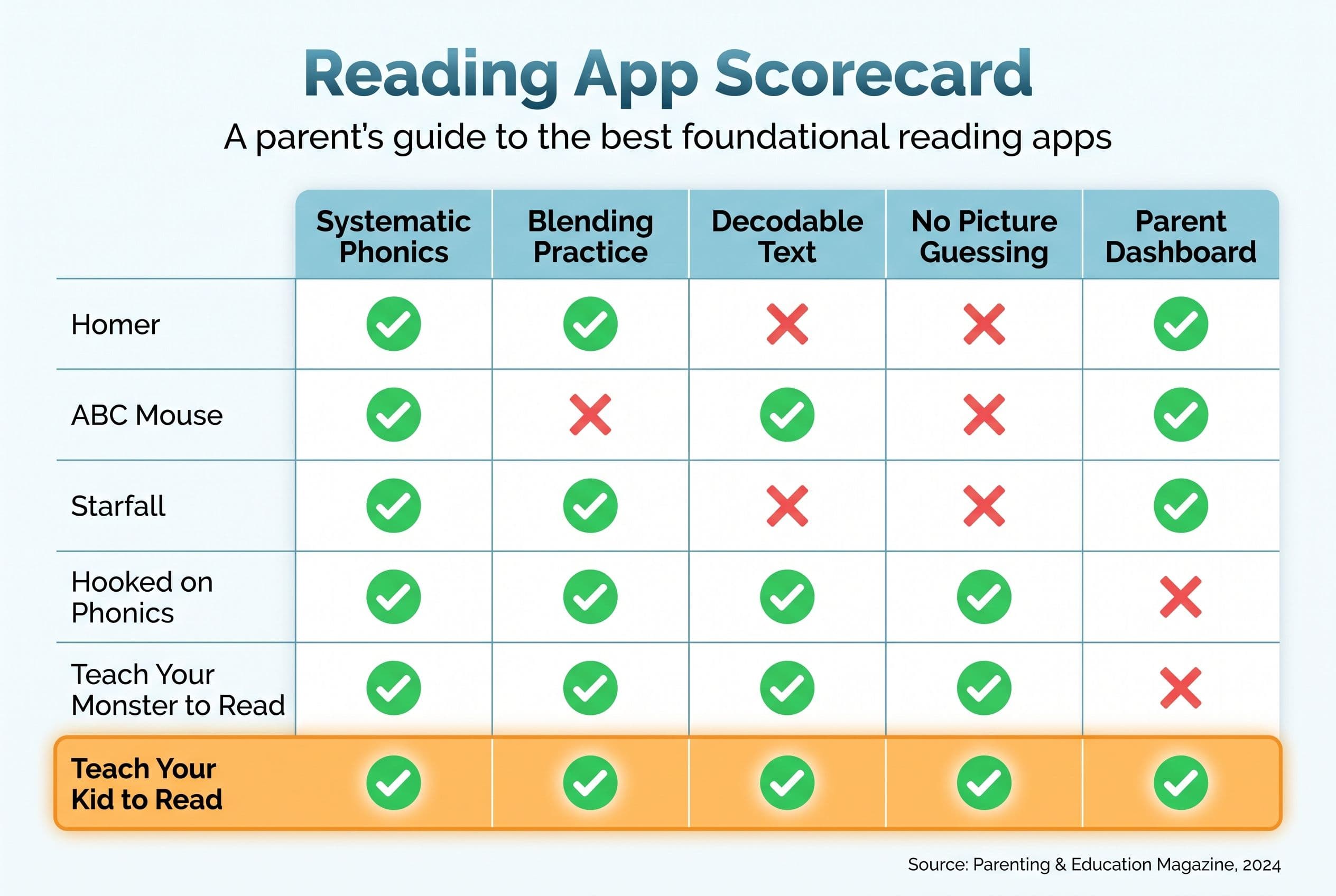
1. Systematic Synthetic Phonics Sequence
The app must teach letter-sound correspondences (grapheme-phoneme correspondences, if you want the technical term) in a deliberate, sequential order. Not random. Not "whatever letter the kid clicks on." A structured scope and sequence, the same way programs like UFLI Foundations or Fundations do it in classrooms.
Red flag you can spot in 30 seconds: Open the app. Does it let your kid skip ahead to any lesson? Does it start with whole words or sight words before teaching individual sounds? Close it. Delete it.
2. Blending Practice (Not Guessing)
The app must require kids to blend sounds together to form words. C-A-T becomes "cat" through blending, not through looking at a picture of a cat and guessing.
Mark Seidenberg's "Language at the Speed of Sight" (2017) — he's a University of Wisconsin cognitive scientist — called out the entire reading education establishment for letting kids guess from context clues. A good app never lets them guess.
3. Decodable Text
After learning sounds, the app should present sentences and short stories made up ONLY of patterns the child has already been taught. This is what David Kilpatrick's orthographic mapping research explains — kids build permanent word memories by successfully decoding words multiple times, not by memorizing them as whole shapes.
4. No Picture-Based Guessing
If the app shows a picture of a dog next to the word "dog" and counts it as "reading" when your kid taps it — that's not reading. That's a matching game. Real talk: Linnea Ehri's phases of word reading development (from her 2005 meta-analysis) show that kids in the pre-alphabetic phase "read" by memorizing visual cues like pictures and word shapes. A good app pushes them OUT of that phase, not deeper into it.
5. Progress Tracking You Can Actually Use
Can you see exactly which sounds your kid has mastered and which ones they're struggling with? If the app just shows you stars and trophies, it's hiding the data that matters.
The 6 Reading Apps I Tested — Ranked Honestly
I downloaded and tested each of these apps with my 4-year-old (who's working at a 5-year-old level — tiger mom, remember?) over the past three months. I'm ranking them from worst to best based on my non-negotiable checklist above.
I'm not getting paid by any of these companies. I paid for every subscription out of pocket. These are my honest opinions.
6. Homer (Now "Learn with Homer") — Pretty but Problematic
What it gets right: Beautiful design. Kids love the stories. The art is genuinely impressive.
What it gets wrong: Homer mixes sight-word memorization with phonics in a way that feels a lot like Balanced Literacy wearing a tech hoodie. My daughter was "reading" stories by memorizing high-frequency words and guessing from illustrations within the first week. That's not reading — that's the exact pattern Sarah's son at the playground was stuck in.
The bottom line: Homer prioritizes engagement metrics over reading science. Your kid will love it. They won't learn to decode from it.
Phonics Score: 4/10
5. ABC Mouse — The Arcade With a Reading Section
What it gets right: Massive amount of content. Covers multiple subjects. Kids can use it independently.
What it gets wrong: ABC Mouse is a mile wide and an inch deep on phonics. The reading activities are scattered across a giant game world with no systematic sequence. My daughter spent 40 minutes one afternoon earning virtual tickets to "decorate her classroom" and touched exactly zero phonics content. I timed it.
The bottom line: If you want a general educational app, fine. If you want a reading app for your 5-year-old? This isn't it.
Phonics Score: 3/10
4. Starfall — Solid Foundation, Dated Execution
What it gets right: Starfall has been around since 2002, and its phonics sequence is genuinely systematic. It teaches letter-sound correspondences in order and includes blending practice. The "Learn to Read" section follows a real scope and sequence.
What it gets wrong: The app feels like it hasn't been updated since the Bush administration. The interface is clunky, the animations are stiff, and keeping a 5-year-old engaged for more than 8-10 minutes is a battle. Also, some sections lean on picture cues more than I'd like.
The bottom line: The bones are good. The execution is showing its age. If your kid doesn't mind the dated look, there's real phonics instruction here.
Phonics Score: 6/10
3. Hooked on Phonics — The Legacy Brand That Mostly Delivers
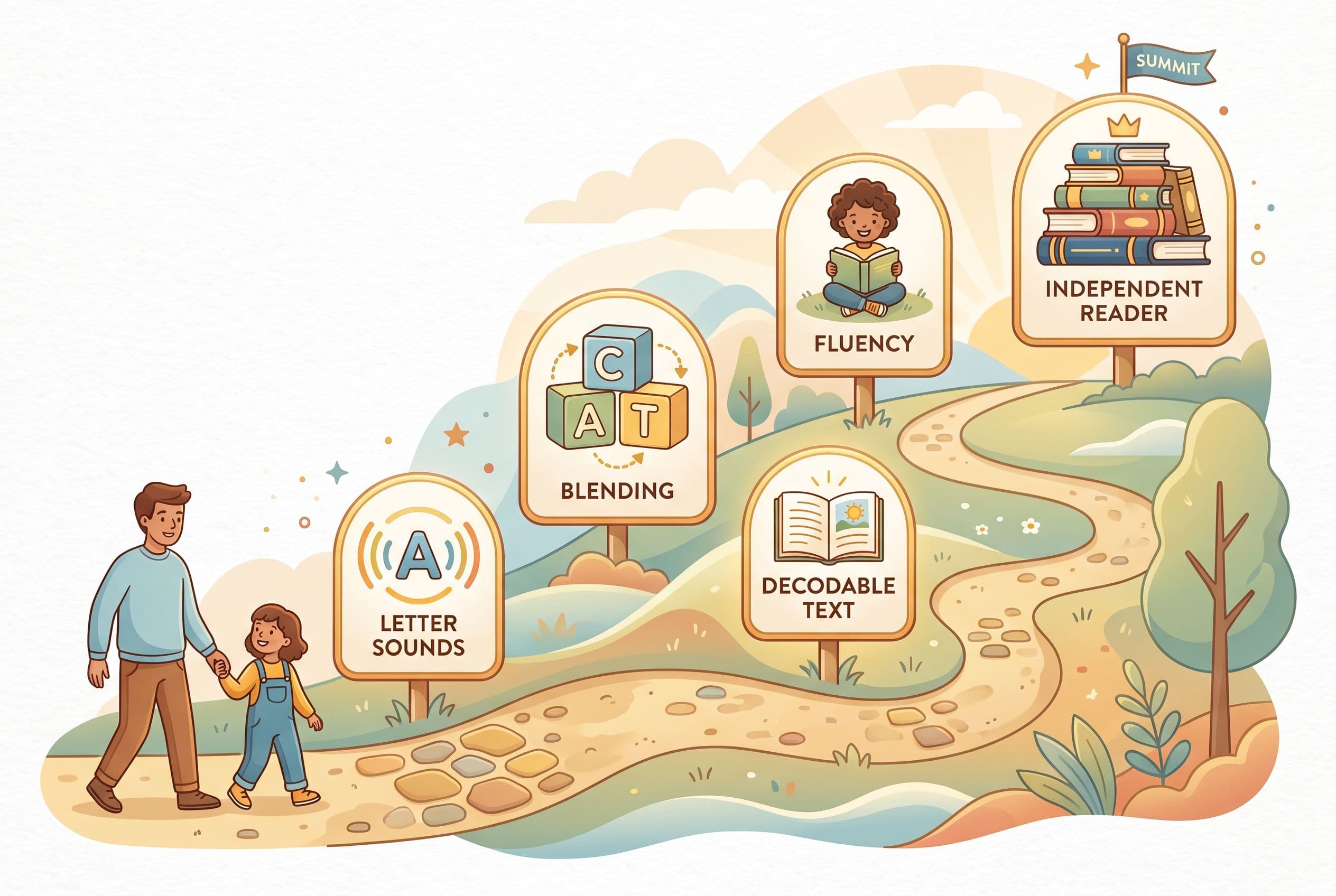
What it gets right: Strong systematic phonics sequence. Real decodable readers built into the app. The lessons follow a clear progression from letter sounds → blending → CVC words → digraphs → blends. It also separates "learning" from "practice" in a way that makes sense.
What it gets wrong: Some of the sight word integration happens too early in the sequence for my taste. The app also uses a reward system (stickers, songs) that can become the focus instead of the reading. I caught my daughter tapping through a lesson as fast as possible to get to the "celebration" screen.
The bottom line: A solid choice. Not perfect, but it's built on real phonics principles and has decades of brand history backing the methodology.
Phonics Score: 7/10
2. Teach Your Monster to Read — Surprisingly Strong
What it gets right: This UK-based app was developed with support from actual reading researchers, and it shows. The phonics progression follows a synthetic phonics model similar to what the Clackmannanshire study (Johnston & Watson, 2005) validated — that seven-year longitudinal study out of Scotland showed synthetic phonics kids outperformed analytic phonics kids across the board. The app requires real blending, uses decodable text, and doesn't let kids skip the hard parts.
What it gets wrong: The monster-building game mechanic can distract some kids. The free version has enough content to evaluate, but the full experience requires purchase. Also, the British English phonics sequence doesn't perfectly align with American English vowel sounds in a few spots.
The bottom line: One of the best pure phonics apps on the market. The game layer is well-designed enough to keep kids engaged without replacing the instruction.
Phonics Score: 8/10
1. Teach Your Kid to Read — The One I Actually Use
I know, I know. I'm biased. I co-founded this app. But here's the thing — I co-founded it BECAUSE nothing else on the market met my standards as both a reading specialist and a mom in the trenches.
What it gets right: Everything on my non-negotiable checklist.
- Systematic synthetic phonics with a structured scope and sequence based on Orton-Gillingham principles
- Pure blending practice — no picture-based guessing, ever
- Decodable text that uses ONLY the patterns your child has already mastered
- Orthographic mapping built in — the app uses the same principles David Kilpatrick describes in "Equipped for Reading Success" (2016) to help kids build permanent word memories through repeated, successful decoding
- Parent dashboard that shows you exactly which grapheme-phoneme correspondences your child has mastered, which ones need more practice, and what's coming next
What makes it different: Most reading apps are built by game developers who consulted a reading expert for an afternoon. Teach Your Kid to Read was built by reading educators who hired game developers. The priorities are flipped. Mastery comes first. Engagement serves the instruction, not the other way around.
The bottom line: This is the app I use with my own 4-year-old. Every single day. Including birthdays and holidays. (Tiger Rules: We Never Skip.)
Phonics Score: 10/10
The "But My Kid Loves [Other App]" Problem
I hear this constantly. "But she loves Homer!" "He asks to play ABC Mouse every day!"
Great. Your kid also loves ice cream for dinner.
Loving an app and learning to read from an app are two completely different things. Stanislas Dehaene's "Reading in the Brain" (2009) proved that the brain has to be deliberately TRAINED to read — it doesn't happen naturally the way speech does. Reading requires explicit instruction that rewires the visual cortex to recognize letter patterns. A game that makes your kid feel like they're reading isn't the same as an app that actually teaches the decoding process.
Here's my test. After your kid has used a reading app for two weeks, write a CVC word they've never seen before on a piece of paper — something like "hep" or "vun" (nonsense words work even better because they CAN'T guess from memory). Hand it to your kid. Can they sound it out?
If yes? The app is working.
If no? The app is babysitting.
This is basically a homemade version of what DIBELS nonsense word fluency (NWF) measures. Benchmark targets vary depending on which edition your school uses (DIBELS 6th vs. 8th), the specific subscore (Correct Letter Sounds vs. Whole Words Read), and the time of year (beginning, middle, or end of kindergarten). Don't try to memorize one magic number — ask your kid's teacher for the school's benchmark table so you're comparing apples to apples. The point is the same: if your kid can't sound out unfamiliar letter combinations after weeks on a reading app, that app isn't teaching decoding.
My Exact Daily Routine: App + Real Instruction
An app alone isn't enough. I don't care how good it is. Here's my daily routine with my 4-year-old, and you can adapt this for any 5-year-old:
Morning (10 minutes at the kitchen table):
- 2 minutes: Review yesterday's sounds with flashcards. I use physical cards — not a screen. She says the sound, not the letter name.
- 3 minutes: Introduce one new grapheme-phoneme correspondence. Right now we're on digraphs (sh, ch, th). I say it, she repeats it, I show her three words that use it.
- 5 minutes: She reads a decodable sentence or short passage using only patterns she's mastered. No guessing. If she gets stuck, she goes back to the individual sounds.
Afternoon (15 minutes on the app — Teach Your Kid to Read):
- She works through the app's lesson for the day. It reinforces the same sounds I introduced in the morning. The app handles the blending practice and decodable text while I fold laundry or wrangle the 1-year-old.
- I check the parent dashboard to see where she struggled.
Bedtime (10 minutes):
- I read aloud to her — something above her independent level, with rich vocabulary. Right now we're reading "Charlotte's Web." This builds the language comprehension side of Scarborough's Reading Rope while the phonics work builds the word recognition side.
Total daily commitment: 35 minutes. That's it. We do this every day. Birthdays, Christmas, vacation. We Never Skip.
Why State Laws Are Forcing the Same Shift
That mom in Raleigh was annoyed her kid's school switched curricula. But 40+ states have now passed Science of Reading legislation since 2019 because the old methods were failing kids at catastrophic rates.
Mississippi's Literacy-Based Promotion Act of 2013 is the gold standard example. They went from 49th to 21st in national reading scores in six years after mandating evidence-based phonics instruction. Six years. That's not a fluke — that's what happens when you stop letting kids guess and start teaching them to decode.
Ohio's Third Grade Reading Guarantee holds kids back if they can't read at grade level by 3rd grade. Florida's 3rd grade retention policy does the same thing. These states aren't being mean. They're being honest: if your kid can't read by 3rd grade, promoting them to 4th grade doesn't help. It buries them.
The schools are finally catching up to the science. Your reading app should be ahead of it.
How to Evaluate Any Reading App in 5 Minutes
You don't need to be a reading specialist. Just run through this checklist:
- Open the app and start Lesson 1. Does it teach a letter sound first, or does it jump to whole words? (Sound first = good.)
- Look for blending. Does the app ask your child to push sounds together (c-a-t → cat), or does it just show the word and say it? (Blending practice = good.)
- Check for picture cues. Are there pictures next to the words your kid is "reading"? Cover the pictures. Can they still read the words? (No picture dependency = good.)
- Try to skip ahead. Can your kid jump to any lesson, or does the app require mastery before moving on? (Locked progression = good.)
- Find the parent dashboard. Can you see which specific sounds your kid knows and which they don't? (Real data = good. Stars and trophies only = bad.)
If an app fails more than one of these? Delete it. I'm serious. A bad reading app is worse than no app at all, because it teaches your kid to fake-read — and unlearning bad habits is harder than learning the right way from scratch.
The App That Checks Every Box
Look, I tested six apps for this article. I spent three months and an embarrassing amount of money on subscriptions. And the pattern was clear: most reading apps are built to keep kids tapping, not to teach them to read.
Teach Your Kid to Read is different because it was built on the same Orton-Gillingham principles that programs like the Wilson Reading System and Barton Reading & Spelling use for struggling readers — except we built it for EARLY readers, before they ever fall behind. Prevention, not remediation.
Here's the reality: earlier is easier, and catching up later is harder. By 3rd grade, the text demands at school ramp up fast — kids shift from "learning to read" to "reading to learn," and if the decoding skills aren't there, every subject suffers. That's the 3rd Grade Cliff, and it's not a biological deadline, but it is a very real schooling cliff where the gap between strong decoders and struggling readers starts to widen fast.
Here's your action step:
- Download Teach Your Kid to Read at start lesson one free
- Set up 15 minutes a day — non-negotiable, no exceptions
- Use the parent dashboard to track mastery of each grapheme-phoneme correspondence
- Supplement with 10 minutes of physical flashcard review and 10 minutes of read-aloud time
- If you want to benchmark your kid's progress, ask their kindergarten teacher about their DIBELS scores, or administer Kilpatrick's PAST test yourself — it takes about 5 minutes and tells you exactly where the phonological breakdown is
Questions? Call us at (407) 707-6850 or visit contact us today. We're real people. I might literally answer the phone while my 1-year-old screams in the background.
Frequently Asked Questions
Can a 5-year-old really learn to read from an app?
Yes — IF the app uses systematic synthetic phonics and your child has adult support alongside it. An app alone isn't a teacher. Think of it as a practice tool, like a piano practice app. You still need someone showing them proper technique. The app handles repetition and reinforcement, which is actually what it's best at. The National Reading Panel's 2000 report confirmed that systematic phonics instruction produces significant benefits for kids in kindergarten through 6th grade — the delivery method (human, app, or both) matters less than the method being systematic.
How much screen time should I allow for a reading app?
I cap app-based phonics practice at 15 minutes per day for my 4-year-old. The American Academy of Pediatrics recommends no more than one hour of total screen time for kids ages 2-5, so you need to budget. But here's my stance: 15 minutes of structured phonics practice on a quality app is radically different from 15 minutes of YouTube. Not all screen time is equal. Use your allotment wisely.
My kid's school already uses a phonics program. Do they still need an app?
Depends on the program. If the school uses UFLI Foundations, Fundations, or another evidence-based systematic phonics curriculum, an app at home provides valuable extra practice — repetition is how orthographic mapping works. But if the school is still using Fountas & Pinnell leveled readers or a Balanced Literacy framework (ask!), then yes, your kid absolutely needs phonics instruction at home to fill the gap. The app becomes the main course, not a side dish.
What if my 5-year-old resists phonics and just wants to play games?
Tiger Rule: We Never Skip. But we do make it brief and non-negotiable. I don't negotiate with my 4-year-old about whether we practice sounds today. I negotiate about whether she gets chocolate milk or regular milk afterward. The practice happens. Period. Start with 5 minutes if 15 feels like too much. Build up. Consistency matters more than duration — practicing 5 minutes every day beats 30 minutes once a week, hands down.
How do I know if my child is behind in reading for their age?
By the end of kindergarten, your child should be able to identify all 26 letter sounds, blend CVC words (cat, sit, hop), and read simple decodable sentences. For DIBELS nonsense word fluency benchmarks, the specific target numbers depend on the edition your school uses (6th vs. 8th), the subscore being measured, and the time of year — so ask your kid's teacher for the school's benchmark table rather than relying on a single number you found online. If your kid is falling short of those benchmarks, don't wait and see. Get Kilpatrick's PAST test (Phonological Awareness Screening Test) — it takes 5 minutes, it's free to administer, and it tells you exactly which phonological processing skills are weak. Then start targeted practice immediately. Waiting is the worst thing you can do.
Part of these guides

Xia Brody
Co-Founder, Teach Your Kid to Read
Mom of 4 who has successfully taught her kids to read. Currently in the trenches with her 4-year-old while her two oldest (10 and 7) devour books on their own. Passionate about phonics-based methods and building a lifelong love of reading.
Related Articles
Best Phonics App for a 5-Year-Old: 5 Tested & Compared (2026)
Most 'phonics apps' for kindergarteners are glorified guessing games with cute animations. I tested 5 of the most popular ones with my own kids and broke down which ones actually teach systematic phonics — and which ones waste your child's time.
Read More →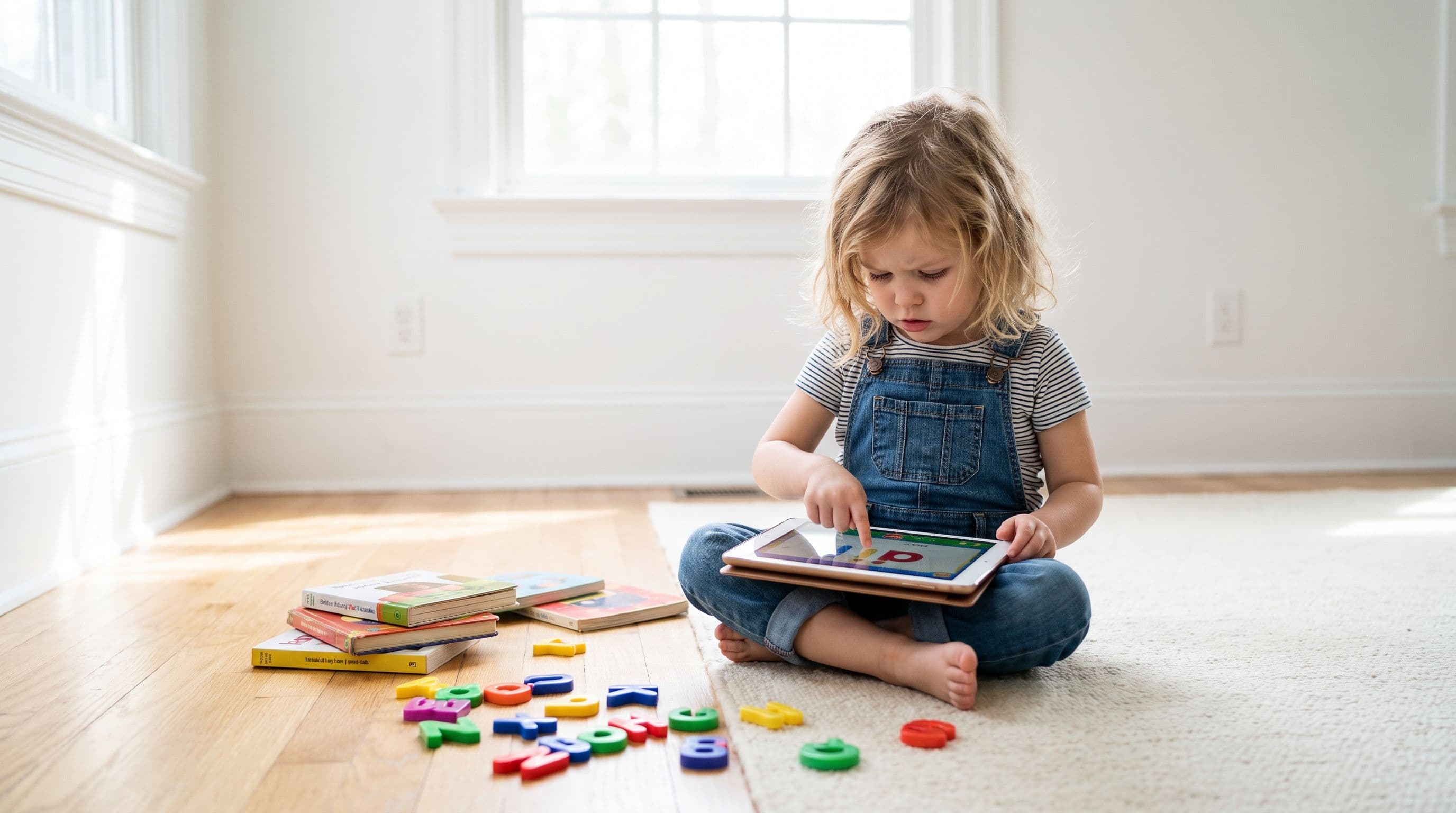
Reading Apps for 4-Year-Olds: 6 Worth Trying in 2026
Most 'educational' reading apps for 4-year-olds are glorified cartoons with a phonics sticker slapped on. Here are 6 that actually teach your kid to read — and the red flags that tell you an app is wasting your child's time.
Read More →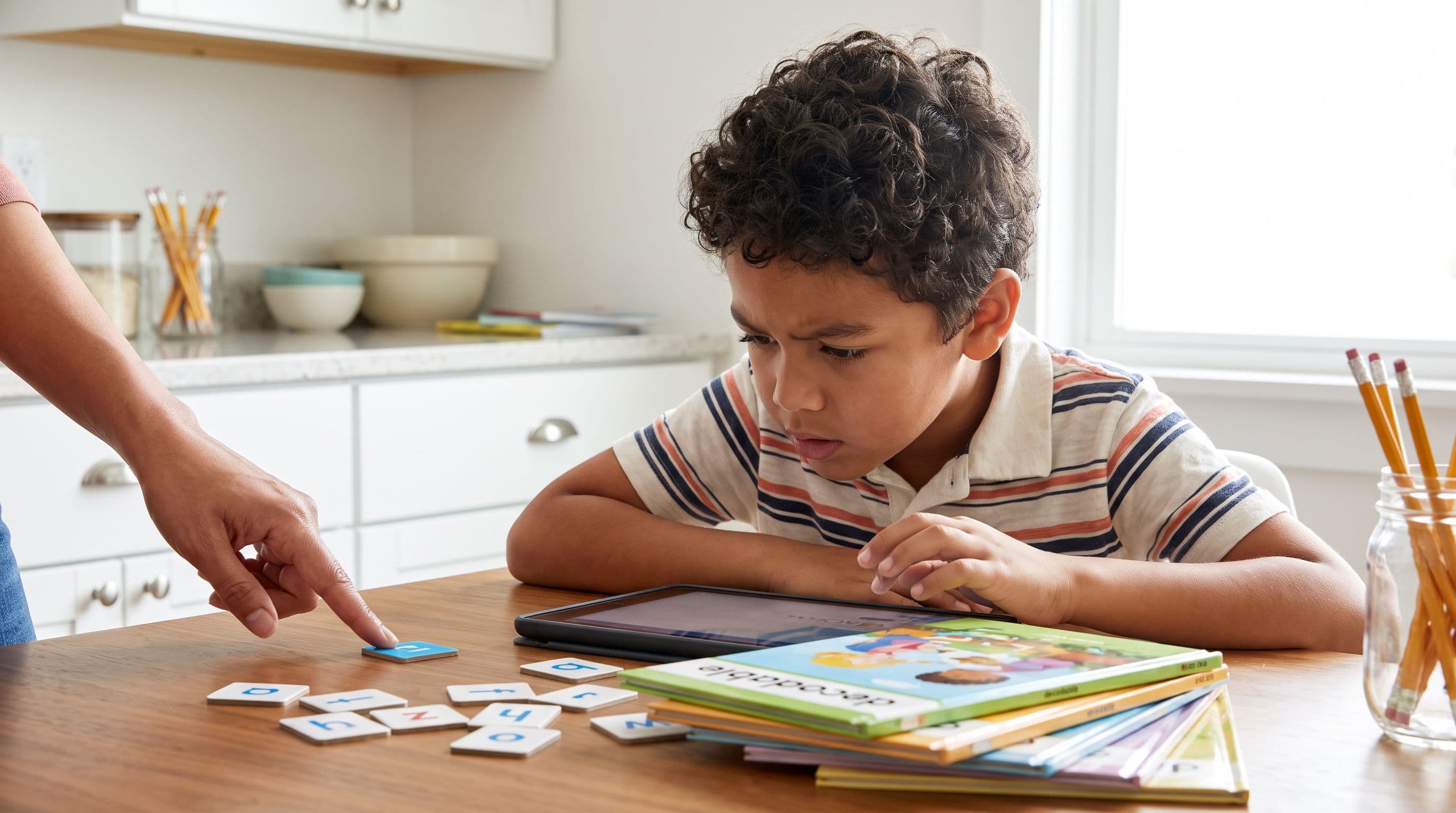
Reading Eggs vs ABCmouse for 5-Year-Olds: Best Pick
Choosing between Reading Eggs and ABCmouse? Here’s the no-fluff mom verdict on which app actually teaches a 5-year-old to read — and where both fall short.
Read More →