Best Phonics App for a 3-Year-Old: 5 Compared (2026)
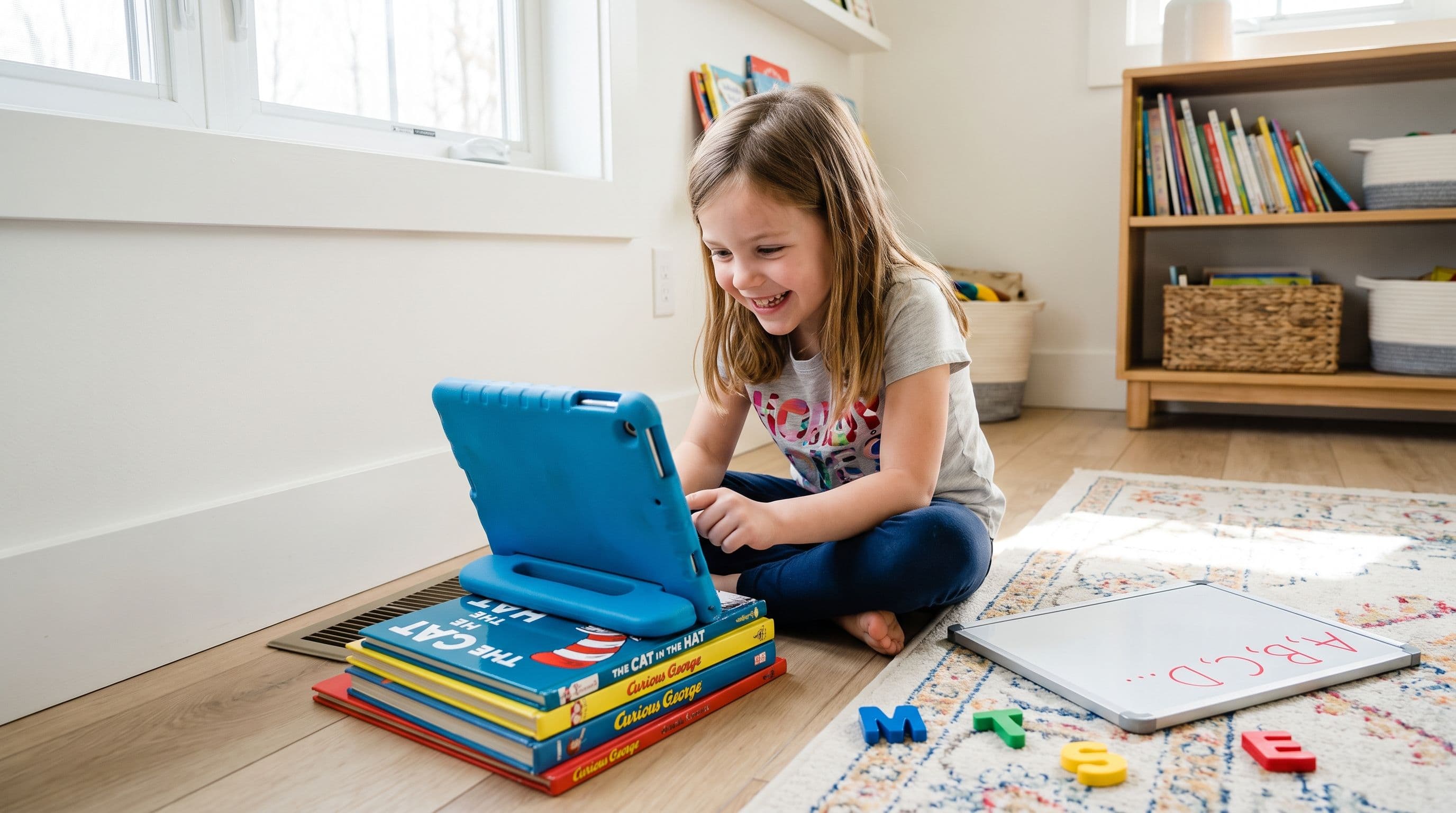
What You'll Learn
- Why 90% of "phonics apps" for 3-year-olds aren't actually teaching phonics — and the one red flag that tells you immediately
- The specific features a phonics app must have to align with the Science of Reading (hint: cute animal mascots don't count)
- 5 real apps compared, ranked by how well they teach letter-sound correspondence — not how well they entertain
- The exact daily routine I use to pair an app with real-world phonics practice so my 4-year-old actually retains what she learns
The Hard Truth About Phonics Apps for Toddlers
Let me save you some time. Most apps marketed as the "best phonics app for 3-year-olds" are not teaching your kid to read. They're teaching your kid to tap, swipe, and collect digital stickers while letter sounds play in the background like elevator music.
I've been there. When my oldest was 3, I downloaded every shiny app that promised early reading skills. She loved them. She could navigate the menus better than I could. She earned badges and unlocked characters and sang along with animated letter friends.
Know what she couldn't do after three months? Tell me the sound the letter B makes.
That was my wake-up call. And it should be yours.
Here's the thing — a 3-year-old's brain is at an incredible window for phonological development. Stanislas Dehaene's research in Reading in the Brain (2009) showed us that the brain doesn't learn to read naturally the way it learns to speak. Reading is a taught skill. The neural pathways that connect visual letter shapes to their sounds have to be built through explicit, systematic instruction. A 3-year-old playing a tap-the-letter game is not building those pathways. They're building hand-eye coordination, maybe. But not reading.
So when parents ask me, "What is the best phonics app for a 3-year-old?" — my first answer is always: it depends on whether the app actually teaches phonics or just uses the word "phonics" in the App Store description.
The 3rd Grade Cliff Starts Right Now
I know. Your kid is 3. Third grade feels like a lifetime away.
But the data doesn't care about feelings.
Only 33% of 4th graders read at proficient level on the 2022 NAEP — that's the Nation's Report Card. Two-thirds of American kids can't read well enough. And the 2023 NAEP scores showed reading dropped another 3 points since 2019 — the largest decline in 30 years.
Children who aren't reading proficiently by the end of 3rd grade face a dramatically higher risk of dropping out of high school — the Annie E. Casey Foundation's Double Jeopardy report found they were about four times more likely not to graduate on time compared to proficient readers. Four times.
And here's the kicker: by the time your kid is struggling in 2nd grade and the school finally says, "Let's get him tested," you've already lost years of that golden neurological window. Private Orton-Gillingham tutoring two to three times a week can run to thousands of dollars a year, and insurance doesn't cover most of it.
I'm not saying a phonics app at age 3 is a magic bullet. I'm saying that the right app — combined with real instruction — is how you make sure your kid never needs that kind of intervention.
That's the tiger mom math. And the math doesn't lie.
What a Real Phonics App Must Have (The Non-Negotiable Checklist)
Before I give you my ranked list, you need to know what to look for. Because the App Store is a minefield of "educational" apps that teach nothing.
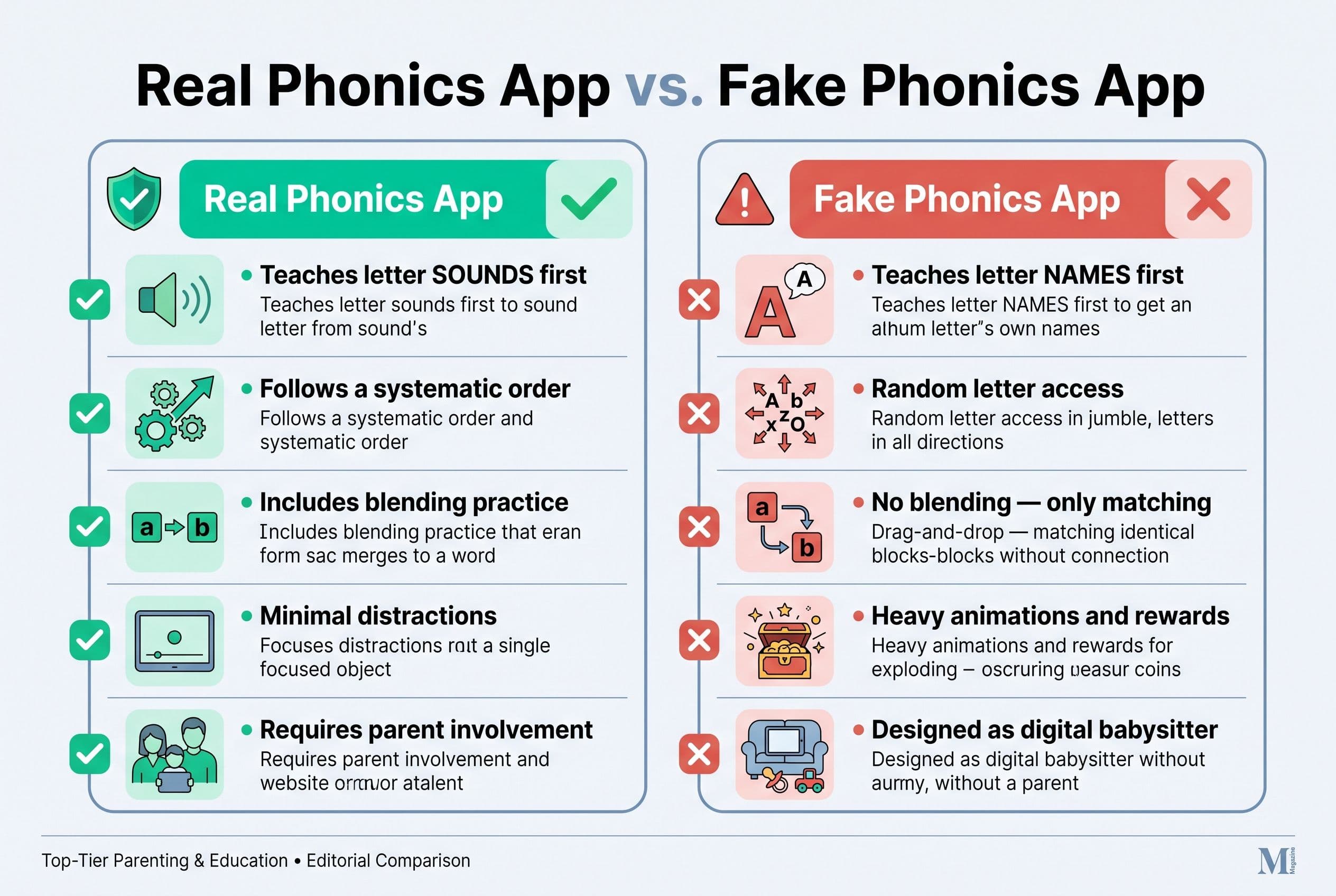
A legitimate phonics app for a 3-year-old must include:
1. Letter-sound instruction, not just letter-name instruction. Your kid knowing that the letter is "called" B is almost worthless for reading. They need to know it says /b/. If the app spends most of its time on the ABC song and letter names, delete it.
2. Systematic progression. It should teach sounds in a deliberate order — not randomly. The best apps follow something close to Orton-Gillingham sequencing, starting with the most common consonants and short vowels before moving to blends and digraphs. If your kid can access any letter at any time with no structure, that's a toy, not a teacher.
3. Blending practice. By 3, some kids can start blending two sounds together (/s/…/a/ → "sa") — though many will need months of individual sound work before they're ready for that step, and that's completely normal. If blending frustrates your child, stay with sound identification and oral blending games until it clicks. A good app will introduce blending early. If the app only does isolated letter sounds and never combines them, it's only doing half the job.
4. No picture-guessing. This one drives me crazy. If the app shows a picture of a ball and the letter B and your kid taps B because they see a ball — they haven't learned a thing. That's the exact guessing strategy that Emily Hanford's "Sold a Story" investigation exposed as junk science — prompting kids to guess words from pictures or context instead of sounding them out. Pictures aren't evil on their own — prompts that encourage guessing instead of decoding are the problem. A 3-year-old doesn't need to "use context clues." They need to learn sounds.
5. Minimal distractions. Every bouncing star, dancing unicorn, and reward animation is pulling your kid's attention away from the actual phonics content. I'm looking for clean, focused interfaces. Not digital carnivals.
How I Evaluated These 5 Apps
I compared these five apps on what each one says about its approach, its features and its teaching sequence. I looked at:
- Whether the app builds letter-sound recall that holds up without the app open
- Whether the app taught sounds or just names
- Whether it followed any systematic progression
- How many non-phonics elements compete for a child's attention
- How much a parent has to step in vs. the app doing the teaching
Short sessions matter here. (Three-year-olds have the attention span of a caffeinated squirrel. You work with what you've got.)
The 5 Best Phonics Apps for 3-Year-Olds in 2025, Ranked
1. Teach Your Kid to Read App — The One I Actually Use Daily
Ages: 2-7 | Price: Free to start | Platform: iOS and Android
Real talk — this is my app. My husband and I co-founded TeachYourKidToRead.org because nothing else on the market did what we needed. So yes, I'm biased. But I'm biased because I built the thing I couldn't find anywhere else.
The Teach Your Kid to Read app uses systematic synthetic phonics grounded in Orton-Gillingham principles. It doesn't start with letter names. It starts with letter sounds. It introduces them in a controlled sequence — the same sequence I used to teach my oldest two kids to read.
Here's what makes it different from everything else on this list: it's designed to be used with a parent. Not as a babysitter. Not as a "set it and forget it" screen time activity. It's a guided tool that puts you in the teaching seat and gives your kid structured practice.
For a 3-year-old, that matters enormously. David Kilpatrick's work on orthographic mapping — spelled out in Equipped for Reading Success (2016) — shows that lasting letter-sound connections require active, engaged practice with feedback. A 3-year-old tapping alone on a screen doesn't get that feedback loop. A 3-year-old working through sounds with Mom or Dad does.
Mei uses this app at the kitchen table most mornings. Ten minutes. We drill the sounds she's learned, she practices blending with my help, and then we're done. She's currently working on CVC blending — /c/…/a/…/t/ → "cat." Some mornings she nails it. Some mornings she cries because she wants to watch Bluey instead. We do it anyway. Tiger Rules: We Never Skip.
Pros:
- True systematic synthetic phonics
- Parent-guided (which means real learning happens)
- Clean interface, minimal distractions
- Follows Science of Reading principles
Cons:
- Requires parent involvement (some parents want an app that "does it for them" — this isn't that)
- Younger 3-year-olds may need to start with just letter-sound exposure before full lessons
2. Phonics Hero
Ages: 3-7 | Price: Limited free; subscription for full access | Platform: Web-based, iOS
Phonics Hero is one of the few apps that actually follows a systematic phonics scope and sequence. It was developed with input from reading specialists in Australia, and it aligns reasonably well with structured literacy principles.
What I like: it introduces sounds in a controlled order, it includes blending activities, and it has a parent dashboard that shows you exactly where your kid is. The progression from individual sounds to blending to reading short words is logical and deliberate.
What I don't love: the game-ification layer is heavy. Kids can get very focused on "earning" things and less focused on the actual phonics. For a 3-year-old, those reward mechanics can easily become the whole point. You might need to redirect.
The letter-sound instruction itself is solid. It teaches sounds, not names. And the blending activities actually require the child to synthesize sounds rather than guess from pictures. That alone puts it above 80% of what's out there.
Pros:
- Real systematic phonics progression
- Blending and segmenting activities
- Parent dashboard for tracking
Cons:
- Reward/game mechanics can distract from learning
- Subscription cost adds up
- Web-based version can be clunky on tablets
3. Jolly Phonics Lessons
Ages: 3-6 | Price: Paid app (one-time purchase) | Platform: iOS, Android
Jolly Phonics is a well-known program in the UK, and the app version does a decent job translating its methodology to a screen. It teaches 42 letter sounds (not just 26 — it includes digraphs like /sh/, /ch/, /th/), uses multi-sensory actions for each sound, and follows a specific teaching order that's been used in classrooms for decades.
For a 3-year-old, the multi-sensory component is the standout feature. Each sound has an associated action — like wiggling your fingers for /s/ (to mimic a snake) — and research on multi-sensory learning from the International Dyslexia Association supports this approach for building strong phonological connections.
The downside? The app's interface feels dated. It hasn't been updated with the same polish as some competitors, and the navigation can be confusing for a 3-year-old working independently. You'll probably need to sit with your child, which — honestly — is what you should be doing anyway.
Pros:
- Based on an established, research-aligned phonics program
- Multi-sensory actions for each sound
- Teaches beyond basic 26 letters to digraphs
Cons:
- Dated interface and design
- Not intuitive for independent use by a 3-year-old
- Limited blending practice within the app itself
4. Homer
Ages: 2-8 | Price: Subscription | Platform: iOS, Android
Homer (formerly Homer Reading) gets a lot of buzz, and I understand why — it's beautiful, well-designed, and genuinely engaging.
But here's my concern: Homer mixes phonics instruction with activities that prompt kids to guess words from pictures or context instead of sounding them out. For a 3-year-old who's just starting to learn letter sounds, that kind of task can create exactly the guessing habit you're trying to avoid.
Homer does teach letter sounds. It does have a progression. But it also leans heavily into the "balanced" approach that Mark Seidenberg criticized in Language at the Speed of Sight (2017) — trying to mix phonics with whole-word recognition and context-based reading. For older kids who already have a solid phonics foundation, that might be fine. For a 3-year-old who's building that foundation from scratch? It muddies the water.
Pros:
- Beautiful design and engaging content
- Some real phonics instruction included
- Wide age range with adaptive learning
Cons:
- Mixes phonics with picture-guessing and context-based strategies
- Activities where kids can "read" without decoding can build bad habits
- Expensive subscription for what you get
5. Endless Alphabet
Ages: 2-5 | Price: Paid app | Platform: iOS, Android
I'm including Endless Alphabet because it comes up on every "best phonics app" list, and I need to be honest: it's not really a phonics app. It's a vocabulary app with letter animations.
The app shows a word, the letters scatter, your kid drags them back into place, and then a fun animation plays showing what the word means. Kids love it. It's clever and charming.
But it teaches letter names and vocabulary, not letter sounds. It doesn't follow any systematic phonics progression. There's no blending. There's no decoding. Your kid is memorizing whole words and matching letter shapes to slots — which is basically a puzzle game.
Is it harmful? No. Can your 3-year-old learn some letter recognition from it? Sure. Is it going to teach them to read? Absolutely not.
I put it on this list because I want you to see the difference between an app that looks educational and one that actually is. Endless Alphabet is the most popular "phonics" app that doesn't teach phonics.
Pros:
- Engaging and well-designed
- Teaches vocabulary and some letter recognition
- Good for very young children (2-3) as a supplement
Cons:
- Not actually a phonics app
- Teaches letter names, not sounds
- No blending, no decoding, no systematic instruction
- Can build the impression that reading = memorizing whole words
The Playground Conversation That Changed a Mom's Mind
Let me tell you a story that explains why I'm so aggressive about this.
I was at a playground in Raleigh a while back when another mom — let's call her Sarah — told me her kid's school had just switched from Lucy Calkins to a Science of Reading curriculum because of North Carolina's SB 387, the Excellent Public Schools Act. She was confused and a little annoyed. "He was doing fine before," she said about her second grader.
I asked if her son could read the word "splint."
He's in second grade. He could not.
I spent 20 minutes on that playground bench explaining why the switch was happening — Emily Hanford's reporting in "Sold a Story," the NAEP data showing two-thirds of kids can't read proficiently, the neuroscience from Dehaene's lab showing the brain doesn't learn to read naturally the way it learns to speak. Sarah's son had been "reading" by memorizing whole words and guessing from pictures, which is exactly what the Lucy Calkins curriculum encouraged. He looked like he was reading. He wasn't.
Sarah went home and listened to the "Sold a Story" podcast that night. She texted me at 11pm: "I had no idea. Why didn't anyone tell us this sooner?"
I tell you this because the same thing happens with apps. Parents download something that looks like it's teaching reading, their kid interacts with it happily, and everyone assumes learning is happening. But if you handed that child a simple CVC word like "mop" with no picture clue and no app interface — could they sound it out?
That's the test. Not whether they can play the app. Whether they can read without it.
And that's why I built Teach Your Kid to Read the way I did — to make sure the answer is yes.
The App Is Not the Whole Plan: My Daily Phonics Routine for a 3-Year-Old
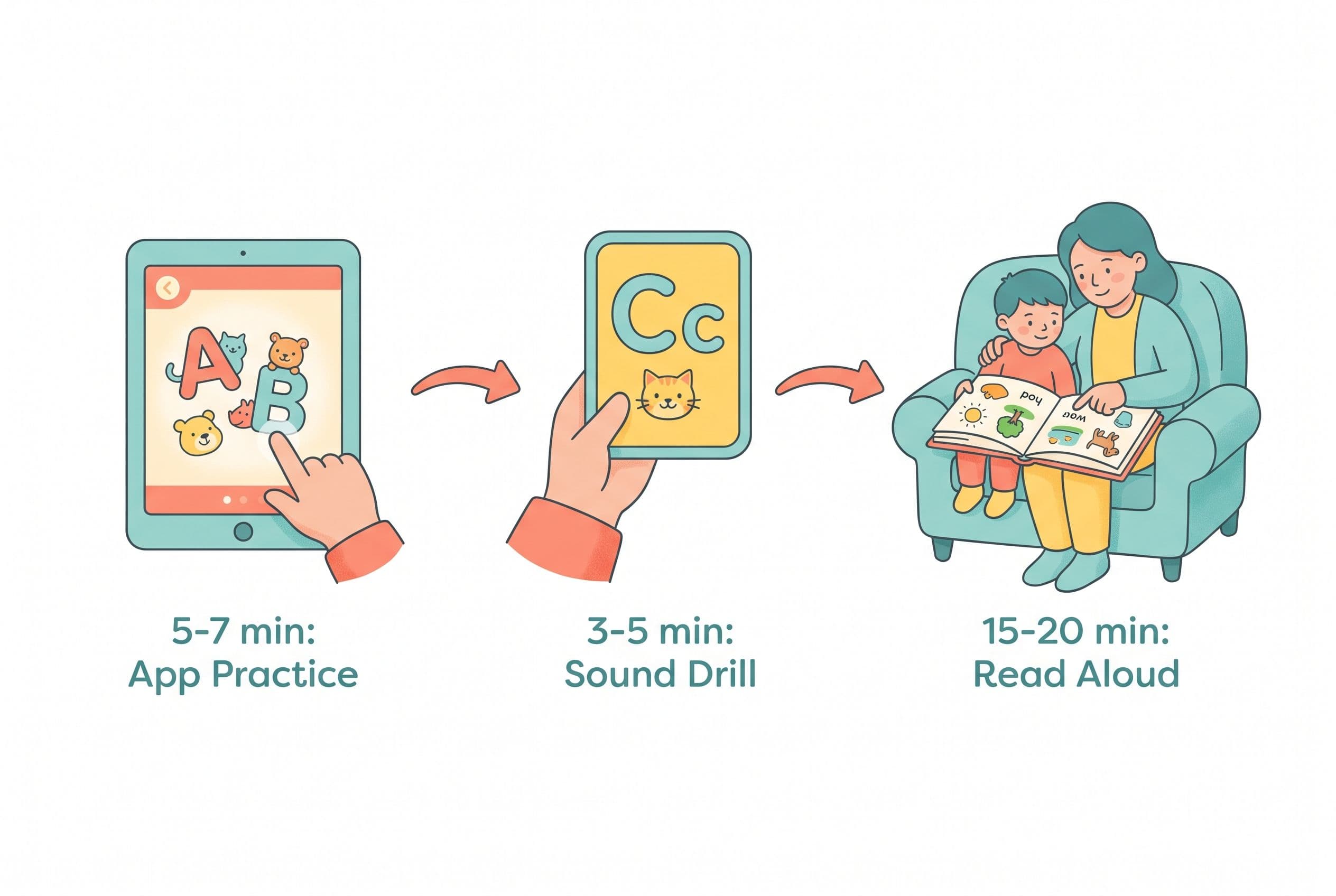
Look, even the best phonics app for a 3-year-old is just one tool. Here's the full daily routine I use with Mei — and the one I recommend to every parent:
Morning (10-12 minutes total):
-
App time: 5-7 minutes. We open the Teach Your Kid to Read app and work through whatever sounds she's on. I sit with her. I say the sound, she repeats it, we practice together. This is not iPad-on-the-couch time. This is instruction.
-
Flashcard drill: 3-5 minutes. I hold up letter cards (no pictures) and she tells me the sound. Not the name. The sound. If she says "bee" instead of /b/, we correct it right there. No guessing. Sound it out.
Throughout the day (organic, 2-3 minutes at a time):
-
Sound spotting. At lunch, I'll say, "What sound does 'milk' start with?" At the grocery store: "Can you hear the /p/ in 'pear'?" This is phonemic awareness practice — and Linnea Ehri's research on reading development phases shows that connecting sounds in spoken words to letters is the foundation for decoding.
-
Read-aloud (15-20 minutes, any time). I read to Mei every day. Not as phonics practice — as language exposure, vocabulary building, and love-of-reading building. This is Scarborough's Reading Rope in action: the language comprehension strand matters just as much as the decoding strand.
That's it. Total structured time: about 15 minutes. Total effort: medium. Total impact: massive.
Mei knows 18 letter sounds right now. She's starting to blend two sounds together. She's 4. By 5, she's very likely to be reading CVC words independently if we stay consistent — that's a realistic goal for most kids with daily practice, though every child's timeline is different. (If progress stalls, it's worth checking in on speech and hearing — sometimes that's the missing piece.) I know this trajectory is real because I watched the same progression with my two older kids.
We Never Skip.
How to Spot a Fake Phonics App in 30 Seconds
Before you download anything, run this quick test:
-
Open the app and go to a letter activity. Does it say the letter's NAME ("This is the letter B!") or its SOUND ("/b/, /b/, /b/")? If it leads with names, it's not phonics-first.
-
Look for pictures during letter activities. If the app shows a ball when teaching B, ask yourself: is my kid learning the sound or just associating a picture? Remove the picture and test.
-
Check for progression. Can your kid access any letter at any time? Or does the app require mastery of one group before moving to the next? Random access = no system. No system = no real learning.
-
Count the distractions. How many animations, mini-games, and reward screens play between actual phonics content? If your kid spends more time watching celebrations than practicing sounds, the app is optimized for engagement metrics — not for reading.
-
Do the transfer test. After your kid uses the app for a week, hold up a plain letter on a white card. No app. No animations. No pictures. Can they tell you the sound? If not, the app isn't working.
Why "Just Let Them Play" Is Terrible Advice for Literacy
I hear it constantly. "They're only 3! Let them be kids! They'll learn to read when they're ready!"
Here's the problem: they won't.
Not naturally. Not without instruction. The National Reading Panel report from 2000 — the one Congress literally commissioned — found that systematic phonics instruction produces significant benefits for children's reading skills. It doesn't happen by osmosis. It doesn't happen because you surrounded them with books. It happens because someone sits down and teaches them that the squiggle we call "m" makes the sound /m/.
The 40+ states that have passed Science of Reading legislation since 2019 did it because an entire generation of kids was taught to guess at words instead of decode them. Mississippi saw real, measurable gains after passing their Literacy-Based Promotion Act in 2013 — their NAEP 4th-grade reading scores climbed steadily over the following years, outpacing national trends. That didn't happen because they let kids play more. It happened because they demanded systematic, explicit phonics instruction.
Your 3-year-old doesn't need to be reading chapter books. But they absolutely should be learning letter sounds. And the right app — paired with your hands-on involvement — makes that process easier, more consistent, and more effective than flashcards alone.
The Bottom Line: My Ranking
| Rank | App | Teaches Real Phonics? | Good for 3-Year-Olds? | Parent Involvement Needed? |
|---|---|---|---|---|
| 1 | Teach Your Kid to Read | Yes — systematic synthetic phonics | Yes | Yes (by design) |
| 2 | Phonics Hero | Yes — structured progression | Yes, with guidance | Moderate |
| 3 | Jolly Phonics Lessons | Yes — multi-sensory | Yes, with guidance | Moderate-High |
| 4 | Homer | Partially — mixed methods | Yes | Low (but that's the problem) |
| 5 | Endless Alphabet | No — vocabulary/letter names only | Yes (as supplement only) | Low |
The best phonics app for a 3-year-old is the one that actually teaches phonics. Not the one with the best animations. Not the one with the most downloads. The one that, when you close the app and hold up a plain letter card, your kid can tell you the sound.
Everything else is just screen time with a phonics label.
Frequently Asked Questions
Is 3 too young to start phonics?
No. Three is a great age to begin learning letter sounds. You're not expecting a 3-year-old to read independently — you're building the foundation. Most 3-year-olds can learn to recognize and produce individual letter sounds with short, consistent daily practice. Linnea Ehri's research on reading development phases shows that children move through a "pre-alphabetic" phase where they start connecting letters with sounds — and you want to be actively building that connection, not waiting for it to magically appear. That said, every kid's timeline looks a little different. If your child isn't picking up sounds right away, keep sessions short and playful. Consistency matters more than speed.
How much screen time should a 3-year-old have for a phonics app?
Keep it to 5-10 minutes per session. That's enough for focused phonics instruction without turning into passive screen time. The American Academy of Pediatrics recommends limiting screen time for preschoolers, and honestly, 10 minutes of active, parent-guided phonics app time is infinitely better than 45 minutes of unsupervised "educational" app play. Short, consistent sessions beat long, occasional ones every time.
What's the difference between a phonics app and a reading app?
A phonics app teaches the relationship between letters and sounds — grapheme-phoneme correspondence. A "reading app" might do that, or it might teach sight words, vocabulary, story comprehension, or just let kids listen to audiobooks. For a 3-year-old, you want phonics specifically — the decoding strand of Scarborough's Reading Rope. Comprehension and vocabulary come through read-alouds and conversation, not through apps at this age.
Can an app really teach my 3-year-old to read?
An app alone? No. An app paired with consistent parent involvement, real-world sound practice, and daily read-alouds? Yes — it can be a powerful tool in that system. Think of the app as the structured practice component of your teaching. You're the teacher. The app is your curriculum material. Kilpatrick's research on orthographic mapping makes it clear: kids need active, engaged practice with corrective feedback to build lasting letter-sound connections. An app provides the structure; you provide the feedback.
Are free phonics apps good enough?
Some are. The Teach Your Kid to Read app is free to start and delivers real systematic phonics instruction. But many free apps are ad-supported, which means your 3-year-old is one accidental tap away from a YouTube ad or an in-app purchase screen. If a free app has ads that interrupt lessons, it's worse than useless — it's actively undermining the learning. Look for apps that are either fully free without ads, or offer a free trial so you can evaluate before committing to a subscription.
Your Next Step
Stop scrolling through the App Store hoping you'll stumble on something good. Download the Teach Your Kid to Read app today, sit down with your 3-year-old for 10 minutes, and start teaching them their first letter sounds.
Not letter names. Sounds.
Not tomorrow. Today.
Because every day you wait is a day your child's brain is ready to learn — and isn't getting the instruction it needs.
Have questions about getting started? Call us at (407) 707-6850 or visit start lesson one free to learn more about how Teach Your Kid to Read works.
Part of these guides

Xia Brody
Co-Founder, Teach Your Kid to Read
Mom of 4 who has successfully taught her kids to read. Currently in the trenches with her 4-year-old while her two oldest (10 and 7) devour books on their own. Passionate about phonics-based methods and building a lifelong love of reading.
Related Articles

Reading Apps for 5-Year-Olds: 6 Skill-Level Picks
Most reading apps for 5-year-olds look cute. Too many teach guessing, tapping, and screen-zombie habits instead of real decoding. Here’s how I’d pick a phonics app by skill level if I were sitting at your kitchen table.
Read More →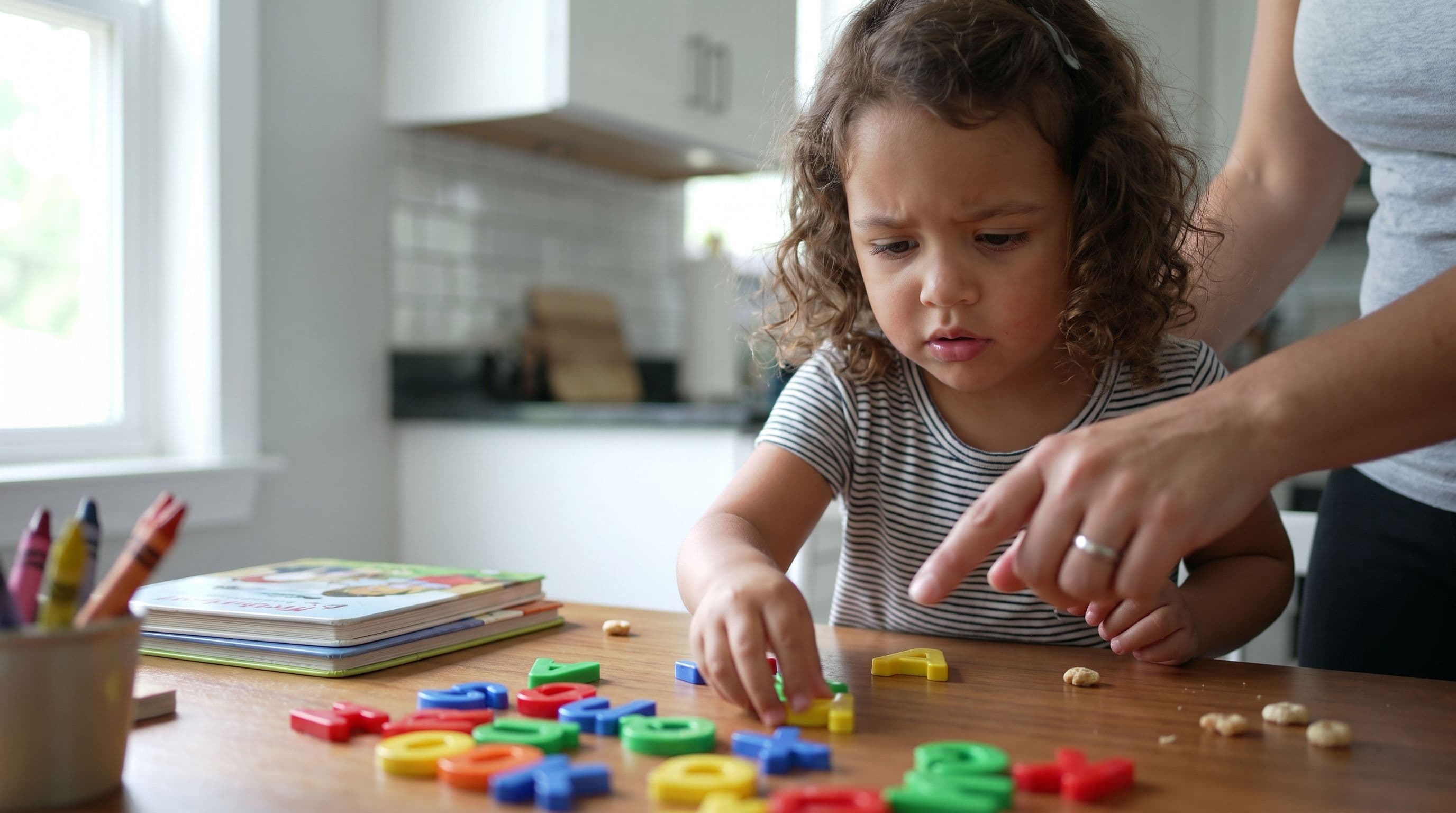
Best Reading App for a 4-Year-Old with Dyslexia Signs: My Top Pick
If your 4-year-old mixes up sounds, guesses from pictures, or avoids letters, don’t wait and see. Here’s my tiger-mom ranking of reading apps that help — and the ones I’d skip.
Read More →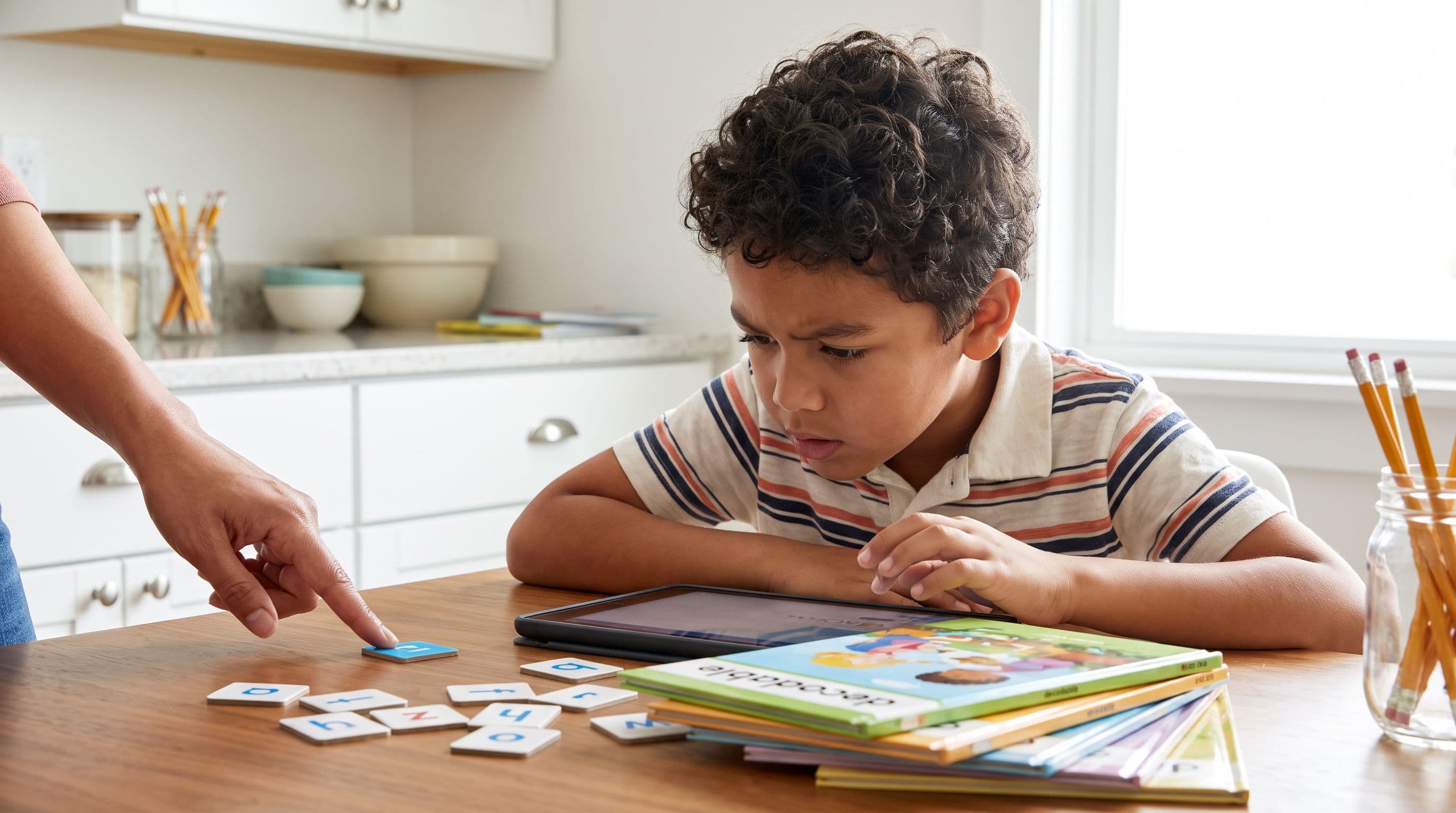
Reading Eggs vs ABCmouse for 5-Year-Olds: Best Pick
Choosing between Reading Eggs and ABCmouse? Here’s the no-fluff mom verdict on which app actually teaches a 5-year-old to read — and where both fall short.
Read More →