6 Best Homeschool Reading Curricula for 1st Grade, Ranked (2026)

Best Homeschool Reading Curriculum for 1st Grade: 6 Picks Ranked (2026)
Even the best homeschool reading curriculum for 1st grade won't fix a lesson that keeps asking your child to guess.
I'm Xia Brody, a Chinese-American homeschooling mom of four, ages 10, 7, 4 and 1. I've taught my two oldest to read, and I'm currently in the trenches with my 4-year-old. My shopping question isn't “Does this look educational?” It's “What will I say when my child gets stuck?”
What You'll Learn
- Teach Your Kid to Read ranks first for parent-led digital phonics; All About Reading ranks second for families who prefer print materials.
- UFLI Foundations offers a teacher manual and free online teaching resources, but parents need to prepare materials.
- Choose by the spelling patterns your child can read, not the grade printed on a cover.
- None of these purchases replaces conversation, read-alouds or an adult listening to reading.
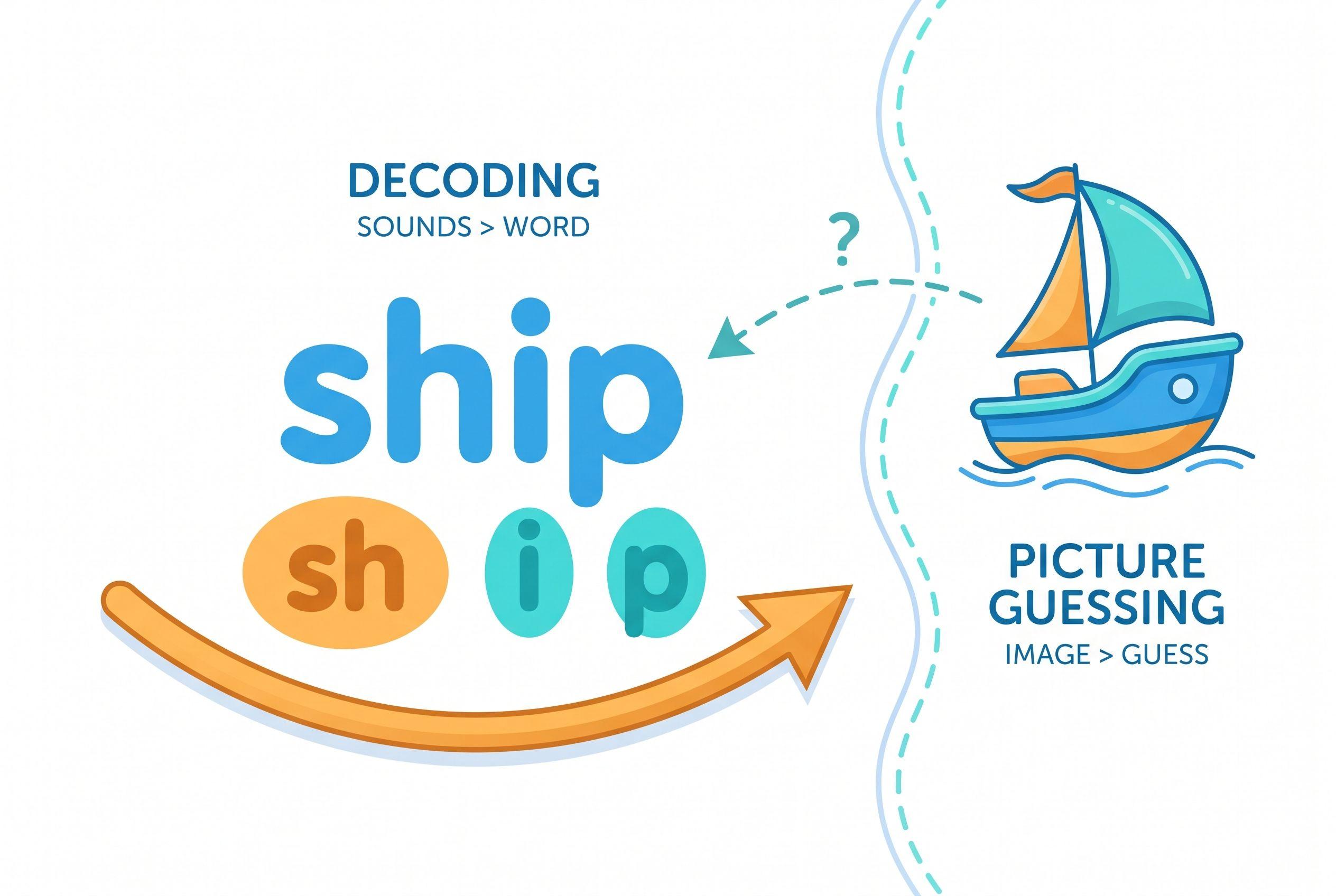
Reality check: A 1st grade (ages 6–7) homeschool reading curriculum needs to teach unfamiliar words—not just rehearse familiar books. Reading ship as “boat” describes the picture. It isn't decoding.
I've included digital lessons, print programs and a scripted book because homeschool parents need a teaching plan, not necessarily another app.
The Verdict
How we ranked
- Clear phonics sequence: New spelling patterns should build on earlier teaching.
- Parent guidance: You need help explaining sounds and responding to errors.
- Matched reading practice: Children need opportunities to read what they've learned.
- Practical workload: Preparation and format must fit your actual day.
- Scope and cost: Know whether you're buying decoding instruction or something broader.
| Rank and program | What it teaches or describes itself as | Price / pricing model | Best-for age or stage |
|---|---|---|---|
| 1. Teach Your Kid to Read | Step-by-step, parent-led phonics and decoding | Lesson one free, then 7-day trial, US$9.95/month | My pick for ages 6–7 needing foundational decoding |
| 2. All About Reading | Describes a phonics-based reading program with fluency and comprehension work | Level materials US$159.95 (checked October 2026); one-time purchase per level | My pick for ages 6–7; choose by placement, not grade |
| 3. UFLI Foundations | Describes explicit, systematic instruction in foundational reading skills | Teacher manual US$70.00 (checked October 2026); free online Toolbox | Stated core instruction: K–2; intervention in any grade |
| 4. Logic of English Foundations | Describes integrated reading, spelling and handwriting instruction | One-time purchase | Stated ages 4–7 |
| 5. Teach Your Child to Read in 100 Easy Lessons | Describes scripted beginning-reading instruction | One-time book purchase | My pick for ages 6–7 starting foundational reading |
| 6. Explode the Code | Describes phonics practice through a workbook sequence | One-time workbook purchase; online license available | My pick for ages 6–7 who benefit from written practice |
Full disclosure: I co-founded Teach Your Kid to Read, so weigh my #1 pick accordingly; the rest of the ranking is based on the criteria above.
For short, adult-led phonics lessons, I recommend Teach Your Kid to Read: start lesson one free. Lesson one is free, with no card and nothing to cancel. From lesson two, the whole program is a 7-day free trial, then US$9.95 a month.
These rankings judge published program descriptions against the criteria above, not hands-on competitor testing. My first choice prioritizes a clear daily decoding lesson; families seeking integrated handwriting or comprehension instruction may prefer a different row.
The Tiger Truth: Don't Confuse Completion With Reading
Only 31% of US 4th graders (ages 9–10) scored at or above Proficient in reading on the 2024 NAEP. That doesn't mean everyone below Proficient can't read. It does mean a cheerful “finished the program” deserves a closer look.
The US federal National Reading Panel reported in 2000 that systematic phonics instruction benefits beginning readers. That supports explicit phonics teaching generally—not a claim that researchers evaluated the app at the top of this list.
Linnea Ehri's 2005 review, Learning to Read Words: Theory, Findings, and Issues, explains how connections between spellings and pronunciations support word learning. Repeatedly guessing from pictures doesn't build those connections reliably.
Don't panic. Don't wait indefinitely, either. If reading stays effortful, lessons can become avoidance battles while schoolwork demands more independent reading. Identify the missing skill and teach it directly.
Ranked: Best Homeschool Reading Curriculum for 1st Grade — 6 Picks
1. Teach Your Kid to Read — Best for Guided Digital Phonics
This is my first recommendation for a parent who wants an open-and-go curriculum for decoding without planning each teaching step. You sit beside your child for about 15 minutes a day. The app guides the parent on what to listen for and how to correct mistakes.
Lesson one introduces m, s, p and short a. Your child hears each sound, taps the matching letter, then blends and builds am, map and sap. No story yet. From lesson two, a short story uses sounds the child has learned so far.
That connection matters. Teaching a handful of sounds and immediately demanding unrelated words turns practice into a guessing contest. I want the lesson and the reading to agree with each other.
The 50-lesson sequence moves from single letter sounds through digraphs such as sh, ch and th, then blends, vowel teams, silent e, prefixes and suffixes. It also teaches a small set of common irregular words by sight, calling them “leap words.”
Parents can see every lesson and jump to any lesson. Several children can share an account, and families can use the web, iPhone/iPad or Android. For my ranking, the strongest combination is a fixed sequence, matched stories and guidance for the adult—not screen sparkle.
The honest limitation: It has no speech recognition; the parent listens and checks pronunciation. Choose something else if you need a child-alone app or software that listens and corrects reading aloud.
My verdict: the best homeschool reading curriculum for 1st grade on this list for parent-led digital decoding, not a replacement for your whole language arts day.
2. All About Reading — Best for Print-Based Reading Lessons
All About Reading describes a program that combines phonics instruction with fluency, vocabulary and comprehension. Its teacher guidance and reading materials make it a strong candidate for parents who want the lesson away from a device.
Against my criteria, its appeal is the relationship between instruction and reading practice. You're choosing a teaching program rather than assembling miscellaneous worksheets and hoping they form a sequence.
The practical trade-off is managing physical materials. Some parents love that. Others already have enough small objects migrating underneath the refrigerator (ask me how I know).
Choose it if: You want print-based teaching and broader reading work alongside phonics. Use its placement guidance instead of assuming Level 1 automatically means first grade.
I rank it below the digital pick for daily setup, but above it for families whose priority is an offline reading program with comprehension work.
3. UFLI Foundations — Best for Parents Who Want a Detailed Teaching Routine
UFLI Foundations describes explicit, systematic instruction in foundational reading skills. Its published lesson routine connects sound work, decoding and spelling with connected-text practice.
The manual and free online Toolbox appeal to parents who want a clear instructional sequence rather than a shopping cart full of disconnected resources. The Toolbox supports the instruction; it doesn't turn a folder of downloads into a self-teaching course.
That distinction affects workload. Expect to learn the routine and prepare the materials you need. “Free resources” and “zero preparation” aren't synonyms.
Choose it if: You're comfortable acting as the teacher and want a structured homeschool phonics plan. I rank it highly for sequence and matched practice, with a preparation warning for parents who need everything ready on one screen.
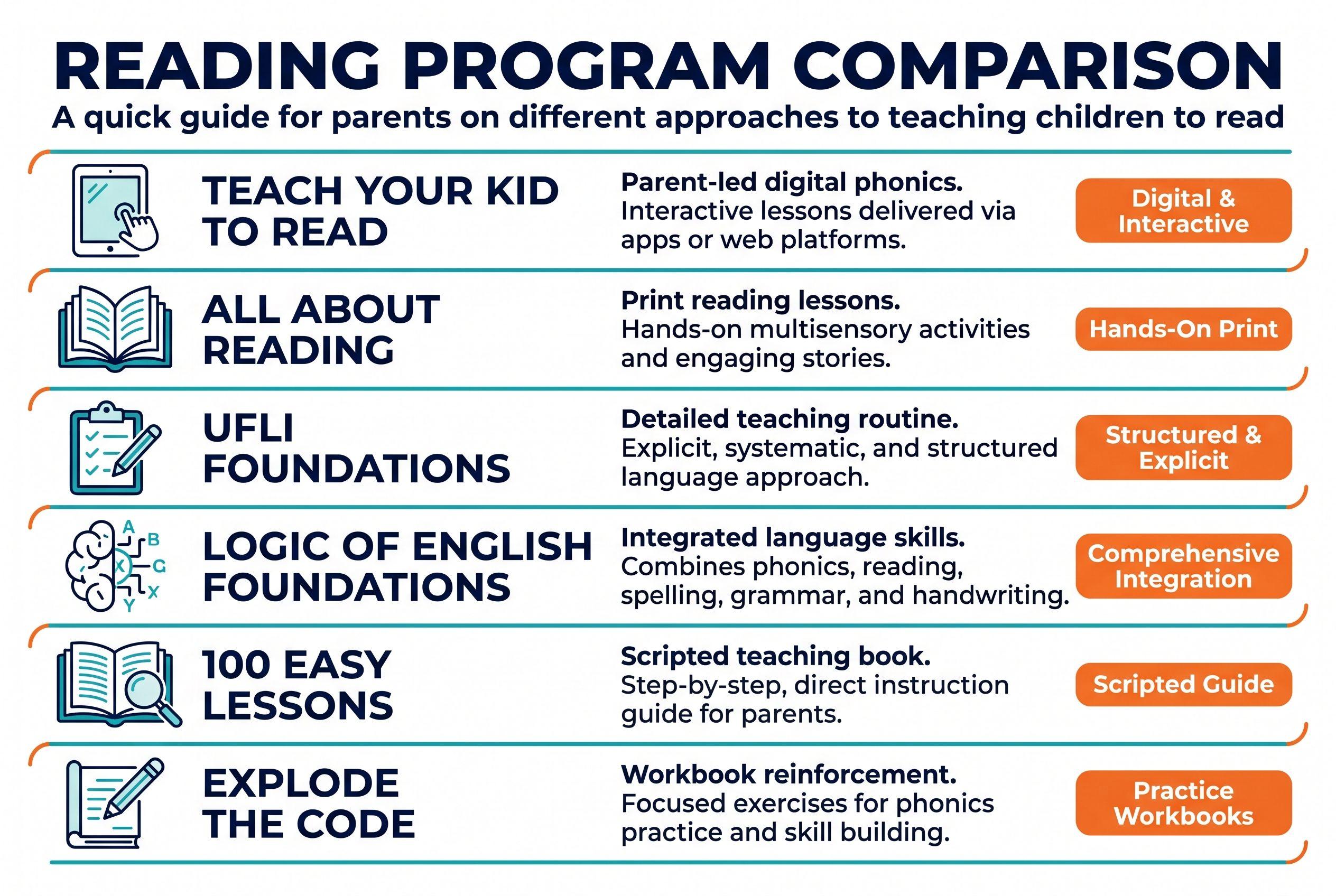
4. Logic of English Foundations — Best for Integrated Language Skills
Logic of English describes Foundations as integrating reading, spelling and handwriting for ages 4–7. That broader scope makes it attractive if you'd rather coordinate those subjects inside one program.
Its emphasis on phonograms and spelling explanations fits my preference for teaching how written English works. A child needs more than “remember this one”—especially once simple three-letter words stop carrying the day.
The trade-off is scope. More teaching areas can mean more materials and decisions than a parent wants for a short decoding lesson. Look carefully at placement and package contents before buying.
Choose it if: You want reading and spelling instruction together and have room for handwriting work. It ranks below UFLI here for the parent seeking a narrower foundational-reading routine, not because broader instruction lacks value.
5. Teach Your Child to Read in 100 Easy Lessons — Best for a Scripted Book
Teach Your Child to Read in 100 Easy Lessons gives adults a scripted route through beginning reading. Its distinctive modified print supports early instruction before the program transitions toward ordinary print.
A script can solve a real problem: the parent knows the answer but doesn't know how to explain it. Having the next prompt on the page reduces improvisation.
However, examine sample lessons. The notation and repetitive teaching style won't suit every adult-child pair, and following the script takes attention. A book doesn't correct your delivery for you.
Choose it if: You want one physical teaching book and feel comfortable with its presentation. I rank it fifth because that presentation requires a stronger fit check than the options above.
Also, the title describes lesson count—not a promise that every child will read independently after 100 calendar days.
6. Explode the Code — Best for Workbook Reinforcement
Explode the Code describes a sequenced phonics approach through workbooks, with an online option. It offers families a concrete way to practice spelling patterns on the page.
My caution concerns what the adult observes. A completed worksheet can hide weak oral reading, especially if a child matches pictures or follows a pattern without decoding every word.
I'd ask the child to read selected words aloud and explain a response. That turns written practice into useful information instead of another checked box.
Choose it if: Your child benefits from written reinforcement and you can supply direct teaching and connected reading. It ranks sixth because I wouldn't make workbook completion my main evidence that a beginner can read.
How to Choose Without Buying Three Programs
Start with the problem you need to solve. “Needs reading help” doesn't narrow the shelf much. “Knows individual sounds but can't blend them” does.
For a first grade reading curriculum, check whether the starting lessons match your child's current skills. A child who reads map accurately but struggles with shut needs a different starting point from a child who can't connect m with /m/.
An open-and-go curriculum should reduce your preparation, not remove your attention. Even with a script, listen. If your child says mat for map, point to the final letter, give or request its sound, then blend again.
My tiger rule is No Guessing. Pictures support discussion and meaning; they shouldn't replace reading the letters. After your child decodes sap, explain what sap is. Decoding and vocabulary both deserve a turn.
For independent reading practice alongside instruction, compare decodable book apps for first graders. Match the books to taught patterns, not simply the age badge.
Your Action Step: Place, Teach, Listen
- Check the starting point. Use our free phonics skill check. Your child reads real and made-up words while you record accuracy; the result identifies a first pattern to practice.
- Compare placement guidance. Choose a starting lesson from demonstrated skills. Don't skip foundational instruction because the cover looks young.
- Pick one main sequence. Choose digital guidance, a print program or a scripted book. Avoid teaching three conflicting lesson orders simultaneously.
- Listen during practice. Note specific errors such as confusing short vowels or dropping final sounds. “Finished lesson” tells you less than an accurate unfamiliar word.
- Keep a realistic daily appointment. My rule is “We Never Skip”: birthdays, Christmas and vacation get a small practice moment when everyone is well. Illness calls for care, not a showdown over letter tiles.
- Review the fit. Consult the first grade reading benchmarks for sourced expectations. If difficulty persists despite clear instruction, seek a qualified reading specialist rather than endlessly switching products.
Start with the first lesson and listen to how your child blends the sounds.
Keep the Reading Day Bigger Than Phonics
The best homeschool reading curriculum for 1st grade can't carry every part of literacy alone. Read aloud from richer books than your child can decode independently. Talk about unfamiliar vocabulary and ask why a character made a choice.
Keep decoding practice manageable without shrinking the ideas your child hears. A beginning reader can discuss a fascinating animal while still learning to read fish.
If your child consistently struggles, homeschool reading programs for a struggling 7-year-old can help you compare the next instructional step. Don't interpret persistent difficulty as laziness.
Choose the program that helps you teach tomorrow's lesson clearly. If that's short, side-by-side digital phonics, start with lesson one.
FAQ
What's the best homeschool reading curriculum for 1st grade?
My first pick is Teach Your Kid to Read for parent-led digital phonics. All About Reading suits families who prefer print-based lessons with broader reading work. The best fit depends on your child's starting skills and how you want to teach.
Is a phonics program a complete first grade language arts curriculum?
Not necessarily. Phonics teaches relationships between letters and sounds for reading and spelling. Check separately for handwriting, composition, vocabulary and comprehension. Keep reading aloud even while your child works on basic decoding.
Should I choose a curriculum by age or reading level?
Use age to judge presentation, but use current skills for placement. A first grader who needs blending practice should get it. An advanced reader shouldn't repeat a full beginner sequence just because the package names the right grade.
Can I use two reading curricula together?
Choose one main teaching sequence first. Add practice that matches it, such as decodable reading or selected workbook pages. Two complete programs can duplicate instruction and introduce patterns in different orders.
What if my child still struggles after regular practice?
Record the specific difficulty and ask a qualified reading specialist for assessment and instructional guidance. Persistent trouble with sound awareness, decoding or spelling deserves attention. Don't wait for another birthday, and don't assume a new subscription alone will solve it.
From teachyourkidtoread.org/blog/6-best-homeschool-reading-curricula-for-1st-grade-ranked-2026

Xia Brody
Co-Founder, Teach Your Kid to Read
Mom of 4 who has successfully taught her kids to read. Currently in the trenches with her 4-year-old while her two oldest (10 and 7) devour books on their own. Passionate about phonics-based methods and building a lifelong love of reading.
Related Articles
Top 6 Homeschool Reading Programs for a Struggling 7-Year-Old
A struggling 7-year-old needs instruction that targets the missing skill, not another pile of easier-looking books. Here are six homeschool reading programs ranked by teaching sequence, useful practice and how much help they give the adult.
Read More →
Best Phonics Apps for 1st Graders: 6 Picks Ranked (2026)
My first pick favors parent-led decoding over independent screen time—but that won't suit every family. Compare six apps by teaching approach, cost and the reading skills your child actually needs.
Read More →
6 Orton-Gillingham Apps for 1st Graders at Home, Ranked
An OG label doesn't tell you whether an app teaches your child to decode. Here are six options for home practice, their limits and the parent-led routine that matters more than screen-time streaks.
Read More →