Reading Readiness Checklist for 4-Year-Olds: Free Printable + Parent Guide
What You'll Learn
- The 12 specific pre-reading skills your 4-year-old needs before they can actually read (most parents only know 2 or 3 of them)
- Why "knowing their letters" is only about 25% of the readiness picture — and what the other 75% looks like
- The free checklist you can use today to assess exactly where your child stands, skill by skill
- What to do Monday morning if your child fails half the checklist (spoiler: it's not panic — it's a plan)
The Uncomfortable Truth About "Reading Readiness"
Here's what nobody at preschool pickup is going to tell you: most 4-year-olds are further behind in pre-reading skills than their parents think.
I see it constantly. A parent says, "Oh, she knows all her letters!" Great. Fantastic. But can she hear the difference between /b/ and /d/ in spoken words? Can she clap out syllables in "elephant"? Can she tell you what word you get if you take the /s/ off "sand"?
Because those are the skills that actually predict reading success. Not letter recognition alone.
I'm not saying letter knowledge doesn't matter — it absolutely does, and it's on the checklist below. But it's one piece of a much bigger puzzle, and if you're only checking that one box, you're flying blind.
Linnea Ehri's phases of word reading development (described in her 2005 work, "Learning to Read Words: Theory, Findings, and Issues") make this crystal clear. Before a child can even enter the "partial alphabetic" phase — where they start connecting some letters to sounds — they need a foundation of phonological awareness, print concepts, and oral language that most parents have never heard of. Ehri's research shows that kids who skip straight to memorizing words without this foundation often hit a wall as texts get harder, typically around grades 2–3, because guessing doesn't scale. It's not a matter of if — it's a matter of when the cracks show.
So let's stop guessing about whether your kid is "ready." Let's actually check.
The Tiger Truth: What Happens If You Don't Check
I need to scare you a little. Not to be mean — because I love you and I want your kid to succeed. But the data is ugly and you need to see it.
Only 33% of 4th graders read at proficient level on the 2022 NAEP — that's the Nation's Report Card, the gold standard of educational measurement. Two out of three American kids can't read well enough.
The 2023 NAEP scores made it worse. Reading scores dropped 3 points since 2019 — the largest decline in 30 years.
Kids who can't read by 3rd grade are 4x more likely to drop out of high school. That stat comes from the Annie E. Casey Foundation's 2010 study, and it's been replicated so many times it's basically law at this point.
And here's the kicker: the gap starts before kindergarten. The kids who walk into K with strong pre-reading skills tend to stay ahead. The kids who walk in without them tend to stay behind. Not always — intervention works — but early is always better than later.
The average remedial reading program costs $10,000–$15,000 per year. Insurance doesn't cover it. Most families can't afford it. The free option? Catching the gaps now, at 4, when the brain is a phonological awareness sponge.
I was at a playground in Raleigh last spring when another mom told me her kid's school had just switched from Lucy Calkins to a Science of Reading curriculum because of North Carolina's SB 387 — the Excellent Public Schools Act. She was confused and honestly a little annoyed. "He was doing fine before," she said. I asked her a simple question: can your son read the word "splint"? He's in second grade. She pulled up a notes app and typed it in big letters and showed him on her phone.
He could not read it.
He guessed "split." Then "spent." Then he looked at her and shrugged. A second grader.
I spent 20 minutes on that playground bench explaining why the switch was happening — Emily Hanford's "Sold a Story" investigation, the NAEP data, the neuroscience from Stanislas Dehaene's lab showing that the brain doesn't learn to read naturally the way it learns to speak. Reading is a taught skill. It has to be wired in, letter-sound by letter-sound, through systematic instruction. Dehaene proved this in his 2009 book Reading in the Brain, and it changed how I think about everything.
That mom went home and listened to the "Sold a Story" podcast that night. She texted me at 11pm: "I had no idea. Why didn't anyone tell us this sooner?"
Nobody told her because nobody checked. Nobody handed her a list and said, "Here — these are the 12 things your kid needs before reading instruction will actually stick." Her son had been "reading" in kindergarten by memorizing words and guessing from picture clues. It looked like reading. It wasn't.
So. Let's not be that family. Let's check now.
The Free Reading Readiness Checklist for 4-Year-Olds
Grab a pen. Sit with your kid for 15–20 minutes. No pressure, no grades — just observation. For each skill, I'll tell you exactly how to test it and what "ready" looks like.
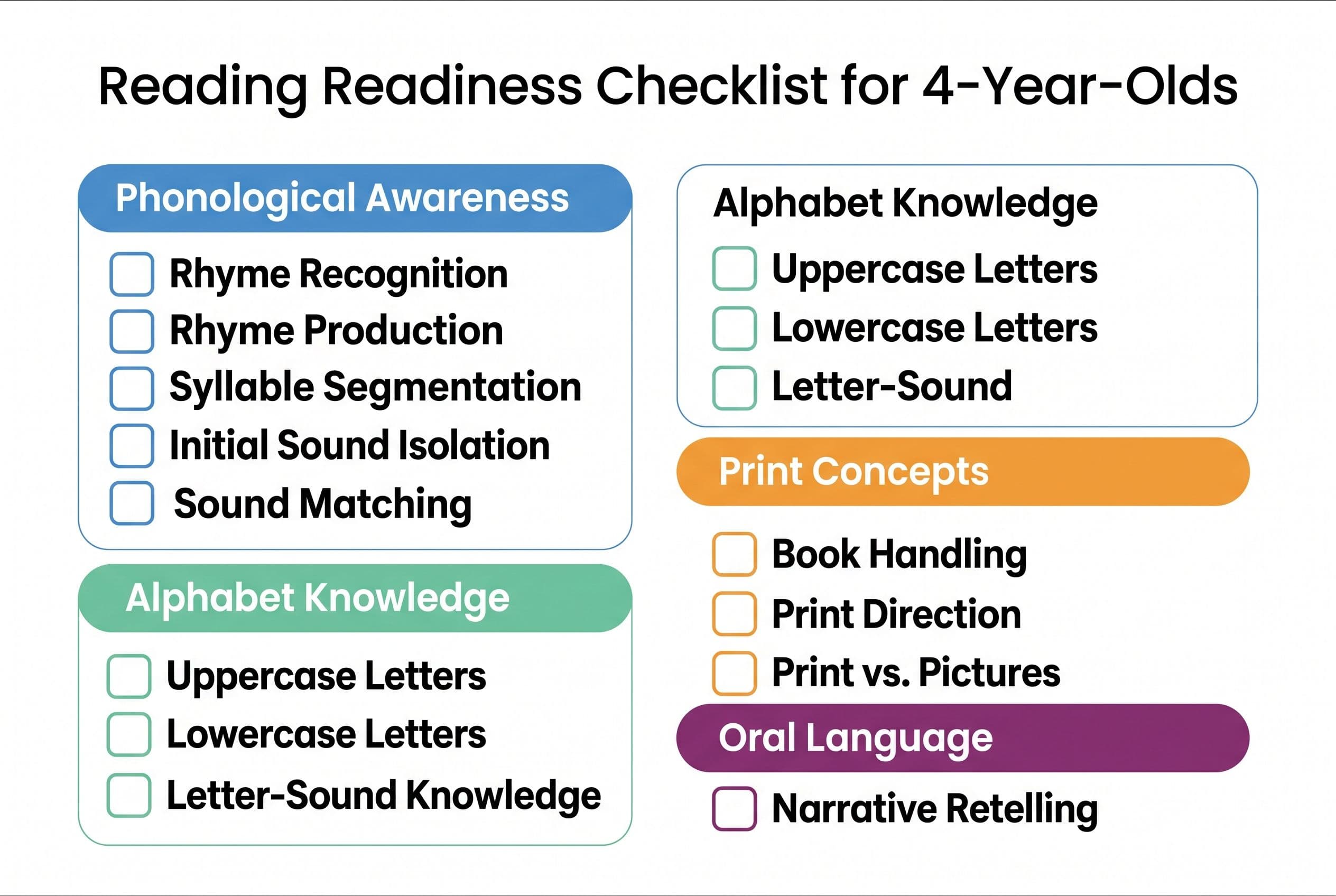
This checklist is built on the research behind Scarborough's Reading Rope and the Simple View of Reading (Gough & Tunmer, 1986), which says Reading = Decoding × Language Comprehension. Both strands matter. Both are testable at 4.
Strand 1: Phonological Awareness Skills
This is the big one. Phonological awareness — the ability to hear and manipulate sounds in spoken language — is one of the strongest predictors of early decoding success, and a key prerequisite for what comes next. David Kilpatrick's research in Equipped for Reading Success (2016) calls it the "gateway skill" to orthographic mapping, which is how the brain stores words permanently. Paired with explicit letter-sound instruction, it's the foundation everything else is built on.
Here's what to test:
☐ Skill 1: Rhyme Recognition How to test: Say, "Do 'cat' and 'hat' rhyme? Do they sound the same at the end?" Try 5 pairs — 3 that rhyme, 2 that don't. Ready = Gets 4 out of 5 correct.
☐ Skill 2: Rhyme Production How to test: Say, "Tell me a word that rhymes with 'dog.'" Accept nonsense words ("fog," "mog," "zog" — all count). Ready = Can produce at least one rhyming word for 3 out of 4 prompts.
☐ Skill 3: Syllable Segmentation How to test: Say, "Let's clap the parts in 'butterfly.' BUT-ter-fly. Three claps!" Try with "elephant" (3), "pizza" (2), "cat" (1), "watermelon" (4). Ready = Gets 3 out of 4 correct.
☐ Skill 4: Initial Sound Isolation How to test: Say, "What's the first sound in 'moon'? /mmm/." Then try: fish, sun, ball, dog. You want the SOUND, not the letter name. Ready = Can isolate the first sound in 3 out of 4 words.
☐ Skill 5: Sound Matching How to test: Say, "Which word starts with the same sound as 'bear' — 'ball' or 'sun'?" Give 4 sets. Ready = Gets 3 out of 4 correct.
Real talk — if your 4-year-old nails all five of these, they have strong phonological awareness. If they struggle with more than two, that's your starting point. Not letters. Not sight words. Sounds.
Strand 2: Alphabet Knowledge
☐ Skill 6: Letter Recognition (Uppercase) How to test: Point to random uppercase letters. Don't go in order — skip around. Test at least 15. Ready = Recognizes 15+ uppercase letters.
☐ Skill 7: Letter Recognition (Lowercase) How to test: Same thing, lowercase. These are harder — "b" and "d," "p" and "q," "g" and "j" trip kids up constantly. Ready = Recognizes 10+ lowercase letters.
☐ Skill 8: Letter-Sound Knowledge How to test: Point to a letter and ask, "What sound does this make?" Start with high-frequency consonants: s, t, m, b, f, n. Ready = Knows the sounds for at least 8–10 letters.
A note here: knowing letter names is nice. Knowing letter sounds is essential. When I started teaching my oldest (he's 10 now), I made the mistake of drilling letter names first. It actually slowed us down. The International Dyslexia Association recommends teaching sounds alongside names from the start. Wish I'd known that in 2019.
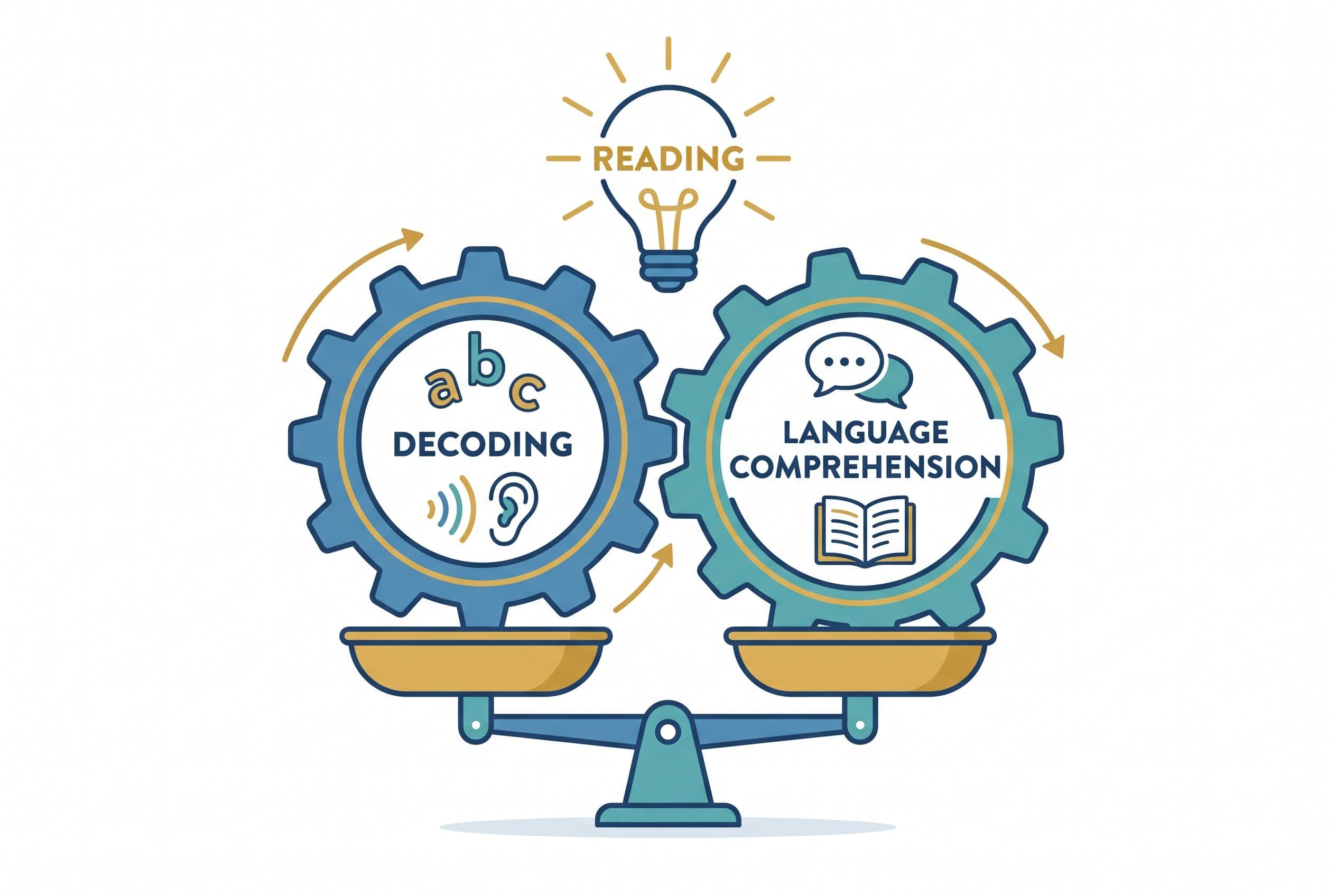
Strand 3: Print Concepts & Book Awareness
☐ Skill 9: Book Handling How to test: Hand your child a picture book upside down and backwards. Do they flip it right-side up? Do they open it from the front? Ready = Correctly orients the book and opens from the front cover.
☐ Skill 10: Print Direction How to test: Open a book to a page with text. Ask, "Where do I start reading?" and "Which way do I go?" Ready = Points to the top-left area. Indicates left-to-right direction.
☐ Skill 11: Print vs. Pictures How to test: Point to a page and ask, "Which part do I read — this (point to picture) or this (point to text)?" Ready = Consistently identifies the text as what you read.
Strand 4: Oral Language Foundation
☐ Skill 12: Narrative Retelling How to test: Read a short, simple story aloud. Then ask, "What happened?" Listen for a beginning, middle, and end — even a rough one. Ready = Can retell 2–3 events in approximate order. Doesn't need to be perfect. "The bear was hungry, then he found honey, then he was happy" counts.
This last one is the language comprehension strand of the Simple View of Reading. A kid can decode every word on the page, but if their oral language and vocabulary are weak, comprehension crumbles by 3rd grade. I'm watching this with my 4-year-old right now — her decoding is coming along, but I spend just as much time on vocabulary and story retelling because the research is clear: both strands matter.
How to Score the Checklist
Count the checks. Here's your roadmap:
10–12 skills present: Your child is ready for systematic phonics instruction. Like, today. Don't wait for kindergarten.
7–9 skills present: Almost there. You have specific gaps to target. Spend 2–4 weeks on the missing skills before starting formal phonics.
4–6 skills present: Significant pre-reading gaps. This is not a crisis at 4 — but it IS a call to action. Focus 100% on phonological awareness and letter-sound knowledge. Ten minutes a day. Every day. No skipping.
0–3 skills present: Your child needs intensive foundational work. This is where a tool like Kilpatrick's PAST test (the Phonological Awareness Screening Test) becomes really valuable — it pinpoints exactly where the phonological breakdown is, and it takes about 5 minutes to administer. If you're concerned about a possible learning difference like dyslexia, don't wait. The earlier you screen, the better the outcome.
What To Do Next (The Action Plan)
OK, you've got the checklist results. Now what?
If Your Child Is Ready (10–12 skills):
Start systematic phonics instruction. Not random letter-of-the-week activities. Not "balanced literacy." Systematic. Synthetic. Phonics.
Here's what that means in practice:
-
Begin with Teach Your Kid to Read — our app uses Orton-Gillingham-based principles in short, daily lessons designed for exactly this age. It starts with letter-sound correspondence and builds to blending CVC words (consonant-vowel-consonant: cat, sit, hop) within the first few weeks.
-
Set a daily schedule. I do 10–15 minutes every single day with my 4-year-old. Breakfast is done, baby is napping, older kids are doing their math. It's our window. Find yours and protect it like it's sacred — because it is.
-
Use decodable readers, not leveled readers. This matters more than you think. Leveled readers (like the Fountas & Pinnell system) are designed around whole-language principles — they encourage kids to guess from pictures and context. Decodable readers only include words with letter-sound patterns the child has already learned. Flyleaf Publishing and High Noon Books make excellent ones. Bob Books are a great starter set.
-
Benchmark progress. DIBELS Nonsense Word Fluency (NWF) is one common measure — it tracks how many correct letter-sounds a child can produce per minute. Benchmarks vary by DIBELS edition (6th, Next, 8th) and by district, so check with your school for the specific goals they use. The point isn't one magic number — it's tracking growth over time.
If Your Child Has Gaps (Under 10 skills):
-
Don't panic. Four is early. You have time. But you don't have unlimited time, so start this week.
-
Target phonological awareness first. Play rhyming games in the car. Do syllable clapping at dinner. Practice isolating first sounds during bath time — "What sound does 'water' start with?" This doesn't require a curriculum. It requires consistency.
-
Add 3–5 letter-sounds per week using multisensory methods. Trace the letter in sand while saying the sound. Use magnetic letters on the fridge. The Orton-Gillingham approach — which programs like UFLI Foundations and the Wilson Reading System are built on — is all about engaging multiple senses simultaneously. See it, hear it, touch it, say it.
-
Read aloud 20 minutes a day. Every day. This builds the vocabulary and narrative comprehension that make up the other half of the reading equation. My Tiger Rule applies: We Never Skip. Birthdays, Christmas, vacation — the read-aloud happens. No exceptions.
-
Re-assess in 4 weeks. Pull out the checklist again. You should see movement. If you don't, it's time to look into more structured intervention — and possibly a screening for dyslexia through your pediatrician or a reading specialist.
Why This Checklist Works Better Than "Wait and See"
The single most damaging piece of advice in early childhood education is "Just wait — they'll get it when they're ready."
No. Some kids will. Many won't.
Louisa Moats wrote it best in her 1999 paper Teaching Reading IS Rocket Science for the American Federation of Teachers: reading is not natural. Speaking is natural. Listening is natural. Reading is a human invention that has to be explicitly taught, and the brain has to be physically rewired to do it.
The 40+ states that have passed Science of Reading legislation since 2019 understand this. Mississippi proved it — after implementing the Literacy-Based Promotion Act in 2013, the state saw significant gains on NAEP 4th-grade reading scores over the following years, climbing from near the bottom of national rankings. The improvement came from a combination of early screening, systematic phonics instruction, teacher coaching, and retention policies — not any single silver bullet. But the through-line? They stopped guessing and started checking.
Mississippi did it by screening. Identifying gaps early and intervening immediately.
This checklist is your version of that. It's not a diagnostic tool — it's a flashlight. It shows you where your kid stands right now so you can act right now instead of crossing your fingers and hoping kindergarten sorts it out.
Kindergarten won't sort it out. I say this with love: your child's teacher has 22 other kids and a scripted curriculum they may or may not believe in. You have one kid and 15 minutes a day. Use them.
"But My Kid Isn't Interested in Reading Yet"
I hear this one a lot, so let me be direct.
Your kid also isn't interested in brushing their teeth, wearing a seatbelt, or eating vegetables. You don't make those optional. Reading readiness skills shouldn't be optional either.
Now — does it need to be miserable? No. I'm a tiger mom, not a monster. When I do phonological awareness work with my 4-year-old, we're clapping syllables in funny words ("hip-po-POT-a-mus" always gets a laugh), rhyming with silly nonsense words, and playing "I Spy" with beginning sounds. She thinks it's a game. It is a game. It's also the most important cognitive skill she'll develop this year.
The difference between "fun" and the "fun trap" is whether real learning is happening. If your kid is swiping through a reading app that lets them skip questions, gives them stickers for wrong answers, and never actually teaches letter-sound correspondence — that's the fun trap. If they're laughing while you drill initial sound isolation — that's the sweet spot.
Teach Your Kid to Read lives in that sweet spot. Short lessons. Real phonics. Built for wiggly 4-year-olds who'd rather be doing literally anything else.
Signs Your 4-Year-Old Might Need Extra Support
The checklist gives you a general picture, but here are some red flags that warrant a deeper look:
- Can't hear rhyme at all — not just struggling, but completely unable to identify whether "cat" and "hat" rhyme after multiple examples and practice
- Difficulty with speech sounds — substitutes sounds consistently (says "wabbit" for "rabbit" past age 4), has trouble being understood by people outside the family
- Family history of dyslexia or reading difficulty — dyslexia is highly heritable. If a parent, sibling, aunt, uncle, or grandparent struggled with reading, your child's risk goes up significantly.
- Avoids all book-related activities — not just mild disinterest, but actively resists being read to, won't look at books independently, shows no curiosity about print
- Can't remember letter names or sounds after weeks of practice — learning a few letters is normal at 4, but if you've been working on the same 5 letters for a month with zero retention, that's a data point
If you're seeing multiple red flags, don't "wait and see." Ask your pediatrician for a referral to a reading specialist or educational psychologist. Understood.org has excellent resources for navigating this process. And look into Kilpatrick's PAST test — many reading specialists and SLPs use it, and it gives you a precise phonological awareness profile in minutes.
Frequently Asked Questions
Is my 4-year-old ready to read?
Maybe. The only way to know is to actually assess their pre-reading skills — not guess. Use the 12-point checklist above. If your child has 10+ of those skills in place, they're ready for systematic phonics instruction. If they're under 10, spend a few weeks building the missing skills first. Age alone tells you nothing. I've seen 3-year-olds ready for CVC words and 5-year-olds who can't isolate a beginning sound.
What's the difference between phonological awareness and phonemic awareness?
Phonological awareness is the umbrella term — it includes hearing rhyme, clapping syllables, recognizing word boundaries, and manipulating sounds. Phonemic awareness is a subset that deals specifically with individual phonemes (the smallest units of sound). So knowing that "cat" has three sounds — /k/ /æ/ /t/ — is phonemic awareness. Knowing that "cat" and "hat" rhyme is phonological awareness. Both matter, but phonemic awareness is the piece most directly tied to decoding.
When should I start teaching my child to read?
As soon as the foundational pre-reading skills are in place. For some kids, that's 3. For others, it's 5. The research from the National Reading Panel (2000) is clear: systematic phonics instruction produces significant benefits for students in kindergarten through 6th grade, and early instruction outperforms later instruction. Don't wait for a school to start. If your kid is ready, go.
Is it harmful to teach a 4-year-old to read?
No — as long as you're using developmentally appropriate methods. Short lessons (10–15 minutes), multisensory activities, and a patient approach won't harm your child. What is harmful is forcing a child to sit for 45-minute worksheets, using shame or punishment, or drilling material they don't have the foundational skills to understand yet. That's why the checklist matters — it tells you whether your child is ready for formal instruction or still needs foundational work.
What reading readiness assessment do schools use?
It varies by state and district. Common ones include DIBELS (Dynamic Indicators of Basic Early Literacy Skills), PALS (Phonological Awareness Literacy Screening), and AIMSweb. Some schools still use Fountas & Pinnell running records, but those are whole-language aligned and don't assess phonological awareness — so take those results with a grain of salt. You can do your own informal screening at home with this checklist and Kilpatrick's PAST test.
Bottom Line
You don't need a degree in education to figure out if your 4-year-old is ready to read. You need 15 minutes, this checklist, and the willingness to act on what you find.
The reading crisis in America isn't going to fix itself. Schools are slowly coming around — the 40+ states passing Science of Reading laws is real progress — but your child doesn't have time to wait for a system to catch up. You can start today. Right now. At your kitchen table.
Print the checklist. Assess your kid. Fill in the gaps. And when they're ready, start teaching them with a systematic phonics program that does it right.
Teach Your Kid to Read was built for exactly this moment — the moment a parent stops hoping and starts doing. Ten minutes a day. Real phonics. No guessing.
Ready to start? Visit start lesson one free or call (407) 707-6850 to learn more about how Teach Your Kid to Read can take your child from pre-reader to reader — one sound at a time.
Part of these guides

Xia Brody
Co-Founder, Teach Your Kid to Read
Mom of 4 who has successfully taught her kids to read. Currently in the trenches with her 4-year-old while her two oldest (10 and 7) devour books on their own. Passionate about phonics-based methods and building a lifelong love of reading.
Related Articles

Reading Readiness Checklist for 5-Year-Olds: Free Printable + Parent Guide
Is your 5-year-old ready to read? Most parents can't answer that question — because nobody gave them the right checklist. Here's the one I use with my own kids, backed by reading science, not wishful thinking.
Read More →
Reading Readiness Quiz for 4-Year-Olds: 12 Signs
Wondering if your 4-year-old is ready to read? Here are 12 reading readiness signs I look for as a homeschooling mom, plus what to do if your child isn't there yet.
Read More →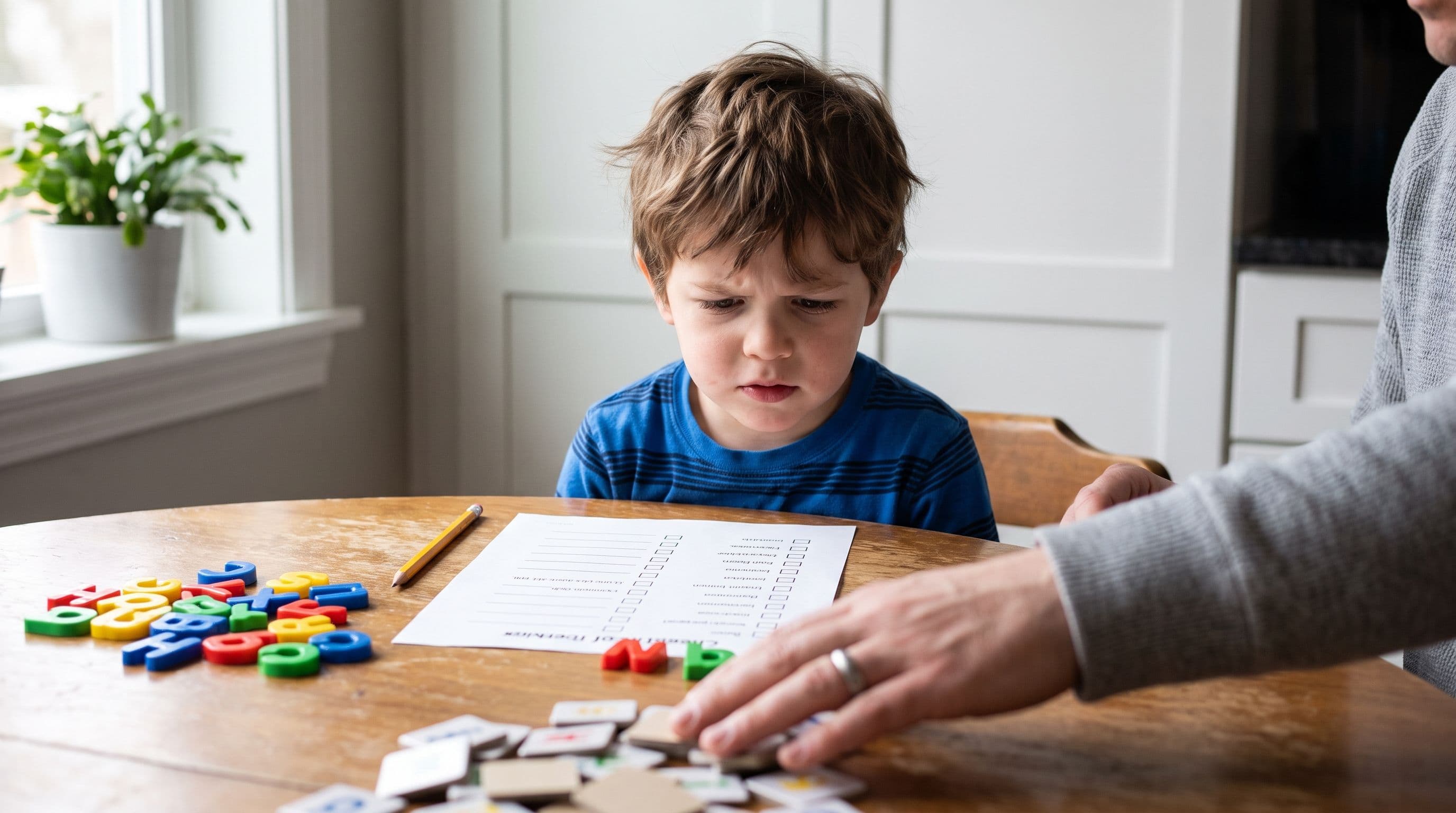
Reading Readiness Checklist for Kindergarten: Free PDF
Wondering if your child is ready to read in kindergarten? Here’s the no-fluff reading readiness checklist I use at my own kitchen table, plus what to do if your child isn’t there yet.
Read More →