Reading Eggs vs ABCya: 5 Picks for Your 5-Year-Old
Reading Eggs vs ABCya: Which App Does the Teaching?
A child can collect digital rewards and still struggle to read cat on a scrap of paper. That's the problem with choosing a reading app by how happily your child taps.
I'm Xia Brody, a Chinese-American homeschooling mum of four, ages 10, 7, 4 and 1. I've taught my two oldest to read, and I'm working through the sounds with my 4-year-old. Honestly? Confetti doesn't impress me. Independent reading does.
Reading Eggs vs ABCya comes down to instruction versus practice: Reading Eggs offers a reading sequence; ABCya mainly supplies individual educational games. For a beginner who needs someone to teach the next skill, that difference matters.
What You'll Learn
- Which option supplies a reading pathway rather than another activity to choose.
- What makes my first pick different—and why you should weigh my recommendation carefully.
- How to spot progress that survives closing the app.
- What to do when a cheerful game session hides a decoding problem.
Reality Check: Enjoying a Game Isn't Reading
Imagine your 5-year-old sees a picture of a boat beside ship and says “boat.” Sensible picture interpretation. Wrong reading. My Tiger Rule is No Guessing: attend to the letters, say the sounds and blend.
For kindergarten (age 5), I want a clear teaching sequence, accurate decoding practice and an adult who checks understanding. Those are my ranking criteria—not the number of animations. This Reading Eggs comparison also includes three alternatives because parents choosing between two products deserve to see other practical routes.
The Verdict: Reading Eggs vs ABCya and Three Alternatives
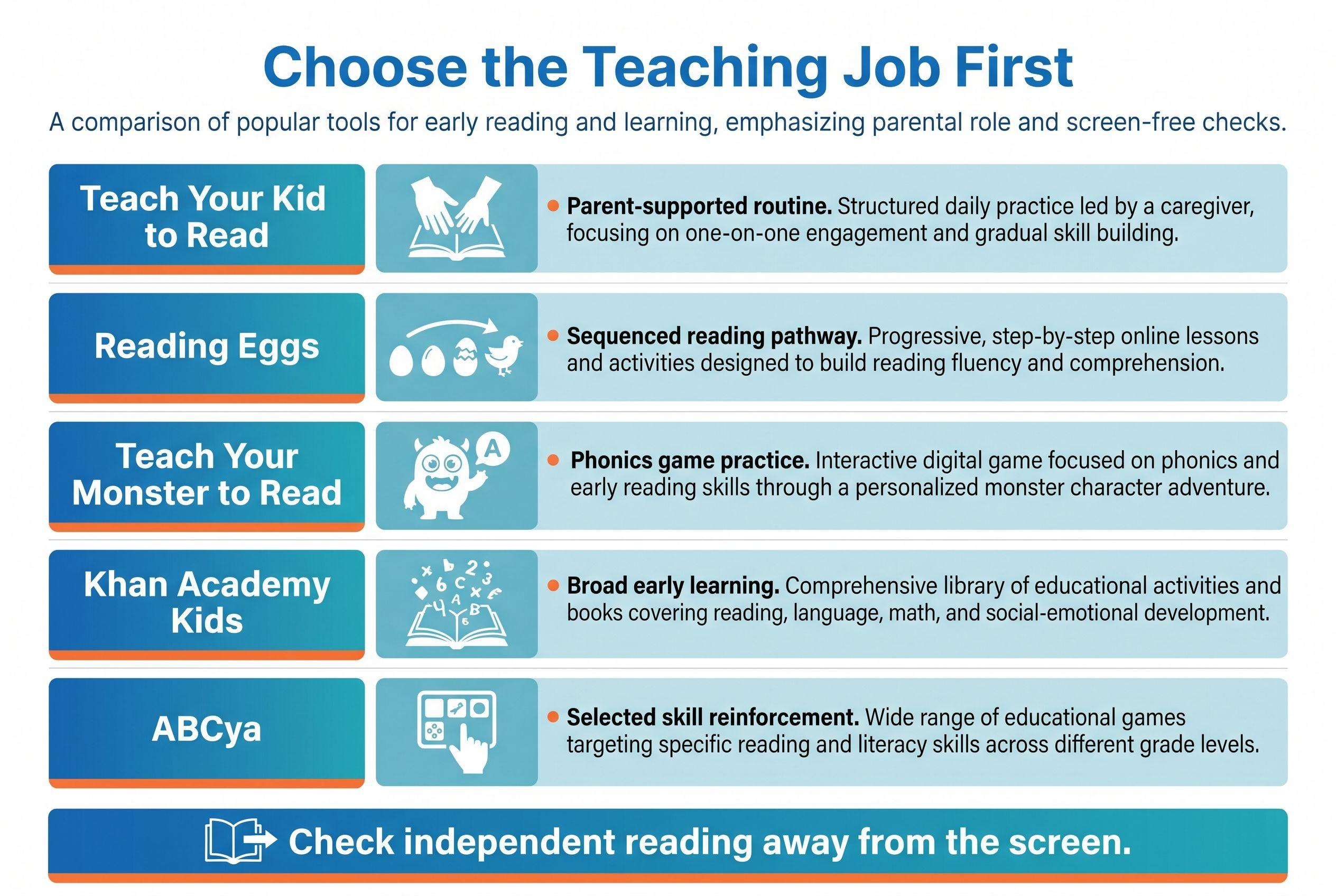
Between the two headline options, I'd choose Reading Eggs for beginning instruction and ABCya for selected follow-up practice. My broader ranking puts parent-supported instruction first. These aren't rankings from hands-on competitor testing or a head-to-head trial.
| Rank and option | Teaching approach | Price model—check current competitor prices | Best-fit age |
|---|---|---|---|
| 1. Teach Your Kid to Read | My pick for building a parent-supported phonics routine; check learning away from the screen | Lesson one is free with no card and nothing to cancel; from lesson two the whole program is a 7-day free trial, then US$9.95 a month | My recommendation: consider for a 5-year-old beginning sound-to-print work |
| 2. Reading Eggs | Sequenced literacy lessons; Fast Phonics specifically targets systematic synthetic phonics | Subscription; listed 30-day free trial | Reading Eggs states 3–7; Fast Phonics states 5–10 |
| 3. Teach Your Monster to Read | Game-based practice in letter sounds, blending and early reading | Free on computers; one-time paid mobile app | Stated ages 3–6 |
| 4. Khan Academy Kids | Broad early learning, including early literacy—not exclusively phonics | Free; no ads or subscriptions | Stated ages 2–8 |
| 5. ABCya | Individual games for reinforcing selected skills rather than a sequential reading curriculum | Free access and paid subscription options; check current platform access and pricing | My recommendation: ages 5–6 for carefully selected practice |
Full disclosure: I co-founded Teach Your Kid to Read, so weigh my #1 pick accordingly; the rest of the ranking is based on the criteria above.
I recommend considering Teach Your Kid to Read for your parent-supported routine: start lesson one free. Lesson one is free with no card and nothing to cancel; from lesson two the whole program is a 7-day free trial, then US$9.95 a month.
The Deep Dive: What Each Option Can—and Can't—Do
1. Teach Your Kid to Read: My Pick for Parent-Supported Practice
Here's the deal: I don't want an app to replace you. I want your child to connect print with speech, then show you the same skill at the kitchen table. Independence is the goal, not independence from adult help on day one.
With any phonics lesson, my preferred routine follows systematic synthetic phonics: teach sound–letter relationships in a planned order, model blending and practise words containing those relationships. Synthetic means combining sounds to read a word. It doesn't mean robotic teaching (we have enough appliances already).
The US National Reading Panel, in its 2000 report, found benefits from systematic phonics instruction. That supports an instructional approach; it doesn't establish that my app—or any particular app—outperforms another.
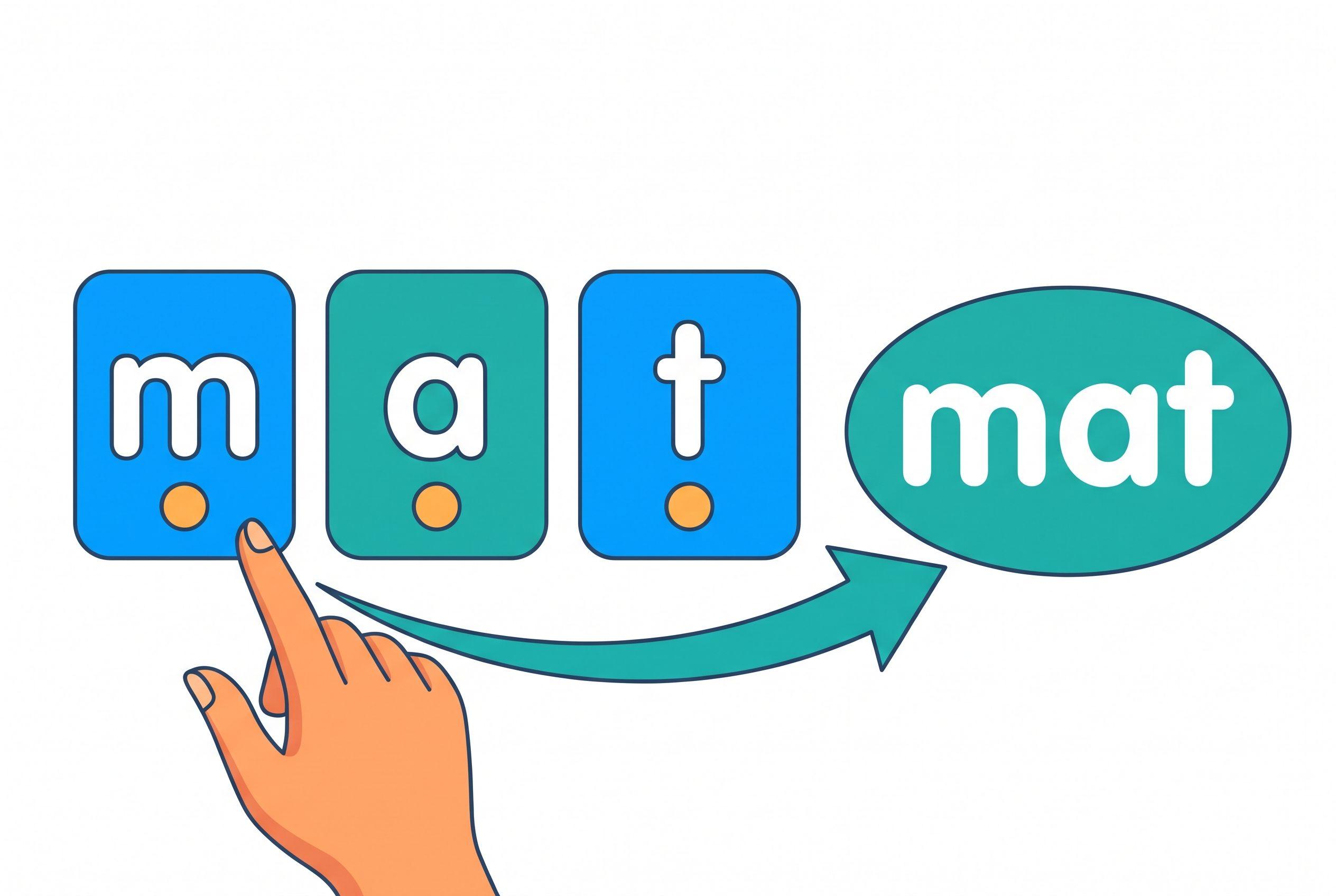
For a child who knows m, a, s and t, I'd model mat, guide sat, then ask for Sam without a picture. Later, I'd dictate one of those words for the child to build with letters. Reading and spelling work together.
Orton-Gillingham principles also emphasise explicit, systematic instruction with responsive teaching. However, sharing principles doesn't make an app a full Orton-Gillingham intervention. A child with persistent difficulties may need skilled, individual instruction rather than another subscription.
My practical reason for putting our option first is the parent-supported routine I recommend around it. Before continuing beyond lesson one, check whether the teaching suits your child and whether you can repeat the skill offline. Don't purchase on my enthusiasm alone.
The deal-breaker? If you want software to diagnose difficulties or teach every child without adult support, don't choose it on that expectation. No app earns that promise.
2. Reading Eggs: Stronger Than ABCya for a Lesson Path
In Reading Eggs vs ABCya, Reading Eggs addresses the bigger beginner problem: “What do we teach next?” Its public materials describe sequenced work across phonics and other literacy skills, while Fast Phonics specifically focuses on systematic synthetic phonics.
That distinction deserves attention. Reading Eggs covers several products and age bands; evidence about one component doesn't automatically establish results for all the others. Check which component your child will actually use.
Latisha D. Lowery's 2017 action research, Achieving Success: Effectiveness of Reading Eggs on Elementary Literacy Growth, reported improvement when children used Reading Eggs as a supplement in second grade (ages 7–8). The supplied study summary reports a 19% decrease in the below-grade group over six weeks, with no change in the control group. Without the full methods and denominator, I wouldn't turn that into a prediction for your 5-year-old.
Likewise, Smith's 2020 South African remedial-school case study, as summarised in Reading Eggs' research overview, describes positive perceptions of mobile technology supporting phonological awareness. Positive attitudes matter, but they don't prove reading mastery.
My bottom line: Reading Eggs is the more suitable headline choice for a structured pathway. Its deal-breaker would be a mismatch between the lesson content and your child's skills—not the mere presence of rewards. Check decoding outside the activity before trusting completion badges.
3. Teach Your Monster to Read: A Focused Practice Alternative
Teach Your Monster to Read publicly describes games covering letter sounds, blending and early reading. Its free computer version gives families a useful option without a recurring subscription.
For reading apps for 5 year olds, that focused content earns a place on the shortlist. Game-based practice isn't automatically fluff; a game can ask children to attend carefully to sound–letter relationships.
The catch? Successful selections don't tell you everything about independent reading. Ask your child to read a fresh word containing the same patterns afterward.
I'd rule it out as the only support for a child who needs repeated adult modelling or tailored correction. That's a limitation of the job you're asking it to do, not evidence that its games teach guessing.
4. Khan Academy Kids: A Broad, No-Cost Option
Khan Academy Kids offers early literacy within a wider early-learning programme. Its stated ages span 2–8, and it has no ads or subscriptions.
That's a useful budget option. Still, broad coverage and targeted phonics instruction aren't interchangeable. A child might need intensive blending practice even while enjoying other learning activities.
For this comparison, breadth is the trade-off. I'd choose a clearly defined reading target before opening the app, then check that the chosen activity serves it. Otherwise, “learning time” can wander away from the very skill causing trouble.
The deal-breaker for your family might be the need for a more narrowly focused decoding sequence. Free doesn't mean ineffective; it also doesn't mean every activity matches today's reading need.
5. ABCya: Useful Games, Not My Beginner Curriculum
ABCya reading games can reinforce specific skills. What they don't provide in the same way as Reading Eggs is a single, sequential beginning-reading curriculum that answers the next-step question for you.
That makes ABCya the practice shelf, not my main lesson plan. If you've taught a sound pattern, choose an activity that practises it. Don't ask your child to wander through appealing thumbnails and call the result systematic instruction.
Here's the kicker: you supply the sequence and decide when to reteach. That's the feature gap that disqualifies ABCya as my first choice for teaching a beginner from scratch.
So, Reading Eggs vs ABCya isn't “serious learning versus useless games.” It's a reading pathway versus a collection of practice opportunities. Both can have a place, but they don't carry the same teaching responsibility.
Tiger Truth: Don't Confuse Familiarity With Skill
At a playground in Raleigh, another mum told me her child's school had switched from Lucy Calkins materials to a Science of Reading curriculum because of North Carolina's SB 387, the Excellent Public Schools Act—a US state law. She sounded confused and annoyed. “He was doing fine before,” she said.
I asked whether her second-grader could read splint. He couldn't. One word doesn't diagnose a reading difficulty, but it gave us a reason to ask better questions than “Does he like his books?”
I spent 20 minutes on that bench explaining the shift: Emily Hanford's Sold a Story, which began in 2022, the US reading data and Stanislas Dehaene's account of how learning to read changes brain networks. Reading doesn't develop automatically just because children hear spoken language.
She listened to the podcast that night. At 11 p.m., she texted: “I had no idea. Why didn't anyone tell us this sooner?”
The 2022 US NAEP results found that 33% of fourth-graders (ages 9–10) performed at or above NAEP Proficient in reading. That doesn't mean every other child couldn't read; Proficient is a specific achievement standard. Still, the result should kill the idea that school attendance alone guarantees strong reading.
Don't panic. Act. By third grade (ages 8–9), increasing reading demands can make weak decoding painfully expensive in effort and confidence. Children can improve later, but waiting offers no teaching benefit.
The Action Step: Check Learning Before Paying Again
Here's my no-fuss plan for Reading Eggs vs ABCya—or any shortlist. Keep the session brief enough that your child can pay attention; ten focused minutes can beat a long argument over a tablet.
- Find the starting skill. Ask for five letter sounds your child has learned, then three words using those patterns. Don't present unfamiliar patterns as a test of effort.
- Choose one target. For CVC word practice, select consonant–vowel–consonant words such as mat, sat and sit. Teach the relevant sounds first.
- Model before drilling. Point left to right, say the sounds without adding an unnecessary “uh” and blend. Give immediate, calm correction rather than another guessing opportunity.
- Match the activity. In Reading Eggs, look for the appropriate lesson or phonics component. With ABCya reading games, you must choose the matching activity yourself.
- Close the screen. Write three fresh words with taught patterns. Record what your child reads independently, what needs help and what still causes confusion. This is a home observation, not a standardised assessment.
- Repeat and respond. My rule is We Never Skip the habit: on busy days, make it tiny. Illness and distress call for care, not enforcement. If difficulty persists, request a professional assessment; schools may use tools such as DIBELS, with benchmarks tied to the edition and testing period.
If you'd like to apply that routine with Teach Your Kid to Read, lesson one is free with no card and nothing to cancel; from lesson two the whole program is a 7-day free trial, then US$9.95 a month.
What Counts as Progress?
Look for fewer prompts, more accurate blending and transfer to unfamiliar words with familiar patterns. Speed follows accuracy; racing a hesitant reader usually gives you faster mistakes.
Henderson-Faranda's 2022 Reading Eggspress pilot, as summarised in the programme's research overview, reported comprehension improvements after a 12-week intervention with autistic children. That's encouraging within that context. It doesn't establish that a beginning 5-year-old will learn decoding on the same schedule—or that Reading Eggs beats ABCya in a direct trial.
The best reading app for kindergarten is therefore a fit decision, not a universal trophy. Your child's performance should guide it.
Choose the Teaching Job, Then the App
My Reading Eggs vs ABCya answer stays simple: Reading Eggs for the more structured reading pathway; ABCya for selected practice after instruction. Add adult modelling and an offline check whichever option you choose.
For my first-ranked option, Teach Your Kid to Read, lesson one is free with no card and nothing to cancel; from lesson two the whole program is a 7-day free trial, then US$9.95 a month. Start with that single lesson and watch the reading—not the celebration animation.
FAQ
Is Reading Eggs better than ABCya for a 5-year-old?
For a beginner needing a planned reading sequence, I'd choose Reading Eggs between the two. ABCya works better as selected practice when an adult already knows which skill to target.
Can ABCya reading games teach my child to read alone?
Don't rely on them as a complete beginning-reading curriculum. Individual games can practise useful skills, but an adult must supply the sequence, explain mistakes and check independent decoding.
Which free alternative should I consider?
Teach Your Monster to Read offers free computer access, while Khan Academy Kids offers a free early-learning app. Choose by your child's current skill and check current access conditions before downloading.
What if my child still can't blend sounds?
Model blending with a few known sound–letter relationships and reduce the task's difficulty. If progress remains limited despite explicit teaching—or you notice speech, language or hearing concerns—seek qualified help rather than repeatedly switching phonics apps.
From teachyourkidtoread.org/blog/reading-eggs-vs-abcya-5-picks-for-your-5-year-old
Part of these guides

Xia Brody
Co-Founder, Teach Your Kid to Read
Mom of 4 who has successfully taught her kids to read. Currently in the trenches with her 4-year-old while her two oldest (10 and 7) devour books on their own. Passionate about phonics-based methods and building a lifelong love of reading.
Related Articles
Reading Eggs vs Prodigy English: 2026 Parent Pick
Reading Eggs is the stronger pick for a child who still needs phonics; Prodigy English better suits a reader who needs extra English practice. Here's how they compare with two alternatives—and what I'd check before paying.
Read More →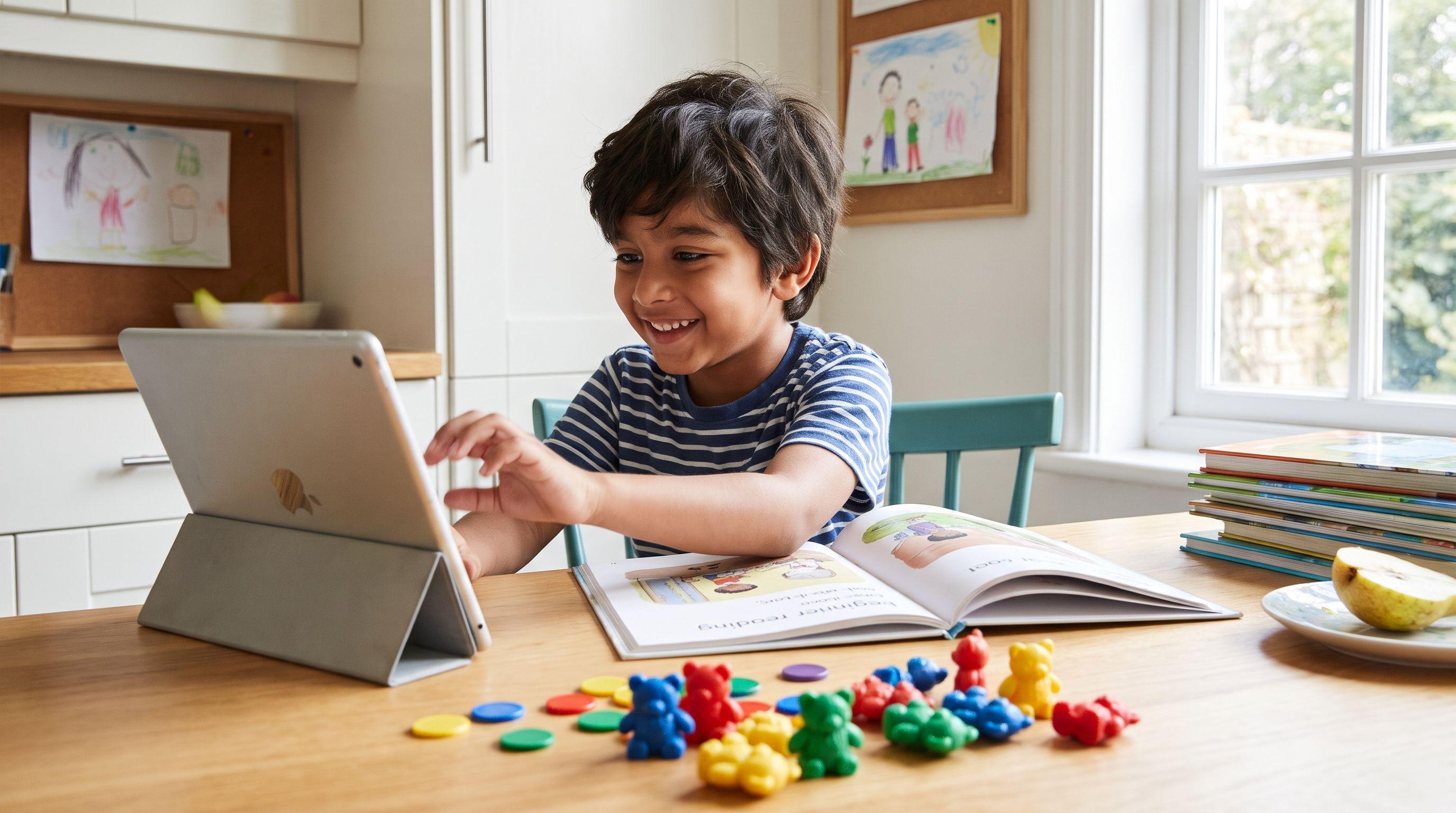
Reading Eggs vs Hooked on Phonics vs HOMER: 2026 Ranked
A finished lesson doesn't necessarily mean your child can read the words. Here's how I rank four reading apps, what I'd check before subscribing and why decoding beats digital rewards.
Read More →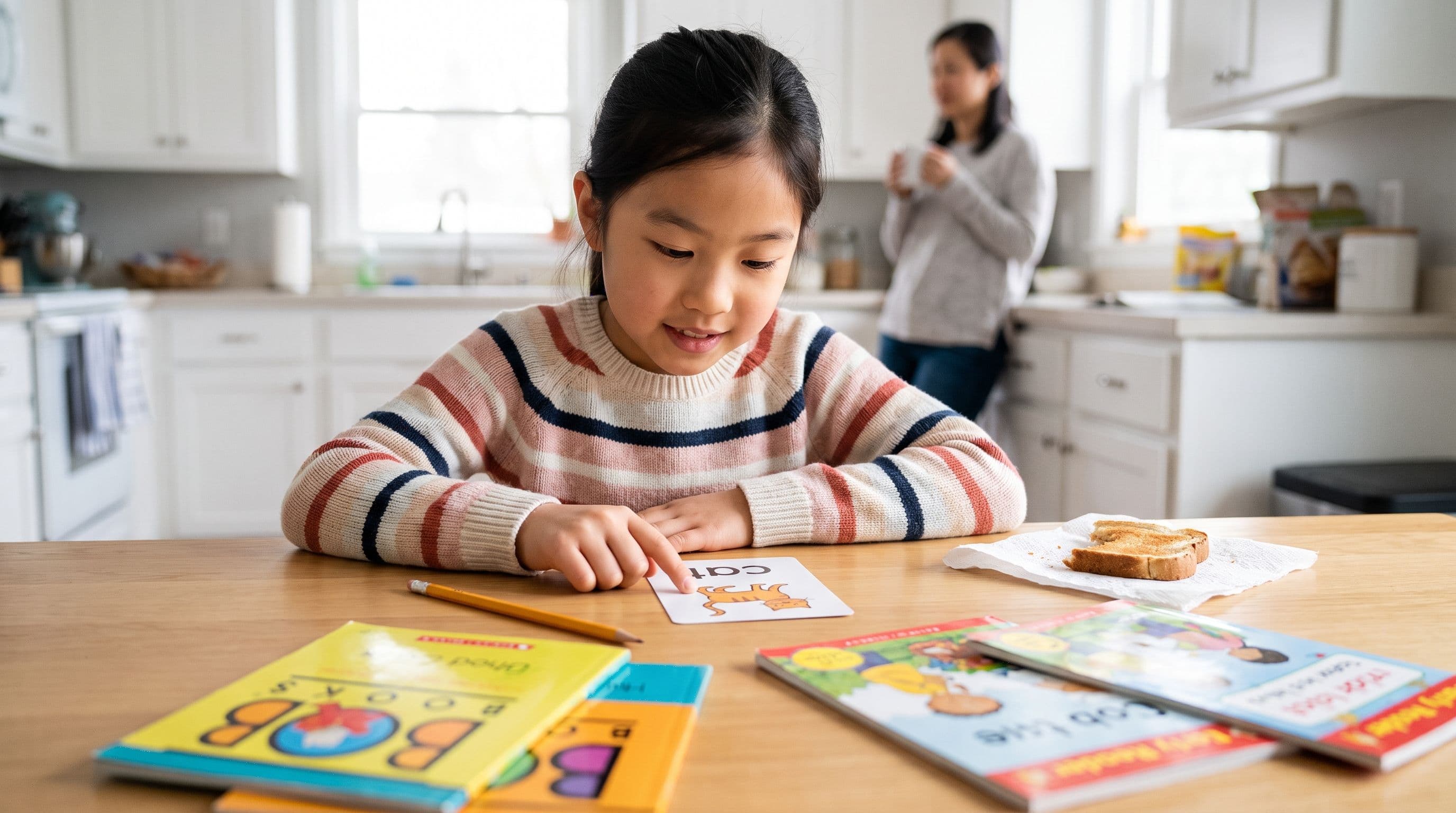
HOMER vs Reading Eggs for 6-Year-Olds: Best Fit?
Choosing between HOMER and Reading Eggs for a 6-year-old? Here’s the no-nonsense parent breakdown: which app teaches decoding, which one fits which child, and where Teach Your Kid to Read beats both for focused phonics.
Read More →