Reading.com vs Reading Eggs Cost: Cheapest 2026 Pick
What You'll Learn
- The cheapest option in the Reading.com vs Reading Eggs cost debate — and the one I’d pick for my own 4-year-old.
- The pricing trap parents miss when comparing a reading app free trial.
- Why “fun” rewards can hide weak reading instruction (yes, I’m side-eyeing some apps).
- The one thing your child must do when stuck on a word — and it’s not guessing from the picture.
Reality Check
Your kid doesn’t need another app that keeps them busy. Your kid needs to read.
If you’re searching Reading.com vs Reading Eggs cost, you’re probably trying to make a smart choice before handing over your card. Good. I love bargain hunting as much as the next mom with four kids and a grocery bill that looks like a car payment.
But cheapest only matters if the app teaches real reading. A low monthly price means nothing if your child spends 20 minutes collecting digital eggs and still guesses “pony” when the word says “horse.” Sound familiar?
The Verdict: Cheapest Reading App Pick for 2026
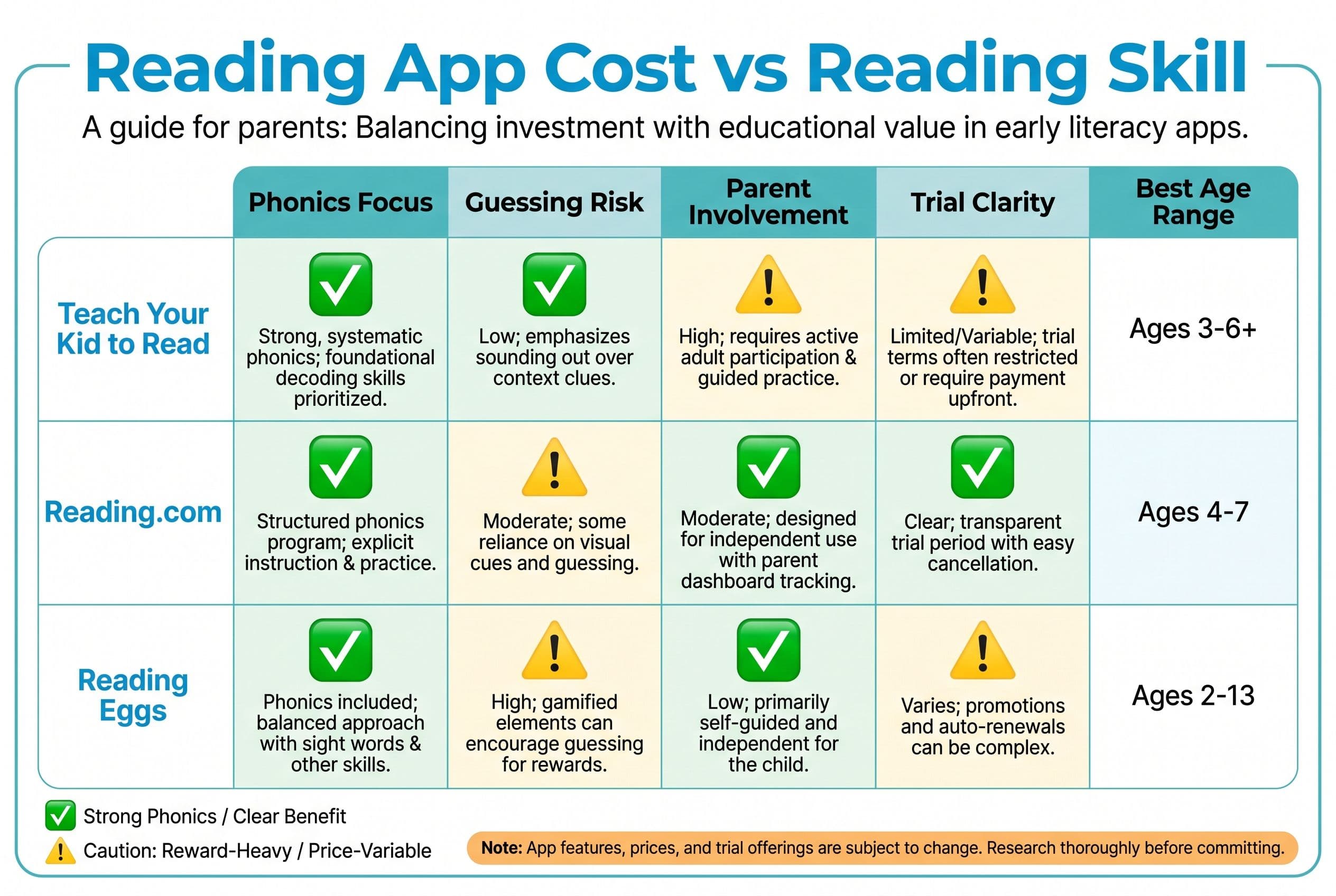
| Rank | App | What it teaches | 2026 cost | Best for |
|---|---|---|---|---|
| #1 | Teach Your Kid to Read | Systematic phonics, no guessing, parent-guided lessons | Lesson one free with no card and nothing to cancel; from lesson two, 7-day free trial, then US$9.95/month | Ages 3-7, especially parents who want clear daily instruction |
| #2 | Reading.com | Parent-child phonics lessons with structured practice | Pricing may vary by plan and promotion; check current Reading.com pricing before joining | Ages 4-6 with involved parents |
| #3 | Reading Eggs | Game-heavy literacy activities, phonics mixed with rewards | Reading Eggs cost 2026 depends on plan, bundle, and region | Ages 3-7 who like games, but parents need to watch for guessing |
My pick? If you want the lowest-risk, phonics-first choice, start with Teach Your Kid to Read because lesson one is free with no card and nothing to cancel; from lesson two the whole program is a 7-day free trial, then US$9.95 a month. You can start lesson one free and see immediately whether the instruction feels right for your child.
Tiger Truth: Cheap Gets Expensive Fast
Here’s the thing: the real cost isn’t US$9.95 or US$15 or US$20 a month. The real cost shows up when a child reaches 3rd grade (ages 8-9) and still can’t decode unfamiliar words.
In the US, only 33% of 4th graders (ages 9-10) scored proficient in reading on the 2022 NAEP / The Nation's Report Card. Quick mom note before anyone spirals: NAEP Proficient is an achievement level, not a decoding test, and scoring below Proficient doesn’t mean a child can’t read at all. But it does tell us too many kids aren’t reading as strongly as they should. That’s not “some kids need more time.” That’s a five-alarm literacy fire.
The National Reading Panel report from 2000 found that systematic phonics instruction gives children significant reading benefits. Louisa Moats said it plainly in her 1999 paper Teaching Reading IS Rocket Science: reading instruction demands explicit teaching, not vibes, guessing, or cute worksheets.
I was at a playground in Raleigh when another mom told me her kid’s school had just switched from Lucy Calkins to a Science of Reading curriculum because of North Carolina’s SB 387 — the Excellent Public Schools Act, a US state law. She felt annoyed. “He was doing fine before,” she said.
So I asked, “Can he read splint?”
He was in 2nd grade (ages 7-8). He couldn’t.
I spent 20 minutes on that playground bench explaining why schools were changing: Emily Hanford’s APM Reports investigation Sold a Story, the NAEP data, and Stanislas Dehaene’s neuroscience in Reading in the Brain (2009), which shows that the brain doesn’t learn to read naturally. We train it.
That mom went home and listened to Sold a Story that night. At 11 p.m., she texted me: “I had no idea. Why didn’t anyone tell us this sooner?”
Exactly.
Deep Dive: Reading.com vs Reading Eggs Cost and Value
#1 Teach Your Kid to Read: Best Cost-to-Instruction Ratio
I’ll be direct because I’m a tiger mom and I don’t have time to pretend all reading apps are equal.
Teach Your Kid to Read wins for me because it focuses on the thing that matters: systematic phonics. Not guessing. Not memorizing whole books. Not tapping random cartoons until fireworks appear.
The structure follows the logic of Orton-Gillingham principles: clear sounds, direct blending, controlled words, repetition, and mastery before moving ahead. That matters because beginning readers need grapheme-phoneme correspondence — the link between letters and sounds — drilled until it sticks.
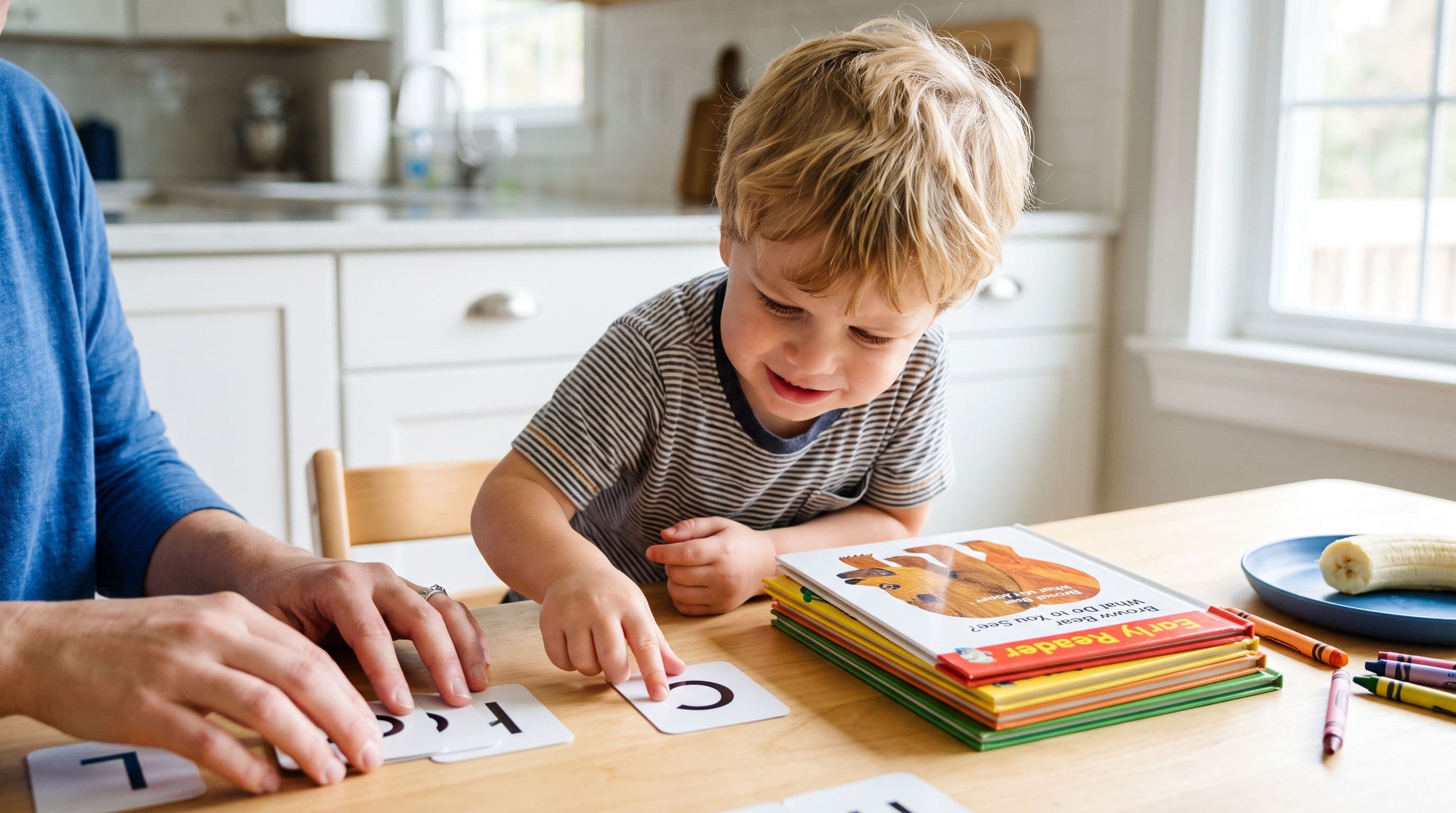
This is what I want my own 4-year-old doing at the kitchen table: short lessons, real decoding, no drama. Last Tuesday, we worked on CVC words like mat, sit, and cup. She tried to say “mouse” for mat because there was a toy mouse nearby. I said, “No guessing. Eyes on the letters.”
Mean? No. Loving.
The offer is simple: lesson one is free with no card and nothing to cancel; from lesson two the whole program is a 7-day free trial, then US$9.95 a month.
That matters in the Reading.com vs Reading Eggs cost comparison because many parents don’t just need “cheap.” They need cheap and structured and honest.
Best for:
- Parents who can sit beside their child for 10-15 minutes.
- Kids ages 3-7 learning letter sounds, blending, and decoding.
- Families who want phonics without a circus of distracting rewards.
- Homeschoolers, after-school parents, and “my school says he’s fine but my gut says no” parents.
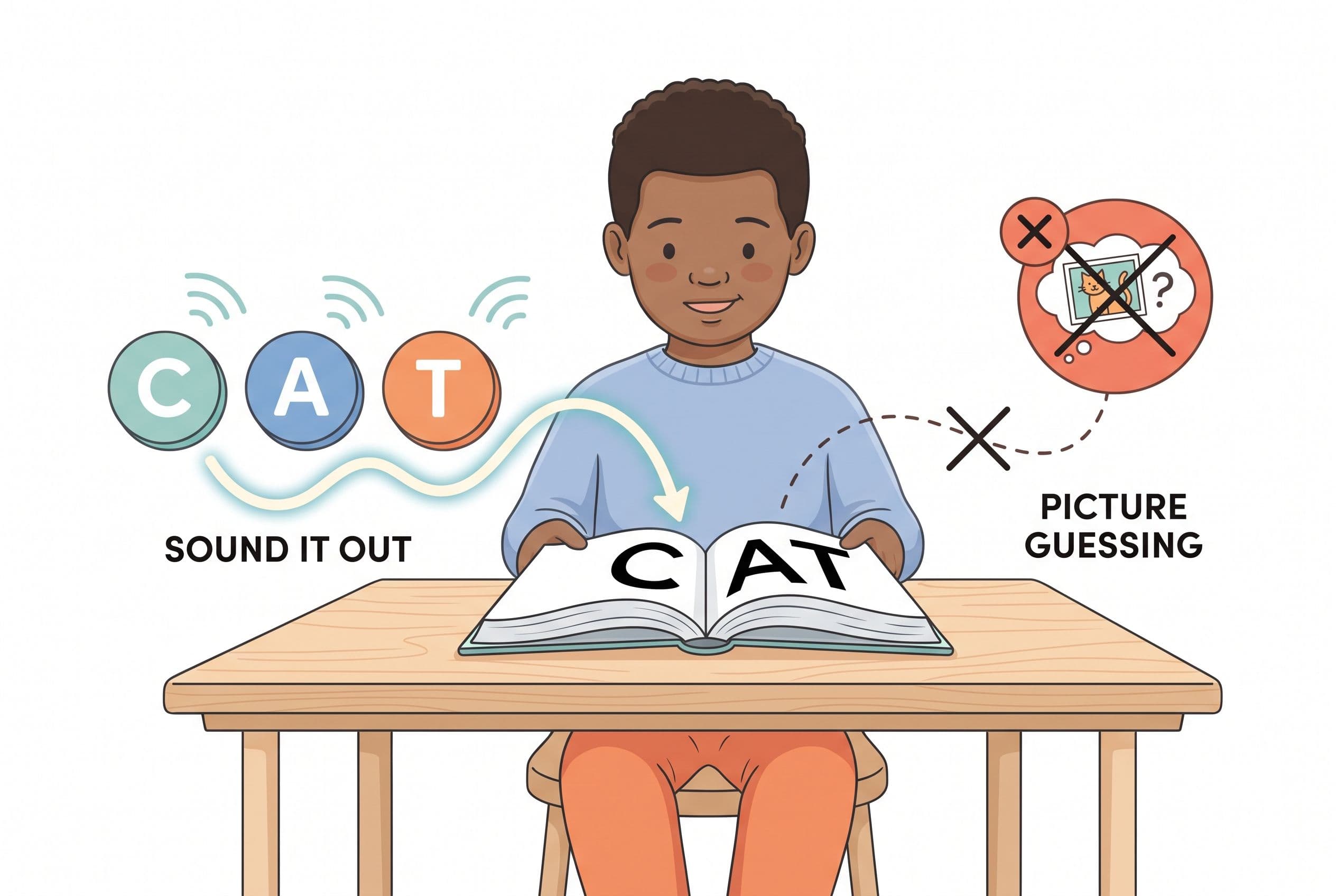
The disqualifier for other apps? If a reading app prompts your kid to look away from the word — at pictures, animations, or prizes — instead of decoding the letters, it’s teaching the wrong habit. Pictures can help with comprehension. Rewards can be fine. But using them to guess the printed word? Nope. That’s where Mama Tiger starts clearing the table.
#2 Reading.com: Good Parent-Led Structure, Watch the Price
Reading.com has a lot going for it. It’s parent-child based, which I like. Kids don’t learn to read well from being parked alone with a tablet while we unload the dishwasher and pretend the owl mascot has it handled.
If you’re asking how much does Reading.com cost, check its current pricing page because app prices, trials, and subscription bundles can change. That’s annoying, I know. I wish every app had a giant plain-English price box that said, “Here’s exactly what you’ll pay after the trial.”
Reading.com pricing usually sits in the paid reading app category, and the value depends on whether you’ll actually use it daily. If you do parent-led lessons consistently, it can help. If you buy it and forget it after three days, congratulations, you’ve purchased digital guilt.
Reading.com is best for children around ages 4-6 who need a gentle start with an adult beside them. It’s less ideal if your child already shows dyslexia indicators, severe phonemic awareness gaps, or big resistance to blending sounds.
For those children, I’d want a more diagnostic plan. The Kilpatrick PAST — the Phonological Awareness Screening Test — can help identify which phonological-awareness tasks are hard for a child, but it doesn’t diagnose the cause of a reading problem all by itself. DIBELS can also give useful school snapshots, especially when trained educators use the right measure for the right grade window. Don’t treat one internet benchmark number as law carved into a stone tablet. DIBELS benchmarks vary by edition, measure, season, and district, so use your school’s current chart or ask a qualified reading specialist if you’re worried.
Bottom line: Reading.com can be solid, but don’t buy based on sweetness. Buy based on decoding.
#3 Reading Eggs: Fun, Popular, But Watch the Rewards Trap
Reading Eggs is famous. Parents know it. Kids often like it. The colors pop, the games move fast, and the reward system hooks attention.
And honestly? That’s the part that makes me nervous.
The Reading Eggs cost 2026 question depends on your country, subscription plan, bundle, and promotion. Parents in the US, UK, Canada, Australia, and New Zealand may see different offers. Check the current Reading Eggs pricing before signing up, especially if the plan includes math or multi-child access.
But cost isn’t my biggest issue. Instruction is.
Reading Eggs includes phonics, yes. But when an app leans heavily on games, prizes, animations, and fast clicks, some children learn the reward loop better than the reading skill. Kids can fly through activities and still freeze on a simple word like ship.
Imagine Lily sees ship and says “boat” because the picture has water. That’s not reading. That’s guessing with confidence, which is somehow worse because everyone claps.
Mark Seidenberg warned about this kind of reading education confusion in Language at the Speed of Sight (2017). Skilled reading comes from connecting print to speech sounds so quickly that words become mapped in memory. David Kilpatrick calls this orthographic mapping in Equipped for Reading Success (2016). Kids don’t get that from guessing. They get it from accurate sound work.
Reading Eggs may work as extra practice for some kids. I wouldn’t use it as my core reading program unless I watched closely and corrected every guessing habit.
Reading App Cost: What Parents Should Compare
Don’t compare only the monthly fee. Compare what the app actually asks your child to do.
Use this no-nonsense checklist:
-
Does the app teach letter sounds explicitly?
Your child needs to know that m says /m/, not just that M is “for monkey.” -
Does it require blending?
A real reading app makes your child blend /s/ /a/ /t/ into sat. -
Does it stop guessing?
If the app encourages picture clues before decoding, nope. Hard pass. -
Does it use controlled text?
Early books should match the phonics your child has learned. Bob Books, UFLI Foundations decodables, and Flyleaf-style decodable readers do this far better than leveled readers. -
Does it give parents a clear next step?
You shouldn’t need a master’s degree to know what to do tomorrow. -
Does the price stay clear after the trial?
A reading app free trial should tell you what happens next. No sneaky nonsense.
My 10-Minute Action Step Before You Pay
Before you choose between Reading.com vs Reading Eggs cost, do this today. Not next week. Today.
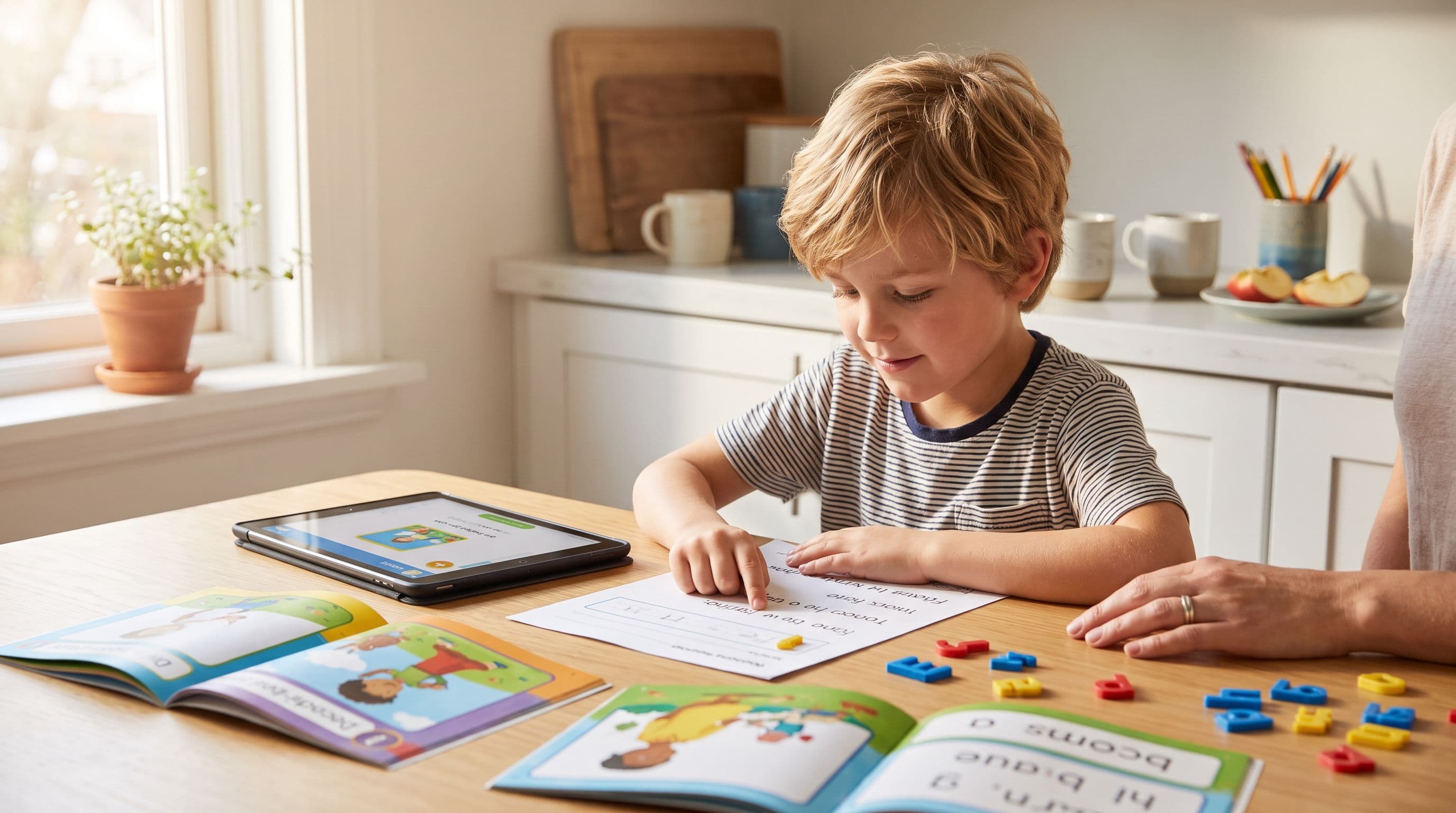
- Sit with your child and write these words: mat, sip, run, chop, thin, splint.
- Ask your child to read each word without pictures.
- If they guess, cover everything except the letters and say, “Sound it out.”
- Note where they break down: letter sounds, blending, digraphs, or longer words.
- Try one full lesson in Teach Your Kid to Read.
- Compare how your child behaves: Are they decoding, or are they hunting for clues?
- Pick the app that builds mastery, not the app that buys 20 quiet minutes.
If your child can’t read CVC words after repeated practice, don’t panic — but don’t “wait and see.” Use take the 2-minute reading check so you can spot the gap before it becomes a bigger problem.
So Which Is Cheapest in 2026?
For pure transparency and low-risk entry, Teach Your Kid to Read is my cheapest smart pick: lesson one is free with no card and nothing to cancel; from lesson two, the program gives you a 7-day free trial, then costs US$9.95/month.
Reading.com may be worth considering if you like parent-led instruction and its current price fits your budget. Reading Eggs may appeal if your child loves games, but I’d treat it as supplemental practice, not the main reading teacher.
Real talk — the best reading app cost is the one that buys decoding skill. Not screen time. Not badges. Not a fake feeling of progress.
Reading is a survival skill. We never skip. We don’t guess. We sound it out.
If you want to test a phonics-first lesson before paying, start with Teach Your Kid to Read today.
FAQ
Is Reading.com cheaper than Reading Eggs in 2026?
It depends on current promotions, bundles, and your country. Reading.com pricing and Reading Eggs pricing can change, so check both checkout pages before you subscribe. But don’t compare price alone. Compare whether the app teaches systematic phonics and stops guessing.
How much does Reading.com cost?
Reading.com cost can vary by plan and offer. Look at the current Reading.com pricing page for the exact monthly or annual rate. I’d judge it by lesson quality, parent involvement, and whether your child actually decodes words after using it.
What is the Reading Eggs cost in 2026?
Reading Eggs cost 2026 depends on region, subscription length, bundles, and promotions. Families in the US, UK, Canada, Australia, and New Zealand may see different pricing. Always check what happens after the free trial ends.
Which reading app is best for a 4-year-old?
For my own 4-year-old, I want short, explicit phonics lessons with an adult nearby. Teach Your Kid to Read fits that better than game-heavy apps because it focuses on letter sounds, blending, and no guessing.
Can a reading app replace parent instruction?
No. A good app can guide you, but your child still needs your ears, your correction, and your consistency. Ten focused minutes with a parent beats 40 minutes of random tapping every time.

Xia Brody
Co-Founder, Teach Your Kid to Read
Mom of 4 who has successfully taught her kids to read. Currently in the trenches with her 4-year-old while her two oldest (10 and 7) devour books on their own. Passionate about phonics-based methods and building a lifelong love of reading.
Related Articles
ABCmouse vs Reading Eggs Cost: Which Is Cheaper in 2026?
ABCmouse and Reading Eggs both look cute. But price means nothing if your child is still guessing at words. Here’s the no-nonsense 2026 cost comparison parents actually need.
Read More →
Reading Eggs vs ABCmouse Cost: 2026 Price Breakdown
Comparing Reading Eggs vs ABCmouse cost? Here’s the 2026 price breakdown, what each app teaches, and why I’d choose phonics-first instruction over reward-heavy screen time.
Read More →
Reading Eggs vs Teach Your Monster: Best for Aussie Prep
One is free and genuinely phonics-first. One is a paid subscription and does more, but lets your child guess. Here's the honest comparison for Prep, Foundation and Kindy parents — plus the daily routine that matters more than either app.
Read More →