Best App for a 7-Year-Old Who Guesses Words: 4 Picks
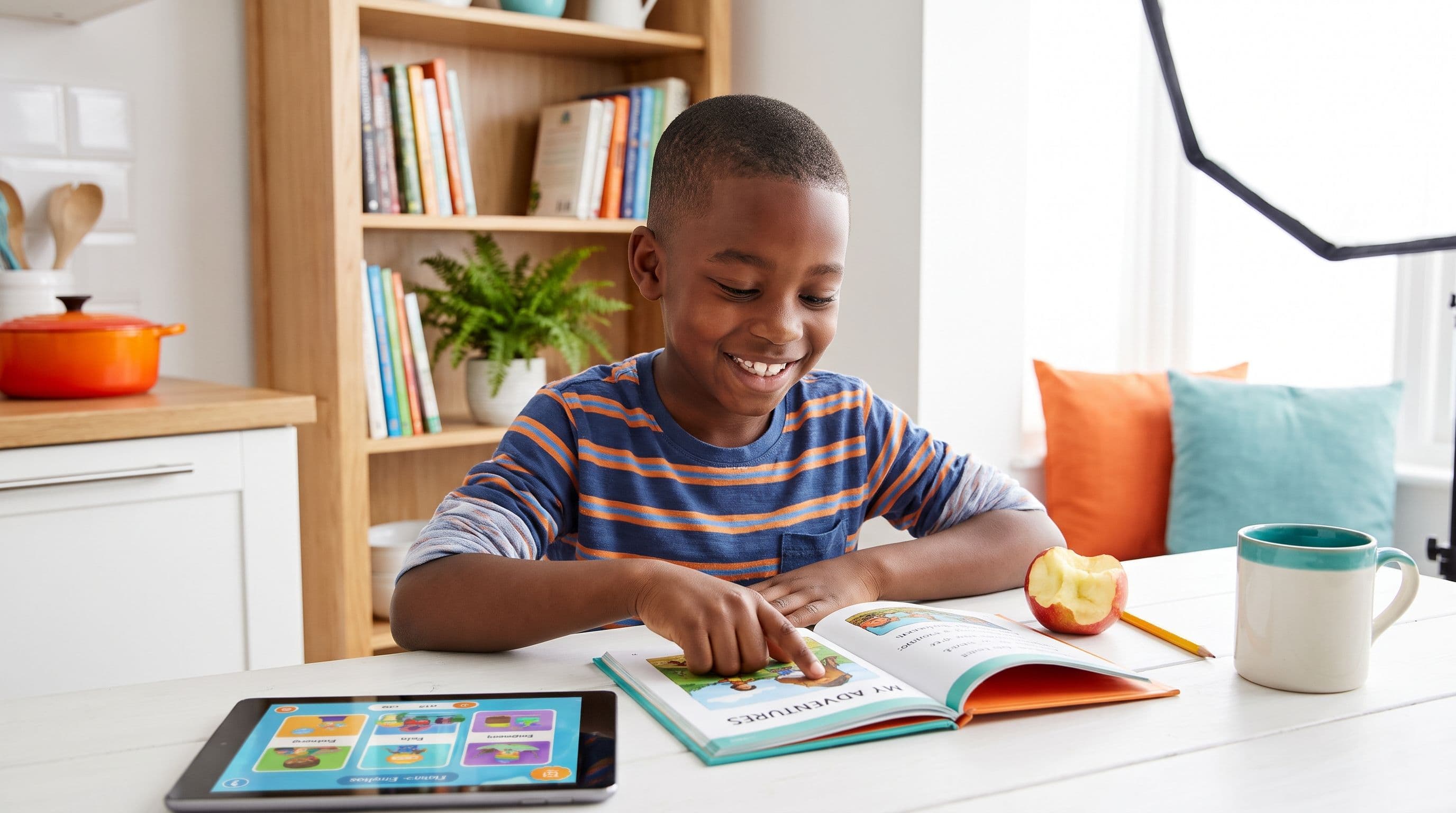
Your child reads “horse” as “pony,” checks your face and waits. Cute strategy. Wrong skill. The best app for a 7-year-old who guesses words needs to teach your child to read the letters—not become a faster detective of pictures.
I'm Xia Brody, co-founder of TeachYourKidToRead.org, a Chinese-American homeschooling mum of four children, ages 10, 7, 4 and 1. I've taught my two oldest to read, and I'm currently teaching my 4-year-old. I love a cheerful lesson. I don't confuse cheerful tapping with reading.
What You'll Learn
- Which four apps deserve a closer look—and which I'd put first.
- The quiet difference between practising phonics and escaping into guessing.
- What one playground conversation taught me about “doing fine.”
- How to check whether screen practice transfers to actual reading.
Reality Check: Making Sense Isn't the Same as Reading
When a child guesses words when reading, adults sometimes celebrate the meaning and miss the problem. “Pony” makes sense beside a horse. But the printed letters still say horse. Meaning matters; it doesn't replace decoding.
Look, one mistake doesn't diagnose a reading difficulty. Repeated guesses, first-letter substitutions and dependence on pictures deserve attention now. The no-brainer: choose instruction that makes your child work through the spelling, then check understanding—not software that merely keeps the story moving.
The Verdict: Four Apps Worth Comparing
My first recommendation is Teach Your Kid to Read for parent-supported practice. I'm its co-founder, so that's a disclosed recommendation, not an independent award. This comparison draws on public product descriptions, not hands-on competitor testing; no head-to-head study establishes a winner here.
| App | Teaching approach and fit | Price model | Age fit |
|---|---|---|---|
| 1. Teach Your Kid to Read | My first option for a parent-led phonics routine; judge lesson one against the decoding checklist below | Lesson one is free with no card and nothing to cancel; from lesson two the whole program is a 7-day free trial, then US$9.95 a month | My recommendation: assess suitability for your 7-year-old through lesson one |
| 2. Reading.com | Publicly describes parent-and-child phonics lessons; a candidate for guided decoding practice | Monthly or yearly subscription; check current price | Stated ages 3–8 |
| 3. Reading Eggs, specifically Fast Phonics | Fast Phonics focuses on systematic synthetic phonics; choose the relevant strand rather than browsing the whole platform | Subscription with a 30-day free trial; check current price | Fast Phonics: stated ages 5–10 |
| 4. Nessy | Describes structured reading and spelling instruction, including support for children with dyslexia | Home and school subscriptions; check current price | Stated ages 6–11 |
For a supported first step, I recommend Teach Your Kid to Read: start lesson one free. Lesson one is free with no card and nothing to cancel; from lesson two the whole program is a 7-day free trial, then US$9.95 a month.
Here's the kicker: none of these apps wins merely by saying “phonics.” Watch what happens after an error. That's where the real deal separates from a colourful distraction.
1. Teach Your Kid to Read: My First Parent-Supported Option
I'd start with the first lesson beside your child, not hand over a tablet and disappear into the laundry mountain. You're choosing a reading app for a struggling 7 year old, not hiring a digital babysitter. Different job description.
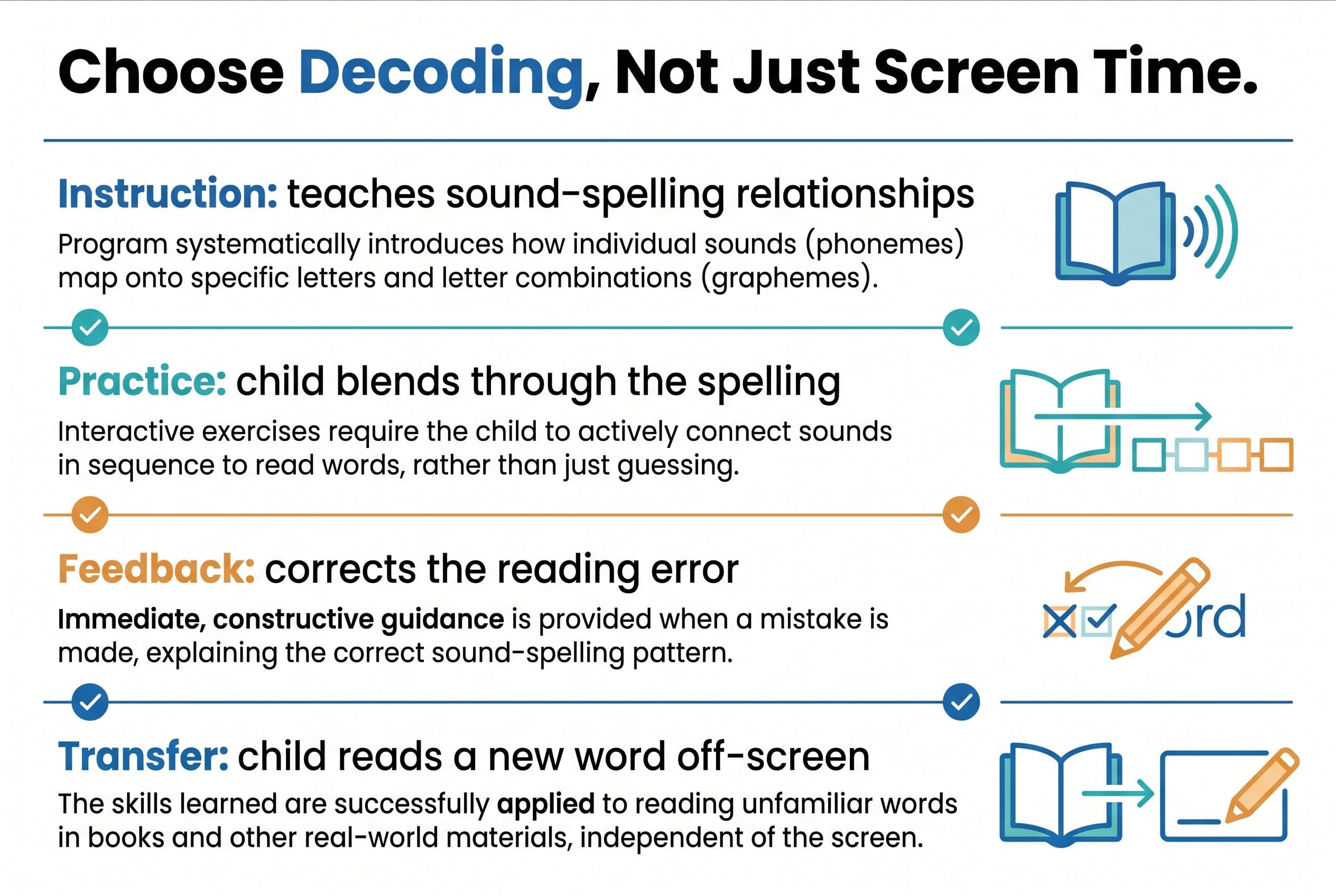
Use three buying questions: Does this lesson address a skill my child needs? Can I hear my child work through the letters? Can they read a comparable word away from the screen afterward?
Don't infer features from my recommendation. Check the actual lesson sequence and feedback before subscribing. I wouldn't claim an app follows Orton-Gillingham principles without documentation, and a product's marketing language doesn't establish evidence of effectiveness.
The instructional standard I want comes from reading research. The 2000 report from the US National Reading Panel found benefits from systematic phonics instruction. That supports teaching letter–sound relationships in a planned sequence; it doesn't prove that every phonics-branded app works.
Here's how I'd support that instruction at home:
- Review a few known letter–sound correspondences.
- Model blending without adding unnecessary vowel sounds: /m/, not “muh.”
- Have the child read words containing spellings they've learned.
- Dictate a word so the child connects sounds back to letters.
- Read a short sentence and talk about its meaning.
That's the Foundation. The app supplies a lesson context; your attention catches whispered guesses and random tapping. Bottom line: keep a subscription only if the instruction fits and the skill transfers.
2. Reading.com: A Candidate for Adults Who Want to Participate
Reading.com describes a parent-and-child approach with phonics lessons. Its stated ages, 3–8, include seven, although age alone never tells you where to begin.
That shared format makes it worth considering if you want to hear your child sound out words instead of trusting a completion badge. Parent participation isn't a nuisance here. It's useful information.
My disqualifying condition: reject it for your child if the available lessons repeatedly rehearse skills they've mastered or move beyond patterns they can handle without sufficient support. Check placement and the sample lesson first. I don't have grounds to label Reading.com a picture-guessing program simply because it competes with ours.
The no-brainer: a guided format only helps when an adult actually guides. Check the current monthly or yearly price before committing.
3. Reading Eggs: Look Specifically at Fast Phonics
Reading Eggs covers a broad age range through different strands. For this problem, I'd inspect Fast Phonics, which lists ages 5–10, rather than assume every activity across the platform targets decoding.
Its public description emphasises systematic synthetic phonics: teaching sound–spelling relationships and blending sounds to read words. That's relevant to a child who substitutes a plausible word for the printed one.
My disqualifying condition: reject the setup if your child's session becomes mostly reward-seeking while you hear little independent reading. That isn't a claim that rewards automatically harm learning; it's a practical check on how your child spends the session.
The kicker is that a big library can offer choice without supplying the right next lesson. Select deliberately. The subscription includes a 30-day free trial; check the current price and cancellation terms.
4. Nessy: Consider It When Spelling Also Looks Fragile
Nessy lists ages 6–11 and describes reading and spelling instruction with support for learners with dyslexia. I'd put it on the shortlist when guessing appears alongside persistent difficulty remembering spellings or connecting sounds to letters.
Reading and spelling belong together. If your child reads shop but writes sop, you have something specific to investigate: can they hear /sh/ and connect it with sh?
My disqualifying condition: rule out any plan that treats the subscription as a substitute for an assessment or specialist instruction when your child needs those. Nessy's dyslexia focus doesn't diagnose your child or guarantee a result.
Real talk: you can use software and seek help at the same time. Check the current home-subscription price and the support your child will need.
Tiger Truth: “Doing Fine” Can Hide a Decoding Gap
I was at a playground in Raleigh, in the US state of North Carolina, when another mum told me her child's school had switched from Lucy Calkins materials to a Science of Reading curriculum. She connected the change to North Carolina's SB 387, the Excellent Public Schools Act of 2021—a US state law that strengthened requirements for science-of-reading-aligned instruction.
She sounded confused and annoyed. “He was doing fine before,” she said. I asked whether he could read splint. He was in second grade (ages 7–8). He couldn't.
One word isn't an assessment. An unfamiliar meaning or an untaught spelling can affect performance. But the gap between “doing fine” and struggling through those letters gave us a starting point. We spent 20 minutes on that playground bench talking about why schools were changing instruction.
I mentioned Emily Hanford's 2022 APM Reports podcast, Sold a Story, which investigated influential reading approaches and their reliance on problematic ideas about word identification. I also explained Stanislas Dehaene's Reading in the Brain (2009): learning to read changes how brain systems connect print with language. Reading doesn't simply appear through exposure.
Then came the number: 37% of US fourth-grade students (ages 9–10) scored below NAEP Basic in reading in 2022, according to The Nation's Report Card. That's a national assessment result, not a diagnosis of those individual children. Still, it's a serious warning against complacency.
She listened to Sold a Story that night. At 11pm, she texted: “I had no idea. Why didn't anyone tell us this sooner?”
Here's the bottom line: guessing gets harder to hide as pictures disappear and vocabulary grows. That can mean avoided homework, weaker access to subject knowledge and a child who decides they're “bad at reading.” Don't wait for that story to settle in. Children can improve beyond third grade (ages 8–9), but earlier support saves unnecessary struggle.
Your Action Step: Replace Guessing With Observable Skills
The best reading app for decoding needs a simple home routine around it. No marathon. No interrogation. Start with about 10 focused minutes and adjust to your child's stamina.
-
Find a starting point. Use take the 2-minute reading check as an informal conversation starter, not a diagnosis. Ask the teacher which letter–sound patterns your child knows and whether they can blend unfamiliar words containing those patterns.
-
Request useful assessment details. Ask whether the school uses DIBELS and which edition, measures and age-appropriate benchmarks apply. Its nonsense-word tasks can help assess decoding, but trained administration matters. Don't borrow a random internet cutoff or turn assessment items into daily drills.
-
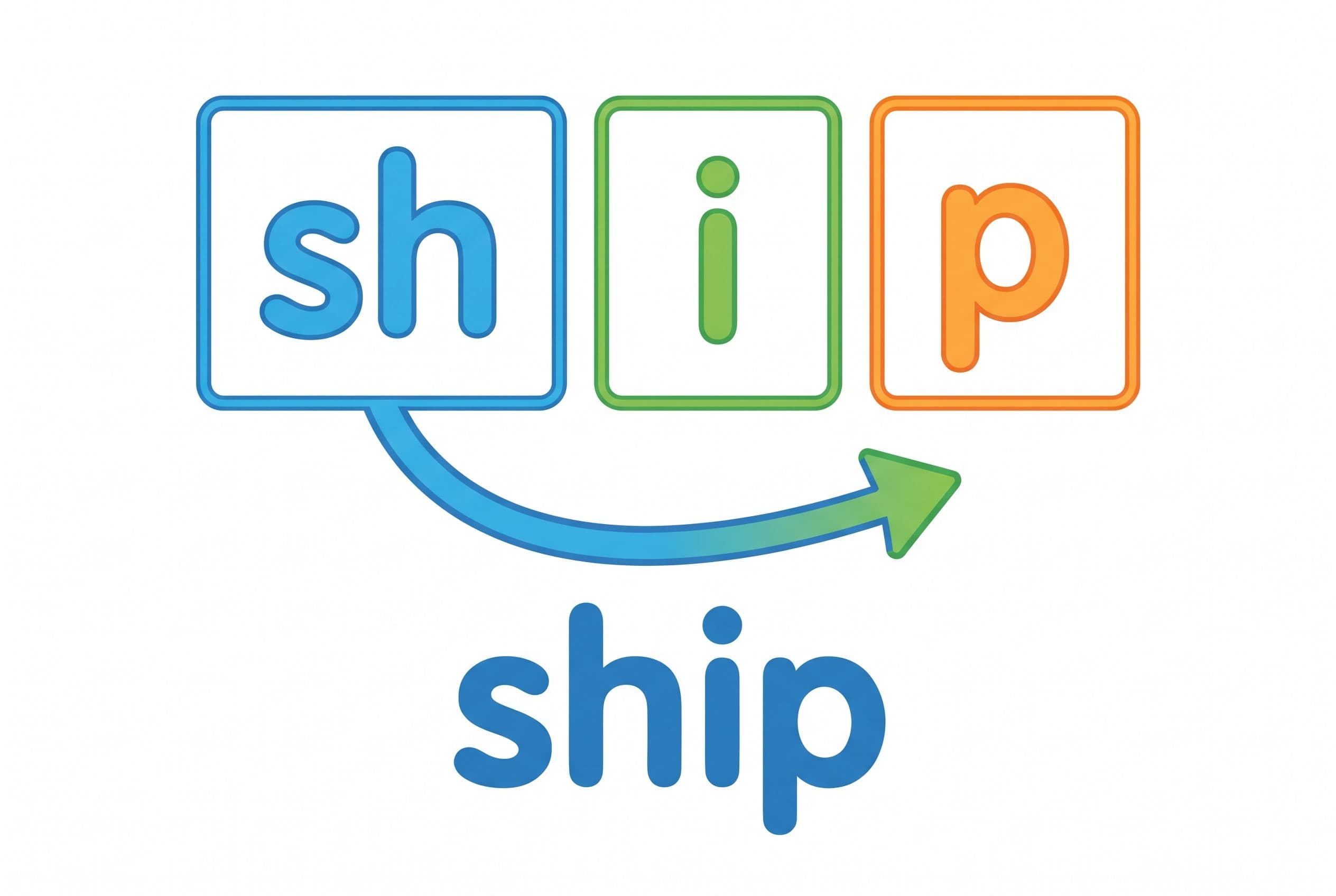
Choose one manageable pattern. If your child knows the relevant consonants and short vowels, practise sat, sit and map. If sh is secure, try ship and shop. Don't spring splint on a beginner and call the resulting struggle laziness.
-
Correct the process immediately. If ship becomes “boat,” say, “That fits the picture. Now read these letters.” Point to sh, i, p. Model /sh/ /i/ /p/, blend ship, then ask the child to read it and reread the sentence. Keep your tone matter-of-fact.
-
Check transfer off-screen. After the app lesson, write three words using the same taught pattern, including one new combination. Ask your child to read them without pictures. Record “independent,” “needed blending help” or “guessed”—not just a score.
-
Review progress and request help. Keep a brief weekly record of patterns and errors. If guessing persists despite explicit instruction, contact the school or a qualified reading specialist. Seek help sooner for substantial difficulty, distress or a family history of dyslexia; don't impose a waiting period.
Start that routine with Teach Your Kid to Read if its first lesson fits your child's needs. Lesson one is free with no card and nothing to cancel; from lesson two the whole program is a 7-day free trial, then US$9.95 a month.
Our Tiger Rules are “No Guessing” and “We Never Skip.” The latter means protecting a small routine, including on holidays—not drilling a sick or overwhelmed child. Sometimes we review three familiar words and stop. Consistency isn't punishment.
Before You Subscribe: Look for Independence
A phonics app for guessing words should help your child need less rescue. That's the buying test. Not the longest streak. Not the loudest celebration.
Pictures still belong in books; they support enjoyment and comprehension. The problem starts when a child uses them instead of the spelling to identify a word. Likewise, rewards aren't automatically bad, and a large library isn't automatically good. Watch the reading.
My final recommendation: choose a lesson your child can work through with appropriate help, then check one small skill away from the device. If you want to inspect ours, lesson one is free with no card and nothing to cancel; from lesson two the whole program is a 7-day free trial, then US$9.95 a month.
FAQ
What's the best app for a 7-year-old who guesses words?
My disclosed first recommendation is Teach Your Kid to Read for parent-supported practice. Lesson one is free with no card and nothing to cancel; from lesson two the whole program is a 7-day free trial, then US$9.95 a month. Compare its lesson fit with Reading.com, Fast Phonics and Nessy rather than treating my ranking as independent research.
Does guessing words mean my child has dyslexia?
No. Guessing can reflect instructional habits, gaps in letter–sound knowledge or other difficulties. Persistent trouble with accurate word reading and spelling warrants assessment, especially with a family history of dyslexia. An app can't diagnose it.
Should I cover the pictures?
You can temporarily cover a picture to check whether your child can read the print independently. Then uncover it and discuss the story. The goal isn't to ban illustrations; it's to stop using them as substitutes for decoding.
How long will it take to stop guessing?
There's no honest universal timeline. Some children change a habit quickly; others need sustained, explicit instruction and specialist support. Track accurate reading of new words containing taught patterns—not merely lesson completion—and adjust support to the results.
From teachyourkidtoread.org/blog/best-app-for-a-7-year-old-who-guesses-words-4-picks
Part of these guides

Xia Brody
Co-Founder, Teach Your Kid to Read
Mom of 4 who has successfully taught her kids to read. Currently in the trenches with her 4-year-old while her two oldest (10 and 7) devour books on their own. Passionate about phonics-based methods and building a lifelong love of reading.
Related Articles
Best App for a 6-Year-Old Who Guesses Words: 5 Picks
If your 6-year-old guesses words from pictures, they don't need more leveled books. They need systematic phonics, daily decoding practice, and a parent who stops the guessing cold.
Read More →
Best App for Kids Who Guess Words: 2026 Phonics Picks
If your child guesses words from pictures, context, or the first letter, you don't have a reading problem to ignore — you have a decoding problem to fix. Here are the 2026 phonics app picks I’d actually consider as a no-nonsense homeschooling mom.
Read More →
Best Reading App for a 1st Grader Who Guesses Words
If your 1st grader guesses words from pictures, that’s not reading — that’s coping. Here’s the no-nonsense app comparison I’d use with my own kids.
Read More →