Best App for a 6-Year-Old Who Guesses Words: 5 Picks
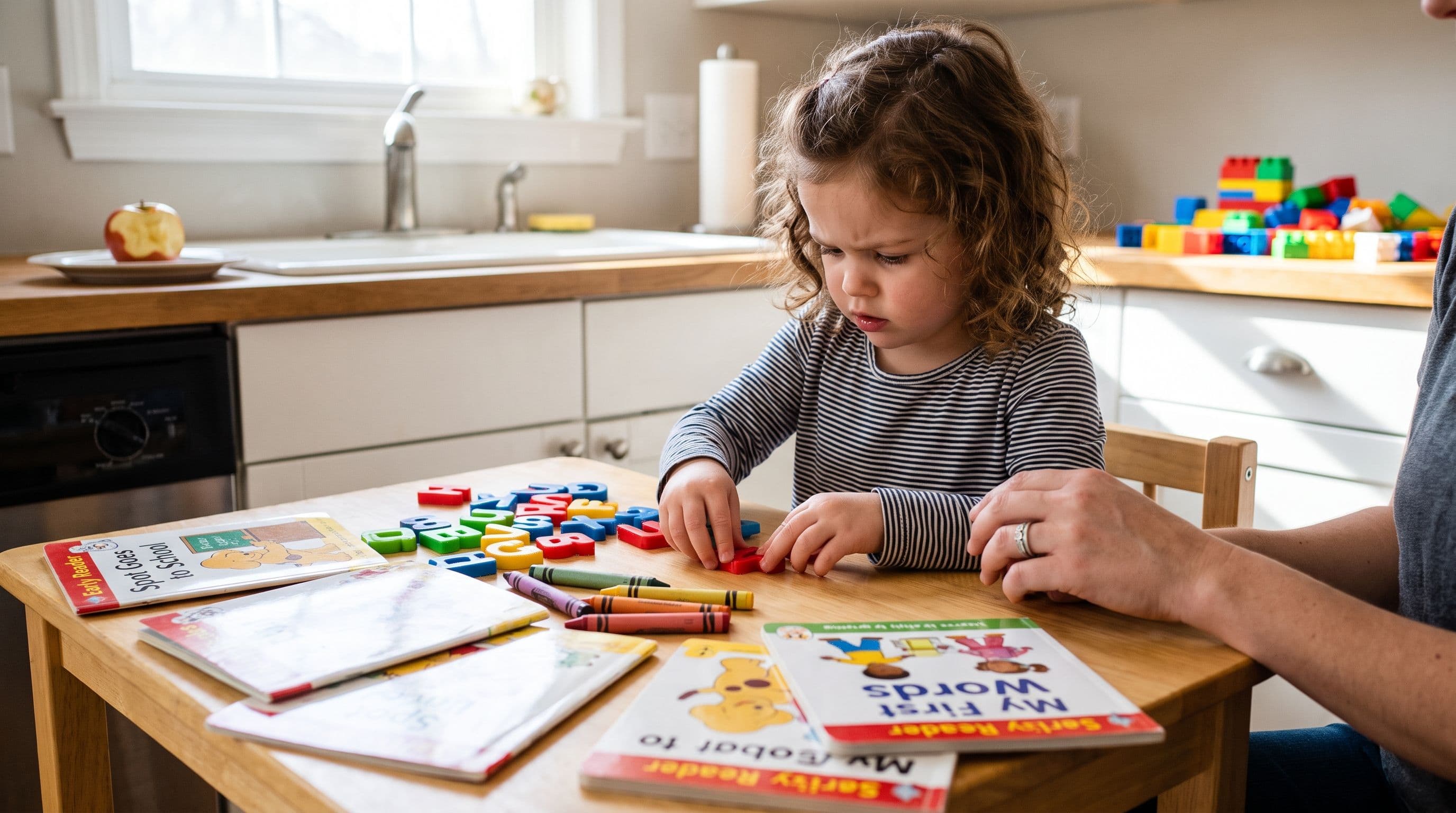
What You'll Learn
- The one app I’d use first if my 6-year-old kept guessing “pony” for “horse”
- Which popular reading apps look cute but let kids dodge real decoding
- Why picture guessing feels like reading — until the book gets harder
- The 10-minute daily drill I’d start tonight at the kitchen table
Reality Check: Guessing Words Isn’t Reading
Your child guesses words when reading because guessing works just enough to fool everyone.
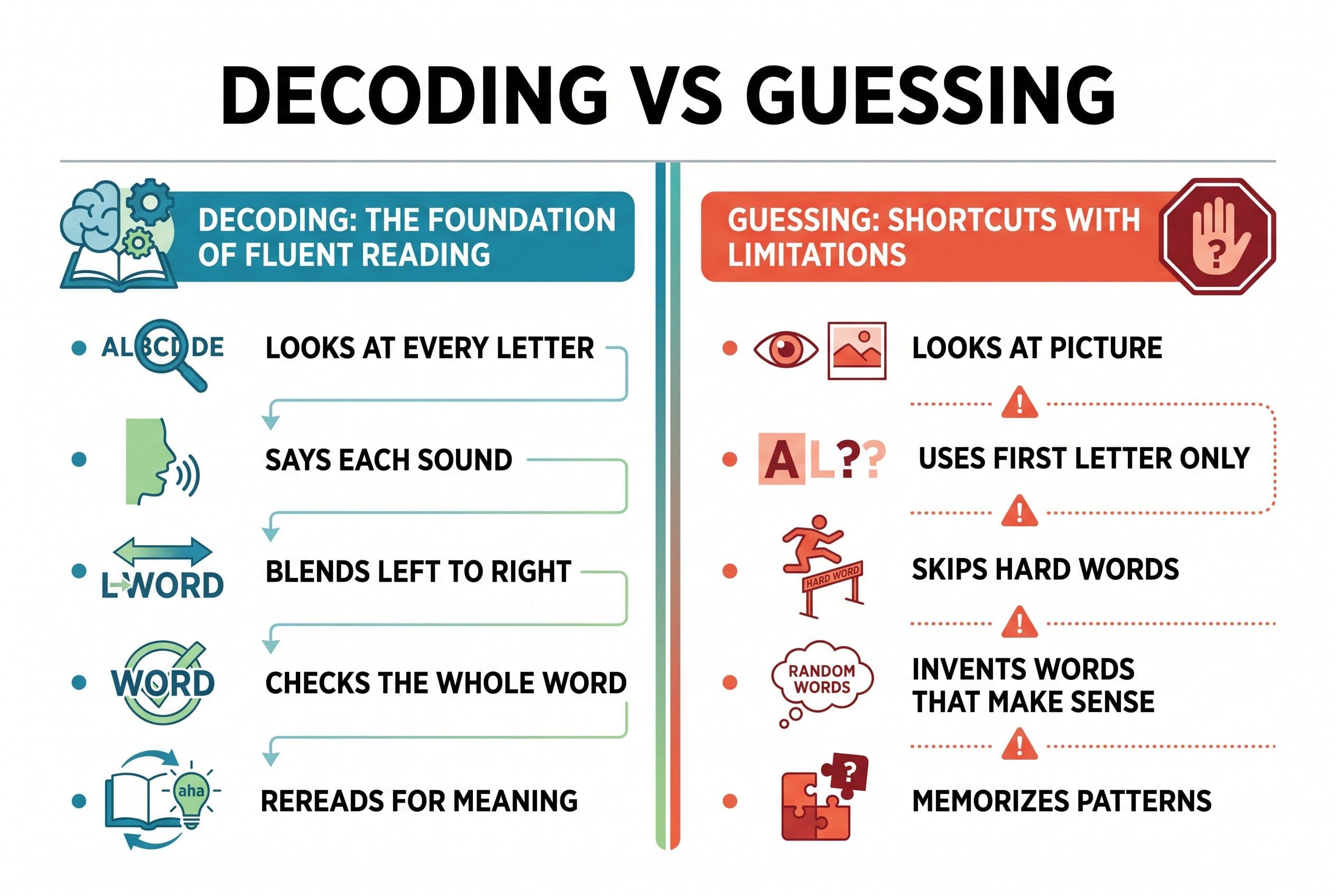
They look at the picture, grab the first letter, invent a word that makes sense, and adults clap because the sentence sounds right. Cute? Maybe at age 4. Dangerous at age 6? Absolutely.
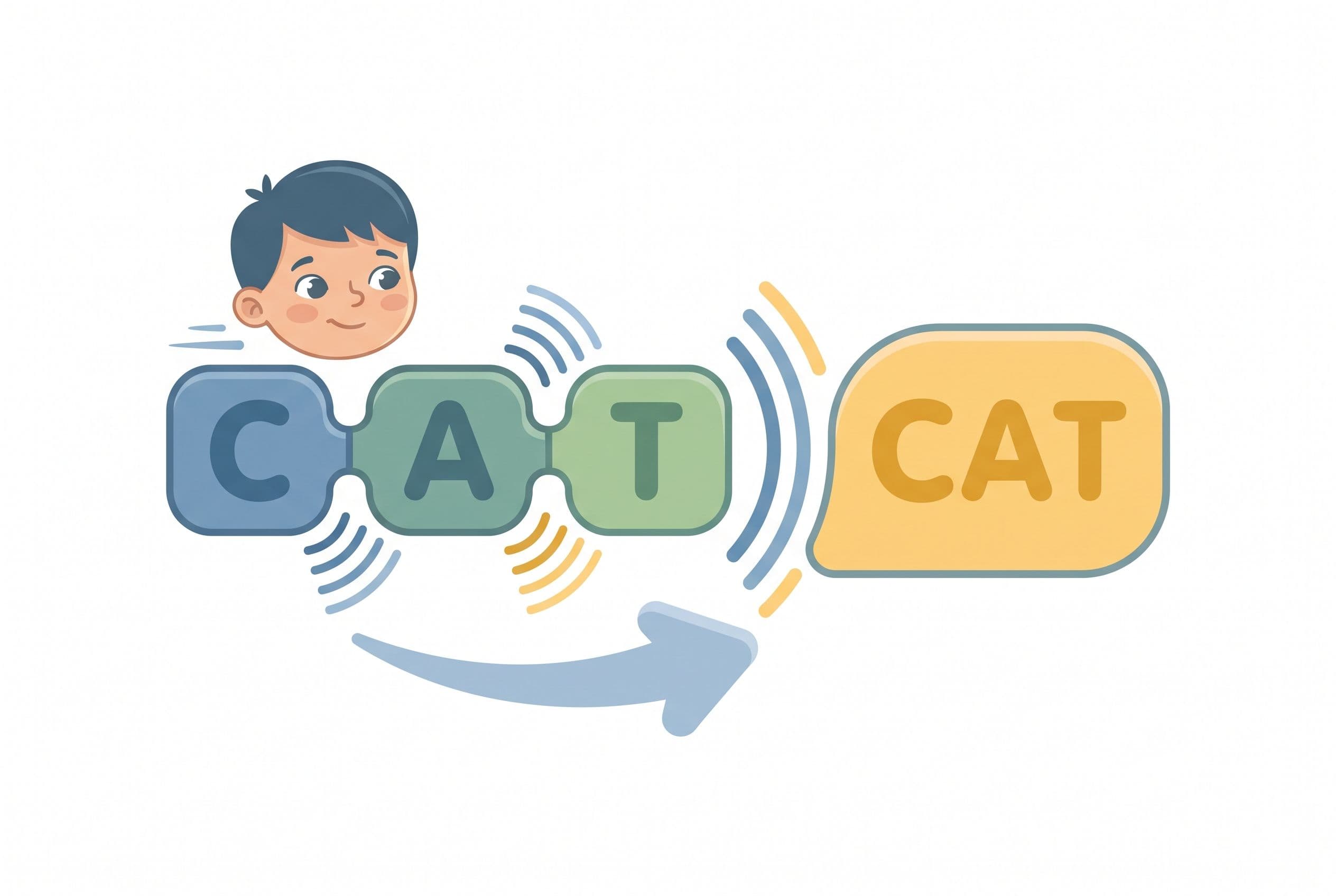
If you’re searching for the best app for a 6-year-old who guesses words, you don’t need another game with dancing animals. You need a phonics app that forces your child to look at every letter, say every sound, blend left to right, and stop pretending pictures count as decoding.
The Verdict: Best Reading Apps for Guessing Readers
| Rank | App | What It Teaches | Price | Best For |
|---|---|---|---|---|
| #1 | Teach Your Kid to Read | Systematic phonics, sounding out words, no guessing | Lesson one free with no card; from lesson two, 7-day free trial, then US$9.95/month | Ages 4-7, especially guessers |
| #2 | Hooked on Phonics | Sequential phonics with videos and practice | Paid subscription varies | Ages 4-8 |
| #3 | Reading Eggs | Phonics plus games and rewards | Paid subscription varies | Ages 4-7 who need motivation |
| #4 | Khan Academy Kids | Early literacy exposure, stories, letters | Free | Ages 2-6, light practice |
| #5 | Duolingo ABC | Letter sounds, tracing, short lessons | Free | Ages 3-6 beginners |
My pick is Teach Your Kid to Read because it treats guessing like the enemy, not a cute phase. If your child is 6 and still guessing, start with lesson one through start lesson one free — lesson one is free with no card and nothing to cancel; from lesson two the whole program is a 7-day free trial, then US$9.95 a month.
If your kid is guessing, here’s the fix in one sentence: stop letting them use the picture like a cheat sheet and make their eyes do the actual reading.
- Stop picture and pattern prompts during word reading.
- Use systematic phonics plus decodable text, not mystery words with cute clues.
- Sit beside them and require left-to-right blending. Yes, you. Not the couch across the room.
Tiger Truth: Guessing Creates a Fake Reader
Here’s the thing: guessing can carry a child through predictable books for a little while. “I see the dog.” “I see the cat.” “I see the balloon.” Your kid memorizes the pattern, looks at the picture, and boom — everyone thinks reading happened.
Then the text changes.
Suddenly the sentence says, “The frog had a splint on his leg,” and your child says “stick” because there’s a picture of a frog near a stick. Sound familiar?
The National Reading Panel report in 2000 found that systematic phonics instruction gives children significant benefits in learning to read. Stanislas Dehaene’s Reading in the Brain (2009) explains why: the brain doesn’t naturally read print. We train it. Letter by letter. Sound by sound. No magic fairy dust.
US data backs up the panic. On the 2022 NAEP / The Nation’s Report Card, only 33% of US 4th graders (ages 9-10) read at or above NAEP Proficient. NAEP Proficient doesn’t mean “on grade level” in the everyday parent sense, and that number doesn’t prove guessing caused the whole mess. But it does tell us way too many kids are not reading as strongly as they should be. That’s not “some kids are late bloomers.” That’s a five-alarm fire.
I watched this confusion hit another mom in real time at a playground in Raleigh. Her child’s school had switched from Lucy Calkins to a Science of Reading curriculum because of North Carolina’s SB 387 — the Excellent Public Schools Act, a US state law. She felt annoyed. “He was doing fine before,” she told me. I asked if her second grader (age 7-8) could read the word “splint.” He couldn’t.
So I spent 20 minutes on that playground bench explaining Emily Hanford’s 2023 APM Reports / “Sold a Story” investigation, the NAEP data, and Dehaene’s neuroscience showing reading doesn’t develop naturally like speech. That night she watched the podcast and texted me at 11 p.m.: “I had no idea. Why didn’t anyone tell us this sooner?”
Exactly.
Deep Dive: The Best App for a 6-Year-Old Who Guesses Words
#1 Teach Your Kid to Read: Best for Stopping Guessing Cold
Teach Your Kid to Read is my top choice because the method matches the problem.
A child who guesses words doesn’t need more exposure to books. They need explicit instruction in grapheme-phoneme correspondence — which letter or letter team represents which sound — then practice blending those sounds into real words.
That’s the whole ballgame.
The app uses systematic synthetic phonics principles. That means your child learns sounds in a planned order, blends them into words, and reads decodable text that only uses patterns they’ve already learned. No “read this mystery word because the picture gives it away.” No leveled-reader guessing circus. No sticker parade replacing actual skill.
I’m a homeschooling mom of four, and I’ve taught my two oldest to read. I’m now in the trenches with my 4-year-old. Last Tuesday, we sat at the kitchen table with a half-eaten banana, a pile of letter cards, and a baby banging a spoon on the floor like a tiny courtroom judge. We drilled CVC words: map, sit, rug, hen. Every time my 4-year-old tried to guess from the first sound, I tapped the letters and said, “No guessing. Sound it out.”
That’s what a good phonics app has to do too.
Teach Your Kid to Read works best for a 6-year-old who:
- Says “horse” when the word is “pony”
- Reads the first letter and invents the rest
- Memorizes books but can’t read a new page
- Panics when pictures disappear
- Knows letter names but can’t blend sounds smoothly
The app builds decoding skills from the foundation up. That matters because Linnea Ehri’s 2005 work on phases of word reading shows that children move from partial alphabetic guessing into full alphabetic reading when they connect letters to sounds across the whole word. In plain mom language: they stop using vibes and start reading print.
Bottom line? This is the app I’d start with if your child is 6, guessing words, and losing confidence.
#2 Hooked on Phonics: Solid Phonics, But Watch the Pace
Hooked on Phonics has been around forever, and for good reason. It teaches phonics in a sequence, uses short lessons, and gives kids practice with sounds and words.
For many families, it works. Hands down, it beats any app that relies on leveled readers and picture clues.
The catch? Some kids move through the lessons without enough mastery. If your 6-year-old guesses words, you need to slow down. Don’t let the app become background noise while your child taps through for rewards.
Use this rule: if your child misses more than 2 words in a short lesson, repeat it the next day. I don’t care if they groan. Reading is a survival skill, not a spa day.
Hooked on Phonics can help if you sit nearby and demand accurate sounding out words. If you hand over the tablet and walk away, the guessing habit may survive.
#3 Reading Eggs: Fun, But Rewards Can Distract
Reading Eggs has bright games, cute characters, and lots of activities. Kids often like it. Parents like that kids like it. I get it.
But here’s the kicker: fun can hide weak decoding.
If your child guesses words when reading, you need to watch whether they’re actually blending sounds or just clicking until something works. Some children learn well with game-heavy apps. Others chase eggs, badges, and animations while their decoding skills stay wobbly.
I’d use Reading Eggs as a supplement, not the main intervention, for a struggling reader. Pair it with direct phonics instruction and decodable books. Think Bob Books, UFLI Foundations practice, or Explode the Code workbooks if you want paper practice too.
Real talk — if your child can’t read “ship” without saying “boat” because of the picture, they don’t need more cute. They need correction.
#4 Khan Academy Kids: Great Free App, Not Enough for a Guessing 6-Year-Old
Khan Academy Kids is generous, high-quality, and free. I respect that. For preschool and early kindergarten (age 5) readiness, it’s a no-brainer.
But if you’re looking for the best reading app for 6 year old guessers, I wouldn’t use it as the main tool. It gives early literacy exposure, stories, letters, and playful practice. That’s useful.
It just isn’t intense enough for a child who has already built a guessing habit.
Use Khan Academy Kids for extra practice, especially with younger siblings. For your 6-year-old struggling reader, choose something more direct and phonics-heavy.
#5 Duolingo ABC: Good Beginner Practice, Too Light for Remediation
Duolingo ABC helps with letter formation, letter sounds, and short reading activities. It’s clean, simple, and free.
For a 3-, 4-, or young 5-year-old, I like it as a gentle introduction. For a 6-year-old who guesses words, it’s probably too light.
The problem isn’t that Duolingo ABC is bad. The problem is mismatch. A guessing reader needs structured decoding practice, not just cheerful exposure.
If your child reads “plan” as “play,” or “trap” as “tree,” they need to slow down and process every grapheme. That’s where stronger phonics instruction wins.
What Disqualifies a Reading App for Guessing Readers?
A reading app for guessing words should never train the exact behavior you’re trying to kill.
Avoid apps that push:
- Picture clues before decoding
- Predictable leveled readers as the main text
- “Look at the first letter and think what makes sense” prompts
- Rewards that let kids skip hard thinking
- Whole-word memorization without phonics
This drives me crazy because parents think they’re buying reading help, but some tools just polish the guessing habit. Fountas & Pinnell levels are everywhere in schools, but they grew out of a whole-language aligned approach. If a book lets your child guess from pattern and picture, it may build confidence without building reading.
That’s fake confidence.
A strong phonics app for struggling reader support should include:
- Direct sound-symbol teaching
- Blending practice
- Dictation or spelling practice
- Decodable words and sentences
- Immediate correction
- Review until mastery
The real deal looks less flashy than the game apps. Good. Flashy doesn’t teach “splint.”
Quick At-Home Check: Is Your 6-Year-Old Guessing or Decoding?
Try this today. It takes five minutes.
Write a few words on plain paper with no pictures. Use patterns your child has actually been taught — because no, we’re not going to act shocked if a child hasn’t learned a spelling pattern yet.
For example, if these patterns have been taught, you might try:
- cat
- fish
- trap
- plan
- ship
- splint
Now ask your child to read them. Don’t help. Don’t point to a picture. Don’t say, “Look at the first sound.” Just watch.
This is an informal kitchen-table check, not a diagnosis. If they miss simple taught words, change endings, or guess based on the first letter again and again, you may have a decoding issue. If they can read “cat” but collapse at “ship,” check whether they’ve learned digraphs. If “splint” destroys the room, don’t panic from one word — but do notice whether consonant blends have been taught and practiced.
For a more formal check, look at DIBELS or David Kilpatrick’s PAST — the Phonological Awareness Screening Test. The PAST looks at oral sound-awareness skills, including phoneme manipulation. It doesn’t test printed-word decoding, so you’d need a separate decoding assessment to see how your child reads actual words on a page.
DIBELS nonsense word fluency benchmarks vary by edition, grade, testing window, and measure, so don’t grab one random number from the internet and start spiraling. Standardized administration matters. But weak letter-sound fluency? Repeated guessing? Trouble blending taught patterns? Take that seriously.
The Action Step: What I’d Do Tonight
If your 6-year-old guesses words, don’t wait for school to fix it. Schools can help, but you’re the parent. You see the homework tears. You hear the fake reading. You know.
Do this tonight:
- Pick one phonics-first app. Start with Teach Your Kid to Read if guessing is the main issue.
- Sit with your child for the first lesson. Don’t hand over the tablet and vanish.
- Ban guessing out loud. Say, “No guessing. Touch the letters. Say the sounds.”
- Use plain words with no pictures. Pictures come after decoding, not before.
- Drill 10 minutes daily. Yes, birthdays too. We Never Skip.
- Track errors. Write down patterns: short vowels, blends, digraphs, endings.
- Repeat lessons until accurate. Mastery beats speed.
- Add decodable books. Try Bob Books or other decodable readers instead of predictable leveled books.
If you want the cleanest starting point, use Teach Your Kid to Read today: lesson one is free with no card and nothing to cancel; from lesson two the whole program is a 7-day free trial, then US$9.95 a month.
My Final Pick
The best app for a 6-year-old who guesses words is Teach Your Kid to Read because it targets the actual problem: weak decoding.
Hooked on Phonics is also strong. Reading Eggs can motivate some kids. Khan Academy Kids and Duolingo ABC work better for early exposure than intervention.
But for a child who guesses? I want systematic phonics, controlled practice, no picture-crutch nonsense, and daily repetition. That’s the hill I’ll die on, probably while reheating my coffee for the fourth time.
Start with the app, sit beside your child, and correct guessing every single time. Lesson one is free with no card and nothing to cancel; from lesson two the whole program is a 7-day free trial, then US$9.95 a month.
FAQ
What is the best app for a 6-year-old who guesses words?
Teach Your Kid to Read is my top pick because it focuses on systematic phonics and decoding skills instead of picture guessing. A guessing reader needs direct practice sounding out words from left to right.
Why does my child guess words when reading?
Your child may rely on pictures, sentence patterns, or the first letter because those strategies worked in easy books. The fix is explicit phonics, decodable text, and immediate correction when guessing appears.
Should I tell my child to look at the picture?
Not when decoding the word. Let them use pictures for story discussion after they read the sentence. During word reading, eyes go on the letters.
Is guessing words a sign of dyslexia?
Sometimes, but not always. Guessing can come from poor instruction, weak phonemic awareness, or lack of phonics practice. If your child struggles with rhyming, blending, segmenting, spelling, or remembering letter sounds, consider a screening through a qualified reading specialist or resources from the International Dyslexia Association.
How long should my 6-year-old practice phonics each day?
Start with 10-15 focused minutes daily. Short, accurate practice beats long battles. If your child melts down after 8 minutes, stop there and return tomorrow. We want consistency, not drama Olympics.
Part of these guides

Xia Brody
Co-Founder, Teach Your Kid to Read
Mom of 4 who has successfully taught her kids to read. Currently in the trenches with her 4-year-old while her two oldest (10 and 7) devour books on their own. Passionate about phonics-based methods and building a lifelong love of reading.
Related Articles
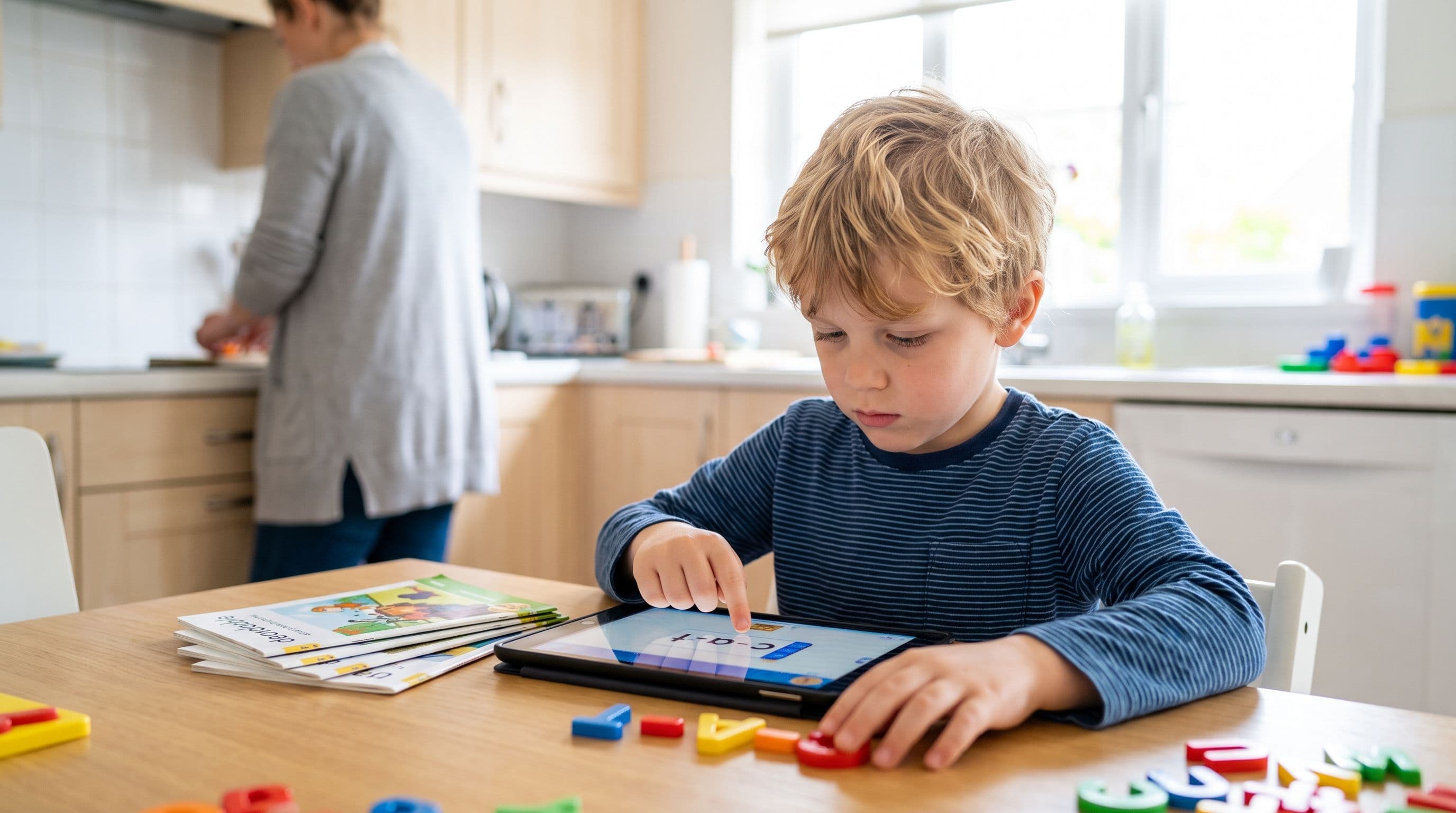
Best Reading App for a 6-Year-Old with Dyslexia: 2026 Picks
If your 6-year-old with dyslexia is guessing at words, cute reading games won’t fix it. Here’s how to choose a structured literacy app that builds decoding skill instead of wasting precious time.
Read More →
Best Reading App for a 5-Year-Old with Dyslexia: 2026 Picks
A dyslexic 5-year-old doesn't need guessing games or pretty animations. They need systematic phonics, daily drill, parent coaching, and a plan that refuses to wait.
Read More →
HOMER vs Reading Eggs for 5-Year-Olds: Best Fit?
Choosing between HOMER and Reading Eggs for a 5-year-old? I’m breaking down phonics quality, guessing risks, rewards, pricing, and the app I’d put first for decoding mastery.
Read More →