How Long Should a 7-Year-Old Read Each Day? 30-45 Min

Quick answer for your child: Open the calculator with our free tool →
What You'll Learn
- The actual daily reading time a 7-year-old needs — and why the 20-minute homework log your school sends home is dangerously insufficient
- Why reading stamina matters more than reading minutes — and how to build it without tears (OK, maybe a few tears)
- The one mistake that turns daily reading into a word-guessing game — and how to fix it before your kid hits the 3rd grade cliff
- A week-by-week plan to increase your second grader's independent reading time from wherever they are right now to where they need to be
Quick answer: how long a 7-year-old should read each day
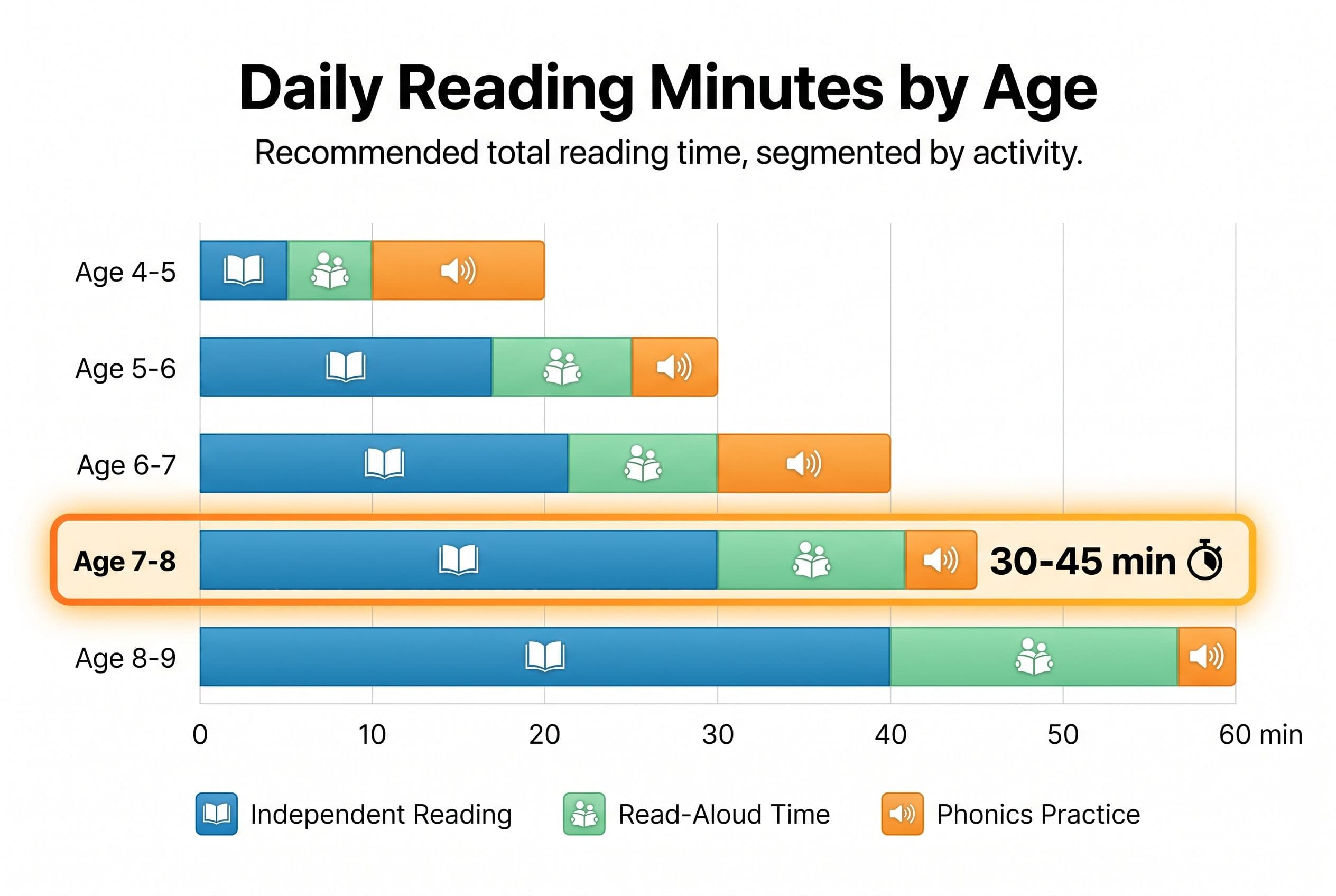
30–45 minutes of total daily reading, split into 2–3 sessions: 15–20 min independent reading + 10–15 min read-aloud + 5–10 min phonics practice.
| Age (grade) | Total daily reading time |
|---|---|
| 4–5 (Pre-K/K) | 10–20 min |
| 5–6 (K/1st) | 20–30 min |
| 6–7 (1st/2nd) | 25–40 min |
| 7–8 (2nd/3rd) | 30–45 min |
| 8–9 (3rd/4th) | 40–60 min |
Your Kid's School Says 20 Minutes. The Research Says That's Not Enough.
Let's start with the number everyone throws around: 20 minutes a day.
That's what your kid's teacher sends home on the reading log. That's what the bookmark from the school book fair says. Twenty minutes. Check the box. Move on.
But here's the problem with that number. That number? That's a floor. Not a ceiling. And for a lot of 7-year-olds — especially ones who are still building decoding skills — 20 minutes of the right kind of reading barely gets them warmed up.
I'm not saying 20 minutes is worthless. I'm saying it's the starting line, and most parents treat it like the finish.
The Tiger Truth: What Happens When 20 Minutes Is All They Get
Let me throw some numbers at you that should make your stomach drop, honestly.
The 2022 NAEP — that's the Nation's Report Card — showed that only 33% of 4th graders read at a proficient level. One-third. And reading scores dropped 3 points from 2019, which was the largest decline in 30 years.
Those aren't somebody else's kids. Those are the kids who sat next to yours at lunch yesterday.
The Annie E. Casey Foundation dropped a landmark study back in 2010 — and what they found was brutal: kids who can't read proficiently by end of 3rd grade are four times more likely to drop out of high school.** Four times. Not a little more likely. Not slightly elevated risk. Four. Times.
Know what the kicker is? Your 7-year-old is one year away from third grade. One. One single year. That cliff is right there, and your kid is either building the bridge to cross it or they're sleepwalking toward the edge.
So when someone tells you "20 minutes is fine," ask them: fine for what, exactly? Fine for checking a box? Or fine for building the kind of reading stamina that means your child can actually comprehend a chapter book, a science textbook, or a word problem in math?
Those are two wildly different questions.
How Long Should a 7-Year-Old Read Each Day? The Real Answer
OK, so if 20 minutes is the floor, what's the real target?
Here's what the evidence actually supports for a typical 7-year-old (second grade) reader:
30-45 minutes of total daily reading time, broken into 2-3 sessions.
That total breaks down like this:
- 15-20 minutes of independent reading — your child reading aloud or silently from a book at their actual reading level (not their grade level — their level)
- 10-15 minutes of read-aloud time — you reading TO them from books slightly above their independent level
- 5-10 minutes of phonics or decoding practice — targeted skill work, not just "reading for fun"
That's 30-45 minutes total. Not 45 minutes of staring at a page while you cook dinner. Structured, intentional reading time where someone is paying attention.
And look, I already know what you're thinking right now. "Xia, my kid can barely sit still for 10 minutes." I hear you. My 4-year-old acts like the chair is made of lava after about 7 minutes. But that's exactly why we're talking about building reading stamina — and why we break it into chunks.
Reading Minutes Per Day by Age: A Quick Reference
Because I get asked this constantly, here's how daily reading time should scale:
- Age 4-5 (Pre-K/K): 10-20 minutes total (mostly read-alouds + 5 min phonics practice)
- Age 5-6 (Kindergarten/1st): 20-30 minutes total (mix of read-alouds, guided reading, phonics drills)
- Age 6-7 (1st/2nd grade): 25-40 minutes total (increasing independent reading time)
- Age 7-8 (2nd/3rd grade): 30-45 minutes total (majority should be independent reading)
- Age 8-9 (3rd/4th grade): 40-60 minutes total (independent reading dominates)
Notice the progression? The goal is to shift the balance from you doing most of the heavy lifting (read-alouds) to them doing it independently. That transition is what second grade is all about.
The Playground Conversation That Changed Everything
I was at a playground in Raleigh last year when I got into one of those bench conversations with another mom. Her son was in second grade, and she mentioned his school had just switched from Lucy Calkins' Units of Study to a Science of Reading curriculum. North Carolina passed SB 387 — the Excellent Public Schools Act — and schools were scrambling to comply.
She was annoyed about it, honestly. "He was doing fine before," she told me, clearly irritated. "Now everything's different and he's frustrated."
So I asked her one question. "Can he read the word 'splint'?"
She called him over. He's seven. Second grade. He looked at the word on my phone screen, stared at it, and said... nothing. Then he guessed "split." Then "sprint." He couldn't decode a one-syllable word with a consonant blend and a closed syllable — a word any kid with solid phonics should nail by mid-second grade.
He wasn't "doing fine before." He was guessing well enough to fool the adults.
I sat on that bench for a solid 20 minutes and laid it all out — Emily Hanford's "Sold a Story" investigation that ripped the mask off Balanced Literacy, the 2022 NAEP scores showing only 33% of 4th graders hit proficiency (meaning an entire generation got wrecked by guessing strategies), and Dehaene's brain imaging work from his 2009 book Reading in the Brain proving that no child's brain just "figures out" decoding on its own. You have to explicitly teach it. Reading doesn't just "happen" the way speech does. It has to be built, sound by sound, letter by letter.
She went home and listened to the Sold a Story podcast that night. Texted me at 11pm: "I had no idea. Why didn't anyone tell us this?"
Real talk — that mom's kid was logging his 20 minutes a day religiously. Gold stars on the reading log. But those 20 minutes were spent guessing at words from picture clues and memorized patterns, not actually reading. The minutes didn't matter because the method was broken.
Which brings me to the one thing I need you to tattoo on your brain from this entire article.
It's Not Just How Long — It's How
Thirty minutes of guessing builds the wrong habits and can actually slow real reading growth — so we fix the method first. I can't stress this enough — and honestly, I'm not sorry for saying it again.
Every time your 7-year-old looks at the picture and guesses the word instead of sounding it out, they're strengthening the wrong neural pathways. David Kilpatrick's research on orthographic mapping — laid out in his 2016 book Equipped for Reading Success — shows that skilled readers store words in long-term memory through a process that connects the sounds in a word (phonemes) to the letters (graphemes). That mapping only happens when the child actually decodes the word. Guessing bypasses the entire mechanism.
So before you worry about how many minutes your kid reads, make sure those minutes count.
Here's what "counting" looks like during your child's daily reading time:
- No guessing from pictures. If your kid gets stuck, they sound it out. Period. Cover the illustration with your hand if you have to. I've literally done it — hand over the picture, no peeking. My 7-year-old hated me for approximately 45 seconds each time.
- Books at the right level. Your child should be able to read 95% of the words accurately. If they're struggling with more than 1 in 20 words, the book is too hard for independent reading. Save it for read-aloud time.
- Decodable texts for practice. Not leveled readers from Fountas & Pinnell — those are whole-language aligned and introduce words kids are supposed to memorize by sight before they have the phonics skills to decode them. Use decodable readers from publishers like Flyleaf Publishing or High Noon Books that match the phonics patterns your child has actually learned.
- Active engagement, not passive page-turning. Ask questions. "What just happened?" "What d'you think that word means?" "Can you read that sentence again a little faster?" Reading is a workout. Treat it like one.
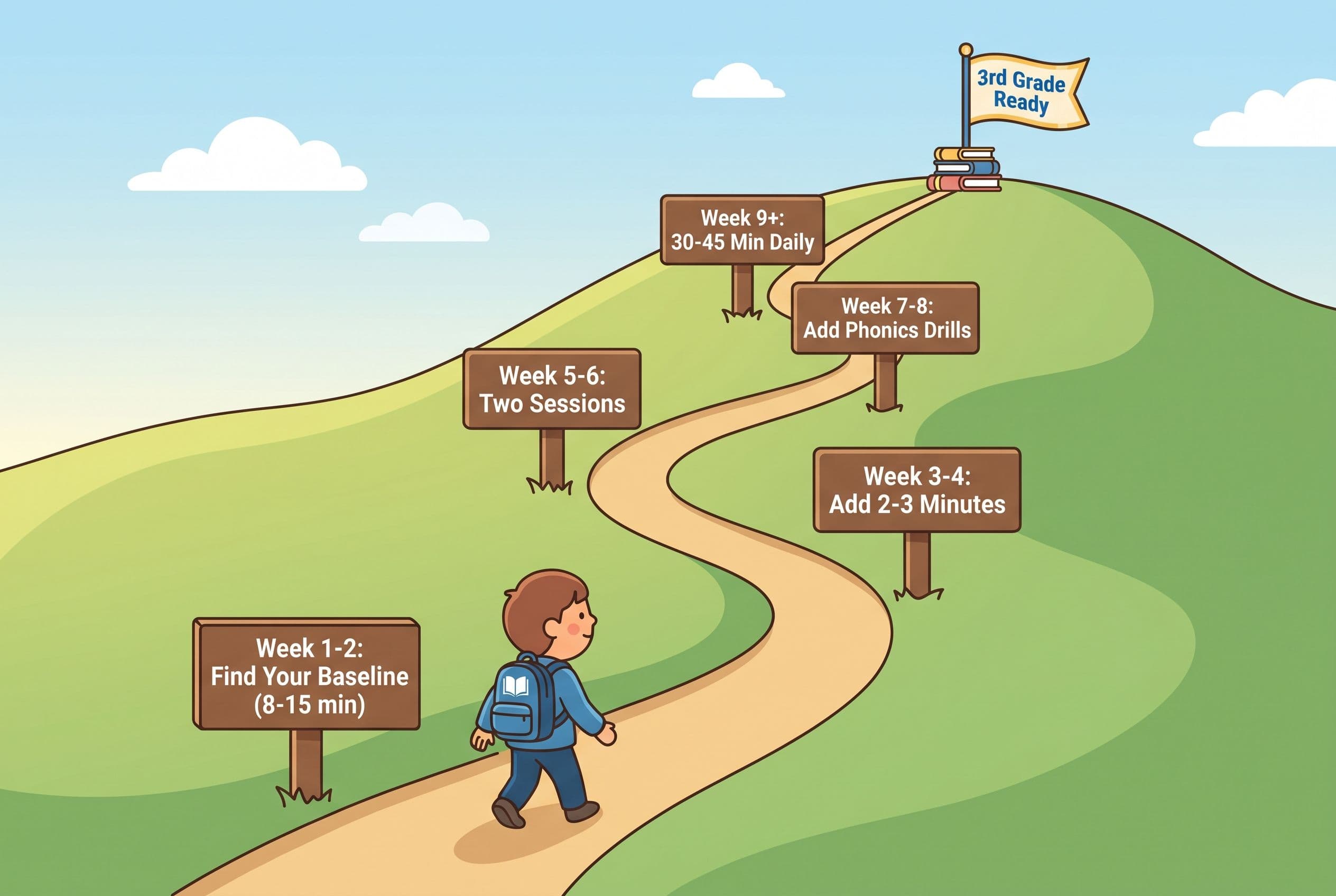
Building Reading Stamina for Kids: The Week-by-Week Plan
If your 7-year-old can barely handle 10 minutes of independent reading right now, you don't jump to 30 minutes tomorrow. That's how you create a kid who hates books.
Here's how I've built reading stamina with my own kids — and how I recommend parents using start lesson one free approach it:
Week 1-2: Find the Baseline
Set a timer. Let your child read independently (aloud is fine — most 7-year-olds still benefit from oral reading). When they hit a wall — fidgeting, losing focus, complaining — note the time. That's your baseline.
For most second graders, that's gonna land somewhere between 8 and 15 minutes. Don't judge it — seriously. Just measure it.
Week 3-4: Add 2-3 Minutes
Push past the baseline by just a couple of minutes each session. Use a visible timer so your kid can see the finish line. When they make it, celebrate. A high-five, a sticker, whatever works. My 7-year-old gets to pick what we have for snack. (Goldfish crackers. It's always Goldfish crackers.)
Week 5-6: Introduce a Second Session
Instead of one long reading block, split into two. Morning session: 10-15 minutes of independent reading. Afternoon/evening session: 10-15 minutes that includes read-aloud time with you.
OK so — this is where it gets good. Because now your kid is reading for 20-30 minutes total without it feeling like a marathon.
Week 7-8: Add Targeted Phonics Practice
Tack on 5-10 minutes of dedicated decoding work. This isn't "reading" the way you're picturing it — it's raw skill-building, like drills at basketball practice. Nonsense word drills. Phoneme segmentation exercises. Blending practice with consonant clusters.
Oral reading fluency benchmarks vary depending on the assessment your school uses (DIBELS 8th Edition, Acadience, etc.) and the time of year, but mid-year second-grade targets typically fall in the 70-100+ correct words per minute range. Ask your child's teacher which benchmark table they're using. If your kid is well below their school's target, the phonics practice time is non-negotiable.
Kilpatrick's PAST test (Phonological Awareness Screening Test) takes about 5 minutes and tells you exactly where the phonological breakdown is happening. It's free online — just Google "Kilpatrick PAST test free." Give it. Know where your child stands.
Week 9+: Maintain and Expand
By now, your child should be handling 30-40 minutes of total daily reading across 2-3 sessions. The independent reading portion should be growing. Your read-aloud time continues (this builds vocabulary and comprehension above their decoding level — Scarborough's Reading Rope model shows exactly why both strands matter).
The goal by the end of second grade: your child can sit down with a book at their level and read independently for 20+ minutes without falling apart. That's real reading stamina. That's what crosses the 3rd grade bridge.
What About the Days They Don't Want To?
Every. Single. Day. Including those days.
I have a rule in our house: We Never Skip. Birthdays. Christmas morning. Vacation. Sick days (unless they have a fever over 101 — I'm tough, not insane). We read every day because reading is not a chore you can take breaks from. It's a skill that atrophies without practice.
Mark Seidenberg — cognitive scientist at the University of Wisconsin, author of Language at the Speed of Sight (2017) — he's written extensively about how the gap between skilled and unskilled readers doesn't just grow, it widens exponentially over time. He called it a "Matthew Effect" situation: the kids who read more get better, so they read more, so they get even better. The kids who read less fall further behind, so they avoid reading, so they fall even further.
Every day your 7-year-old skips reading, the gap grows. Not dramatically. Not catastrophically. But it grows. And those skipped days compound like bad interest on a credit card you're ignoring.
So yes, even the days they fight it. Especially those days.
Shorten the session if you have to. Do 10 minutes instead of 30. Read aloud to them if they're too fried to decode on their own. But do something. Every. Single. Day.
How Teach Your Kid to Read Fits Into Daily Reading Time
This is where I give you the practical tool to make those 30-45 minutes actually work.
Teach Your Kid to Read is built on systematic, explicit phonics — structured literacy-style instruction aligned with what the science of reading has shown works. It's not a random phonics app with cartoon characters and reward coins that teach your kid to tap a screen instead of sound out words.
Here's how it fits into a real day for your 7-year-old:
- 5-10 minutes on the Teach Your Kid to Read structured lessons — these target the exact phonics skill your child needs next, in the right sequence. No skipping ahead. No gaps.
- 15-20 minutes of independent reading practice using decodable texts that match the phonics patterns they've learned in the app
- 10-15 minutes of parent read-aloud time — building vocabulary, comprehension, and the love of stories that makes all the hard work worth it
That's your 30-45 minutes. Structured. Sequenced. Backed by the same research that convinced 40+ states to pass Science of Reading legislation since 2019.
The Bottom Line on Daily Reading Time for Second Graders
Stop treating the 20-minute reading log like it's the whole meal. It's an appetizer.
Your 7-year-old needs 30-45 minutes of total daily reading time, broken into chunks, with a heavy emphasis on actual decoding — not guessing, not picture-walking, not vaguely staring at pages while an audiobook plays.
Build stamina gradually. Use decodable texts. Practice phonics skills explicitly. Read aloud together every day. And never, ever skip.
The 3rd grade cliff is 12 months away. You've got exactly one year to make sure your kid doesn't go over that edge — the Annie E. Casey Foundation's 2010 study showed kids who can't read proficiently by end of 3rd grade are four times more likely to drop out of high school.
Start today. Not Monday. Not "when summer starts." Today.
Frequently Asked Questions
Is 20 minutes of reading enough for a 7-year-old?
Twenty minutes is better than nothing, but it's not enough to build the reading stamina and fluency a second grader needs. Research-backed guidelines point to 30-45 minutes of total daily reading time, broken into independent reading, read-aloud time, and targeted phonics practice. The key is that those minutes involve real decoding — not picture-guessing or passive listening.
How do I know if my 7-year-old is reading at the right level?
Use the 95% accuracy rule: your child should be able to read at least 95 out of every 100 words correctly in a text for it to qualify as their independent reading level. If they're struggling with more than 1 in 20 words, that book is a frustration-level text — save it for read-aloud time. You can also check oral reading fluency benchmarks for your child's specific assessment (DIBELS, Acadience, etc.) — mid-year second-grade targets typically land in the 70-100+ correct words per minute range. Ask your child's teacher which benchmark table the school uses.
Should my 7-year-old read aloud or silently?
Most 7-year-olds still benefit significantly from reading aloud. Oral reading lets you hear their decoding in real time — you'll catch guessing, skipped words, and misread vowel sounds that silent reading hides. As fluency improves and they approach 3rd grade, you can gradually introduce silent reading time. But at 7, keep it aloud for at least half of their independent reading minutes.
What if my child hates reading and fights me every day?
First, check the book level. Kids who fight reading are almost always reading books that are too hard for them — they're failing constantly and it doesn't feel good. Drop down to an easier text (yes, even if it feels "too babyish") and let them experience success. Second, shorten the sessions and build up gradually. Ten minutes of successful, confident reading beats 30 minutes of tears. Third, look into whether there's a decoding gap — Kilpatrick's PAST test is free online and takes 5 minutes to identify phonological awareness weaknesses.
Does screen time count as reading time?
Reading words on a screen counts if — and only if — your child is actually decoding the text. A structured phonics app like Teach Your Kid to Read where your child is actively sounding out words and practicing letter-sound patterns? That counts. Watching YouTube videos with subtitles? Scrolling through a game with speech bubbles? Playing an app that rewards tapping on pictures? None of that counts, honestly. Be honest about what's actually reading and what's screen time with a literacy costume on.
Part of these guides

Xia Brody
Co-Founder, Teach Your Kid to Read
Mom of 4 who has successfully taught her kids to read. Currently in the trenches with her 4-year-old while her two oldest (10 and 7) devour books on their own. Passionate about phonics-based methods and building a lifelong love of reading.
Related Articles
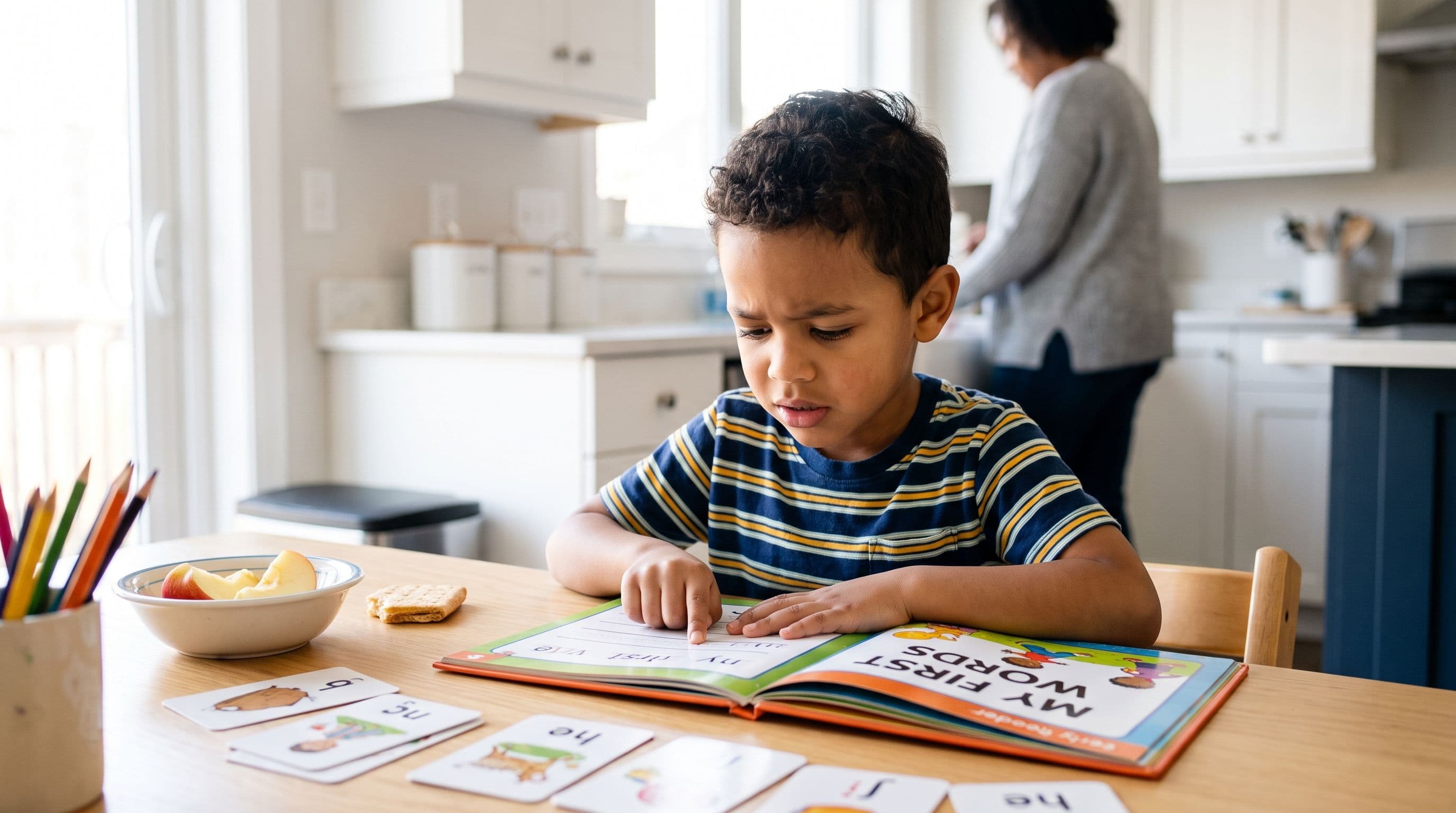
Is My 2nd Grader Behind in Reading? 9 Signs
Wondering if your 2nd grader is behind in reading? Here are the real warning signs, what 2nd graders should be able to do, and what to do next if your child is guessing, slow, or stuck.
Read More →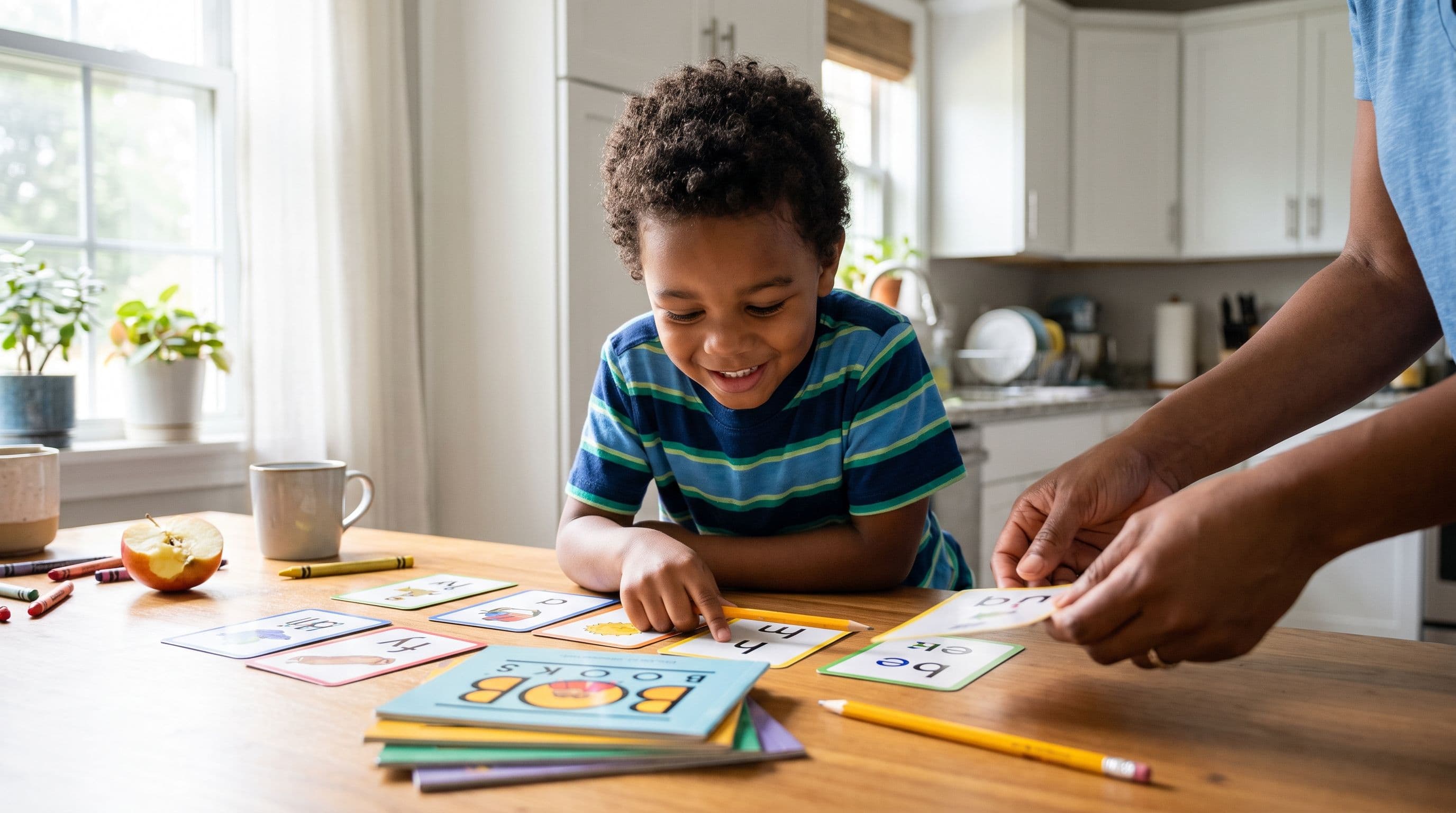
My 8 Year Old Can't Read: Best Apps + Rescue Plan
If your 8-year-old is still guessing at words, this is not a wait-and-see moment. Here’s my no-nonsense app comparison and rescue plan for getting real phonics intervention started now.
Read More →
My 7 Year Old Can't Read: 9 Steps to Act Now
If your 7-year-old still can't read, don't panic—but don't wait. Here's how to check the gap, stop guessing habits, and start a real phonics plan at home.
Read More →