Sight Words vs Phonics: The Debate Is Over (Here's Why)

What You'll Learn
- Why the "sight words vs phonics" debate is actually already settled — and what the science says
- The shocking reason adults who read fluently fooled an entire generation of educators into teaching the wrong method
- What happens to kids who memorize sight words instead of learning phonics (hint: I've seen high schoolers who can't read)
- The exact steps you can take right now to make sure your child learns to read the right way — before school teaches them the wrong way
The Debate Is Over: Phonics vs. Sight Words
Let me save you 20 minutes of scrolling through conflicting blog posts and wishy-washy "both sides" arguments.
There's no comparison anymore. Phonics is the proven way to teach kids to read. Full stop. The sight words vs phonics debate? It's settled. The science of reading for parents isn't ambiguous or complicated — it's clear as day.
So why are we still talking about this?
Because millions of kids are still being taught the wrong way. Because schools spent decades using sight words and whole language methods that don't work. And because a lot of parents — smart, well-meaning parents — still aren't sure which approach is right.
I'm going to fix that for you right now.
Why People Believed in Sight Words (And Why They Were Wrong)
Here's where the whole mess started. Someone looked at how the best adult readers in the world read and noticed something: skilled readers don't sound out every word. They recognize words instantly — almost automatically. They just see the word "because" and know it. No sounding out. No effort.
So the thinking went: If that's how expert readers read, let's just teach kids to do that from the start. Let's have them memorize whole words by sight.
Sounds logical, right?
It was dead wrong.
Here's the thing those educators missed: that's how skilled adults read, but it's not how they learned to read. Those fluent adult readers? They learned through phonics. They learned the rules. They practiced sounding out words letter by letter, sound by sound, over and over until those words became automatic.
What researchers now call orthographic mapping — that instant word recognition that looks like "sight reading" — is actually the result of phonics mastery, not a shortcut around it. The brain maps words automatically when it's been trained to connect letters to sounds. No shortcut gets you there.
This one drives me crazy, because it's like watching a concert pianist play from memory and concluding, "Oh, she doesn't need sheet music — let's skip teaching kids to read music and just have them memorize songs by ear."
That pianist can play from memory because she spent years reading music first. You can't skip the foundation and jump to the finish line.

My Chinese Character Problem (And Why It Matters for Your Kid)
OK so here's where I bring in something most reading experts won't tell you, because they don't have my background.
I'm Chinese-American. I grew up with Mandarin in the house. And let me tell you — the sight word approach to English has an almost identical problem to learning Chinese characters.
In Chinese, there's no alphabet. Every word has its own character. You literally have to memorize each one. There are thousands of them. (Yes, many characters contain phonetic and semantic components that help — it's not pure chaos — but it's still a massive memorization load.) And you know what? Even fluent Chinese speakers don't know the characters for many words they use every day. My mom can have a full conversation about a topic and then not be able to write or read half the words she just said, because she never memorized those specific characters.
That's exactly what happens when you teach a kid English through sight words.
The English language has tens of thousands of words. You cannot memorize them all. It's impossible. A sight-word-only kid can recognize a limited bank of words from memory — maybe a few hundred. Then they hit a word they've never seen before — and they're stuck. Completely, hopelessly stuck.
A phonics-trained kid? They hit a new word, they sound it out, they figure it out. They have a system. They have tools. They don't need to have seen a word before to read it.
See the difference? Sight words give your kid a fish. Phonics teaches them to fish.
And honestly? I think another reason people gravitated toward sight words is because it feels easier. Your kid memorizes the shape of "the" and "was" and "said" — boom, they're "reading" by Tuesday. Learning all the phonics rules? That's hard. That's time-consuming. That requires drill after drill after drill.
But you know what they say. No pain, no gain.
Suffer now with your kids at the kitchen table practicing blends and digraphs — or watch them suffer later in a world where they can't read because they only memorized the shapes of the most common words.
Your call.
Which Way Is Your Kid Reading Right Now?
Here's the practical question buried in the debate: is your child sounding words out, or guessing whole words from memory and the picture? A sight-word kid looks great on the books they've seen and falls apart on a new one. Two minutes tells you. Cover the pictures and ask them to read five words they've never been drilled on — "chest," "slug," "brim," "plot," "shrug." If they can't blend those, they've been memorizing, not reading.
You can take the 2-minute reading check for a quick, age-adjusted read.
If they're guessing, switch to systematic phonics now — it works at 5 and it works at 8. Teach Your Kid to Read is built entirely on it: letter sounds, blending, decodable text, no guessing allowed. Lesson one is free with no card, then a 7-day trial, then $9.95 a month. start lesson one free and keep reading for why the schools got this wrong.
The Tiger Truth: What Happens When Kids Only Learn Sight Words
I know kids — real kids, not hypothetical ones — who are in high school and can't truly read.
Let that land for a second.
They were taught with sight words. They memorized a batch of common words in kindergarten and first grade. They looked like they were reading. Teachers checked the box. Parents breathed a sigh of relief.
Then third grade hit.
Suddenly the books got harder. The words got longer and less common. Words like "environment" and "constitution" and "photosynthesis" showed up. And these kids had no strategy — none — for figuring them out. They'd never learned the rules of how English sounds work. They'd never been taught that "ph" makes an /f/ sound or that "tion" says /shun/.
So what did they do? They guessed. They looked at the pictures. They skipped the hard words. They faked it.
And they're still faking it.
This is the 3rd Grade Cliff, and it's real. Research from the Annie E. Casey Foundation shows that kids who can't read proficiently by third grade are four times more likely to drop out of high school. Four times. That's not a scare tactic — that's peer-reviewed data. (The stat is correlational — poverty and other factors play a role too — but the pattern is brutal and consistent.)
The whole language vs phonics debate caused real, measurable damage to an entire generation of kids. The balanced literacy vs phonics conversation isn't academic theory. It's about whether your child will be able to read their high school biology textbook or not.
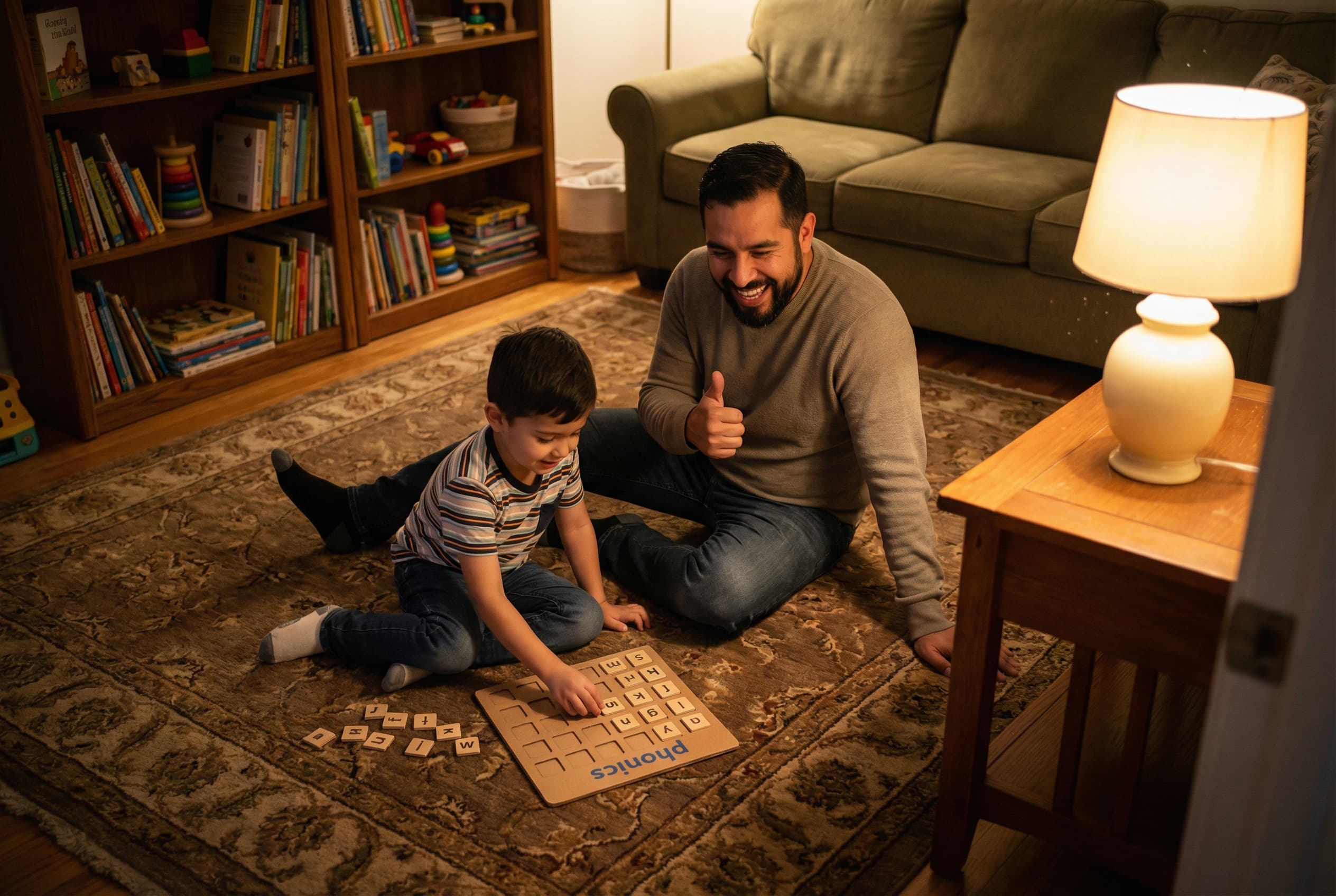
The Science of Reading: Why Phonics Works
I'm not just giving you my opinion here (though my opinion is strong and correct — ask my husband).
The science of reading for parents boils down to this: decades of research, including the National Reading Panel's landmark 2000 report, have consistently shown that systematic phonics instruction is the most effective way to teach children to decode words.
Not whole language. Not balanced literacy. Not the "three cueing" system where kids guess at words using pictures and context clues.
Phonics. Structured, systematic, explicit phonics.
Now — I want to be straight with you. Phonics alone doesn't make a complete reader. Your kid also needs vocabulary, background knowledge, and reading comprehension skills. But phonics is the foundation. Without it, the rest falls apart. It's like trying to understand a recipe when you can't read the words on the page — doesn't matter how much you know about cooking.
Here's what the structured literacy approach does that sight words can't:
- Teaches the code. English is an alphabetic language. Letters represent sounds. Phonics teaches kids the rules of that code — all of them, including the weird ones.
- Builds independence. A child who knows phonics can attempt any word, even one they've never seen before. A sight-word kid can only read words they've memorized.
- Creates real readers, not memorizers. When you learn phonics, something amazing happens over time — most words do become instant-recognition words through orthographic mapping. You don't have to sound out "the" forever. But you got there through the system, not through memorization.
And here's the kicker: the phonics-or-whole-word-approach question has been studied over and over and over. Phonics wins every single time. It's not close. It's scientifically and consistently proven to be the most reliable way to learn to decode English.
Period.
Phonics vs Sight Words: Which Should You Teach First?
I get this question a lot. "Xia, should I teach sight words or phonics first?"
My answer: phonics. Always phonics first.
But let me be clear about something. I'm not saying sight words have zero place in your child's reading life. There are a small number of high-frequency words in English that are genuinely irregular — words like "the," "was," "of," "said" — where the spelling doesn't follow standard phonics rules. Your kid will encounter these words constantly.
Here's how I handle it with my own kids: we learn those tricky words within a phonics framework using what's called the Heart Words method. We talk about what parts of the word do follow the rules and what part you have to know "by heart." "Said" — the /s/ and /d/ are regular, but the /ai/ making an /eh/ sound? That's the heart part. The tricky bit you just have to remember. We acknowledge it, we practice it, we move on.
What I do NOT do is hand my 4-year-old a stack of flashcards and say "memorize these 100 words by shape." That's not reading. That's pattern recognition. My dog can do pattern recognition.
Real talk — if someone tells you to teach sight words before phonics, or instead of phonics, run. Run fast. That advice will set your child back.
The Schools Got It Wrong (But Things Are Changing)
Here's something that makes me equal parts furious and hopeful.
For decades, many schools across America taught reading the wrong way. Whole language. Balanced literacy. Three-cueing. Whatever you want to call it, the result was the same: kids memorizing word shapes and guessing from context instead of learning to actually decode text.
Unfortunately, many schools didn't realize this. They trusted the curriculum publishers. They followed the training they received. And an entire generation of kids paid the price.
But things are finally turning around.
Mississippi — yes, Mississippi — became the poster child for phonics-based reading reform. They mandated structured literacy, retrained their teachers, and their reading scores skyrocketed. Other states are now following suit. As of recent years, more than 30 states have passed laws or policies pushing schools toward evidence-based reading instruction rooted in phonics.
That's the hopeful part.
The scary part? Your kid might not be in one of those states. Or your kid's school might technically be "transitioning" but their teachers are still using the old methods. Or your kid is in a private school that never got the memo at all.
This is why I teach my kids at home. As a homeschool mom of four, phonics is what we teach. It's non-negotiable. We drill it on weekdays, weekends, birthdays, and yes — even Christmas morning (my 7-year-old read her gift tags this year, and I cried into my coffee).
But I know not everyone homeschools. So if your kids are in public or private school, listen to me carefully:
If they're teaching sight words as the primary reading method, your child is learning to read the wrong way.
And the longer they practice the wrong method, the harder it'll be to undo that damage and teach phonics later. This is why it's better to start young — get phonics in their brain before school has a chance to teach them to guess.
How Teach Your Kid to Read Gets This Right
This is exactly why I built start lesson one free around a phonics-first, parent-guided approach.
Teach Your Kid to Read doesn't ask your child to memorize word shapes. It doesn't use pictures as crutches. It doesn't reward guessing.
Here's what it does do:
- Systematic phonics instruction — your child learns letter sounds, blends, digraphs, and advanced phonics rules in a logical, building-block sequence
- No guessing allowed — every word is sounded out, not memorized from a flashcard deck
- Parent-guided lessons — YOU are in the driver's seat, not an algorithm or a cartoon character on a screen
- Daily practice that builds mastery — short, consistent lessons that compound over time into real, independent reading skill
Imagine your kid hitting a word they've never seen before — say, "fantastic." A sight-word kid stares at it, looks at the picture, and guesses "fun" or "fast" or just skips it entirely. A phonics kid? They break it into chunks: /fan/ - /tas/ - /tic/. They sound it out. They get it. They don't need you. They don't need the picture. They've got the code.
That's what mastery looks like. And that's what we're building.
Your Action Plan: Start Phonics Today
Don't wait for the school to figure it out. Don't wait for your kid to "be ready." Here's what to do right now:
Step 1: Find out what your kid's school is teaching.
Ask the teacher directly: "Do you use systematic phonics instruction, or do you teach sight words and use three-cueing strategies?" If they get defensive or say "we use a balanced approach," that's a red flag. Balanced literacy is often just whole language wearing a nicer outfit. (Common curricula to watch out for: Fountas & Pinnell, Lucy Calkins, and anything that uses "leveled readers" with MSV/three-cueing prompts.)
Step 2: Start phonics at home immediately.
Even if your kid is only 3 or 4, you can begin with letter-sound correspondence. Not letter names — letter sounds. The letter "s" isn't "ess." It's /sss/. Start there.
Step 3: Follow a structured sequence.
Don't just randomly pick phonics rules to teach. Follow a systematic program that builds from simple to complex: single letter sounds → CVC words (cat, sit, mop) → consonant blends → digraphs → long vowel patterns → advanced rules. start lesson one free gives you this exact sequence — [INTERNAL_LINK:curriculum] has the full map.
Step 4: Practice every single day.
I don't mean "when you feel like it" or "when the stars align." Every day. Five to fifteen minutes. At the kitchen table, in the car, before bed. We never skip. That's a Tiger Rule in my house, and it should be one in yours.
Step 5: Never let them guess.
If your kid looks at a picture and says a word instead of sounding it out — stop them. Cover the picture. Point to the word. "What does this say? Sound it out." This feels strict. It is strict. It works.
Step 6: Be patient with the hard part.
Learning phonics rules is harder than memorizing a few sight words. I won't pretend otherwise. My 4-year-old gets frustrated. She whines. She'd rather be playing. But I had my 4-year-old practicing CVC words at the kitchen table last Tuesday, and when she sounded out "pig" all by herself and grinned like she'd won the lottery? That's the payoff. That moment is worth every single tough session.
"But My Kid Already Knows Sight Words — Is It Too Late?"
No. It's not too late.
But you need to act now, because here's what's probably happening: your child has memorized a batch of common words and looks like they're reading. They might even be "reading" simple books. But they're not decoding. They're recognizing shapes.
The test is simple: show them a word they've never seen before. A real word, not on their sight word list. Something like "glint" or "crisp" or "plod." Can they sound it out? Or do they stare at it, frozen?
If they freeze, they need phonics. Start now. Layer it in alongside what they've already memorized. The good news is that the sight words they already know won't disappear — they'll just gain the tools to handle the other tens of thousands of words in the English language.
If you're not sure where to start, [INTERNAL_LINK:assessment] can help you figure out exactly where your child is and what to work on first.
The Bottom Line on Sight Words vs Phonics
Look, I don't enjoy being the bearer of bad news. I'd love to tell you that any reading approach works, that it doesn't matter, that your kid will figure it out eventually.
But I've seen what happens when kids don't learn phonics. I've seen high schoolers who can't pronounce any word they haven't memorized. I've seen the 3rd Grade Cliff swallow kids whole. I've watched the whole language vs phonics debate play out in real children's lives — and the kids who got phonics came out on top. Every time.
The sight words vs phonics question isn't a debate. It's a settled science question with a clear answer.
Teach phonics. Teach it early. Teach it every day. Don't let anyone tell you otherwise.
And if you need a system that lays it all out for you — the exact sequence, the daily lessons, the parent-guided approach — that's what start lesson one free was built for. By a mom who's in the trenches right alongside you.
Frequently Asked Questions
Is it bad to teach sight words at all?
It's not bad to teach a small number of high-frequency irregular words ("the," "said," "was") as long as phonics is your primary method. The problem starts when sight words replace phonics instruction. A handful of tricky words taught within a phonics framework — using the Heart Words method where you only memorize the irregular part? Fine. Hundreds of words memorized by shape with no decoding skills? That's a recipe for disaster.
At what age should I start teaching phonics?
You can start as early as age 3 with basic letter-sound correspondence. By age 4, most kids can begin blending sounds into simple CVC words (cat, hop, sun). The key is keeping sessions short — 5 to 10 minutes — and consistent. Don't wait for kindergarten. By then, your child might already be learning bad habits from a sight-word-heavy curriculum.
My child's school uses "balanced literacy." Should I be worried?
Honestly? Yes. "Balanced literacy" often means a mix of phonics and whole-language strategies, but in practice, the phonics piece is usually weak and unsystematic. If your child's school uses three-cueing (telling kids to guess from pictures, context, or the first letter), that's whole language in disguise. Supplement with structured phonics at home immediately. [INTERNAL_LINK:blog-balanced-literacy]
How long does it take to teach a child to read with phonics?
Every child is different, so I won't give you a magic number. But with consistent daily practice — 10 to 15 minutes a day — most children can decode simple CVC words within a few weeks and read basic sentences within a few months. Full fluency with advanced phonics rules typically develops over 1 to 2 years of structured practice. The process is slower than memorizing 50 sight words, but the result is a child who can read anything.
What's the difference between structured literacy and balanced literacy?
Structured literacy is a systematic, phonics-based approach backed by the science of reading. It explicitly teaches the rules of English spelling and sound patterns in a logical sequence. Balanced literacy, on the other hand, blends some phonics with whole-language strategies like guessing from pictures and using context clues. The research overwhelmingly supports structured literacy. Balanced literacy is the approach that got us into this reading crisis in the first place.
How can I tell what reading method my child's school uses?
Ask the teacher what curriculum they use. If you hear names like Fountas & Pinnell, Lucy Calkins, or "Units of Study" — those are whole-language-based programs. If the teacher talks about "MSV" (meaning, structure, visual) or "three cueing," that's a red flag. Look for programs rooted in structured literacy or Orton-Gillingham methods. And if the answer is vague or defensive? That tells you something too.
Part of these guides

Xia Brody
Co-Founder, Teach Your Kid to Read
Mom of 4 who has successfully taught her kids to read. Currently in the trenches with her 4-year-old while her two oldest (10 and 7) devour books on their own. Passionate about phonics-based methods and building a lifelong love of reading.
Related Articles

Best Reading App for a 6-Year-Old with Dyslexia: 2026 Picks
If your 6-year-old with dyslexia is guessing at words, cute reading games won’t fix it. Here’s how to choose a structured literacy app that builds decoding skill instead of wasting precious time.
Read More →
Homeschool Reading Curriculum for Kindergarten: 7 Picks
Most kindergarten reading programs sold to homeschoolers still teach kids to guess at words. Here are the 7 structured-phonics curricula I'd actually put in front of a 5-year-old — with honest pros, cons, and prices — plus the ones I'd throw in the recycling.
Read More →
CVC Words Activities for Struggling Readers: 12 Drills That Build Real Skill
If your kid is guessing at three-letter words instead of sounding them out, these CVC words activities for struggling readers will change everything. Here are 12 drills that actually build blending skill — no fluff, no worksheets-for-the-sake-of-worksheets, just phonics that works.
Read More →