Child Resistant to Reading Practice? Tiger Mom Strategies That Work
What You'll Learn
- The hidden reason most kids resist reading practice — and why it's NOT laziness, defiance, or a personality trait
- The one mistake that turns a 10-minute phonics session into a 45-minute screaming match (I've made it, so you don't have to)
- A specific 5-step framework for getting a resistant child reading without power struggles — based on actual reading science, not Pinterest inspiration
- How to tell the difference between a kid who's being stubborn and a kid who's signaling a real phonological processing gap
Let's Get Honest About What's Really Happening
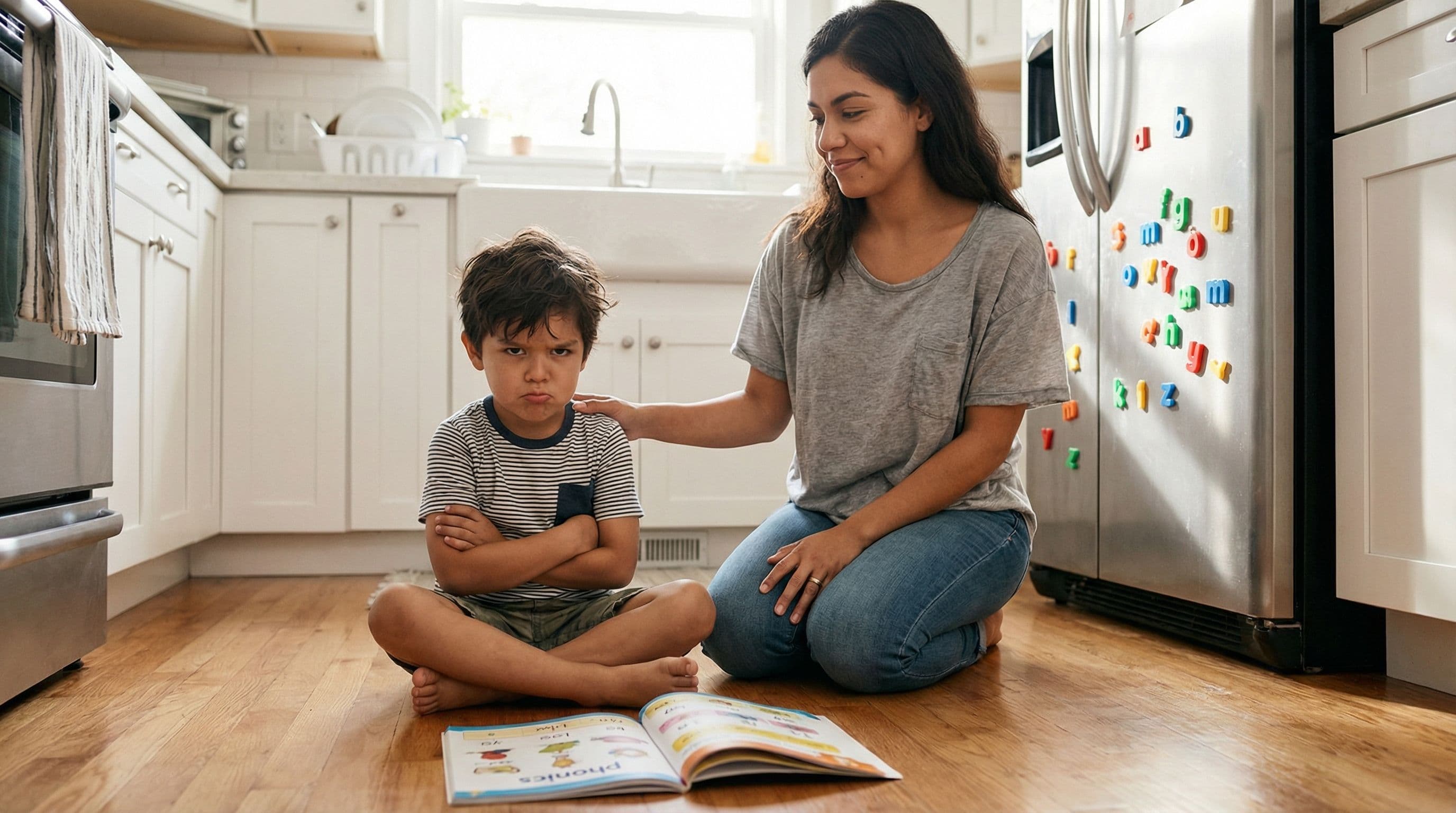
Your kid slams the book shut. Slides off the chair. Suddenly needs to use the bathroom for the fourth time in ten minutes. Cries. Says "I hate reading." Says "I'm stupid."
Sound familiar?
Here's what most parenting blogs will tell you: make it fun! Use stickers! Let them choose the book! Read in a fort!
And here's what I'll tell you: if your child is resistant to reading practice, fun is not your first problem. Skill is.
I've taught two of my four kids to read so far. My oldest, who's 10 now, took to phonics like a fish to water — we were blending CVC words by age 4 with almost zero drama. My 7-year-old? Different kid entirely. At age 5, she would literally go limp like a protest noodle every time I brought out the Bob Books. I'm talking full-body civil disobedience.
I spent two weeks thinking she was just being difficult. Then I ran her through David Kilpatrick's PAST — the Phonological Awareness Screening Test — and realized she couldn't reliably isolate the middle sound in a three-sound word. She wasn't being defiant. She wasn't being defiant — not even a little bit. She was a kid who felt like she was drowning every single time someone opened a book, and the only life raft she could grab was refusing to jump in the pool at all.
That distinction — defiance vs. distress — changes everything about how you respond.
The Tiger Truth: What Happens When You Let the Resistance Win
I know. You're tired. The screaming is awful. The screaming is wearing you down. Your partner sits you down and says you're pushing too hard, that maybe you need to back off. Meanwhile your mother-in-law — bless her heart — pipes up with "He'll read when he's ready" (yeah, that's the same "reading readiness" myth that Mississippi's Literacy-Based Promotion Act was literally designed to combat). And part of you wants to just... stop.
Don't. You. Dare.
Here's the math — and honestly, this should be keeping you up at night:
Only 33% of 4th graders read at proficient level on the 2022 NAEP — that's the Nation's Report Card, the one the federal government runs. Let that land. Sit with that number for a second: two out of every three kids in this country — YOUR kid's classmates, their soccer teammates, the neighbor's daughter — can't read well enough to hit grade-level expectations on the Nation's Report Card. And the 2023 long-term trend data was even worse — reading scores dropped significantly from pre-pandemic levels, marking the largest decline in decades.
Way back in 2010, the Annie E. Casey Foundation published a study that landed like a gut punch in the education world — kids who aren't reading proficiently by the end of 3rd grade? They are four times more likely to drop out of high school. The kicker? For low-income kids who couldn't read on level, the dropout rate was even worse. Four times. For Black and Hispanic kids growing up in poverty, that dropout number is even worse — the deck is stacked higher against them from day one.
Want to hear the part that really wrecks me? The 3rd grade cliff isn't some gradual slope. It's a wall. Before 3rd grade, kids are learning to read. After 3rd grade, they're reading to learn — science, history, math word problems, everything. A child who hits that wall without decoding skills doesn't just struggle in reading class. They fall behind in every subject.
So picture this nightmare: your kid says "I don't want to read," you say "OK, maybe tomorrow" — and that tomorrow? It snowballs into next week, then next month, and before you know it you're staring down a $10,000-to-$15,000-a-year private evaluation and tutoring bill because the school's wait-to-fail model (look up how few districts actually use DIBELS or AIMSweb for early screening — it'll make you sick) ran out the clock on your child.
Am I trying to scare you with this? OK fine, I am absolutely saying this to scare you. Because the "Wait and See" approach is the single most destructive lie in reading education, and your kid's resistance is not a sign to wait. It's a flare gun.
Why Kids Really Resist Reading (It's Almost Never What You Think)
Let me lay out the three real reasons kids fight reading practice, because once you diagnose the actual cause, the solution gets a lot clearer.
Reason 1: The Task Is Too Hard
This right here is the big one — I can't tell you how many parents I've talked to where this was the whole problem staring them in the face. OK here's the deal — I'd put money on this: about 70% of the time a kid flat-out refuses to read, it's because someone is shoving them face-first into a task their brain isn't ready for. Missing phonemic awareness. Shaky grapheme-phoneme correspondence. The kind of gaps that would light up like a Christmas tree if you ran them through Kilpatrick's PAST assessment or mapped them against Linnea Ehri's phases of word reading (I wish I was kidding).
Think about it like this: imagine someone hands you a book in Mandarin and says "just try." You're sitting there staring at characters that might as well be alien hieroglyphics — nothing connects to anything in your brain. You can't sound anything out. But they keep pointing at the page and saying "What does that say?" with increasing frustration.
That's exactly what a 5-year-old feels when they haven't mastered basic grapheme-phoneme correspondence and someone shoves a sentence in front of them and says "read this."
Stanislas Dehaene — French neuroscientist, wrote Reading in the Brain back in 2009, did groundbreaking fMRI imaging studies on what happens inside a reader's skull — proved something parents need to hear: the human brain did NOT evolve to read. It's wired for spoken language, yes. But reading is an invention. The brain has to be specifically, systematically trained to map visual symbols to sounds. It doesn't just "click" one day because your kid is surrounded by books.
So if your kid can't reliably tell you what sound the letter 'a' makes in the word 'cat,' they have zero business being asked to read the word 'cat.' Full stop. That's not a failure of effort. It's a failure of instruction sequence.
Reason 2: They Were Taught to Guess (and Now They Know It Doesn't Work)
This one drives me crazy.
If your child's school or preschool used a Balanced Literacy or Whole Language approach, your kid may have been explicitly taught to look at the picture, look at the first letter, and guess the word. Programs based on Lucy Calkins' Units of Study or Irene Fountas and Gay Su Pinnell's guided reading framework did this for decades.
Picture this: a kid — let's call her "Lily" — is sitting there staring at the word "ship" on the page, she peeks at the picture of a boat floating on water, and boom, out of her mouth comes "boat." Confident as anything. Her teacher says "Good try! Does that track?"" Lily thinks she's reading. She's not. She's playing a guessing game that works OK with predictable picture books and falls apart completely with chapter books.
Emily Hanford's 2023 APM Reports investigation Sold a Story blew the lid off this approach and showed how it failed millions of kids. Since that reporting, over 40 states have passed Science of Reading legislation. But the damage is already done for kids who spent their early years learning to guess instead of decode.
These kids resist reading because they've hit a wall where guessing doesn't work anymore, and they have no other strategy. They're not lazy. They're stuck.
Reason 3: Reading Anxiety Has Taken Root
When a child fails at reading repeatedly — especially if they've been corrected harshly, compared to siblings, or embarrassed in a classroom — actual anxiety develops. Their nervous system goes into fight-or-flight when they see print.
This is real. This is physiological. And no amount of "just try harder" fixes it.
I was at a playground in Raleigh last spring when another mom sat down next to me and mentioned her son's school had just switched from Lucy Calkins to a Science of Reading curriculum because of North Carolina's SB 387 — the Excellent Public Schools Act. You could tell she was confused, and honestly? A little ticked off about the whole curriculum switch. "He was doing totally fine before all this," she told me, half-annoyed. I asked if her kid could read the word "splint." He's in second grade. He could not. And when she asked him to try right there at the playground, his whole face crumpled and he whispered "I can't, Mom" before she'd even finished pointing to the word. That's reading anxiety. That's a kid who's been failing quietly and covering it up with memorized books and picture cues, and now that the system is changing, the gap is showing.
I spent 20 minutes on that playground bench explaining why the switch was happening — Hanford's reporting, the NAEP data, Dehaene's research showing the brain doesn't learn to read naturally. She went home and watched the Sold a Story podcast that night. Texted me at 11pm: "I had no idea. How come nobody told us this years ago?"
Nobody tells parents this stuff. So here I am, telling you right now — because honestly, your pediatrician should've said this at the 4-year checkup, your kid's school should've sent home a flyer, and somebody along the way dropped the ball.
Do this today: Think about which of these three reasons sounds most like your kid. Too hard? Taught to guess? Anxious? Seriously — grab a pen right now and write that down. That's your starting point for the framework below.
The 5-Step Framework for the Resistant Reader
OK so here's the actual plan. This is what I used with my 7-year-old when she was five and fighting me on every single session. It's what I teach in our approach at Teach Your Kid to Read. And it's grounded in Orton-Gillingham principles — the same systematic, multisensory phonics methodology used by Wilson Reading System, Barton Reading & Spelling, and every serious reading intervention program out there.
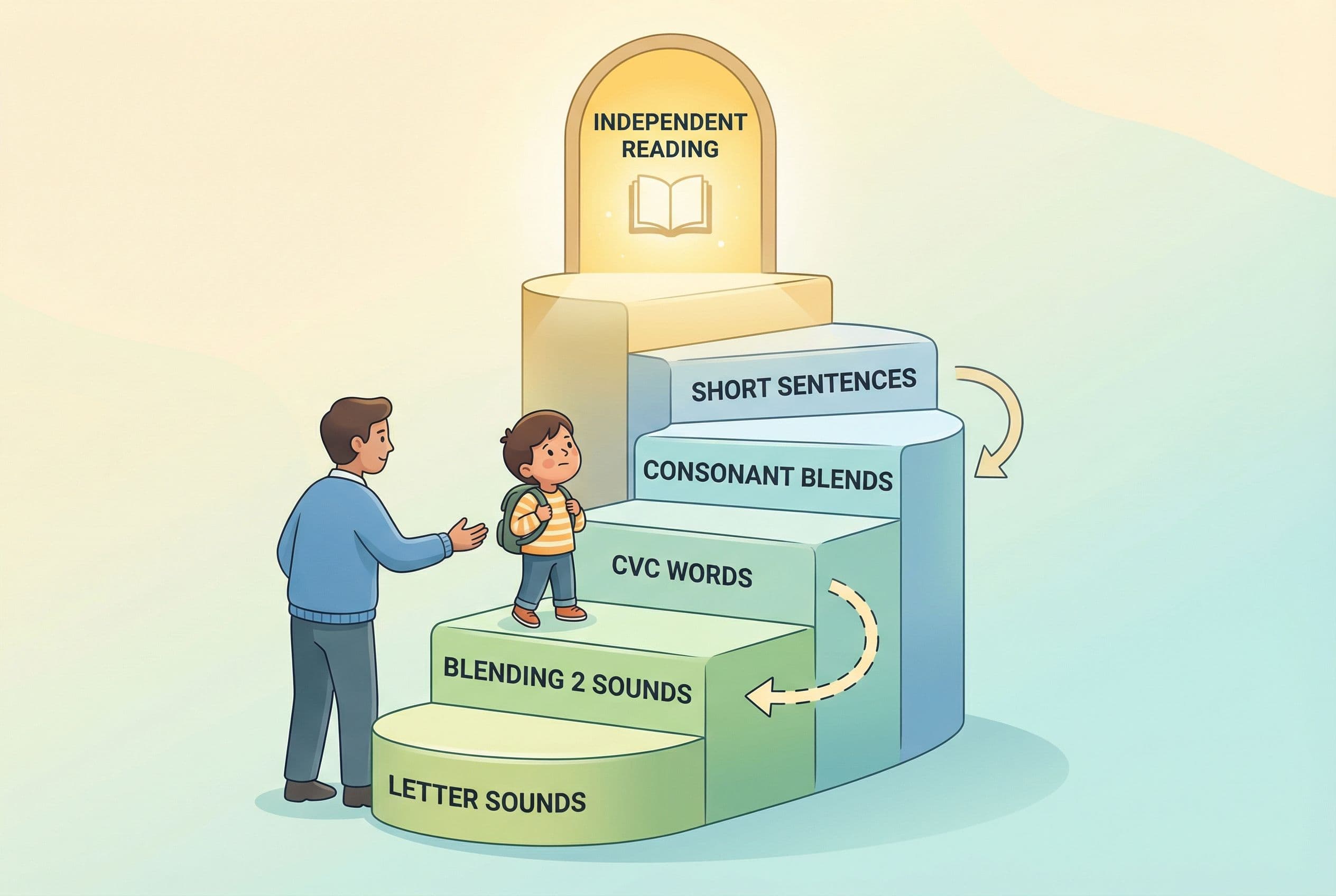
Step 1: Drop Back to Where They CAN Succeed
If your kid resists at Level 3, go back to Level 1. I really don't care if it feels "too easy" — neither does the science behind Ehri's phases of word reading. Mastery builds confidence. Confidence reduces resistance.
When my daughter was fighting CVC blending, I dropped all the way back to individual letter sounds. We spent a full week — yes, a whole week — just on letter-sound correspondence with 10 letters. No words. No blending. Just "What sound does this make?" with instant positive feedback.
By day 4, she was volunteering to practice because she was getting 100% right every time. That's not bribery. That's what Bandura called self-efficacy — a person's belief that they can actually do the thing.
The bottom line: a child who feels successful will want to do the thing again. A kid who feels like a failure? That kid will fight you to the absolute death before picking up a book again.
Step 2: Shrink the Session (Brutally)
I used to do 20-minute sessions with my oldest. Tried the same with my second kid. Disaster.
Here's the thing about resistant readers — 5 minutes of focused, successful practice beats 20 minutes of crying. Not even close. Not according to what the 2000 National Reading Panel found, not according to Dehaene's brain imaging studies, and definitely not according to what I watched happen with my own stubborn, beautiful kids at the kitchen table.
Start with 5 minutes. I mean actually 5 minutes — set a timer, let them see it counting down. When the timer goes off, STOP. Even if they want to keep going (and eventually they will). Stopping when they're successful and wanting more is way better than pushing until they melt down.
I had my 4-year-old doing exactly this last week — 5 minutes at the kitchen table with our Teach Your Kid to Read app, timer visible on my phone, and when it beeped she said "One more?" That right there? THAT is what you're shooting for.
Step 3: Eliminate Guessing Ruthlessly
This is a Tiger Rule in our house: No Guessing. Ever.
If your child looks at a word and throws out a random guess, don't say "good try." Say: "Let's look at each sound."
Mark Seidenberg's Language at the Speed of Sight (2017) — he's a cognitive scientist at the University of Wisconsin — lays out exactly why guessing is so destructive. When a child guesses and happens to get it right, the brain doesn't form the orthographic map (the permanent connection between the letter pattern and the pronunciation) that real reading requires. Kilpatrick's work on orthographic mapping confirms this — the only way words get stored in long-term memory for instant retrieval is through accurate phonological decoding.
So every guess, even a correct one, is a missed opportunity to build the neural pathway that makes fluent reading possible.
In our house, the script goes like this:
- Kid says wrong word → "Hmm, let's look at the letters. What's the first sound?"
- Kid says nothing → "I'll help. This letter says /sh/. What's the next sound?"
- Kid gets it right after sounding out → "YES. You figured that out with your brain. That's reading."
No shame. No frustration. Just relentless redirection to the sounds. (Need help teaching your child to blend sounds together? Check out our [INTERNAL_LINK:blending-how-to] guide.)
Step 4: Use the Right Materials (Decodable, Not Leveled)
Here's a detail only a practitioner would care about, but it matters enormously: the books your child practices with determine whether they succeed or fail.
Fountas & Pinnell leveled readers — the little books with letters on the back, A through Z — are everywhere. Schools use them. Libraries sort by them. But they're whole-language aligned. A Level C book might include the word "beautiful" because it fits the sentence pattern and the picture supports it, even though no beginning reader can decode "beautiful."
Decodable readers are different. A decodable reader is aligned to a specific scope and sequence — the vast majority of words use only the phonics patterns the child has already been taught, plus a handful of high-frequency words explicitly taught as "heart words" (the, is, was). You might see a small number of words with patterns that haven't been formally taught yet, but good decodable series will flag those or pre-teach them. The key test: does your child have a strategy — a phonics pattern or an explicitly taught irregular word — for every word on the page?
Look for decodable readers from publishers like Flyleaf Publishing, High Noon Books, or the ones built into programs like UFLI Foundations. (Not sure where to start? Here's our [INTERNAL_LINK:decodable-readers] guide.) Our Teach Your Kid to Read app includes carefully sequenced decodable passages for exactly this reason — every word your child encounters is one they have the tools to actually read.
A kid who can read every word in the book doesn't resist practice. A kid who hits a wall every third word? Of course they slam it shut.
Step 5: Make It Daily and Non-Negotiable (Yes, Really)
Another Tiger Rule: We Never Skip.
Birthdays. Christmas morning. Vacation. Sick days (unless they're really sick — I'm not a monster). Five minutes of phonics practice happens every single day.
Why? Because Linnea Ehri's research on the phases of word reading development — she identified the pre-alphabetic, partial alphabetic, full alphabetic, and consolidated alphabetic phases in her 2005 meta-analysis — shows that the transition between phases requires consistent, repeated exposure. Gaps in practice make it easy to lose momentum, especially with newly learned skills, and can mean spending extra time re-teaching what should already be solid.
I know that sounds extreme. It's 5 minutes. You spend longer than that arguing about whether they should practice.
Consistency removes the negotiation. When something is non-negotiable — like brushing teeth — kids stop fighting it. When it's optional, it becomes a daily power struggle. Remove the option.
Do this today: Pick one step from this framework — just one — and try it at your next reading session. Can't figure out which? Start with Step 1. Drop back to where your kid can succeed easily, set a 5-minute timer, and watch what happens.
How Teach Your Kid to Read Solves the Resistance Problem
Look, I built Teach Your Kid to Read with my co-founder specifically because I was living this problem. My resistant reader needed:
- Systematic synthetic phonics — not random letter games, not sight word memorization, but the Orton-Gillingham-based sequence that reading science says works
- Micro-sessions — short enough that a wiggly, resistant preschooler or kindergartner could finish before the meltdown hit
- Built-in success architecture — the app only presents what the child is ready for, so they're getting 80-90% accuracy (the sweet spot for learning without frustration)
- Zero guessing — no picture cues, no context clues, just letters and sounds
- Decodable text — every practice passage uses only the patterns already taught
The kicker is that most "reading apps" on the market are glorified games that teach letter names (not sounds), flash sight words for memorization, and reward tapping the screen. That's not reading instruction. That's a digital babysitter wearing a phonics costume.
Teach Your Kid to Read follows the actual science — the same research base behind Mississippi's notable NAEP gains after a package of literacy reforms emphasizing evidence-based phonics instruction, coaching, assessments, and early intervention. Mississippi's Literacy-Based Promotion Act of 2013 kicked off those coordinated reforms, and the state went from near the bottom of national rankings to well above the national average on 4th-grade reading. If a whole state can turn around its reading outcomes with evidence-based instruction at the center, your one kid absolutely can too.
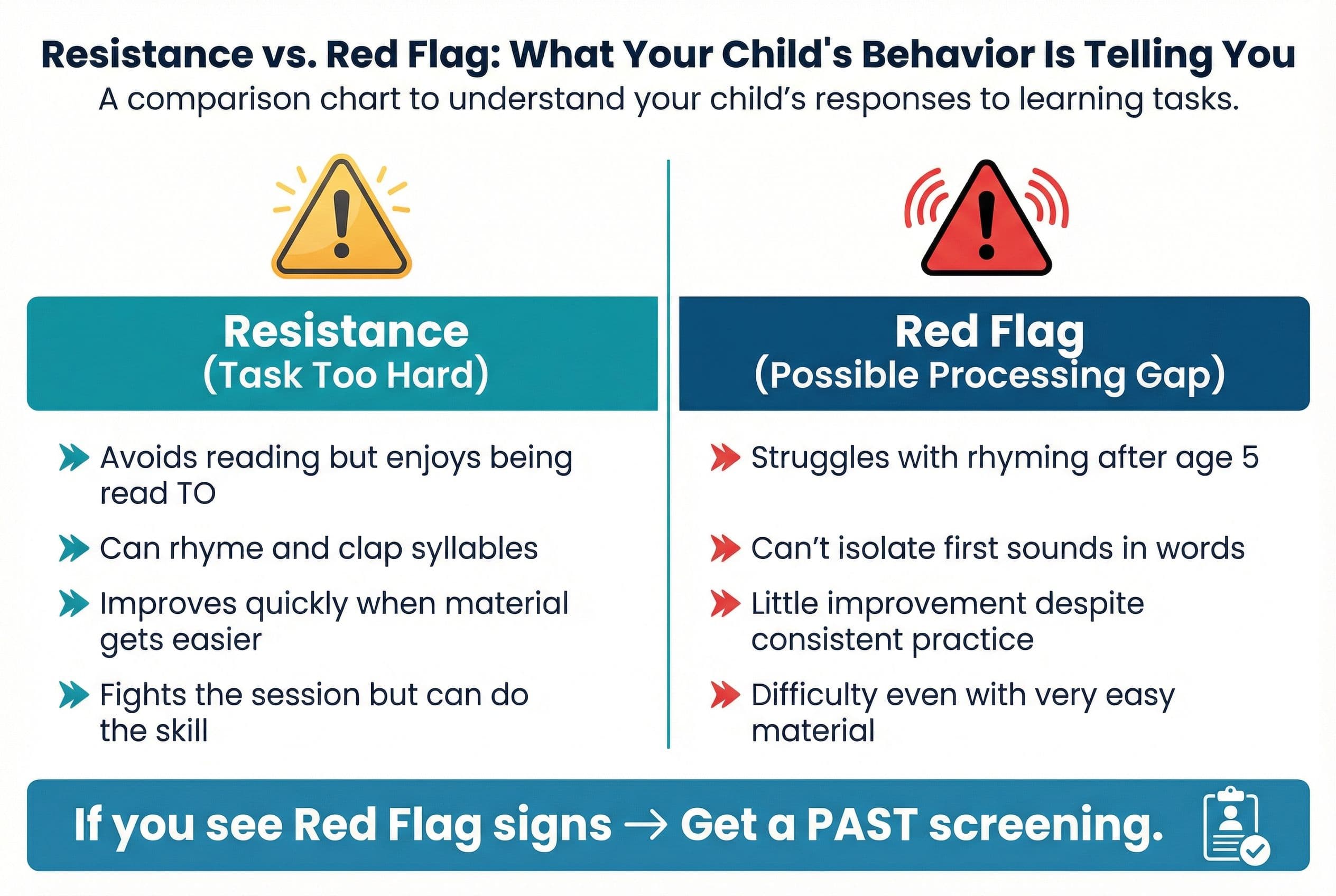
Quick Diagnostic: Is This Resistance or a Red Flag?
Before you implement the framework above, spend one session (just one) checking whether your child's resistance might be pointing to something deeper. Here's a quick screen:
Run through these five tasks:
- Rhyme recognition: "Do 'cat' and 'hat' rhyme?" (Should be solid by age 4.)
- Initial sound isolation: "What's the first sound in 'map'?" (Should be solid by mid-kindergarten.)
- Sound blending: "I'm going to say sounds. You tell me the word: /s/ /i/ /t/." (Should be emerging by late kindergarten.)
- Sound segmentation: "Tell me all the sounds in 'fun'." (Should be solid by end of kindergarten.)
- Sound deletion: "Say 'stop' without the /s/." (This is harder — developing through 1st grade.)
If your child can't do #1 and #2 reliably, the resistance to reading is almost certainly because they don't have the [INTERNAL_LINK:phonemic-awareness-games] foundation yet. You literally cannot build a house on sand — Kilpatrick makes this exact analogy in his 2016 book Equipped for Reading Success. Go back to phonological awareness activities before you ask them to read words.
Kilpatrick's PAST assessment gives you a detailed map of exactly where the breakdown is. It takes about 5 minutes. You can find it in his book Equipped for Reading Success (2016) — the whole book is basically a manual for building the phonological processing skills that make decoding possible.
If your child fails multiple levels of the PAST, consider getting a formal evaluation for dyslexia or a specific learning disability. A child who can't process the sounds in words despite good instruction isn't resistant — they need intervention. Programs like Barton Reading & Spelling or the Wilson Reading System (which uses 12 carefully structured steps and a controlled reader) are designed for exactly this. (Not sure what [INTERNAL_LINK:dyslexia-signs] to look for? We've got a guide for that.)
Do this today: Run through the five tasks above. The whole thing takes less than 5 minutes — I timed it with my own kid last week. Write down which ones your child nails and which ones they struggle with. That tells you exactly where to focus.
What About Motivation? (The Fun Trap)
I can already hear some of you thinking: "But what about making reading FUN?"
Real talk — I'm not anti-fun. I'm anti-fun-as-a-replacement-for-actual-phonics-instruction.
Reading in a blanket fort is fun. Reading with a flashlight is fun. Reading with silly voices is fun. Great. Do all that. But look — you can do every single one of those things and it won't mean a thing if your child still sits there unable to decode the actual words staring back at them from the page. Kilpatrick's research on orthographic mapping is crystal clear on this point.
The single most motivating thing you can do for a resistant reader is make them competent. A kid who can actually read the words doesn't need sticker charts and M&M bribes. The reading itself becomes rewarding because they can DO it.
This lines up with everything we know about the Simple View of Reading (Gough & Tunmer, 1986): Reading Comprehension = Decoding × Language Comprehension. If decoding is zero, the whole equation is zero. No amount of "engagement strategies" fixes a decoding deficit.
So yes — use the blanket fort. Use the silly voices. But do them after you've built the decoding skills. Fun is the accelerant. Phonics is the fuel.
The Daily Script: What 5 Minutes Actually Looks Like
People ask me all the time what a real session looks like — not the Instagram version, the actual messy kitchen-table version — so here you go. Here's literally what went down at my kitchen table yesterday with my 4-year-old, play by play:
Minute 0-1: Review. I hold up 5 letter cards (ones she already knows). She says the sounds. Gets them all right. I say "You know those cold." High five.
Minute 1-2: New skill. I introduce one new letter-sound correspondence. Today it was 'g' as in "go." I say the sound, she repeats it, we do it three times. I mix it into the review cards and she picks it out.
Minute 2-4: Practice. She opens the Teach Your Kid to Read app and does 2 minutes of blending practice with words that use her known sounds plus the new one. The app doesn't let her guess — she has to tap each sound and blend.
Minute 4-5: Success moment. She reads one short decodable sentence out loud. Today it was "The dog can dig." She read it. Her whole face just — lit up. She ran to tell her older sister.
Timer beeps. Done. She asked for one more sentence. I said no (always leave them wanting more). Tomorrow we do it again.
That's it. The whole enchilada. Five minutes. No tears. No power struggle. No bribery.
The secret isn't some magical method. It's that every single thing in those 5 minutes was calibrated to be just within her ability level. She never hit a wall. She never had to guess. She succeeded, and she knew it.
When They Say "I Hate Reading"
Real talk — buckle up because this WILL happen. Even with perfect instruction. Even with 5-minute sessions. At some point — maybe it's a random Tuesday, maybe it's after a birthday party when they're running on cake fumes and zero sleep — your kid is going to lock eyes with you and hit you with "I HATE reading."
Here's what you say back:
"You don't hate reading. You hate that it's hard right now. It won't always be this hard."
And then you keep going. Not in a drill-sergeant way. More like an "I'm on your team and there's no version of this where I let you fail" way.
Because here's what I've learned from teaching my own kids: the children who were most resistant in the beginning are often the proudest readers later. My 7-year-old — the one who used to go boneless on the floor — just finished reading Charlotte's Web independently last month. She carried it around the house for three days after she finished it, showing everyone the last page.
She doesn't remember hating reading. She remembers learning to read. And honestly, so will yours.
Frequently Asked Questions
My child cries every time I try to practice reading. Should I stop?
No — but you should change what you're doing. Crying almost always means the task is too hard, not that your child is being manipulative. Drop back to a level where they succeed easily (even if it feels "too easy"), shorten the session to 3-5 minutes, and rebuild from there. If crying persists even with easy material, consider a screening for reading anxiety or a phonological processing evaluation using Kilpatrick's PAST assessment.
How young is too young to start phonics?
Letter-sound instruction can start as early as age 3, honestly — as long as your kid can sit with you for 2-3 minutes and perks up when they see letters around the house or on signs. I started letter sounds with my 4-year-old at 3.5 and she's on track. But "starting phonics" at this age means casual, playful sound practice — not worksheets and drills. The formal, systematic sequence in a program like Teach Your Kid to Read is typically appropriate starting around age 4-5.
My child's school uses Fountas & Pinnell leveled readers. Is that OK?
Honestly? Almost certainly not. Fountas & Pinnell's system is whole-language aligned — it levels books by text complexity and encourages kids to use pictures and sentence patterns to figure out words, rather than decoding letter by letter. Since Emily Hanford's Sold a Story investigation and the wave of Science of Reading legislation (over 40 states have passed laws since 2019), many districts are moving away from F&P. Ask your child's school if they use decodable readers for phonics practice. If they don't, supplement at home.
What's the difference between a reluctant reader and a child who actually has dyslexia?
A reluctant reader resists practice but can do the phonics tasks when they choose to engage. A child with dyslexia has a neurological difference in how they process the sounds in language — they struggle with phonological awareness tasks even with direct instruction and plenty of practice. If your child can't reliably rhyme, segment sounds, or blend sounds after months of systematic instruction, get a formal evaluation. Early identification changes outcomes dramatically — the International Dyslexia Association recommends screening by age 5.
Does the "reading readiness" approach work — just waiting until they're ready?
No. Hard no. This is what I call the "Wait and See" lie, and honestly? It's done more damage to kids' reading lives than almost any other idea floating around in education. Decades of NICHD-funded research — including work by Reid Lyon, who testified before Congress on the reading crisis — have consistently shown that large percentages of children fail to reach proficiency without explicit instruction. On the 2022 NAEP, only 33% of 4th graders scored at or above proficient. Readiness for reading isn't something kids develop on their own by being exposed to books. It's built through explicit instruction in phonological awareness and phonics. Every month you wait is a month of potential growth lost.
Your Next Step
If you've got a child resistant to reading practice, you don't need more patience. You don't need more sticker charts. You need a system that's built on actual reading science, calibrated to your child's exact skill level, and designed to make success automatic.
That's what Teach Your Kid to Read does. Our app uses systematic synthetic phonics — the same Orton-Gillingham principles behind every evidence-based reading intervention — in short, focused sessions that eliminate guessing and build mastery from the very first day.
Start your child's reading journey today at start lesson one free or call us at (314) 285-9505.
And remember our Tiger Rules: We Never Skip. No Guessing. Sound it out.
Your kid doesn't hate reading. They just haven't been taught to read yet. That's fixable. So let's fix it.
Part of these guides

Xia Brody
Co-Founder, Teach Your Kid to Read
Mom of 4 who has successfully taught her kids to read. Currently in the trenches with her 4-year-old while her two oldest (10 and 7) devour books on their own. Passionate about phonics-based methods and building a lifelong love of reading.
Related Articles
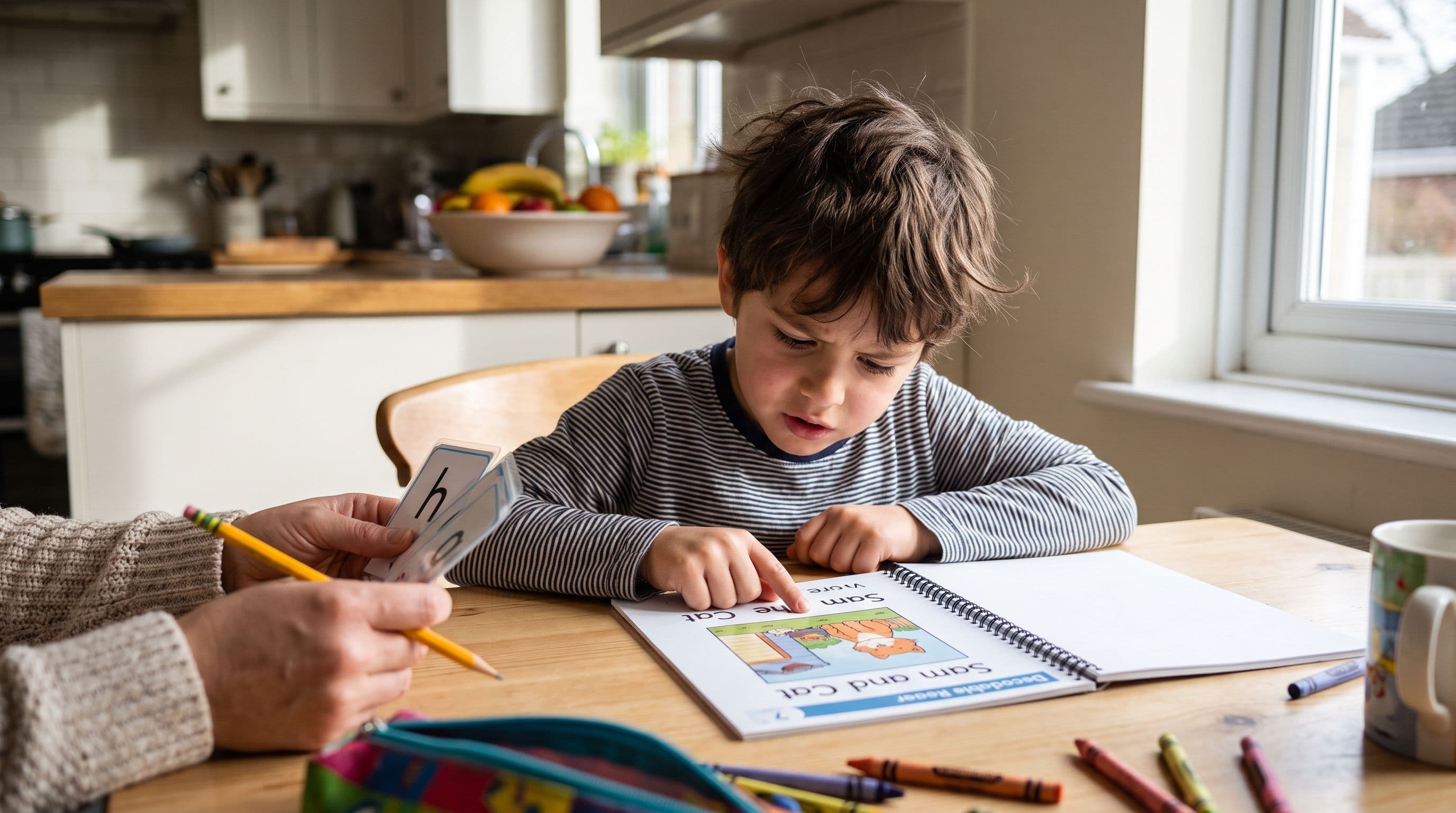
My 1st Grader Hates Reading: 7 Fixes to Try Today
If your first grader won’t read, don’t panic—but don’t wait. Here’s how to tell whether the problem is motivation, decoding weakness, bad books, or all three.
Read More →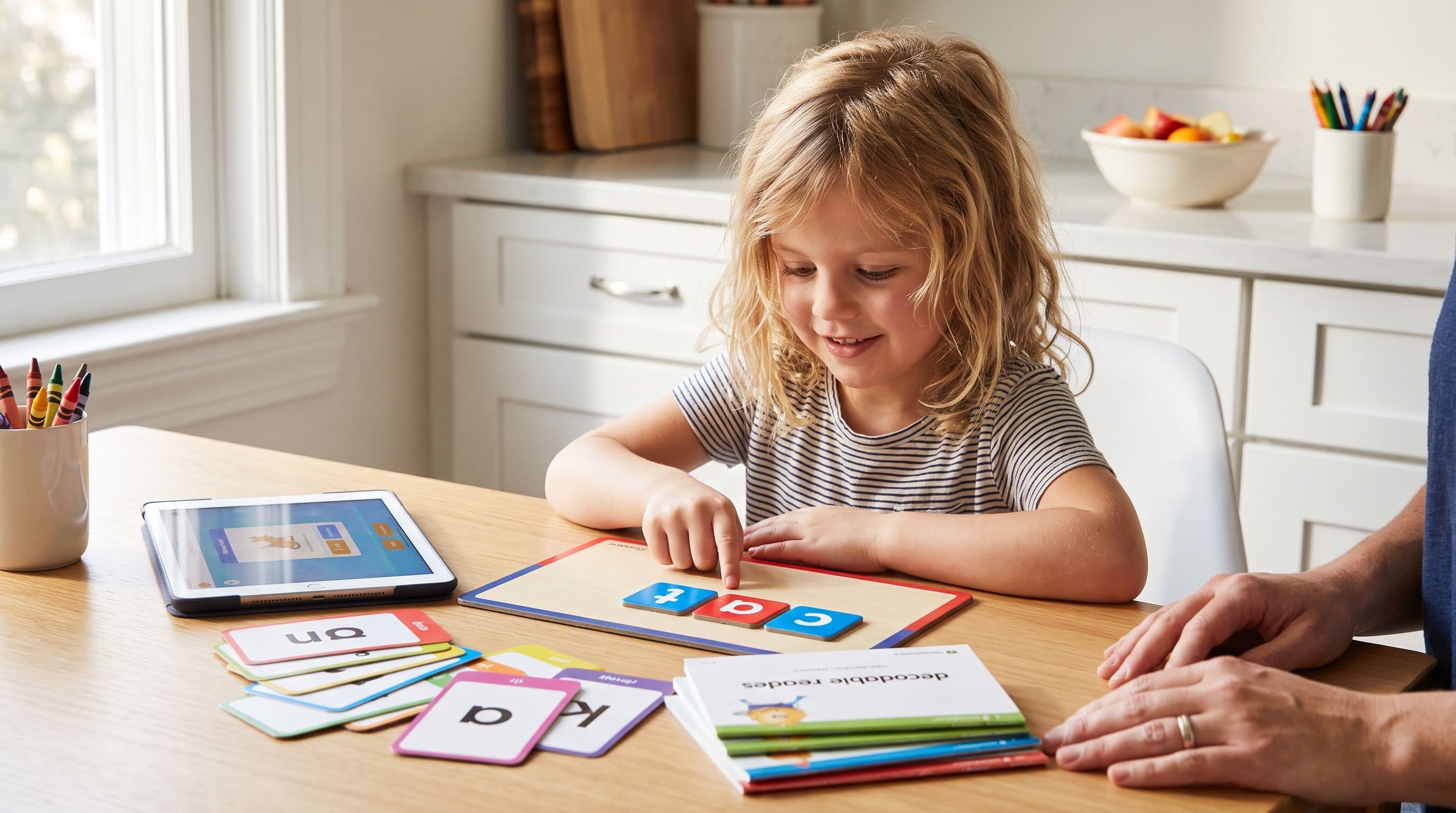
Reading Eggs vs HOMER Australia: Best Prep App?
Choosing between Reading Eggs and HOMER for your 4–6 year old? Here’s the blunt phonics-first comparison Australian parents need before Prep, Foundation or Kindy.
Read More →
Reading Apps for 5-Year-Olds: 6 Skill-Level Picks
Most reading apps for 5-year-olds look cute. Too many teach guessing, tapping, and screen-zombie habits instead of real decoding. Here’s how I’d pick a phonics app by skill level if I were sitting at your kitchen table.
Read More →